NGC 7331: Galaxy Facts, Photos, and Astrophotography Tips

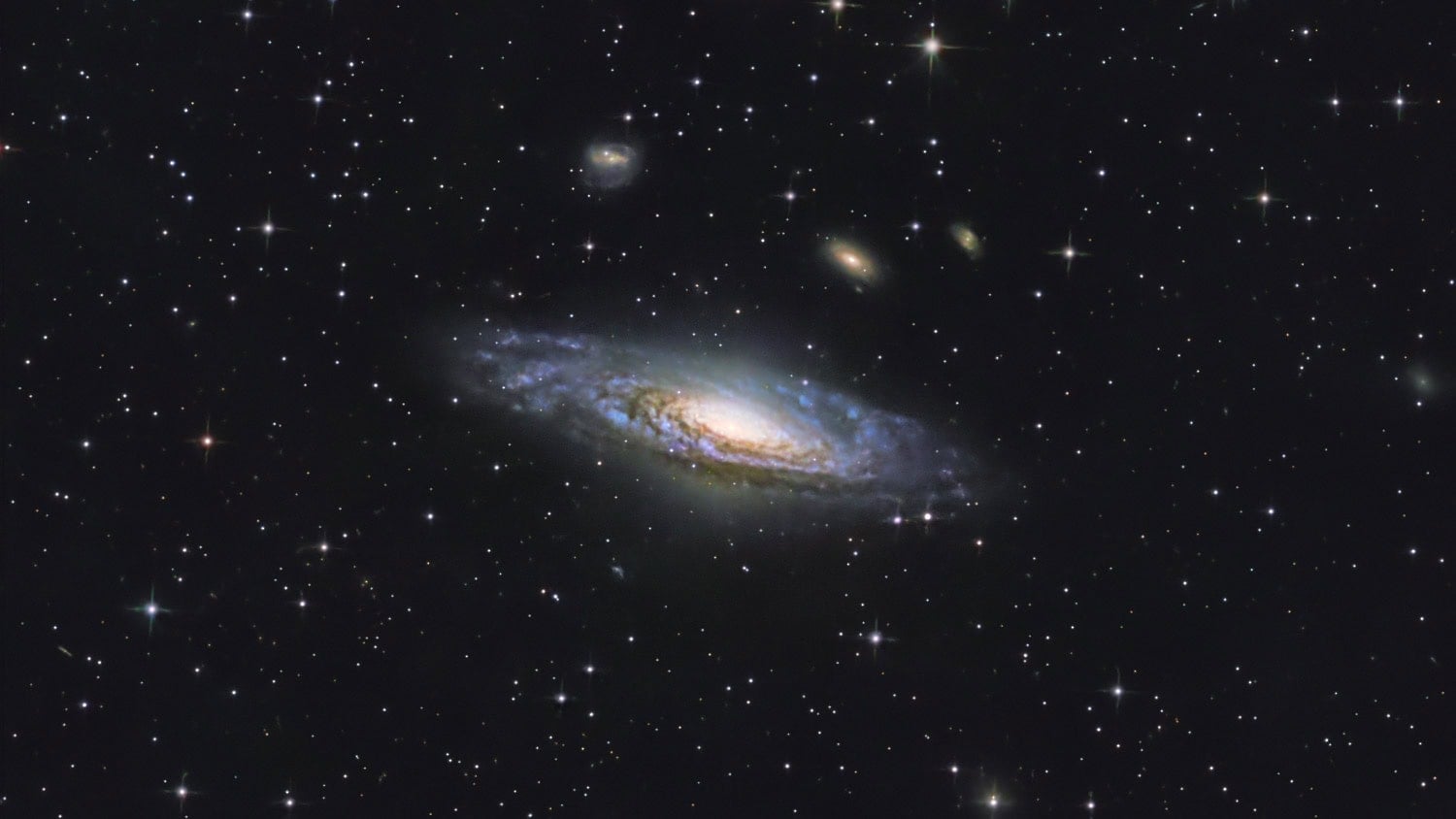
NGC 7331 is a spiral galaxy in the constellation Pegasus, approximately 45 million light-years from Earth. Also known as Caldwell 30, this tilted island of stars is a rewarding telescope target and a beautiful subject for deep-sky astrophotography. Its bright central bulge, dark dust lanes, and surrounding background galaxies give the field an incredible sense of depth.
I photographed NGC 7331 over three nights from my Bortle 6 backyard, collecting 10 hours and 40 minutes of LRGB exposure time with a monochrome camera. My image also includes the Deer Lick Group, a visual grouping that adds several much more distant galaxies to the frame.
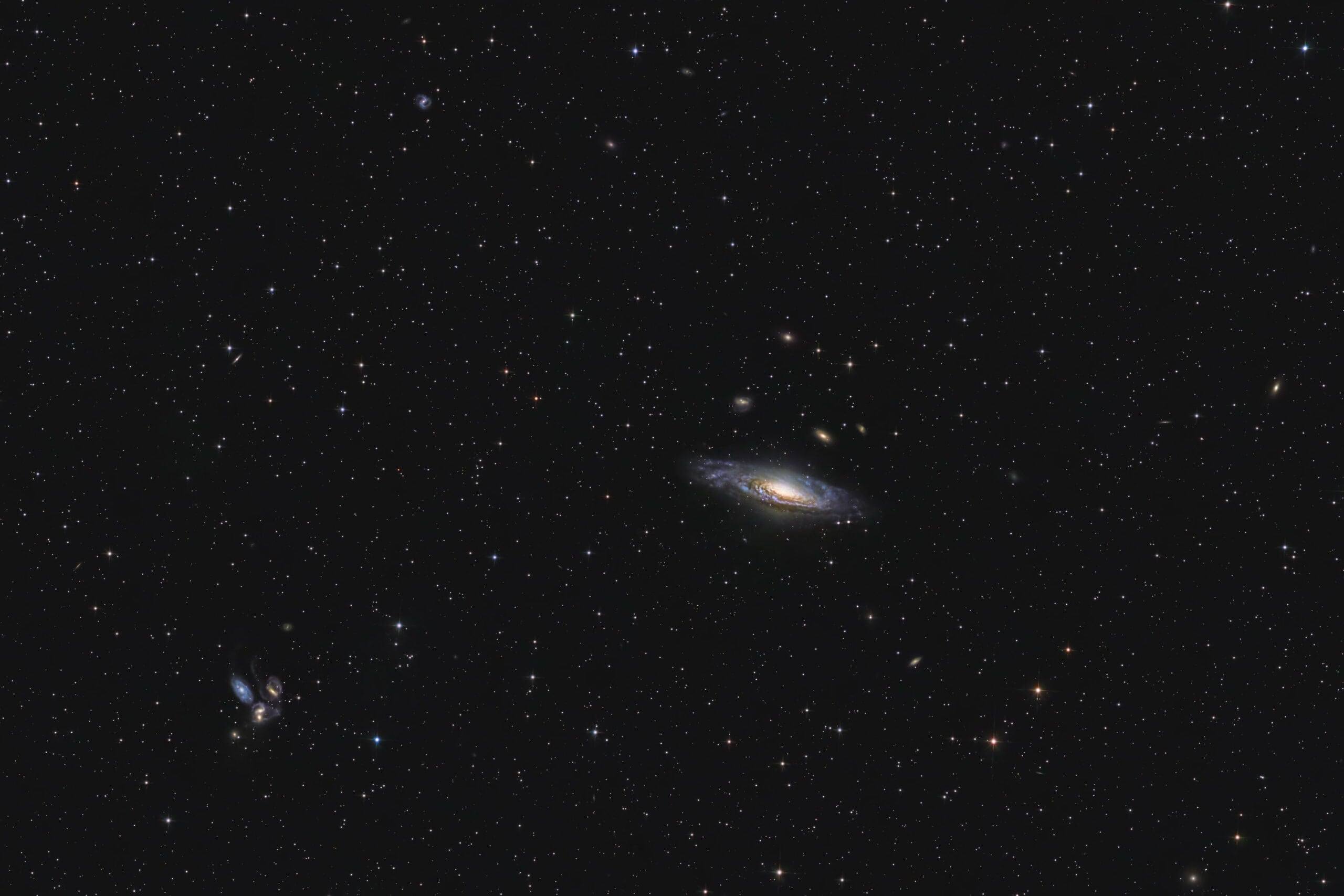
I took my image of NGC 7331 and Stephan’s Quintet with an 8-inch reflector telescope (Apertura Carbonstar 200).
Below, I’ll cover the galaxy’s key facts, how to find it, its recent supernovae, and the equipment and processing techniques I used for this project.
NGC 7331 Key Facts
William Herschel discovered NGC 7331 in 1784. Although it is absent from the Messier catalog, it appears in Patrick Moore’s Caldwell catalog as Caldwell 30. NASA lists its apparent magnitude as 9.5, making it accessible to amateur telescopes under suitable conditions.
| Property | Details |
|---|---|
| Other designation | Caldwell 30 (C30) |
| Object type | Spiral galaxy |
| Constellation | Pegasus |
| Distance | Approximately 45 million light-years |
| Apparent magnitude | About 9.5 |
| Apparent size | Approximately 10.5 × 4.2 arcminutes (optical catalog dimensions) |
| Right ascension (J2000) | 22h 37m 04s |
| Declination (J2000) | +34° 24′ 57″ |
| Discovery | William Herschel, 1784 |
| Best evening season | Autumn in the Northern Hemisphere |
Sources: NASA’s Caldwell 30 guide and SIMBAD. Published distances and angular dimensions vary with the measurement method; some references round the distance to 50 million light-years.
A Galaxy Often Compared to the Milky Way
NGC 7331 is often described as a Milky Way analog because of its broadly similar size, mass, and spiral structure. It is an external view of the kind of enormous stellar system we live inside.
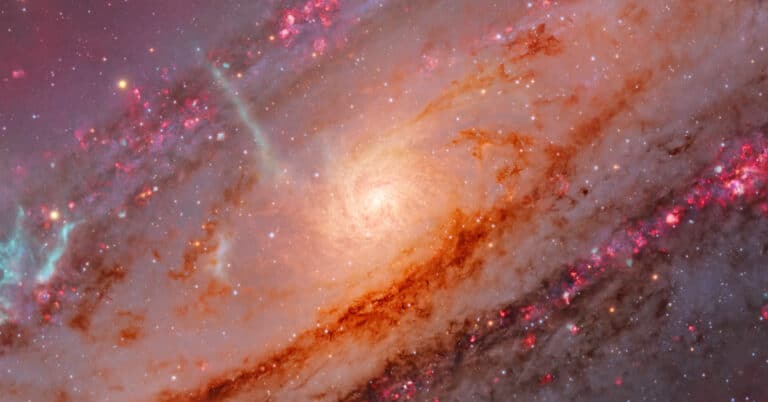
The comparison has limits. ESA/Hubble describes NGC 7331 as an unbarred spiral, whereas the Milky Way has a central bar. In photographs, its inclined disk creates a long, narrow profile, with dust cutting across the glow of its stars. The warmer central bulge and cooler-looking outer arms make it an appealing broadband color target. See ESA/Hubble’s comparison of the two galaxies.
Where Is NGC 7331, and When Can You See It?
Look for NGC 7331 in northern Pegasus, near the constellation’s boundary with Lacerta. From southern Ontario, autumn evenings offer a convenient opportunity to observe or photograph it high in the sky. For imaging, I would prioritize the hours around its highest altitude rather than starting as soon as it clears the horizon.
I actually decided to capture this galaxy based on a ‘Tonight’s Best’ suggestion in the ASIAIR mobile app. The forecast showed 3 straight nights of clear skies, and I wanted to invest some serious imaging time into a broadband project using LRGB filters.
A GoTo mount or plate-solving system can locate the galaxy using either NGC 7331 or Caldwell 30. If you are star-hopping, use a detailed chart around Eta Pegasi (Matar), then work roughly four degrees north and slightly west. The galaxy itself is far too faint to see with the naked eye.
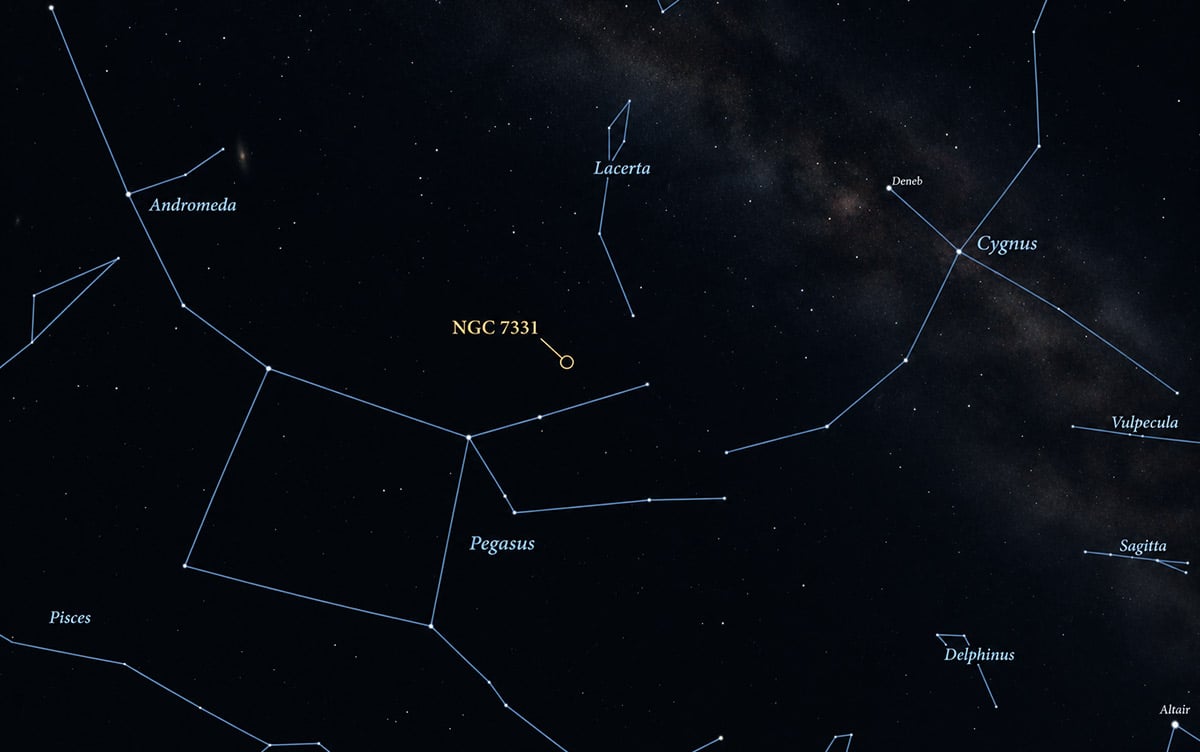
NGC 7331 is located between the Andromeda Galaxy and the Heart of Cygnus in the constellation Pegasus.
What Does NGC 7331 Look Like Through a Telescope?
Expect an elongated gray glow with a brighter center. A photograph reveals far more structure and color than an eyepiece view, particularly from a suburban backyard. Under light pollution, the central region is much easier to detect than the faint outer disk.
Start with a low-power eyepiece to identify the field, then increase magnification if the sky conditions support it. Dark adaptation and averted vision help. Its magnitude describes the combined light of the galaxy, spread across an extended area, so it will not resemble a magnitude 9.5 star.
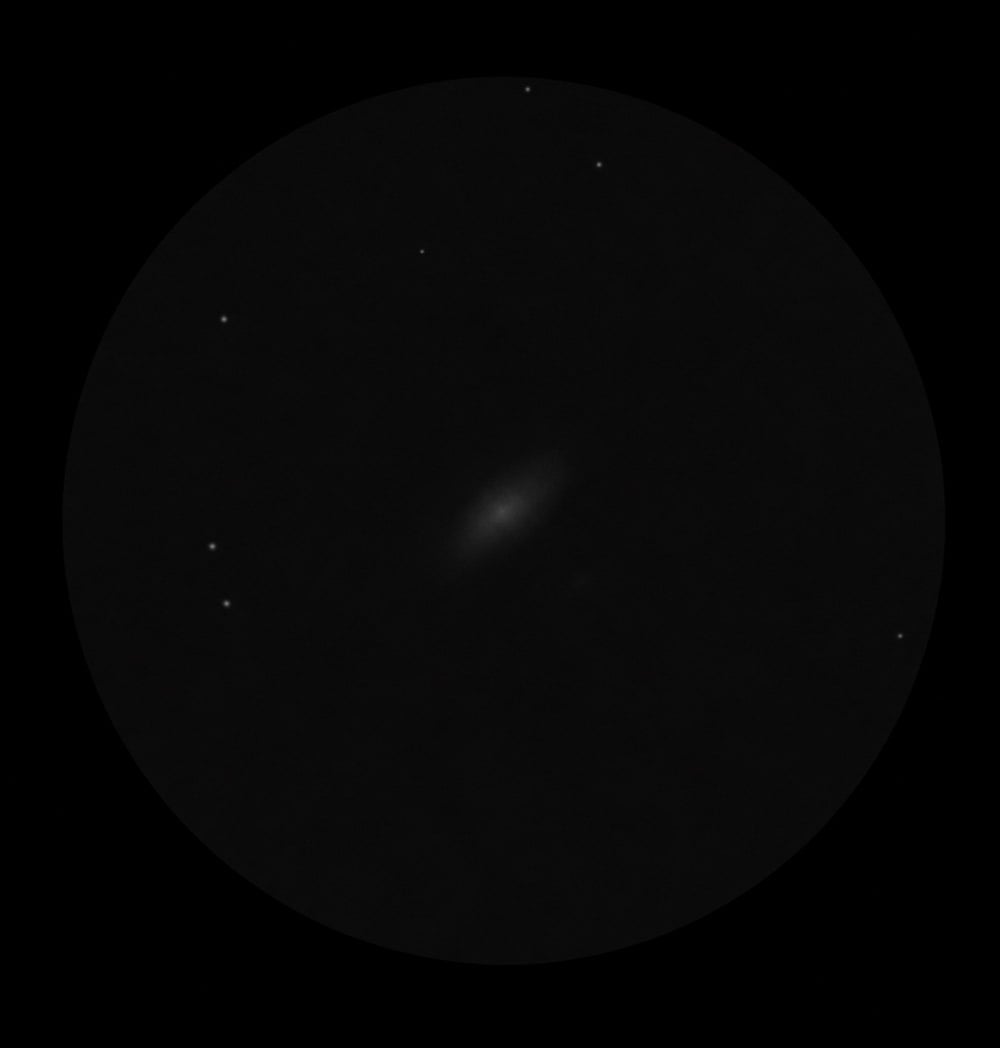
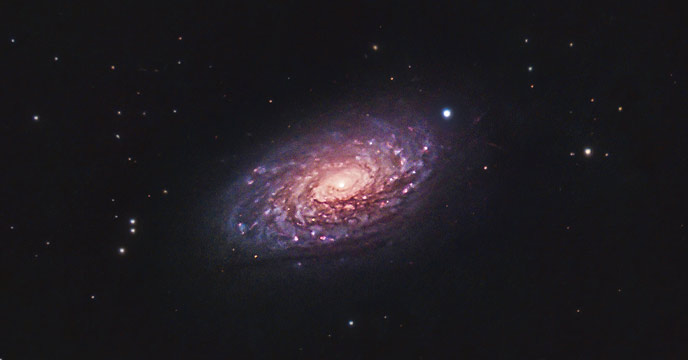
An example illustration of what NGC 7331 will look like through an 8-inch Dobsonian telescope with a 14mm eyepiece.
The Deer Lick Group: Galaxies in My Image
The Deer Lick Group is the familiar visual grouping of NGC 7331 and four smaller-looking galaxies nearby: NGC 7335, NGC 7336, NGC 7337, and NGC 7340. These background galaxies are sometimes nicknamed the “fleas.”
They appear close together in photographs, but the alignment is misleading. NGC 7331 lies in the foreground, while the smaller galaxies are much farther away. They should not be described as four satellite galaxies orbiting NGC 7331. NASA’s NGC 7331 and Beyond explains the chance alignment.
My image includes this grouping, which is one reason I like leaving some space around the main galaxy. A very tight crop can emphasize the dust lanes but lose the wider scene. Keeping the background galaxies visible gives the photograph more context and rewards a closer look.
Nearby Stephan’s Quintet
Another famous galaxy target, Stephan’s Quintet, lies roughly half a degree southwest of NGC 7331. A sufficiently wide field can accommodate both, although you should check your camera orientation and framing before starting a project.
Stephan’s Quintet is separate from the Deer Lick Group. Four of its apparent members are interacting galaxies about 290 million light-years away, while NGC 7320 is a foreground galaxy approximately 40 million light-years away. NASA’s Stephan’s Quintet overview explains this second example of how sky position can hide enormous differences in distance.
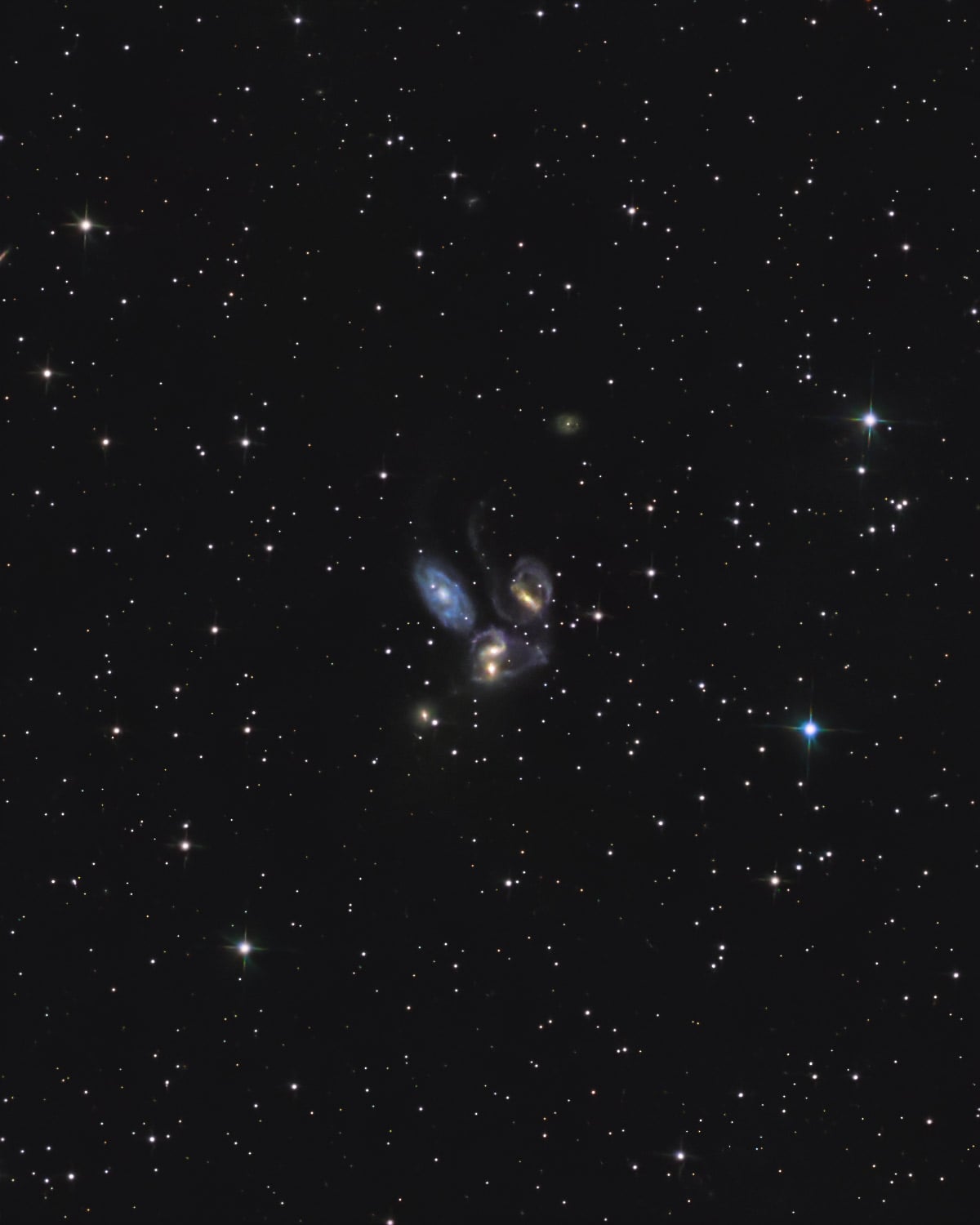
Stephan’s Quintet is an interesting collection of galaxies, but it is quite small, and more focal length is needed to reveal them in detail.
Recent Supernovae in NGC 7331
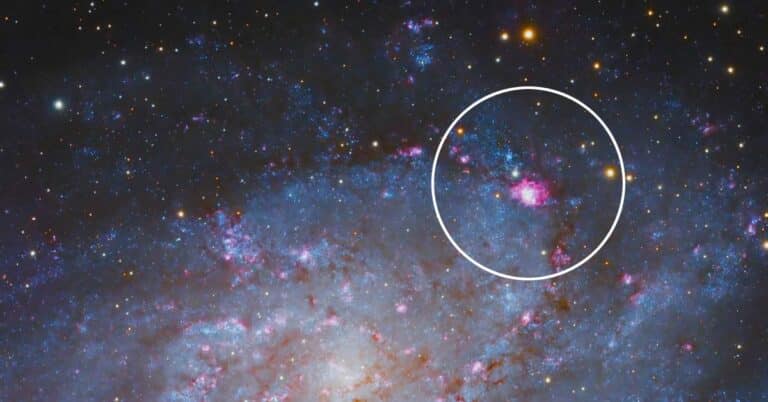
NGC 7331 hosted two notable recent Type Ia supernovae. GOTO discovered SN 2025rbs on July 14, 2025, close to the galaxy’s central region. The discovery team’s report describes how they detected and classified it.
More recently, ATLAS discovered SN 2026aaiv on September 1, 2026. The Transient Name Server record identifies NGC 7331 as its host and classifies it as Type Ia. These events involve the thermonuclear explosion of a white dwarf.
A supernova appears as a point of light superimposed on its host galaxy. To identify one in your own data, compare the capture dates and the object’s precise position with a verified finder chart. A bright point near the galaxy may simply be a foreground star; its presence alone does not establish a supernova detection.
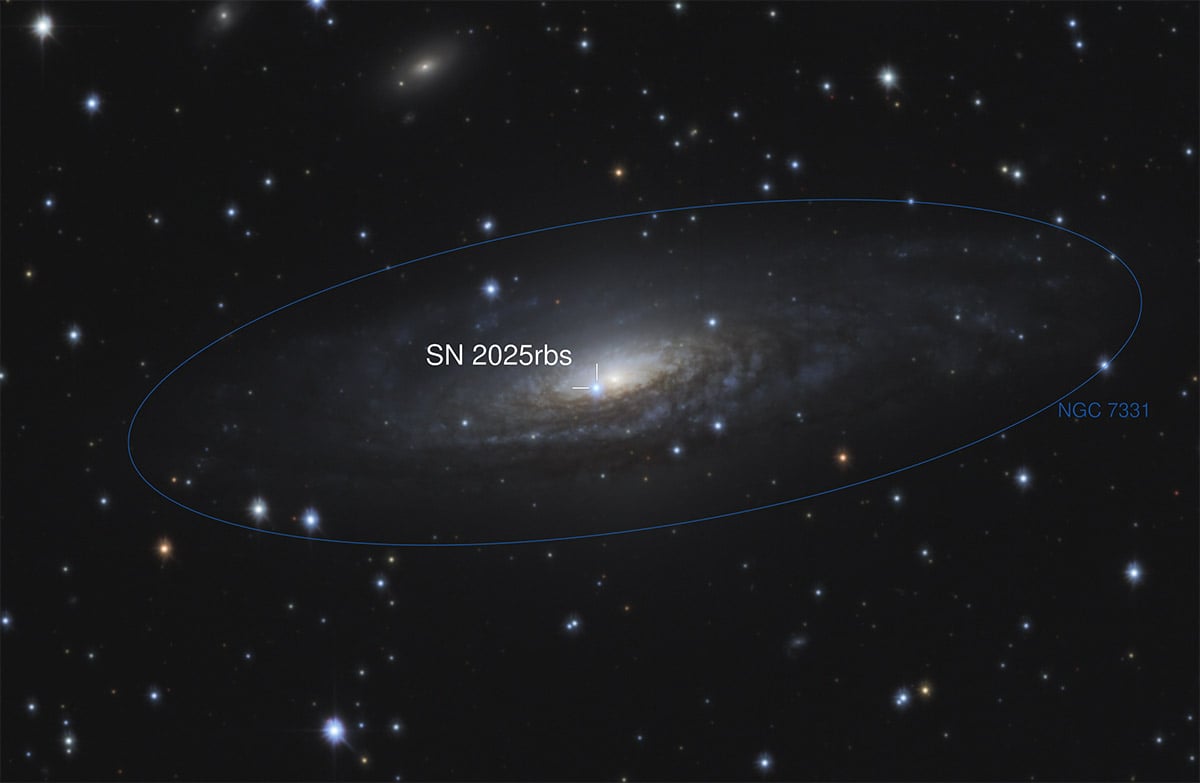
SN 2025rbs. Composite of observations taken in the GOTO L and Sloan g, r, and i bands by TwIST (The GOTO Project)
My NGC 7331 Astrophotography Setup
I captured this project in LRGB with a monochrome CMOS camera. That means recording separate luminance, red, green, and blue exposures, then combining them into a full-color image.
I spent three nights collecting data from my Bortle 6 backyard. Galaxies are challenging broadband targets under suburban skies, but building up exposure across multiple sessions makes a project like this much more achievable.
Unlike an emission nebula, a galaxy contains a broad mix of starlight that you generally want to preserve across the visible spectrum. A narrowband filter can isolate particular emission regions, but it does not replace the broadband information needed for a conventional LRGB galaxy portrait.
For this project, the red, green, and blue filters supplied the color, while luminance provided a separate record of brightness and structure.
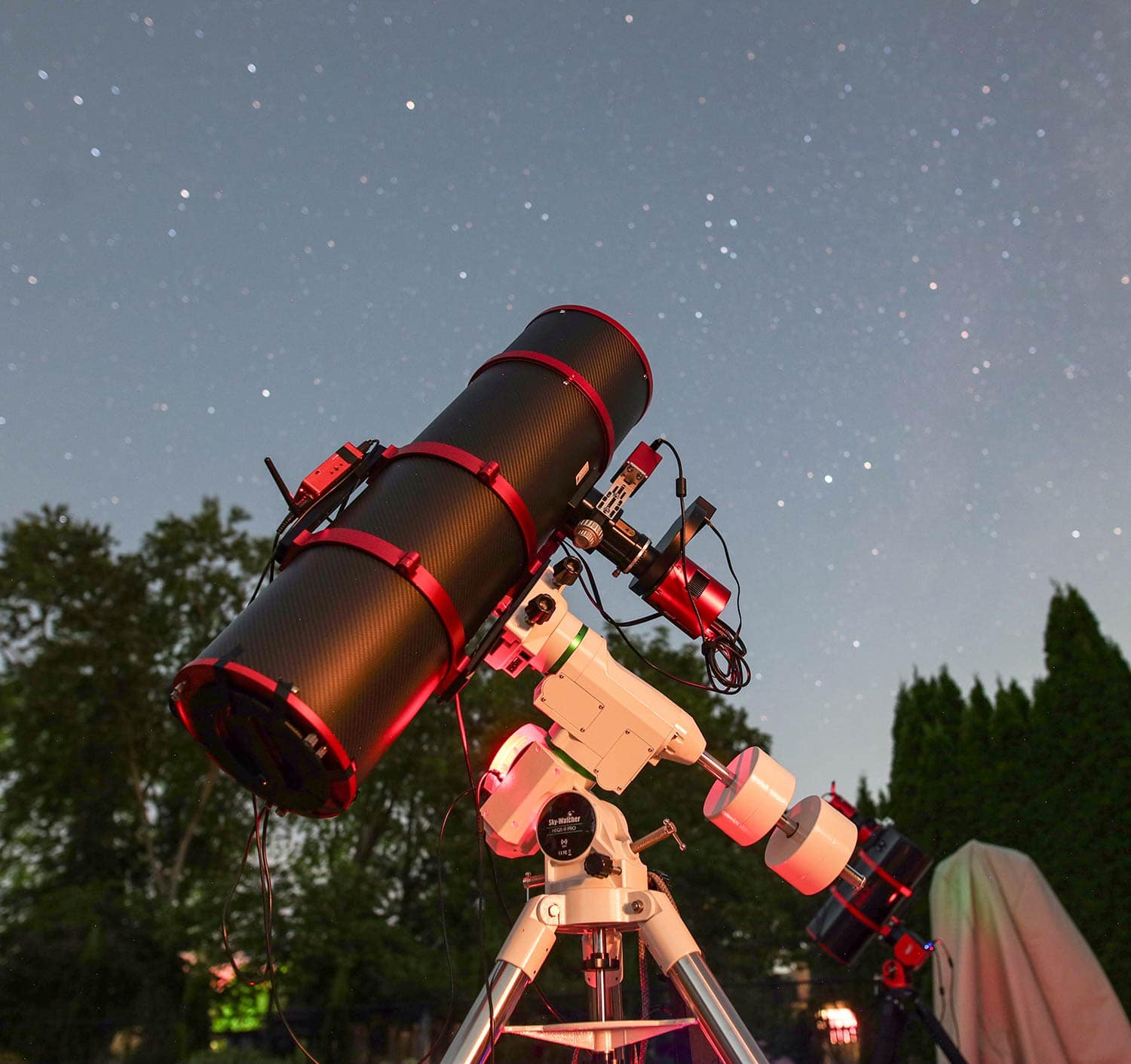
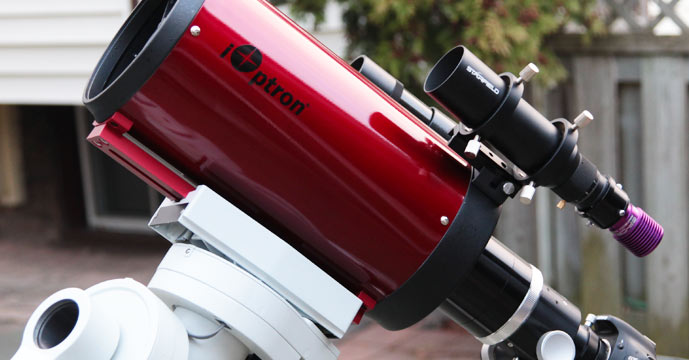
I used an 8-inch Newtonian reflector telescope to capture my image of NGC 7331 from the backyard.
- Telescope: Apertura CarbonStar 200, an 8-inch f/4 Newtonian reflector with an 800mm focal length.
- Corrector: CarbonStar coma corrector.
- Mount: Sky-Watcher HEQ5-R Pro.
- Camera: ZWO ASI2600MM Pro monochrome CMOS camera.
- Filter wheel: 7-position filter wheel, covered in my camera review.
- Filters: Chroma LRGB filters, used with my monochrome camera system.
- Autofocus: ZWO EAF electronic autofocuser.
The CarbonStar’s 800mm focal length gave me a useful image scale for this relatively small galaxy while preserving room for the Deer Lick Group. The coma corrector helped control the off-axis star distortion associated with a fast Newtonian.
The reliable HEQ5-R Pro carried the setup, while the ZWO EAF kept my images consistently sharp throughout the sessions. At this focal length, accurate tracking, collimation, and focus deserve as much attention as the camera settings.
Exposure Details
I collected 80 two-minute exposures through each of the four LRGB filters:
- Luminance: 80 × 120 seconds = 2 hours, 40 minutes.
- Red: 80 × 120 seconds = 2 hours, 40 minutes.
- Green: 80 × 120 seconds = 2 hours, 40 minutes.
- Blue: 80 × 120 seconds = 2 hours, 40 minutes.
- Total: 320 exposures, or 10 hours and 40 minutes.
Two-minute sub-exposures worked for this combination of telescope, camera, filters, and sky. I found this to be the sweet spot for balancing the signal collected in a single sub-exposure without blowing out the highlights of the galaxy’s core.
For a similar multi-night project, keep the camera’s gain and cooling settings consistent and make sure the calibration files match. The ASIAIR made it easy to run a complete imaging plan that captured sub-exposures through each LRGB filter.
I set the ZWO EAF (autofocuser) to refocus after a 2-degree temperature change, after a filter change, and after a meridian flip. It’s a real game-changer for multiple-night, unattended projects like this.
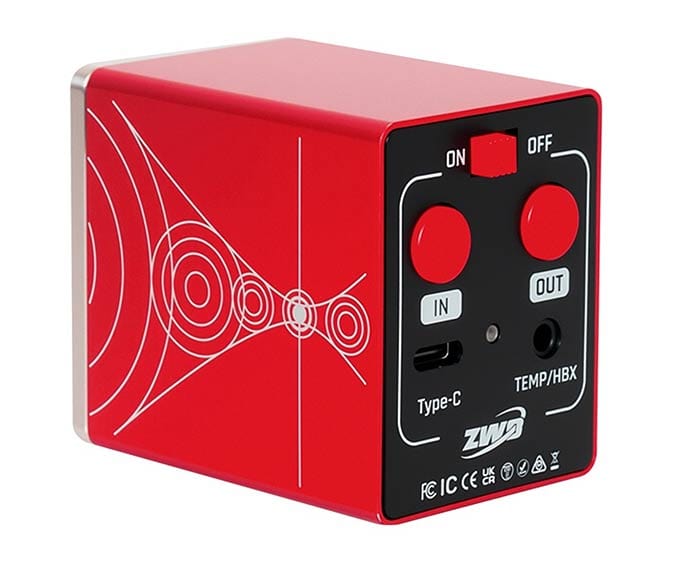
The ZWO EAF is a fantastic upgrade for almost any astrophotography telescope, helping you automate your imaging sessions.
How I Processed My NGC 7331 Image
I used PixInsight to calibrate and stack the data with WeightedBatchPreprocessing (WBPP), including dark frames. This produced separate integrated luminance, red, green, and blue images for processing.
My workflow included BlurXTerminator and NoiseXTerminator on each LRGB stack before combining the channels. I used these tools to address blur and noise while keeping an eye on the fine structure of the galaxy and the shapes of the stars.
GraXpert handled background-gradient subtraction. LRGB projects from the city are notoriously tricky in this regard: uneven sky brightness and color can become much more obvious when the stacks are stretched.
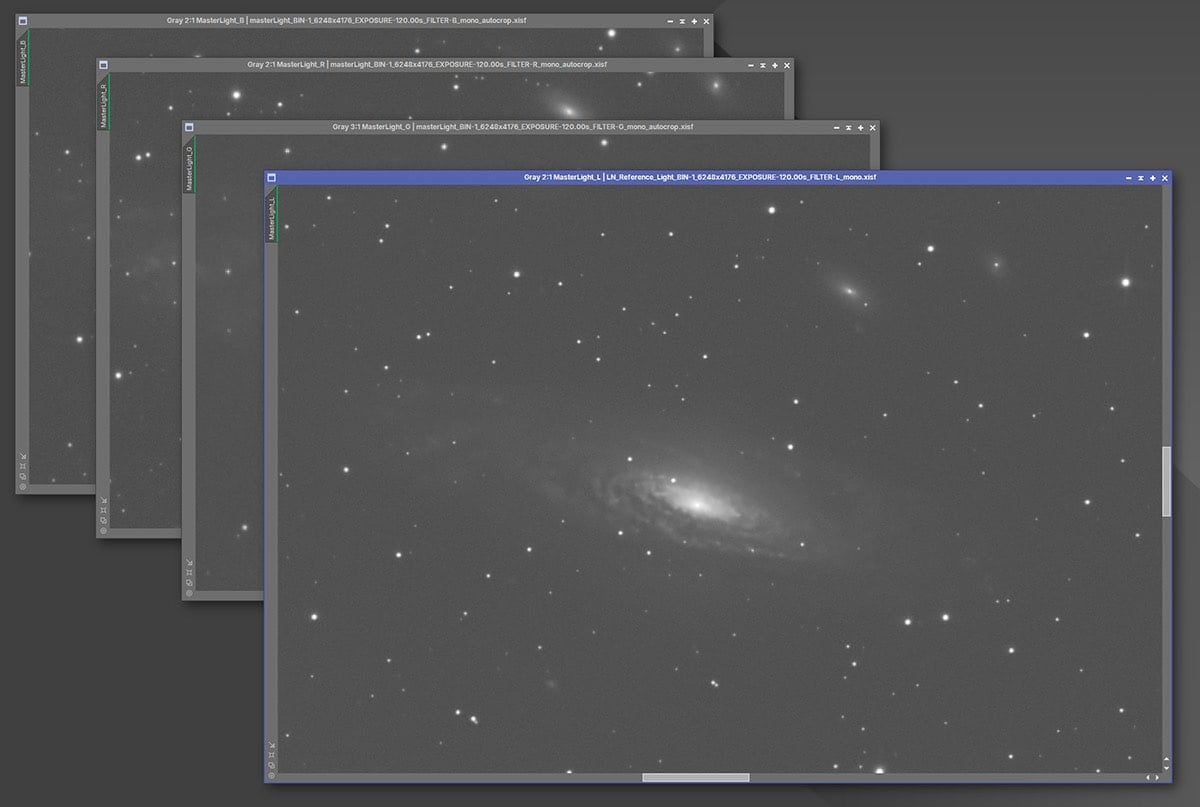
Each channel of my image contained 80 x 120-second exposures (stacked using WBPP in PixInsight)
When correcting gradients, inspect the faint outer galaxy carefully. Background modeling should remove unwanted illumination in the background sky without disrupting the precious, faint light coming from the galaxy itself.
For the finishing work, I moved into Adobe Photoshop. I used a layer mask to selectively increase saturation in the galaxies and stars. This let me strengthen their color without also boosting unwanted color noise in the background.
For your own version, check the image at both full size and a normal viewing scale. Small galaxies can tempt you into sharpening until every feature looks crisp at a distance, while close inspection reveals halos and hard edges. Give the faint background galaxies a little room to remain soft. Their tiny appearance is part of what makes this field interesting, and they do not need the same contrast treatment as the bright central galaxy.
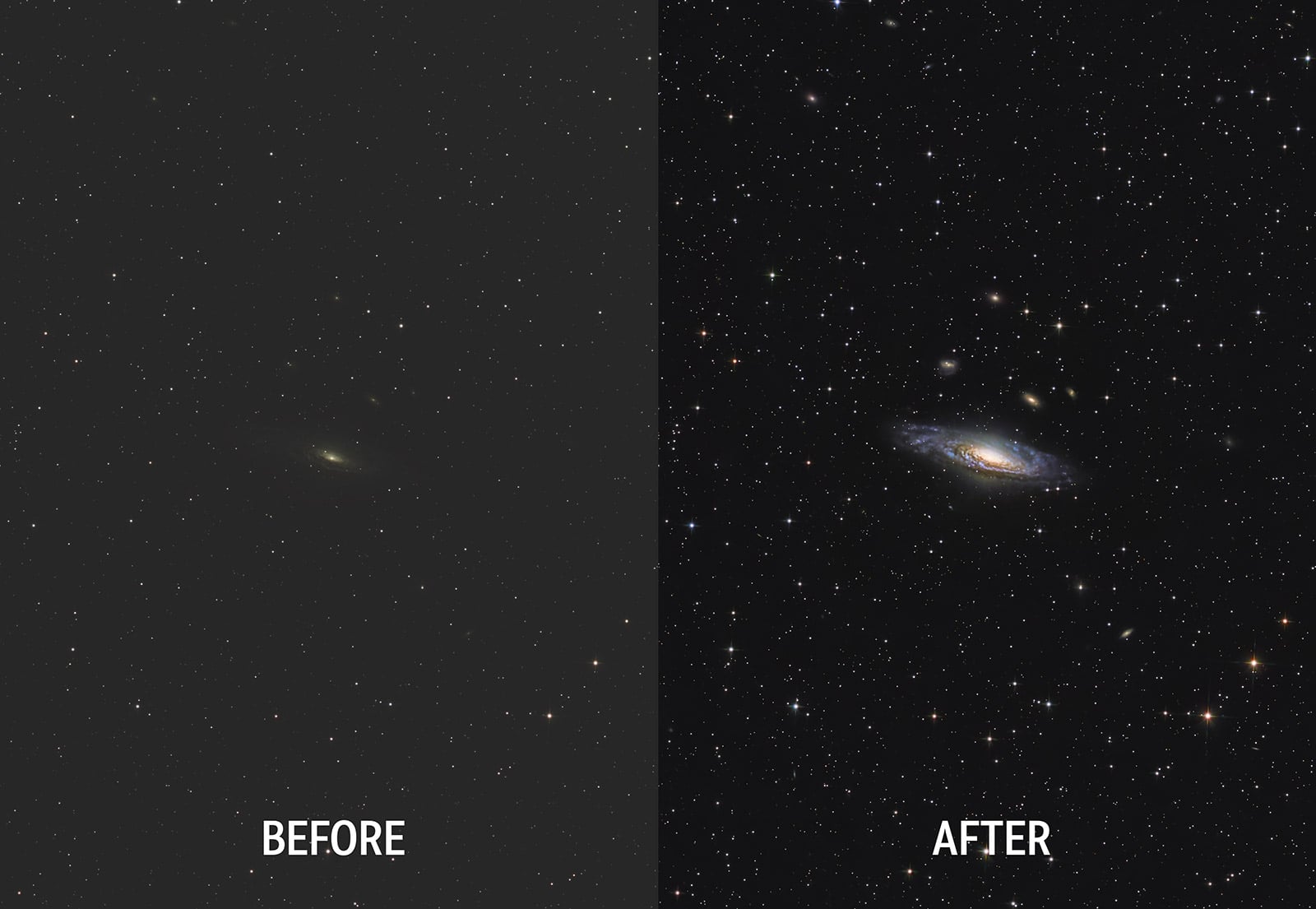
The linear stacked RGB image went through substantial stretching to achieve my final result.
Tips for a Better NGC 7331 Image
- Choose dark, transparent hours. Low moonlight and a high target altitude make broadband galaxy imaging easier. Thin haze can reduce contrast even when stars remain visible.
- Plan the whole frame. Include the Deer Lick galaxies deliberately, and check framing after a meridian flip or when returning on another night.
- Prioritize sharp data. Check collimation, corrector spacing, focus, and star shapes before collecting hundreds of exposures. Processing cannot fully rescue poor capture conditions.
- Build integration across nights. More usable exposure helps reveal the faint disk and background galaxies with less aggressive stretching.
- Use appropriate calibration. Alongside matched darks, I recommend properly calibrated flats for a similar project to address vignetting and dust shadows. Gradient removal serves a different purpose.
- Protect the core and background. Stretch gradually, avoid clipping faint outer light, and keep sharpening and saturation restrained enough to preserve natural-looking structure.
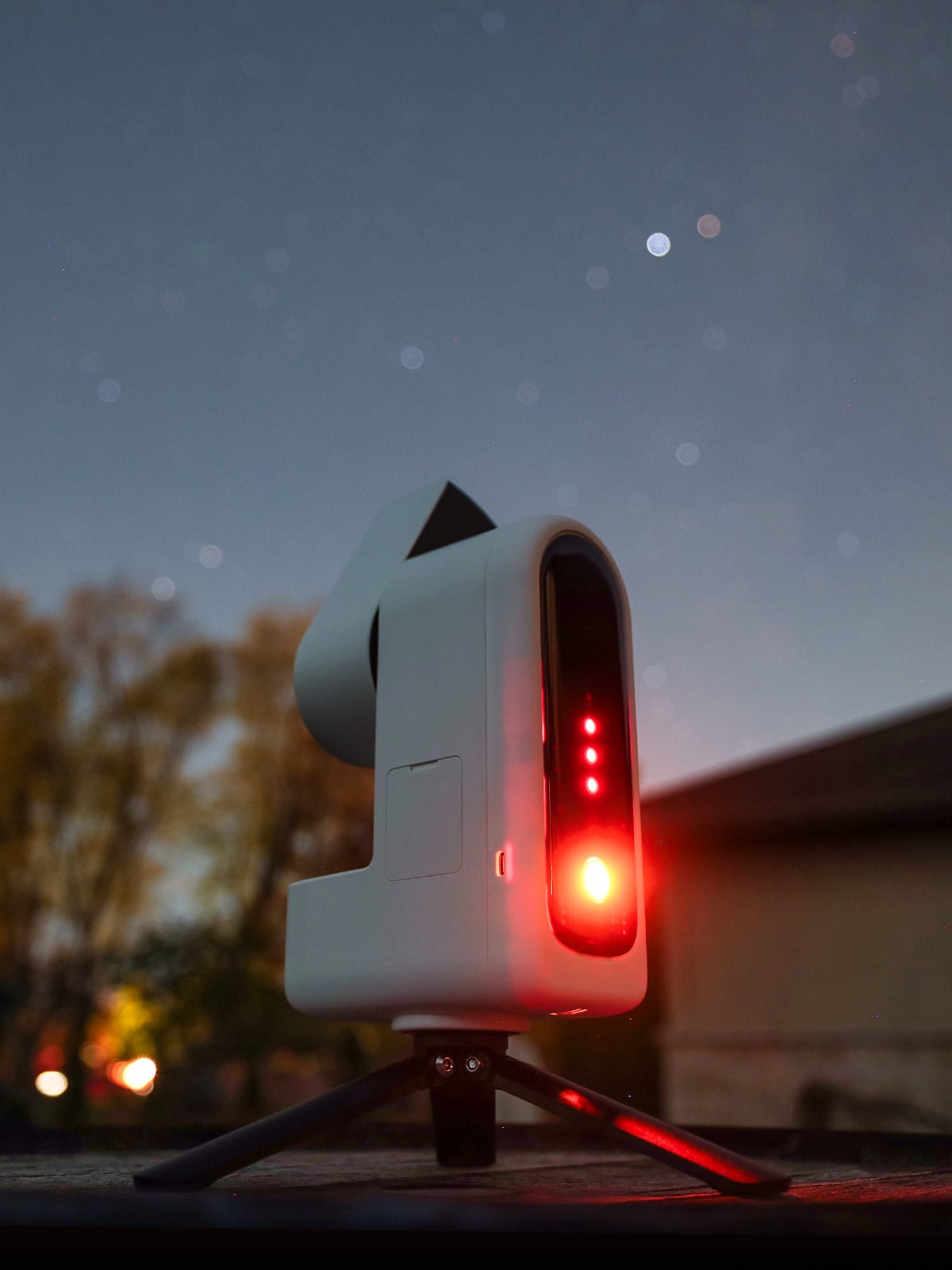
Looking for a challenge? Give NGC 7331 (or Stephan’s Quintet) a try using a smart telescope like the Seestar S30 Pro. It will be very small, but it is possible!
Frequently Asked Questions About NGC 7331
How far away is NGC 7331?
NASA’s Caldwell guide places it approximately 45 million light-years away. You may also see the distance rounded to about 50 million light-years in other references.
Is NGC 7331 part of Stephan’s Quintet?
No. It lies nearby in the sky but is a separate galaxy. The Deer Lick Group is the visual grouping immediately around NGC 7331.
Can you photograph NGC 7331 from a light-polluted backyard?
Yes. I collected this image from Bortle 6 skies over three nights. Careful calibration, solid integration, and controlled background processing are especially valuable for this broadband target.
 Trevor Jones is an astrophotographer and a valued member of the RASC. His passion is inspiring others to start their astrophotography journey on YouTube so they can appreciate the night sky as much as he does. His images have been featured in astronomy books & online publications, including the NASA Astronomy Picture of the Day (APOD).