Sky-Watcher HEQ5-R Pro Review

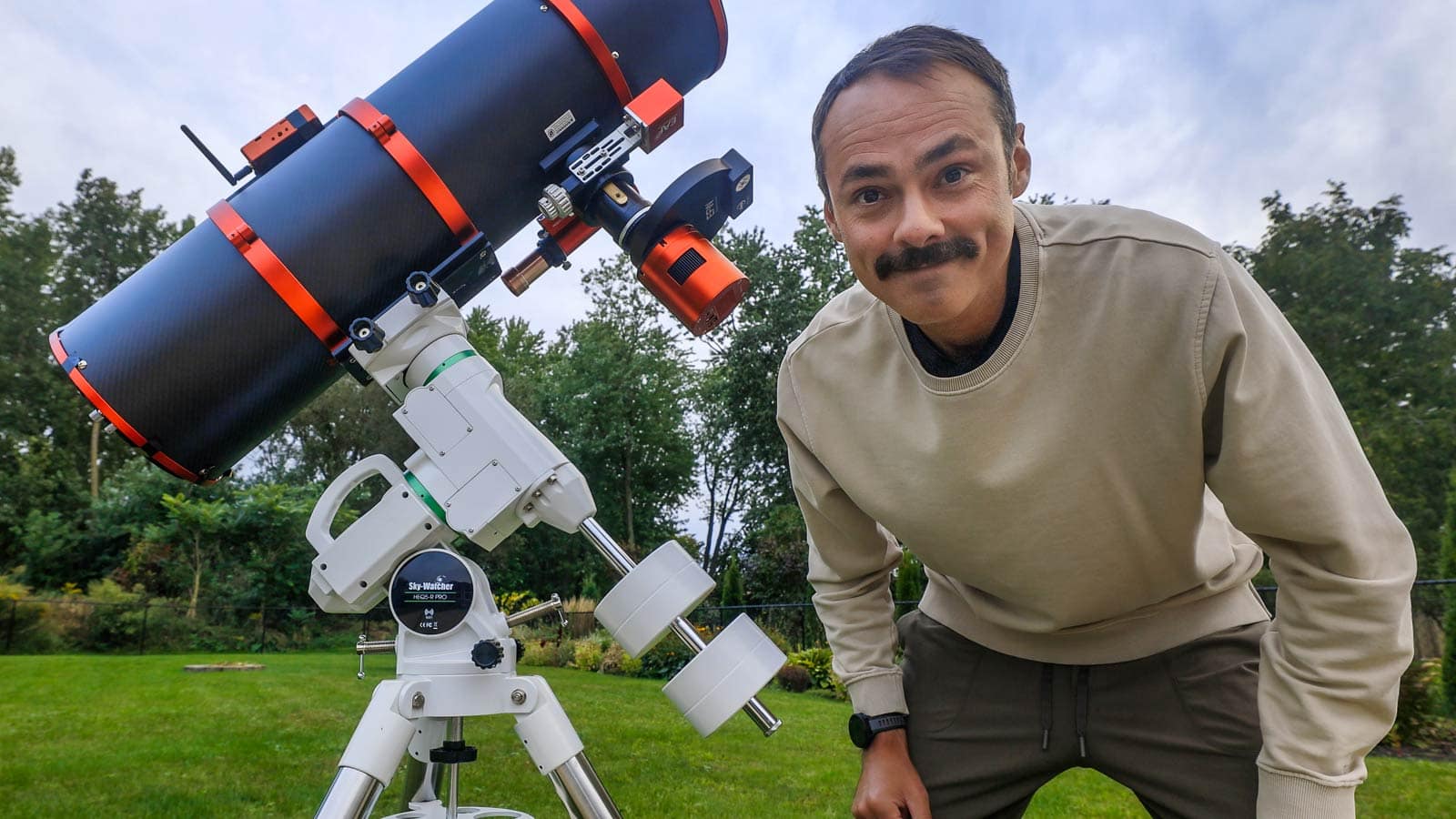
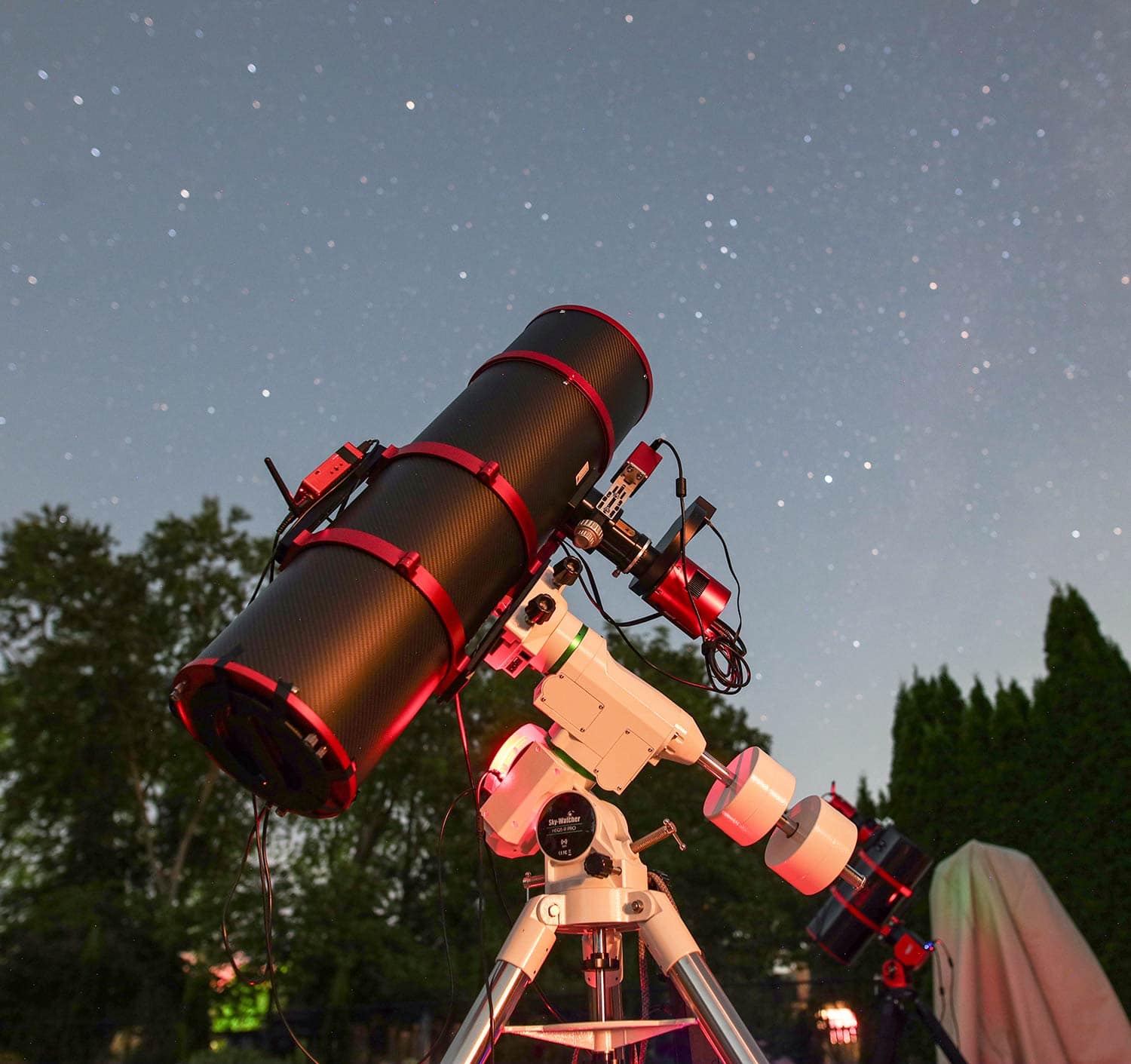
I used the Sky-Watcher HEQ5-R Pro for about six months, with everything from compact refractors to a fully loaded 8-inch Newtonian.
During that time, I collected a lot of deep-sky images with it and, more importantly, I had very few problems.
In this Sky-Watcher HEQ5-R Pro review, I’ll show you how I used the mount, what kind of astrophotography equipment it could realistically carry, and what you should know before buying one.
With lightweight strain-wave mounts becoming increasingly common in astrophotography, I was also interested to see where a more traditional German equatorial mount like the HEQ5-R Pro still fits.
Sky-Watcher HEQ5-R Pro Overview
The HEQ5-R Pro is a traditional German equatorial mount with an advertised payload capacity of 33 pounds.
It uses stepper motors and dual-axis belt drives, which help it track smoothly with minimal backlash. The belt drive also makes this mount noticeably quieter than the other Sky-Watcher equatorial mounts I’ve used.
Even when it was slewing across a large section of the sky, it didn’t make that loud mechanical grinding sound you might expect. If you regularly image in a quiet backyard late at night, that’s actually a really nice feature.
The mount includes a dual Vixen and Losmandy-style saddle, so it accepts the two most common dovetail plate sizes without an adapter.
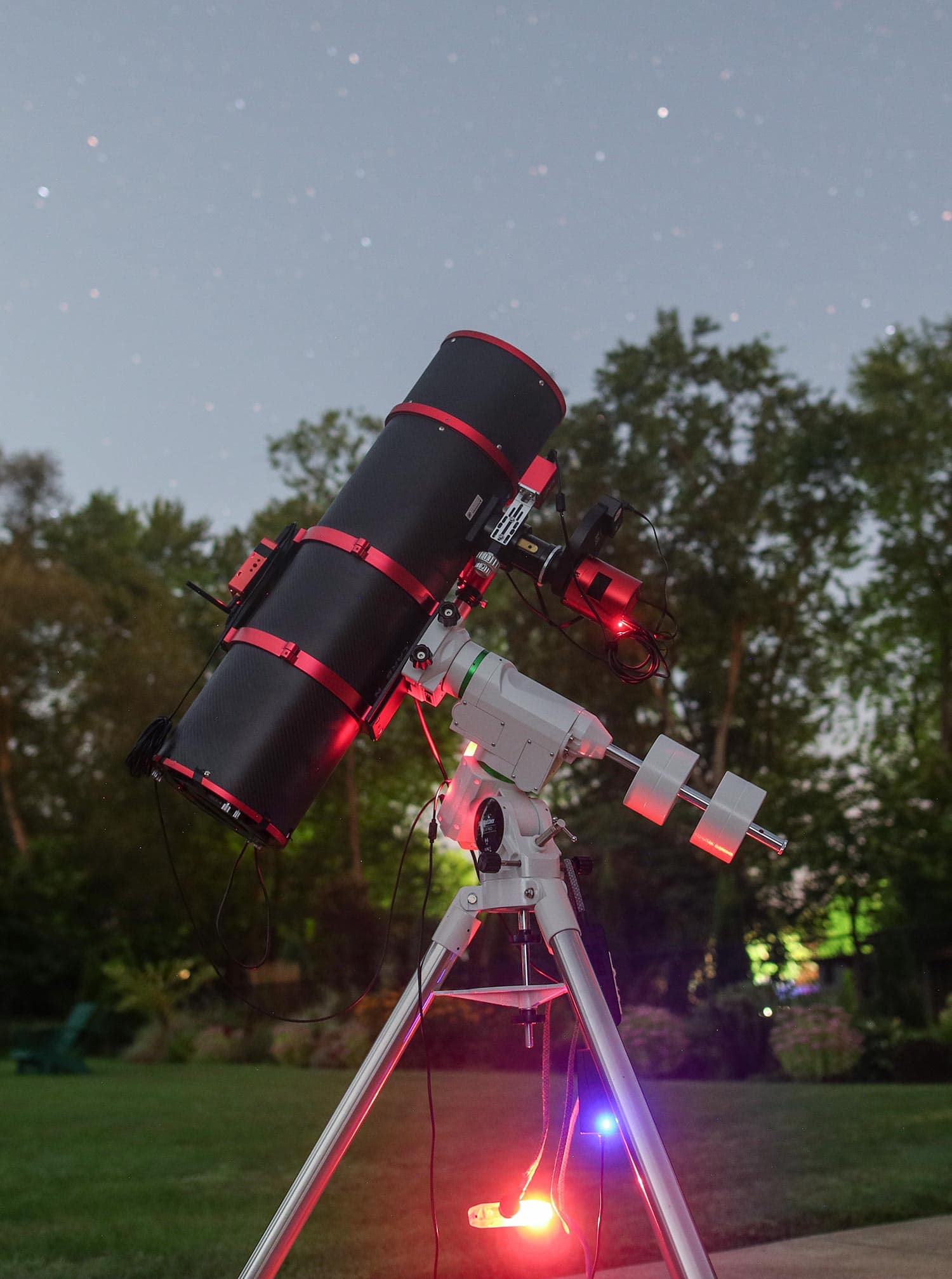
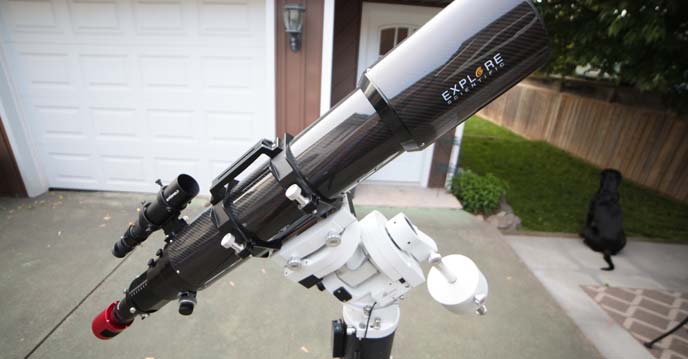
The Sky-Watcher HEQ5-R Pro with an Apertura Carbonstar 200 mounted on top.
Sky-Watcher HEQ5-R Pro Specifications
The Sky-Watcher HEQ5-R Pro is a computerized German equatorial mount with a 33-pound payload capacity, dual-axis belt drives, and several features designed for modern astrophotography setups.
Here’s a look at the key specifications.
| Feature | Specification |
|---|---|
| Mount Type | Computerized German equatorial mount |
| Payload Capacity | 33 lbs |
| Drive System | Dual-axis synchronous belt drive |
| Motor Type | Stepper motors |
| Saddle | Dual Vixen / Losmandy-style |
| Hand Controller | SynScan V5 |
| Object Database | 42,900+ objects |
| Wi-Fi | Built-in |
| Computer Interface | USB-B |
| Tracking Rates | Sidereal, Lunar, Solar |
| Tripod | Adjustable rolled-steel tripod |
| Tripod Leg Diameter | 1.75 inches |
| Counterweights | Two 11 lb counterweights |
| Total Counterweight | 22 lbs |
| Total Weight | Approx. 66 lbs with counterweights |
| Power Requirements | 9–12.6V DC |
| Polar Scope | Not included |
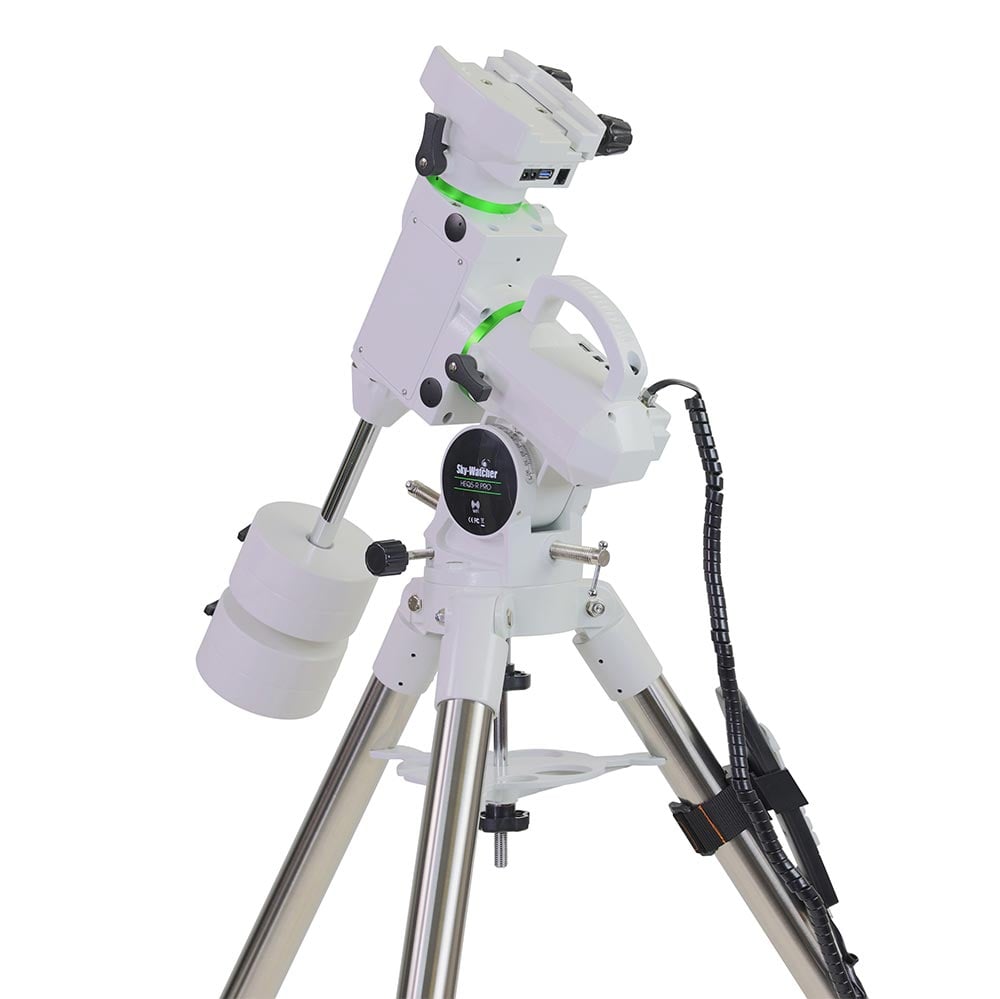
The Sky-Watcher HEQ5-R Pro is available at High Point Scientific.
For astrophotography, the numbers I paid the most attention to were the 33-pound payload capacity, the substantial steel tripod, and the 22 pounds of included counterweight.
Those specifications tell you a lot more about where this mount fits than features like the GoTo object database, especially if you plan to automate the mount with an astrophotography computer.
HEQ5-R Pro Build Quality and Tripod
The tripod was one of the first things I noticed when setting it up. It has thick, 1.75-inch steel legs and feels extremely solid.
Once the spreader tray was tightened, the entire base felt planted. There wasn’t much flex or movement, even with a heavier telescope on top.
You also get two 11-pound counterweights, for 22 pounds of counterweight in total. I really appreciate that Sky-Watcher includes both because heavier imaging rigs can quickly require that second weight.
Fully assembled with both counterweights, the mount is listed at about 66 pounds. That certainly isn’t lightweight, but it was still manageable for me.
At home, I was able to carefully lift the entire mount (with the counterweights attached) and carry it in and out of the garage. That made backyard setup much faster.
Obviously, be careful with your back if you try this. Removing the counterweights or carrying the mount in separate pieces is definitely the safer option.
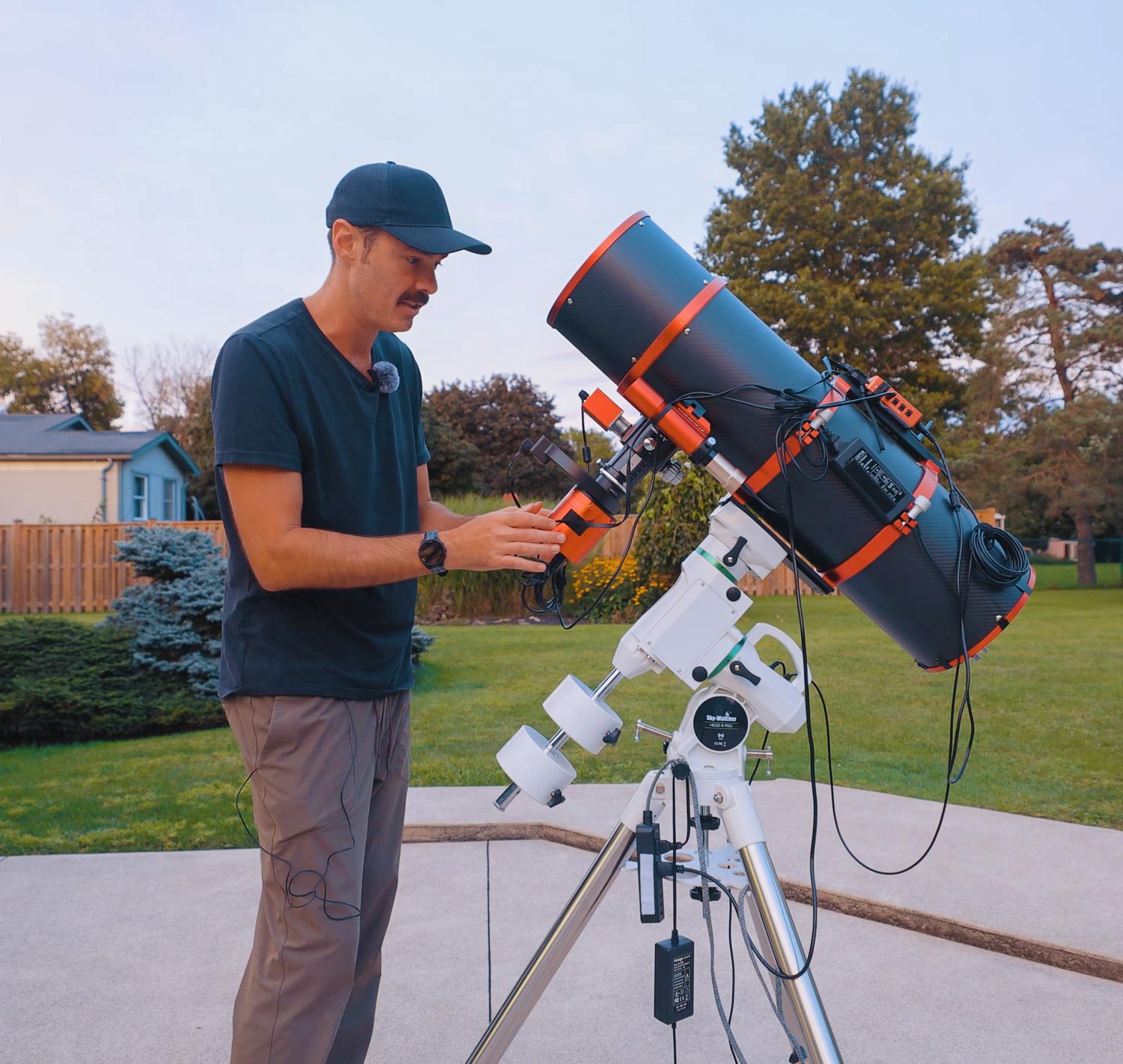
This setup (about 25 pounds) is nearing the top end of what the HEQ5-R Pro can handle in terms of payload.
HEQ5-R Pro Payload Capacity for Astrophotography
In terms of payload, this mount handled everything I expected.
My Askar SQA106 imaging rig weighed about 18 pounds once the camera, guide scope, focuser, and other accessories were attached. The HEQ5-R carried a setup like this with ease. That is probably close to the upper end of what I’d choose for a completely stress-free, portable astrophotography setup on this mount.
However, I also pushed it further with my 8-inch Newtonian and a complete monochrome camera system. That was a much more demanding setup—not only because of the weight, but because the long Newtonian tube catches more wind and places additional leverage on the mount.
The HEQ5-R was still capable of carrying and guiding that rig successfully. I wouldn’t call an 8-inch Newtonian its ideal everyday payload, especially in windy conditions, but it showed how capable this mount could be when everything was balanced properly.
It’s also worth remembering that an advertised payload rating doesn’t tell the entire story for deep-sky astrophotography.
The size and shape of the telescope, wind conditions, balance, focal length, and the rest of the imaging equipment all affect how demanding a setup is on the mount.
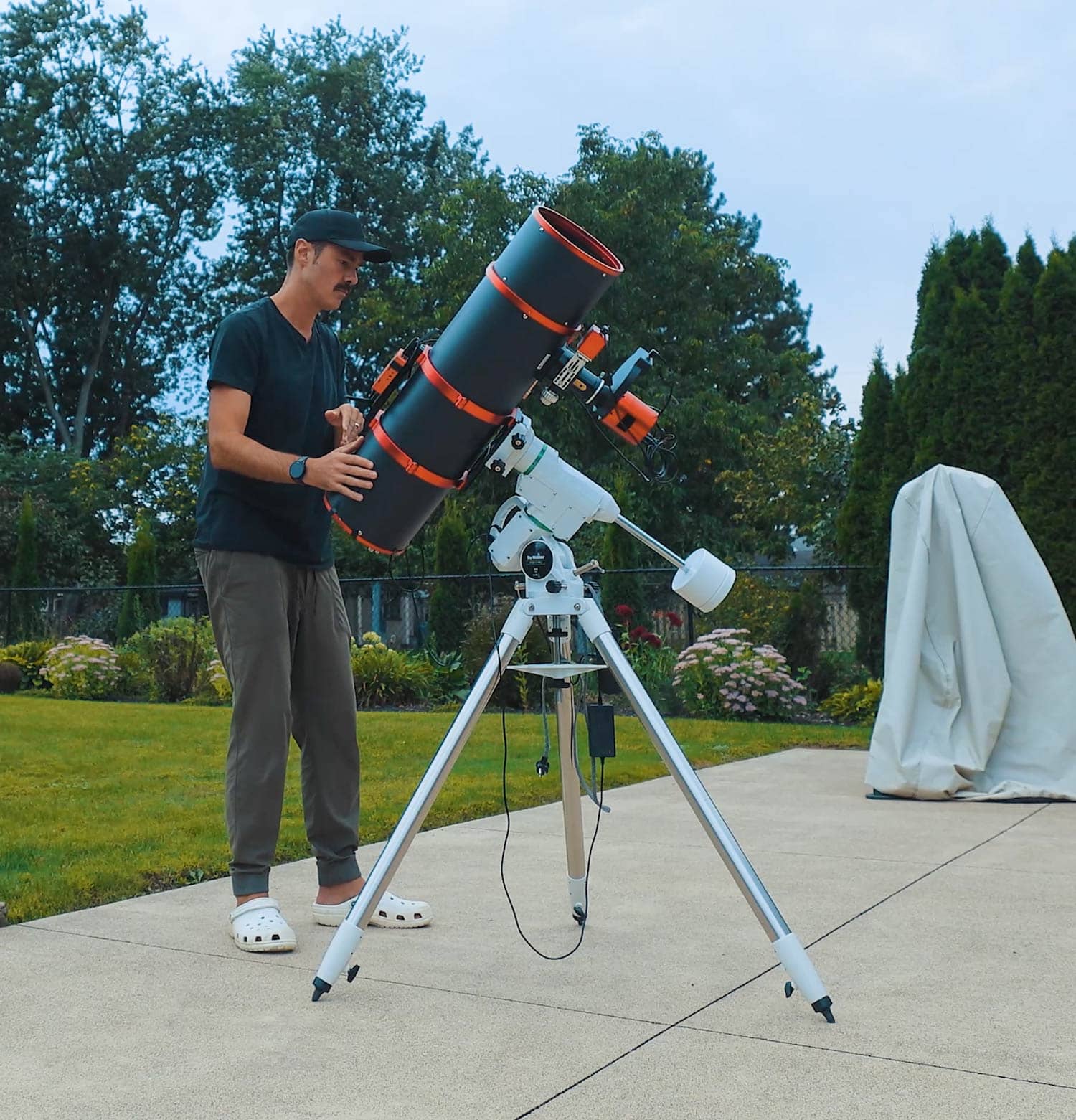
Our History With the Sky-Watcher HEQ5
I’ve had an original Sky-Watcher HEQ5 Pro in our collection since 2014, when we bought the mount used.
It was one of the first serious equatorial mounts I used for deep-sky astrophotography, and it was also the mount Ashley learned on when she started astrophotography.
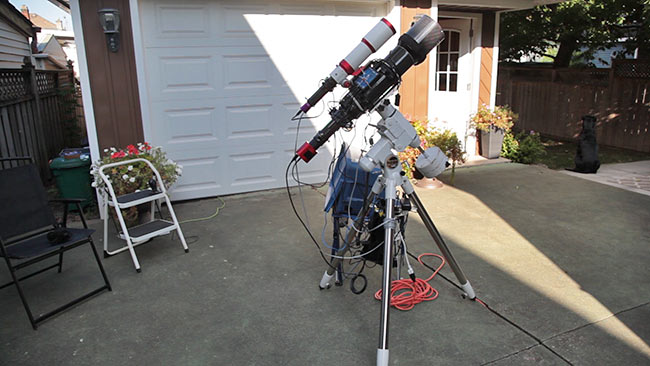
Sky-Watcher HEQ5 Pro in the original Astrobackyard
More than a decade later, that same HEQ5 is still part of our regular collection of mounts. It has carried a lot of different telescopes and imaging setups over the years, which gave us a pretty good idea of what the original HEQ5 could do and made me especially interested to see what Sky-Watcher had changed with the HEQ5-R Pro.
HEQ5-R Pro vs. HEQ5 Pro: What Changed?
The HEQ5-R Pro isn’t a completely different mount. It is essentially a modernized version of the HEQ5 platform.
One of the biggest upgrades is the dual-axis belt drive system, which reduces backlash and makes the mount noticeably smoother and quieter. Sky-Watcher also revised the gearing and slightly increased the payload capacity, from 30 pounds on the HEQ5 Pro to 33 pounds on the HEQ5-R Pro.
It also includes several practical updates, including built-in Wi-Fi, improved cable management, updated latitude adjustment controls, and a carrying handle.
One notable change is that the HEQ5-R Pro no longer includes a built-in polar scope. That may seem unusual if you’re familiar with the original HEQ5, but I used the electronic polar-alignment routine in the ASIAIR anyway.
Overall, the HEQ5-R keeps what worked about the original HEQ5 while updating the mount to match how many astrophotographers control and operate their equipment today.
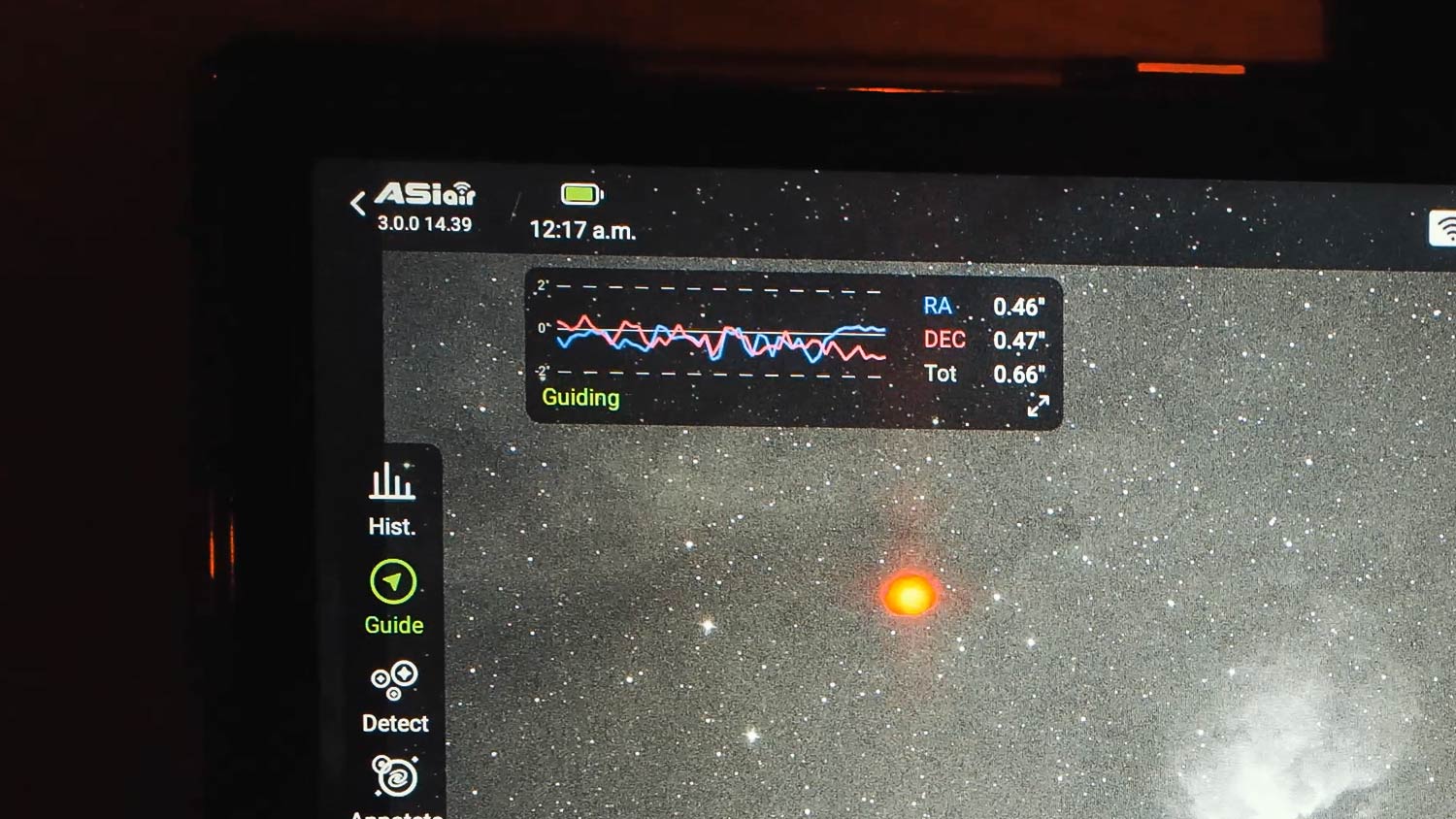
My guiding graph using the Sky-Watcher HEQ5-R Pro (Total RMS Error of 0.66 arcseconds).
Using the Sky-Watcher HEQ5-R Pro for Astrophotography
Most of my time with the HEQ5-R Pro was spent using it as an astrophotography mount rather than for visual observing.
That meant I was less concerned with features like manually selecting targets through the hand controller and much more interested in how easily the mount integrated into an automated imaging setup.
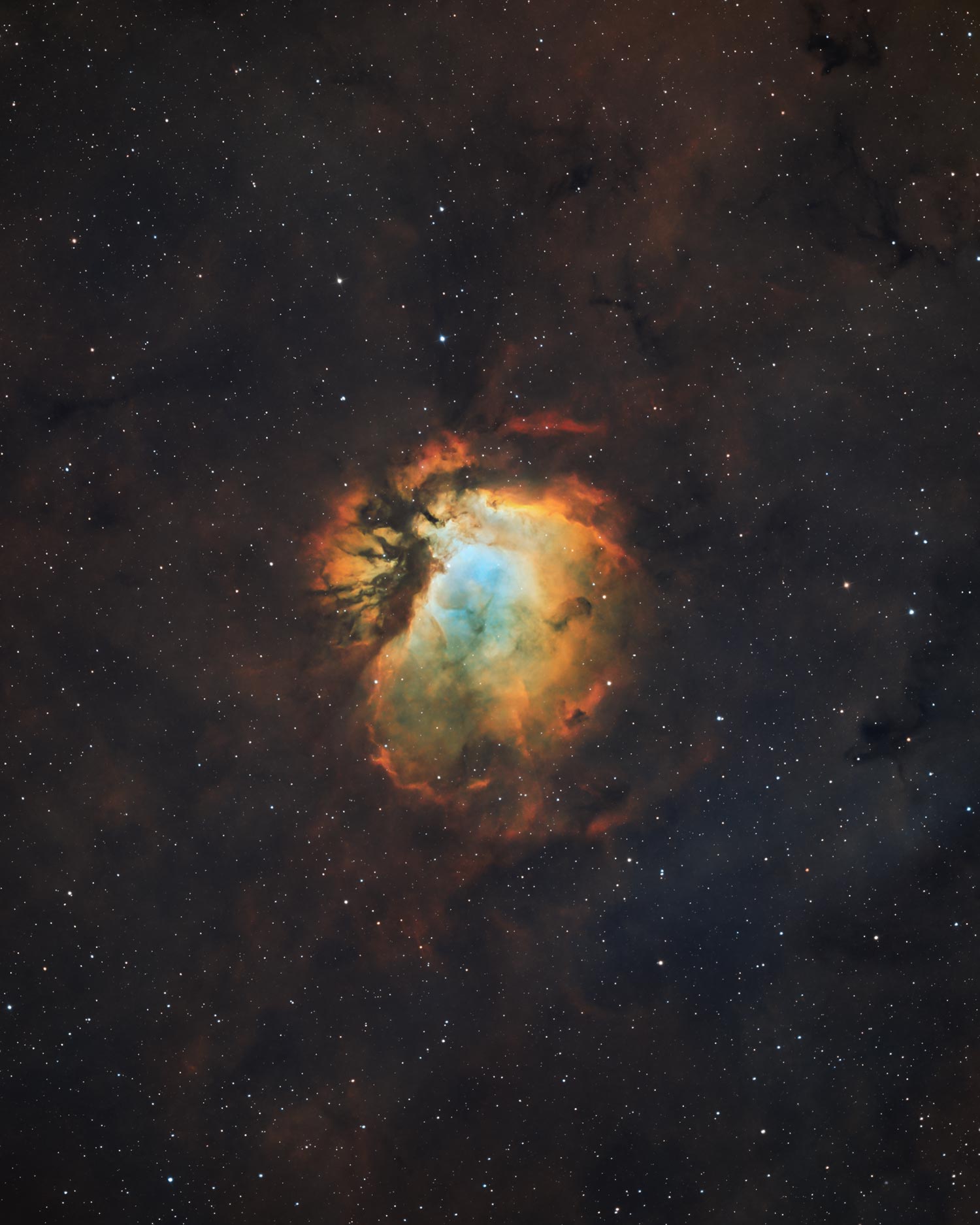
Sharpless 112 captured on the Sky-Watcher HEQ5-R Pro (10 hours total exposure).
Controlling the HEQ5-R Pro With the ASIAIR
The mount includes a SynScan hand controller with a database of more than 42,000 objects, along with built-in Wi-Fi control through the SynScan Pro app.
Personally, I never touched the hand controller. I connected the mount directly to my ASIAIR using an EQMOD cable. From there, I could control the mount, plate solve, center my target, run the meridian flip, and manage the entire imaging sequence through the ASIAIR.
For my workflow, this was one of the biggest advantages of the mount. Once everything was connected, there wasn’t much reason for me to interact with the mount itself during an imaging session.
Polar Aligning the HEQ5-R Pro
One important thing to understand is that the HEQ5-R Pro does not include a built-in polar scope.
You can use the alignment routine in the SynScan hand controller, but my preferred method was to use the polar-alignment tool in the ASIAIR with a guide camera or main imaging camera.
This may surprise anyone coming from an older Sky-Watcher mount with a built-in polar scope, but electronic polar alignment is faster and more accurate for the way I image anyway.
If you already use an ASIAIR, N.I.N.A., or another computer-assisted astrophotography workflow, the missing polar scope may not matter much at all.
HEQ5-R Pro Guiding Performance
The guiding performance was the highlight of this mount for me.
On a typical night, I was seeing a total RMS guiding error of around 0.65 arcseconds. The guiding graph looked excellent almost every time I used it.
Of course, guiding performance will always depend on your polar alignment, balance, seeing conditions, guide settings, and the weight of your telescope. I can only report the results I achieved with my equipment.
But over six months of use, I lost very few frames because of tracking or guiding problems. That is ultimately what matters. A good-looking guiding graph is nice, but consistently collecting sharp, usable exposures throughout the night is the real test—and the HEQ5-R did that.
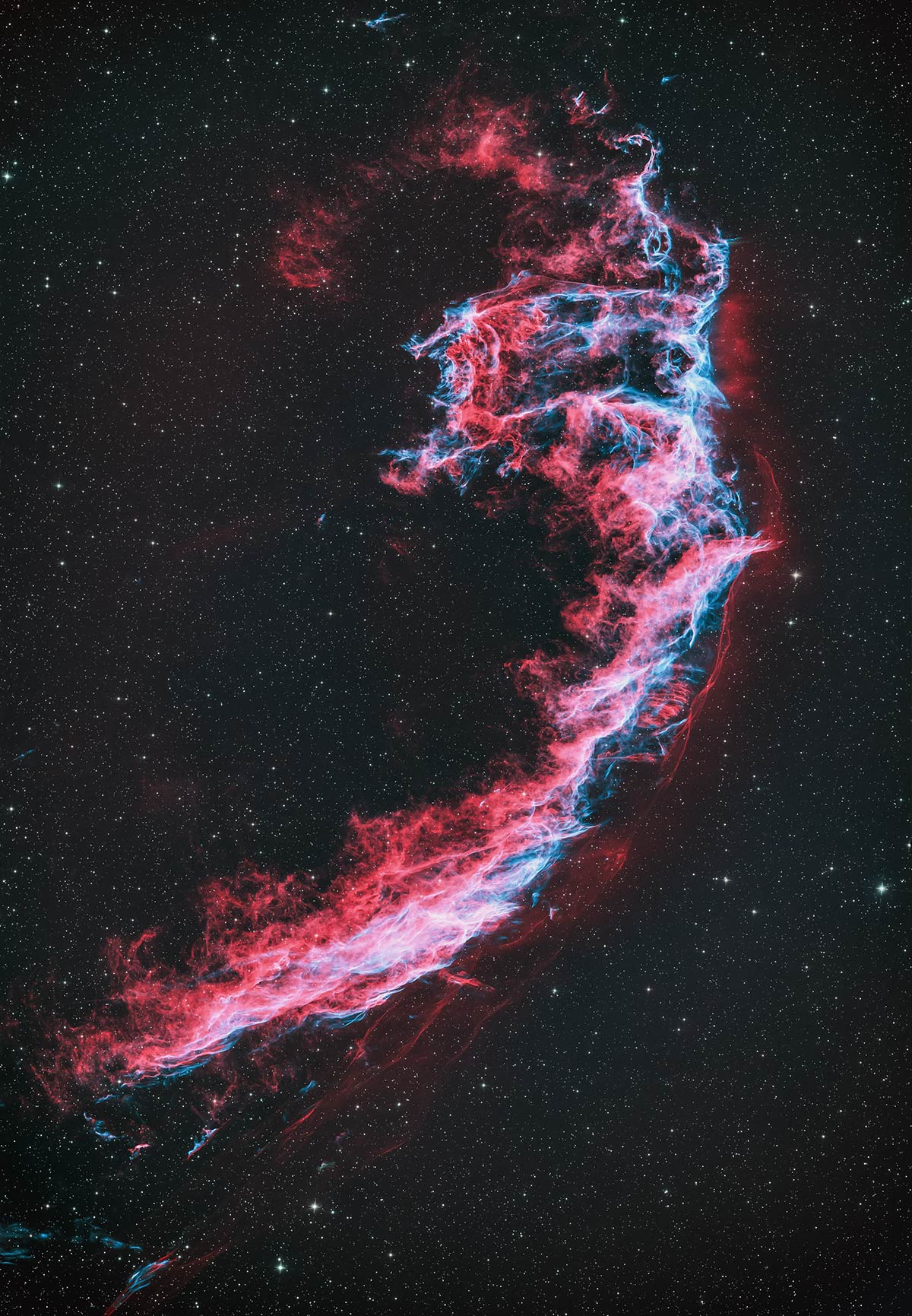
The Veil Nebula in HOO (20 hours total exposure).
Who Is the HEQ5-R Pro Best For?
I see the HEQ5-R Pro making the most sense for someone building a serious backyard astrophotography setup who doesn’t necessarily need the smallest or lightest mount possible.
A small to medium-sized refractor is a particularly good match. Based on my experience, a complete refractor-based imaging rig in the 15- to 20-pound range gave the mount plenty of room to perform without making balance, wind, and guiding unnecessarily difficult.
The mount can carry heavier equipment—as my 8-inch Newtonian setup demonstrated- but I wouldn’t choose a telescope simply because its total weight falls below the advertised 33-pound payload capacity. For deep-sky astrophotography, there is value in leaving yourself some breathing room.
If your biggest priority is airline travel or carrying your complete mount a long distance to an observing site, a modern strain-wave mount may be more appealing.
But if stability, tracking performance, and a proven equatorial-mount design are higher on your list, the HEQ5-R Pro has a lot going for it.
Final Thoughts
Overall, I think the Sky-Watcher HEQ5-R Pro occupies a really useful position in the astrophotography mount market.
It is substantially more capable than a lightweight star tracker, but it isn’t as large or physically demanding as something like the EQ6-R Pro.
It is quiet, solid, accurate, and capable of carrying a serious astrophotography rig. The tripod is excellent, the included counterweights are useful, and connecting it to the ASIAIR made the mount extremely easy to operate.
The lack of a built-in polar scope may bother some people, and this certainly isn’t as portable as one of the newer strain-wave mounts. You also need to be realistic about the 33-pound payload rating if your goal is long-exposure astrophotography.
But based on my experience, a refractor-based imaging rig around 15 to 20 pounds was a very comfortable match, and the mount could handle more when it was carefully balanced and conditions cooperated.
After six months of real-world use, the HEQ5-R Pro was dependable, remarkably quiet, and one of the best-guiding Sky-Watcher mounts I’ve tested.
If you want a sturdy, traditional equatorial mount for a permanent backyard setup—or something you can still transport without moving into the EQ6 weight class, the HEQ5-R Pro is an easy mount to recommend.
The Sky-Watcher HEQ5-R Pro is available at High Point Scientific.

Trevor Jones is an astrophotographer and a valued member of the RASC. His passion is inspiring others to start their astrophotography journey on YouTube so they can appreciate the night sky as much as he does. His images have been featured in astronomy books and online publications, including the NASA Astronomy Picture of the Day (APOD).