September 2026 Night Sky: What to See

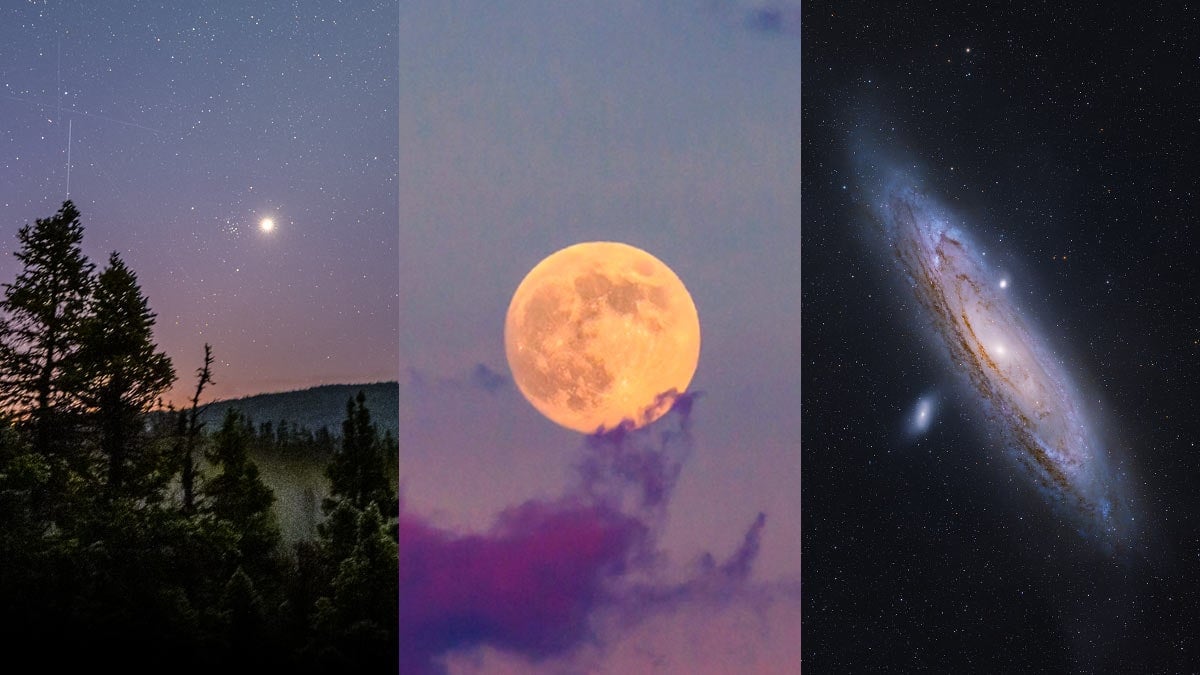
September is a month when you start to notice the change in observing season. The nights are getting longer, darkness arrives a little earlier, and we still have plenty of summer targets hanging around while the fall sky starts moving into a better position.
There’s a good mix of things happening this month too. We have a few nice Moon and planet pairings, Venus at its brightest, International Observe the Moon Night, Neptune at opposition, and the Northern Hemisphere’s Harvest Moon.
For astrophotographers, the dark skies around the New Moon are also a great time to start turning your attention toward fall targets like the Andromeda Galaxy.
We’ve pulled together the September highlights, whether you’re heading outside with nothing more than your eyes or setting up a telescope and camera for the night.
What to Watch During the Rest of September
There is still plenty to see this month, including several easy naked-eye events and excellent opportunities for astrophotography:
- September 9–13: Take advantage of the dark skies surrounding the New Moon to photograph Andromeda, the Milky Way, and other deep-sky targets.
- September 13: Look low in the western sky shortly after sunset for the waxing crescent Moon near brilliant Venus.
- September 14–20: Follow the Moon past Antares and the Teapot of Sagittarius, which points toward the bright central region of the Milky Way.
- September 18: Venus reaches greatest brilliancy and shines prominently above the western horizon after sunset.
- September 19: Celebrate International Observe the Moon Night with binoculars, a telescope, or simply your eyes.
- September 22: The September equinox marks the official beginning of fall in the Northern Hemisphere.
- September 25–26: Neptune reaches opposition, although you’ll need binoculars or a telescope and a detailed sky chart to identify it.
- September 26: Watch the full Harvest Moon rise near Saturn shortly after sunset.
Most of these events can be enjoyed without a telescope. The dark New Moon window and the rising Harvest Moon also provide two very different photography opportunities.
In This Guide
September 2026 Astronomy Events at a Glance
| Event or Target | Best Date | Best For | Equipment |
|---|---|---|---|
| Venus near Spica | After sunset on Sept. 1–2 | Visual observers and photographers | Naked eye, binoculars, or camera |
| Moon near the Pleiades | Before dawn on Sept. 3 | Visual observers and photographers | Naked eye, binoculars, or camera |
| Aurigid meteor shower | Before dawn on Sept. 1 | Meteor watchers | Naked eye, or camera and tripod |
| Moon with Mars and Jupiter | Sept. 6–8 | Early risers and photographers | Naked eye, binoculars, or camera |
| Andromeda under a New Moon | Sept. 8–14 | Deep-sky astrophotographers | Camera and telescope or smart telescope |
| Moon and Venus / Venus at greatest brilliancy | Sept. 14–18 | Visual observers and photographers | Naked eye, binoculars, or telescope |
| International Observe the Moon Night | Sept. 19 | Everyone | Naked eye, binoculars, or telescope |
| September Equinox | Sept. 22–23, depending on time zone | Stargazers and astrophotographers | No equipment needed |
| Neptune at opposition | Sept. 25–26, depending on time zone | Telescope observers | Binoculars or telescope |
| Harvest Moon | Sept. 26 | Everyone, especially photographers | Naked eye, binoculars, or camera and telephoto lens |
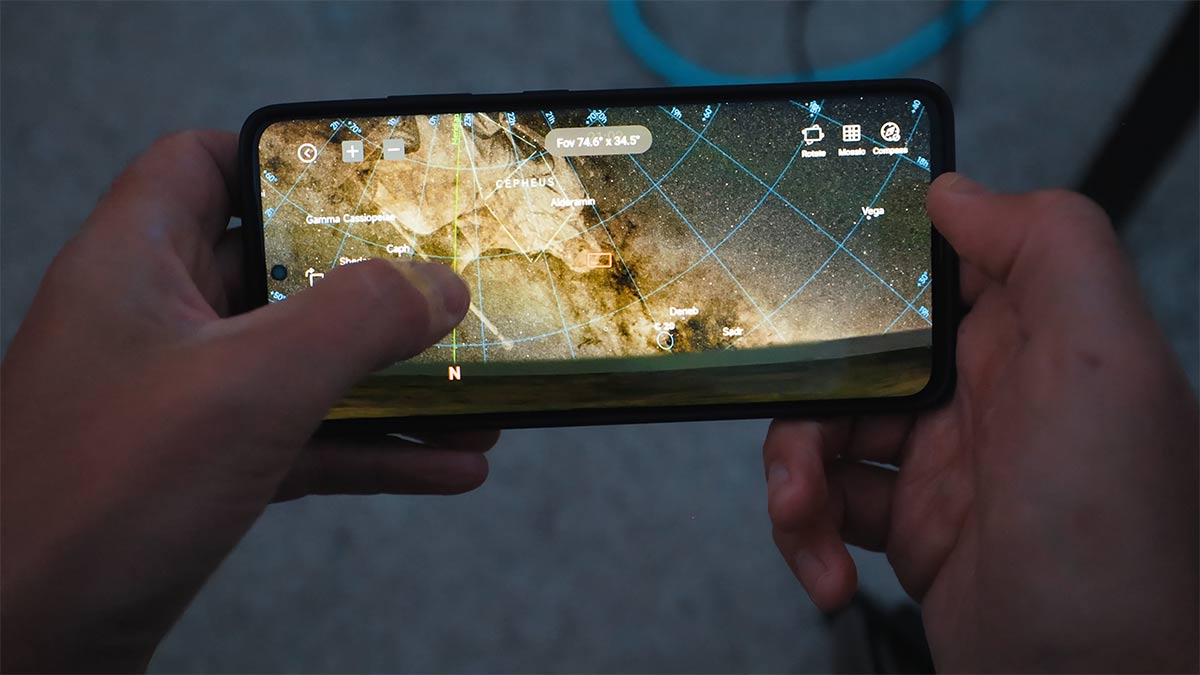
Related Article: The Best Stargazing Apps for Your Phone
Moon Phase
The Moon is an important part of almost every observing plan. These are the four primary moon phases for September 2026. The dates are based on Universal Time, so a phase may fall on the previous calendar date in some North American time zones.
| Moon Phase | Date | What It Means for Observing |
|---|---|---|
| 🌗 Last Quarter | September 4 | Darker evenings as the Moon rises later |
| 🌑 New Moon | September 11 | The best dark-sky window for deep-sky observing and astrophotography |
| 🌓 First Quarter | September 18 | Excellent timing for lunar observing ahead of International Observe the Moon Night |
| 🌕 Full Moon | September 26 | The September Full Moon rises near sunset; in the Northern Hemisphere, it is the Harvest Moon |
Which September Events Can You See From Your Location?
Not every event is visible in the same way from every location. This quick guide gives you a realistic starting point, but local horizons, twilight, and weather still matter.
| Region | Best September 2026 Highlights | Important Limitation |
|---|---|---|
| Canada and the United States | Moon with Mars and Jupiter, Venus, International Observe the Moon Night, Andromeda, Neptune at opposition, and the Harvest Moon | Early-month planet pairings happen before sunrise, and Neptune requires binoculars or a telescope |
| Europe | Venus, International Observe the Moon Night, Andromeda, Neptune at opposition, and the Harvest Moon | Exact calendar dates for the equinox and Neptune opposition may differ slightly by time zone |
| Central and South America | Moon and planet pairings, Venus, Neptune at opposition, International Observe the Moon Night, and the September Full Moon | Andromeda and some of the northern deep-sky targets in this guide sit lower in the sky from more southerly latitudes |
| Southern Hemisphere | Venus, Neptune at opposition, International Observe the Moon Night, and the September Full Moon | This guide’s Andromeda recommendations are written for mid-northern latitudes. “Harvest Moon” is a Northern Hemisphere seasonal name |
| Mid-northern dark-sky locations | Andromeda, Triangulum, Cygnus targets, Milky Way photography, and the Aurigid meteor shower | The bright Moon affects the Aurigids early in the month, while the Milky Way core sets earlier as September progresses |
| Urban and suburban locations | Moon and planet pairings, Venus, International Observe the Moon Night, Neptune through a telescope, and the September Full Moon | Light pollution makes faint deep-sky targets and meteor observing more difficult |
1. Watch for the Aurigid Meteor Shower
Best time: Before dawn on September 1, 2026
September begins with the Aurigid meteor shower. This isn’t one of the major meteor showers I would plan an entire night around, and viewing conditions aren’t especially favorable this year.
The Moon is still more than 80% illuminated at the beginning of September, so its light will wash out many of the fainter meteors. Still, if you’re already outside before sunrise, it’s worth keeping an eye out.
The Aurigids appear to radiate from the constellation Auriga, but you don’t need to stare directly at the radiant. Meteors can appear anywhere across the sky.
For visual observing, find the darkest spot you can, give your eyes time to adjust, and avoid looking at your phone.
For photography, use the same basic setup as any other meteor shower: a wide-angle lens, a sturdy tripod, manual focus, and an intervalometer running continuously. With a minor shower like this, the more frames you collect, the better your odds of catching something.

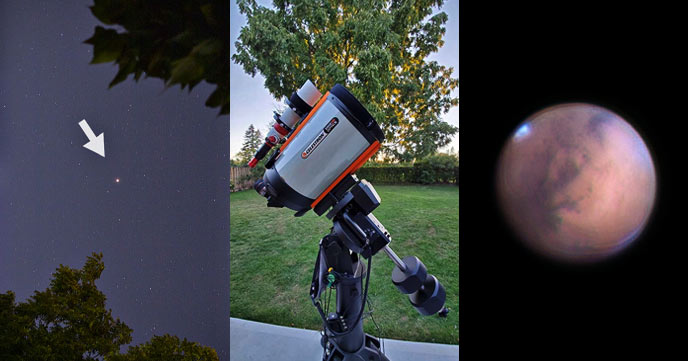
Trevor’s telescope pointed at the constellation Auriga in the backyard.
2. See the Moon Pass Mars and Jupiter Before Sunrise
Best mornings: September 6 and September 8, 2026.
If you don’t mind getting up early, the waning crescent Moon gives us two nice planet pairings during the first part of the month.
On September 6, the Moon passes about 3 degrees north of Mars. Then, on September 8, it passes less than 1 degree north of Jupiter, making that morning’s pairing noticeably tighter.
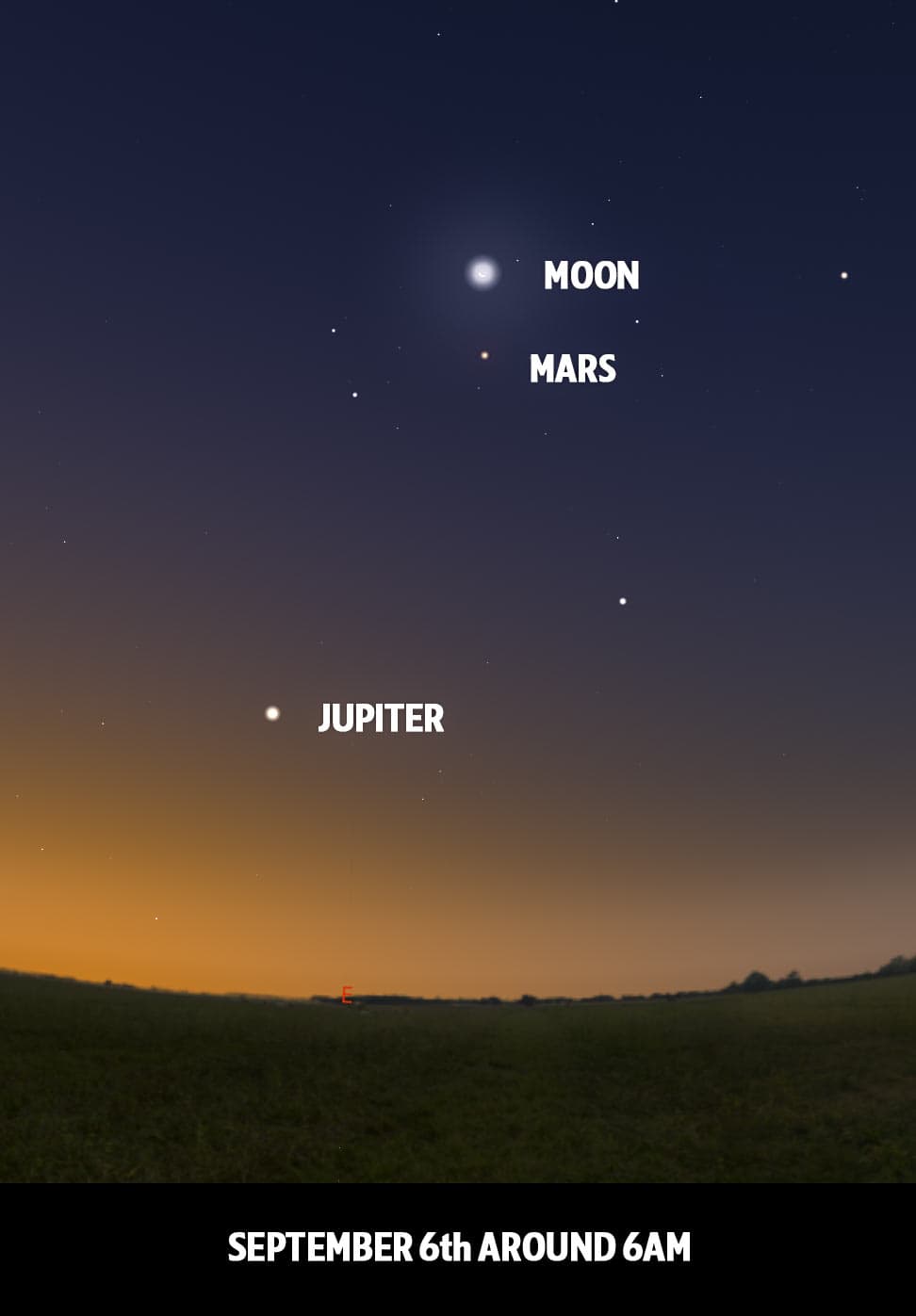
The Moon and Mars on September 6 in the early morning | Stellarium
Jupiter will be the easiest one to spot. It’s much brighter than Mars and should stand out clearly before sunrise. Mars is fainter and has that familiar warm orange color. The Moon will help you find both planets if you aren’t used to identifying them.
These are easy events to enjoy without a telescope, but they’re also nice photography opportunities. A telephoto lens can frame the crescent Moon and planet together, while a wider lens gives you room to include a landscape or colorful pre-dawn sky.
If you already have a telescope set up for Jupiter, spend a few minutes on it before twilight gets too bright. Even a small telescope will reveal the four Galilean moons, and larger instruments can start showing details in Jupiter’s cloud belts.
3. Photograph the Andromeda Galaxy
Best nights: Roughly September 8–14, 2026
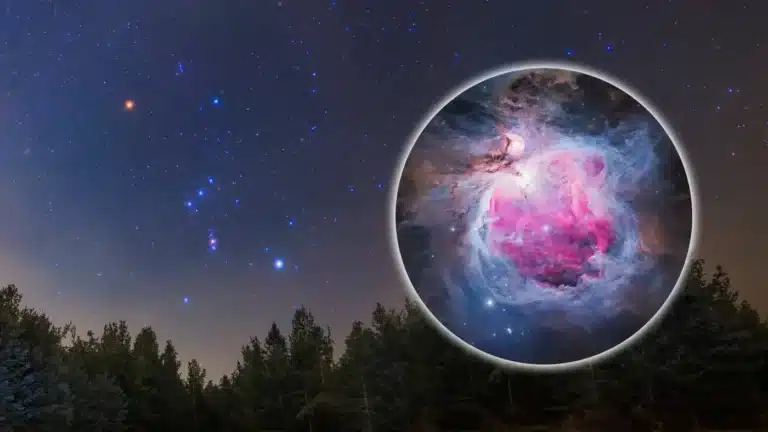
Not every highlight needs to happen at one exact moment. For astrophotographers, one of the best things about September is that the Andromeda Galaxy (M31) is moving into a much better position in the evening sky just as we get a moonless stretch around the New Moon.
The New Moon occurs on September 11 in Universal Time (or late September 10 here in Eastern North America), so the nights on either side are the ones I’d be watching closely.
Andromeda is an ideal September target because it gets higher as the night goes on and doesn’t require a huge telescope. In fact, a small refractor or telephoto camera lens is often the better choice because the galaxy covers a surprisingly large area of the sky.
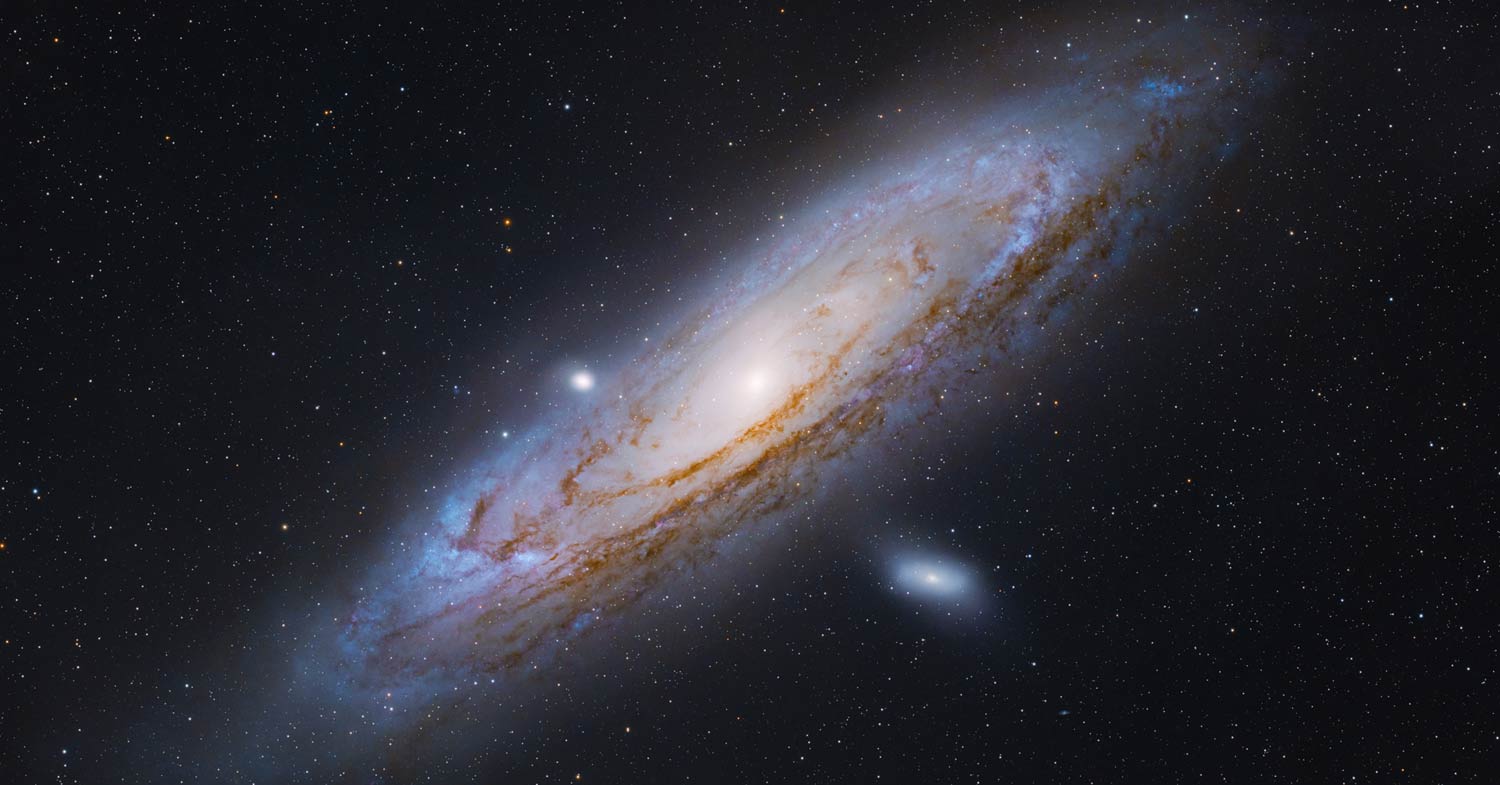
The Andromeda Galaxy / Trevor Jones
If you’re at a dark site, you may even be able to see the bright central glow of M31 with your naked eye. Through binoculars, it becomes an elongated fuzzy patch.
With a tracked camera and enough integration time, you can start revealing the dust lanes, outer arms, and neighboring galaxies M32 and M110.
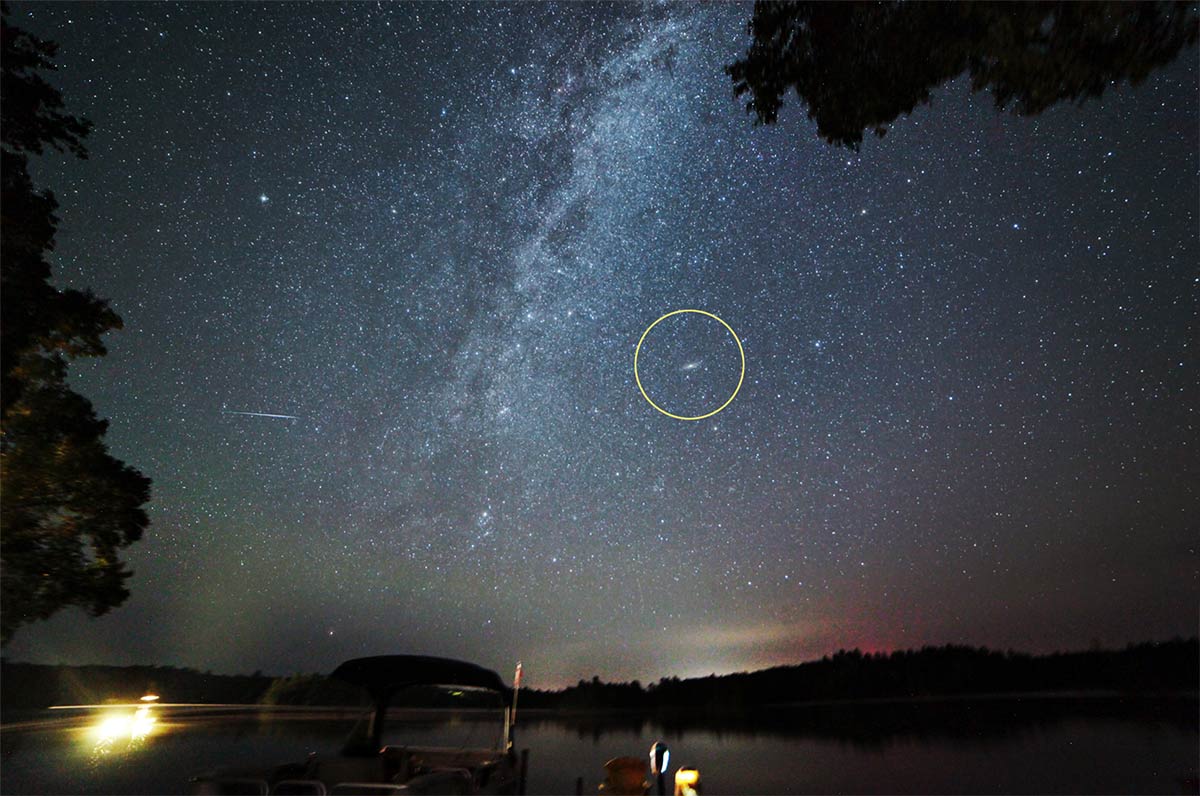
Other deep-sky targets that are well worth considering around the New Moon include:
- Triangulum Galaxy (M33)
- North America Nebula (NGC 7000)
- Pelican Nebula (IC 5070)
- The Veil Nebula
- Heart Nebula (IC 1805)
- Soul Nebula (IC 1848)
- Double Cluster in Perseus
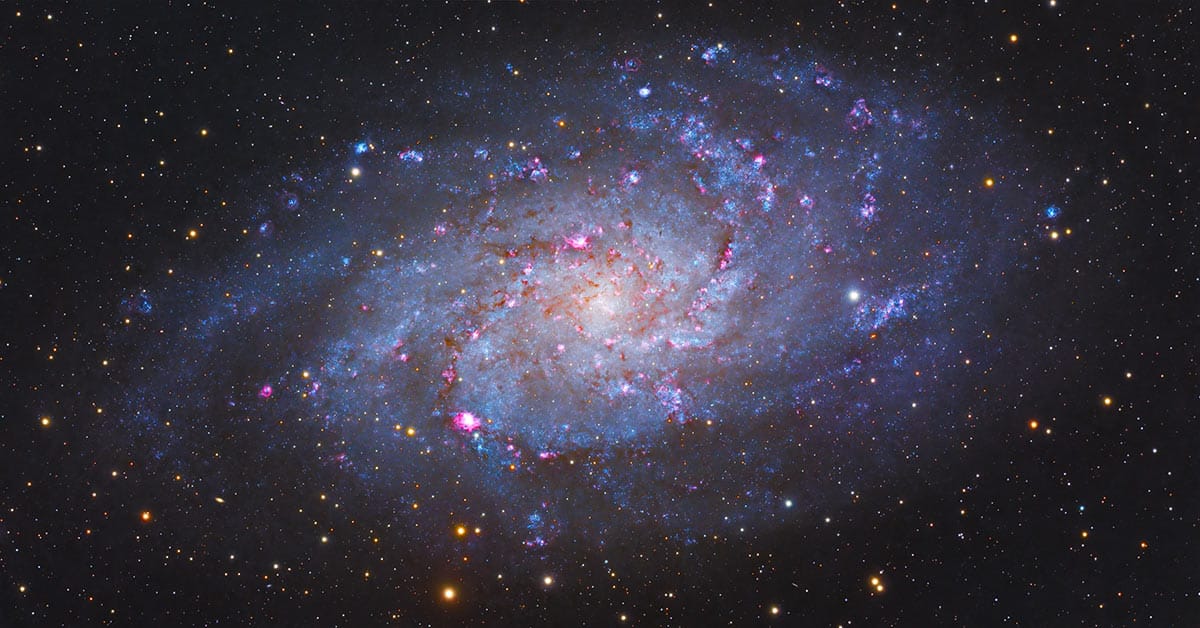
Triangulum Galaxy
The summer targets in Cygnus are definitely not finished yet either. If you started an imaging project there in August, September gives you plenty of opportunities to keep adding data.
The Milky Way core is also still visible in the evening from mid-northern latitudes, but it’s moving farther west and setting earlier. If you still want a Milky Way nightscape this season, I wouldn’t wait too much longer.
4. Watch the Moon Meet Venus, Then See Venus at Its Brightest
Best dates: September 14 and September 18, 2026
Venus is one of the easiest objects to find in the September evening sky. On September 14, the waxing crescent Moon passes only about half a degree north of Venus. That should make a really nice pairing shortly after sunset.
You won’t need any equipment to see it. Look toward the western sky as the light begins to fade. Venus will be the brilliant point of light, with the crescent Moon nearby.
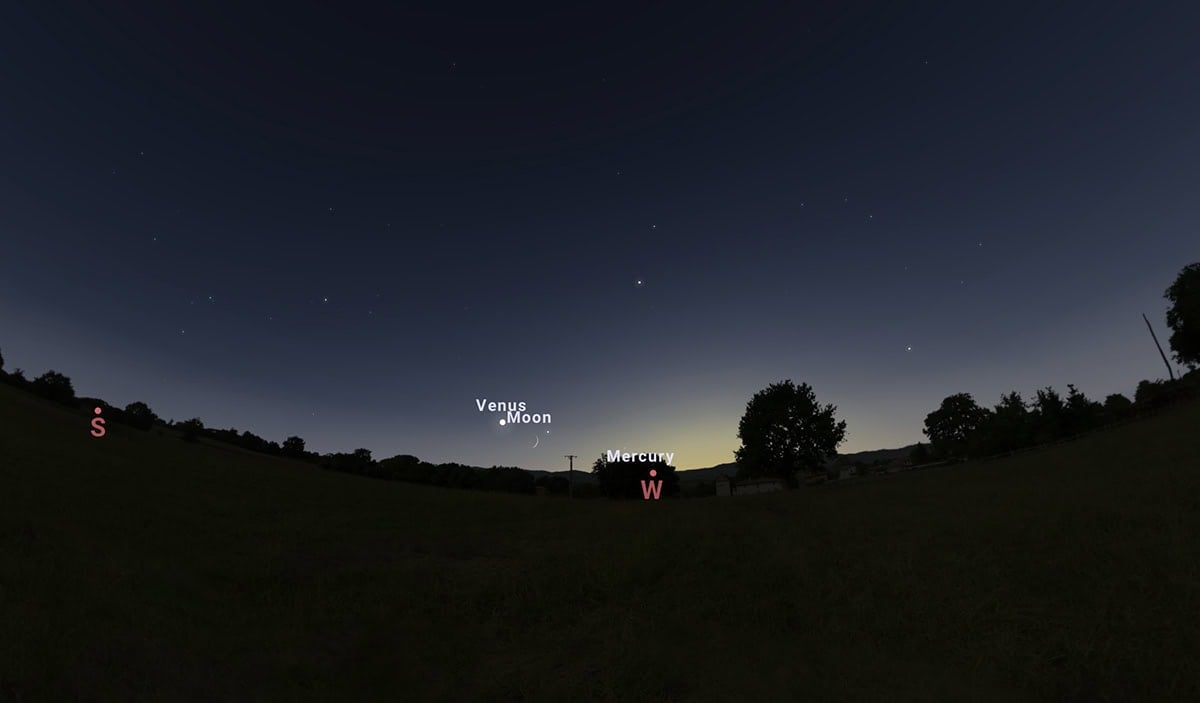
The Moon and Venus on September 14 | Stellarium
This is also a good one to photograph. A short telephoto lens should capture the pair nicely, while a wider composition could include some foreground scenery and evening color.
Then, just a few days later, on September 18, Venus reaches greatest brilliancy. Through a telescope, Venus will look very different from the round disk you might expect. Because it’s moving closer to Earth and showing us less of its illuminated side, you’ll see a bright crescent phase.
Just make sure the Sun is completely below the horizon before aiming binoculars or a telescope anywhere near Venus.
Circle September 18–19 on Your Calendar
On September 18, Venus reaches greatest brilliancy in the evening sky, making an already obvious planet even harder to miss.
That same day, the Moon reaches First Quarter, and the following evening, September 19, is International Observe the Moon Night.
So, if you want an easy night to get outside with the family, set up a telescope for the neighbors, or just spend a little time enjoying the sky without planning a full astrophotography session, this is a good weekend to keep open.
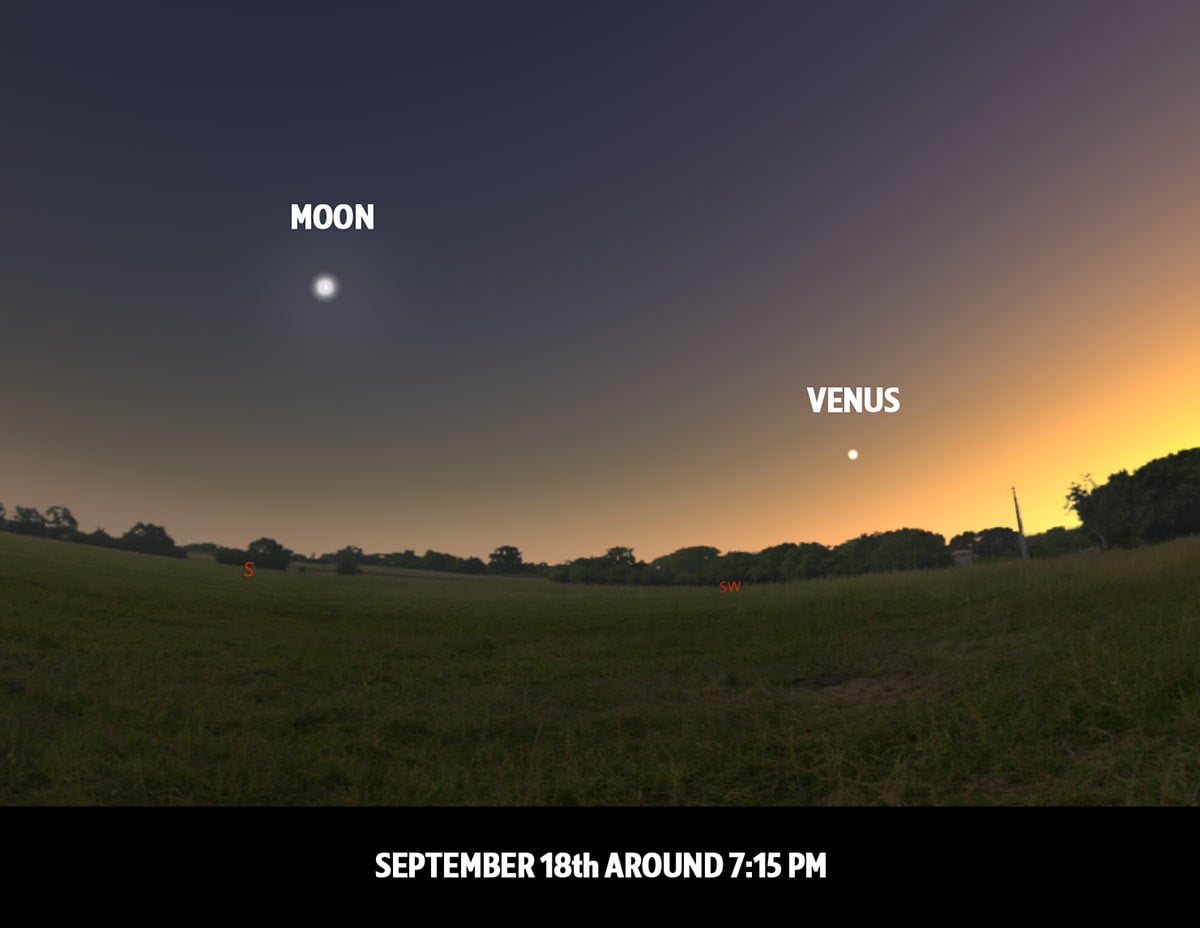
5. Take Part in International Observe the Moon Night
Date: September 19, 2026
International Observe the Moon Night takes place on Saturday, September 19 this year. NASA organizes this event each year to encourage people around the world to spend some time looking at and learning about the Moon.
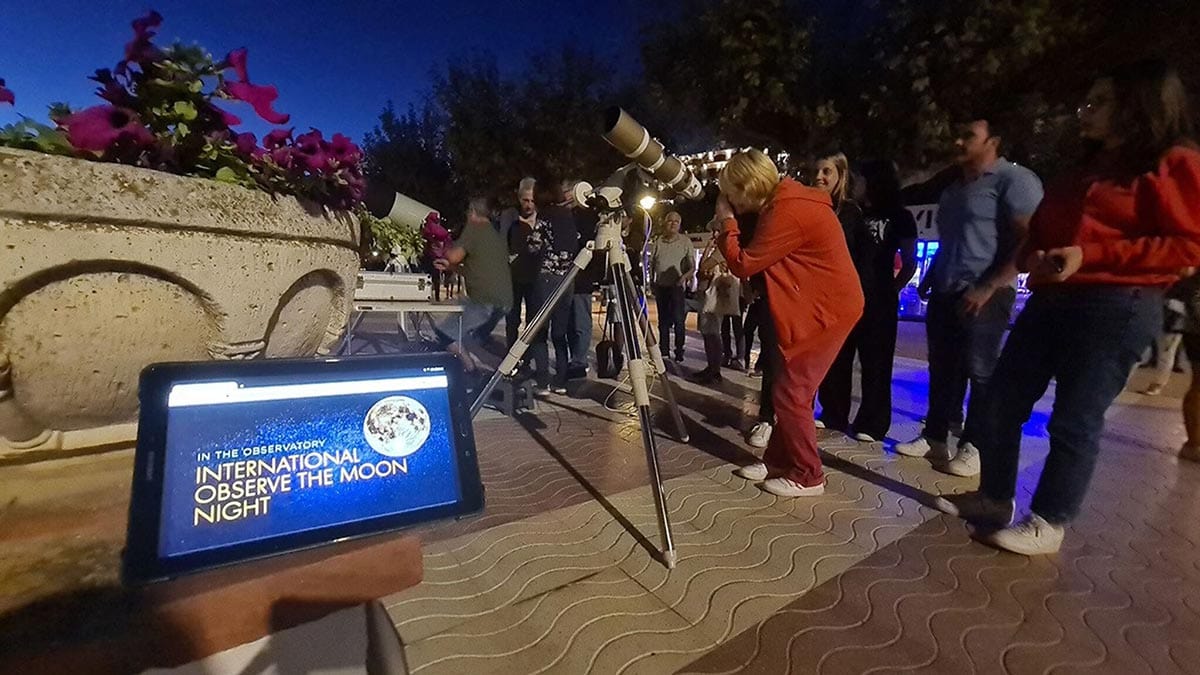
NASA | Image credit: Flickr user Francesc Pruneda Agusti
I like the timing this year because the Moon reaches First Quarter the day before. The craters and mountains along the terminator cast long shadows that make the surface look much more three-dimensional.
You definitely don’t need a large telescope. Binoculars will show plenty of detail, and even a small beginner telescope (or smart telescope) can provide an impressive view.
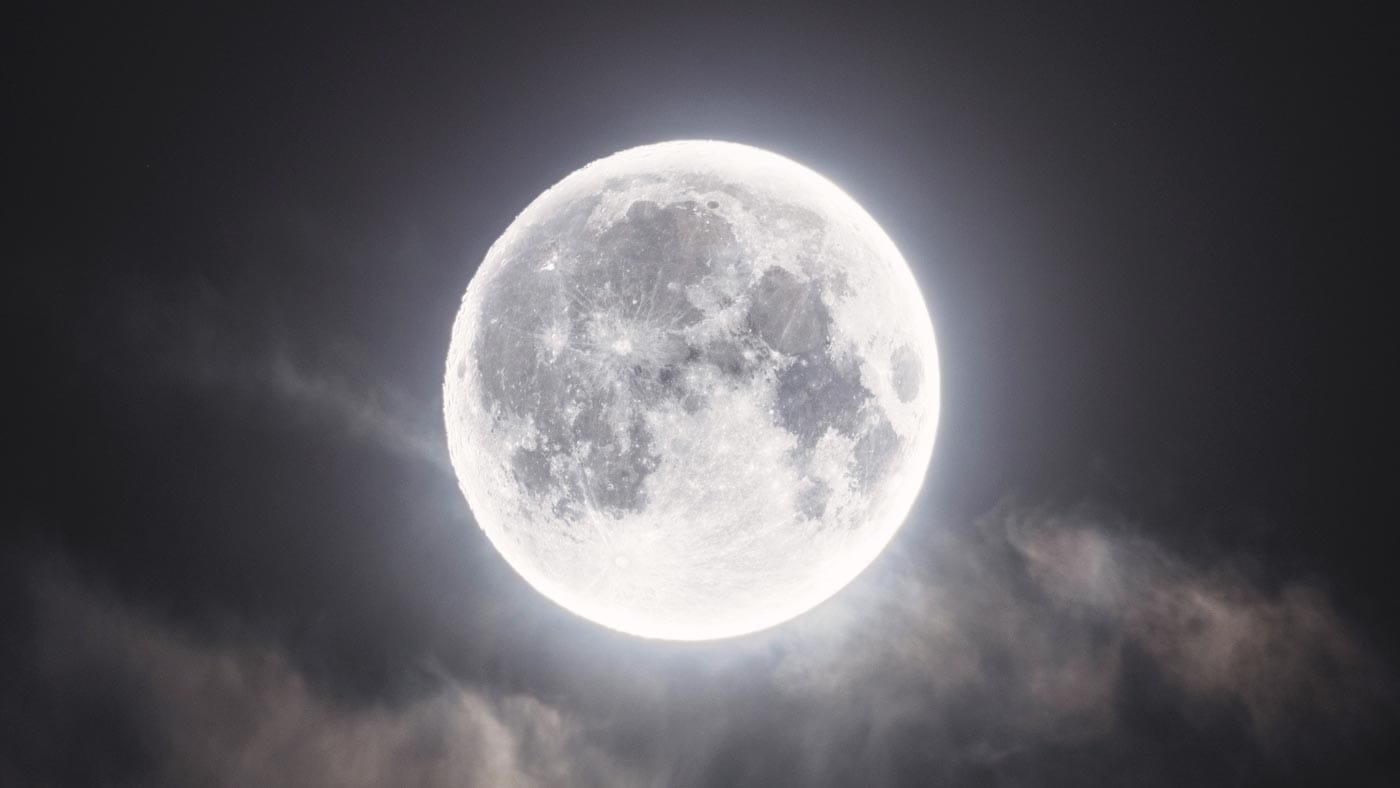
This is also one of the easiest astronomy events to share with other people because you don’t need dark skies. You can set up from the backyard, driveway, or even a fairly light-polluted area and still get a great view.
If you’ve been looking for an excuse to pull out your telescope for friends, family, or neighbors, this is a pretty good one.
6. Find Neptune at Opposition
Best time: September 25–26, 2026
Late September brings the best opportunity of the year to find Neptune. The planet reaches opposition at about 10 p.m. EDT on September 25, or shortly after midnight UTC on September 26.
Opposition means Neptune is opposite the Sun in our sky. It rises around sunset, stays up all night, and sets around sunrise.
It’s also at its brightest for the year.
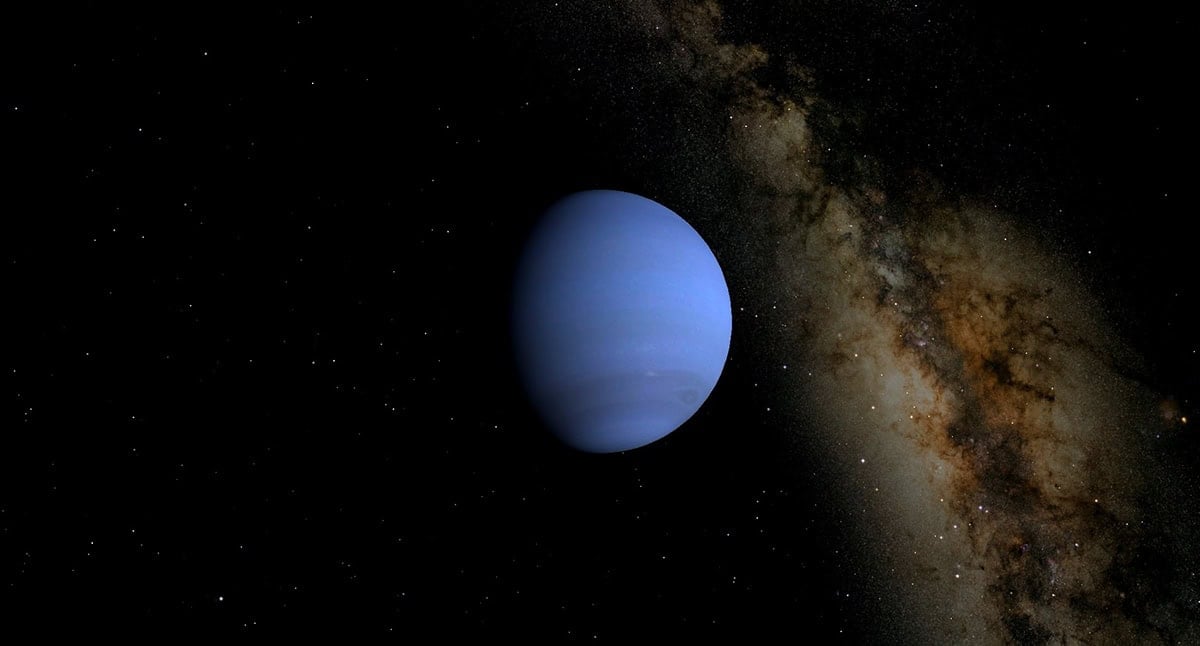
The planet Neptune. (Image credit: Starry Night)
That doesn’t mean Neptune suddenly becomes easy. At opposition, it shines at only about magnitude 7.7, so you won’t see it with your naked eye. Binoculars can technically pick it up under good conditions, but a telescope is much better if you actually want to confirm the planet.
This year, Neptune is in Pisces, not too far from much brighter Saturn. A planetarium app or detailed finder chart will save you a lot of frustration because Neptune can look like another faint star at low magnification.
Once you think you’ve found it, increase the magnification. Neptune is only about 2.4 arcseconds across, but unlike a star it should resolve into a tiny blue-gray disk when the atmosphere is steady.
One downside this year: the Full Moon arrives the very next day. That bright moonlight will make a magnitude 7.7 planet harder to pick out, so don’t feel like you have to observe Neptune at the exact moment of opposition.
The planet moves slowly against the background stars, and the nights leading up to September 25 may actually give you an easier view.
7. Photograph the Harvest Moon
Date: September 26, 2026
In the Northern Hemisphere, September finishes with the Harvest Moon. The Full Moon occurs on September 26 and earns that traditional name because it’s the Full Moon closest to the September Equinox.
For deep-sky astrophotographers, this obviously isn’t the night to go after a faint nebula. But it can be a great night for lunar photography.
A great time to photograph the Full Moon is when it’s rising close to the horizon. That gives you the chance to include a foreground subject and create a much more interesting image than simply photographing the Moon against an empty black sky. Trees, barns, buildings, lighthouses, or a distant skyline can all work.
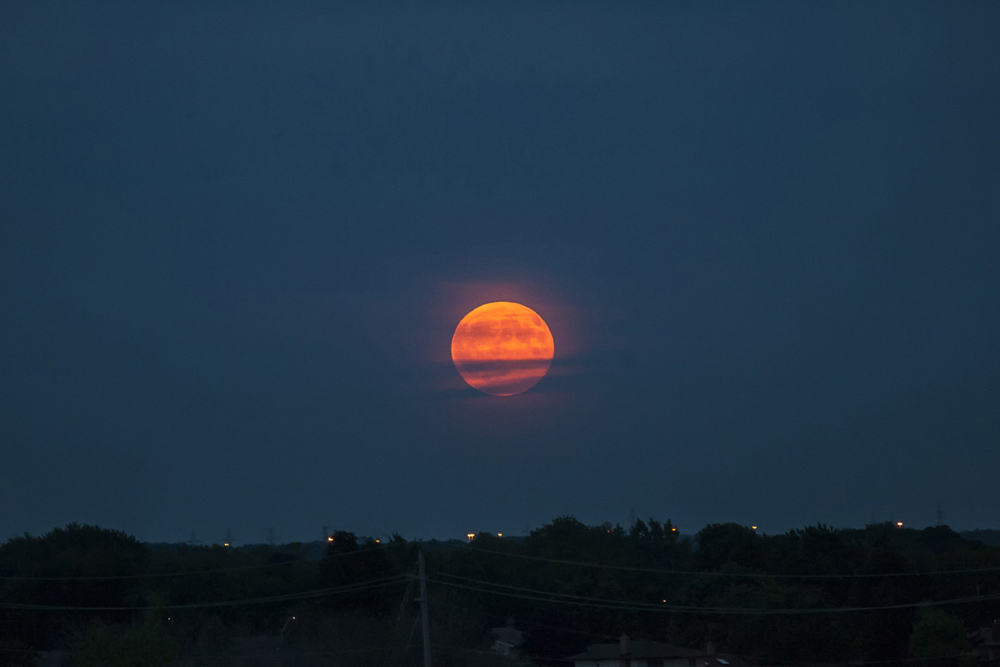
A long telephoto lens compresses the scene and makes the Moon look much larger relative to your foreground, but you need to plan your position carefully.
Check the moonrise direction ahead of time and work backward from the foreground you want in the shot. A few hundred meters can make the difference between the Moon appearing exactly where you want it and completely missing the composition.
You don’t need a camera to enjoy this one either. The Harvest Moon rises around sunset and is an easy naked-eye event, so if the weather is clear, just step outside and watch it come up.
Plan your September under the stars
Here’s what I’d keep in mind when planning your September observing and astrophotography nights:
- Deep-sky astrophotography: Keep September 8–14 open, with the darkest skies centered around the September 10/11 New Moon.
- Fall galaxies: Start working on Andromeda and M33 as they climb into better evening positions.
- Remaining summer targets: Don’t give up on Cygnus yet. The North America, Pelican, and Veil nebulae are still well placed.
- Planetary viewing: Venus is the standout naked-eye planet, while Neptune offers a more challenging telescope target.
- Beginners: September 18–19 is an easy weekend to spend some time with the Moon.
- Lunar photography: Start planning your September 26 Harvest Moon composition before the day arrives.
- Milky Way photography: The core is still available in the evening, but your season is starting to run out.
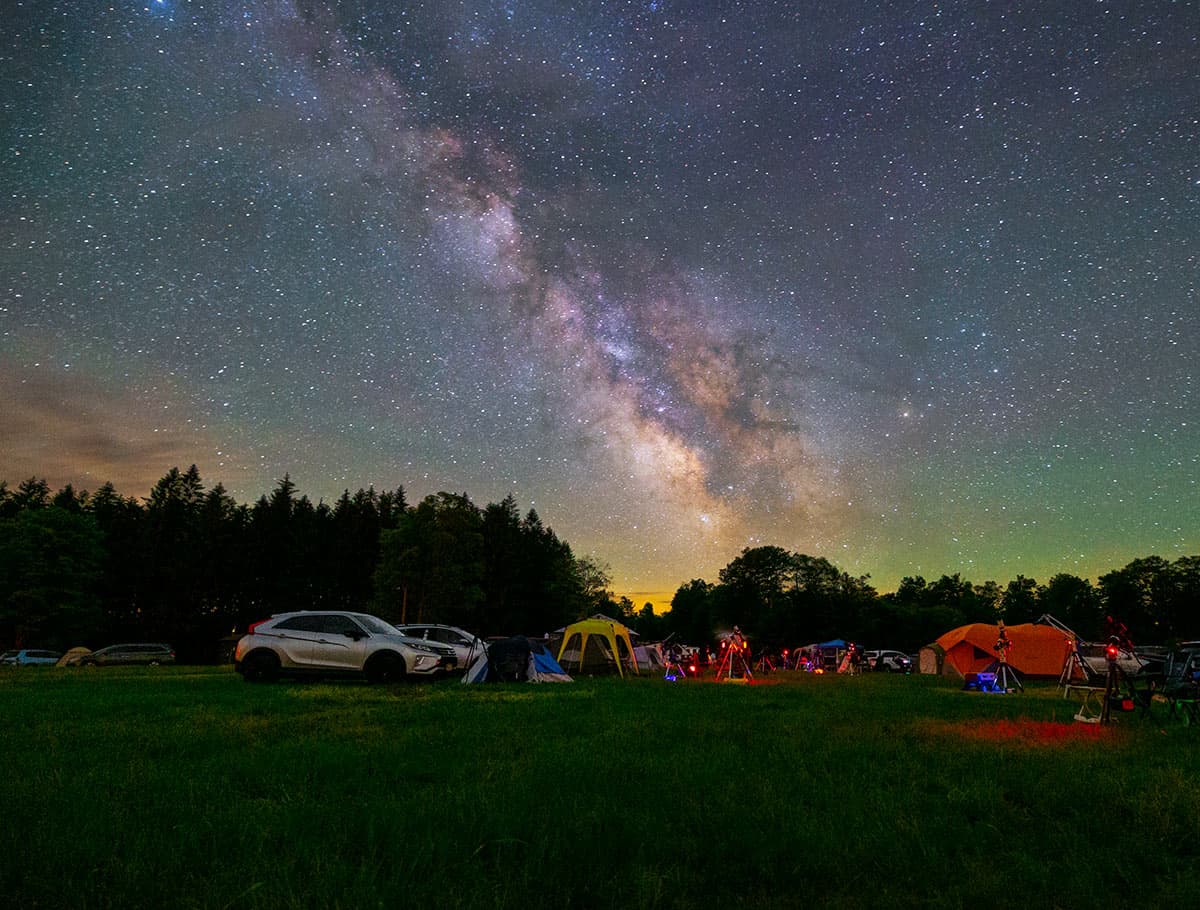
September nights can also cool down faster than you expect. Even if it feels warm when you set up, I’d keep an extra layer nearby, especially if you’re heading to a darker location away from the city.
September Is a Great Month to Get Back Outside
September feels like a bit of a reset. We still have plenty of the summer sky to work with, but we don’t have to wait nearly as long for darkness.
At the same time, Andromeda and other fall targets are moving back into positions that make them much easier to photograph.
Whether you’re planning an astrophotography session, setting up a telescope, or simply stepping outside to see what’s overhead, I hope this guide helps you make the most of the month ahead.
There’s plenty to keep us busy.

Ashley is an environmental educator, communication professional, and astrophotographer. She has extensive experience writing for diverse audiences to increase public awareness and engagement. Ashley is an active Advocate/Delegate with DarkSky International, helping to protect the nighttime environment from the harmful effects of light pollution through advocacy and outreach.
Related Content:
- Astrophotography Targets by Season
- How to Photograph Planetary Conjunctions: A Practical Guide
- Venus Through a Telescope