
Dark Sky Camping: RV Lighting Etiquette and Setup

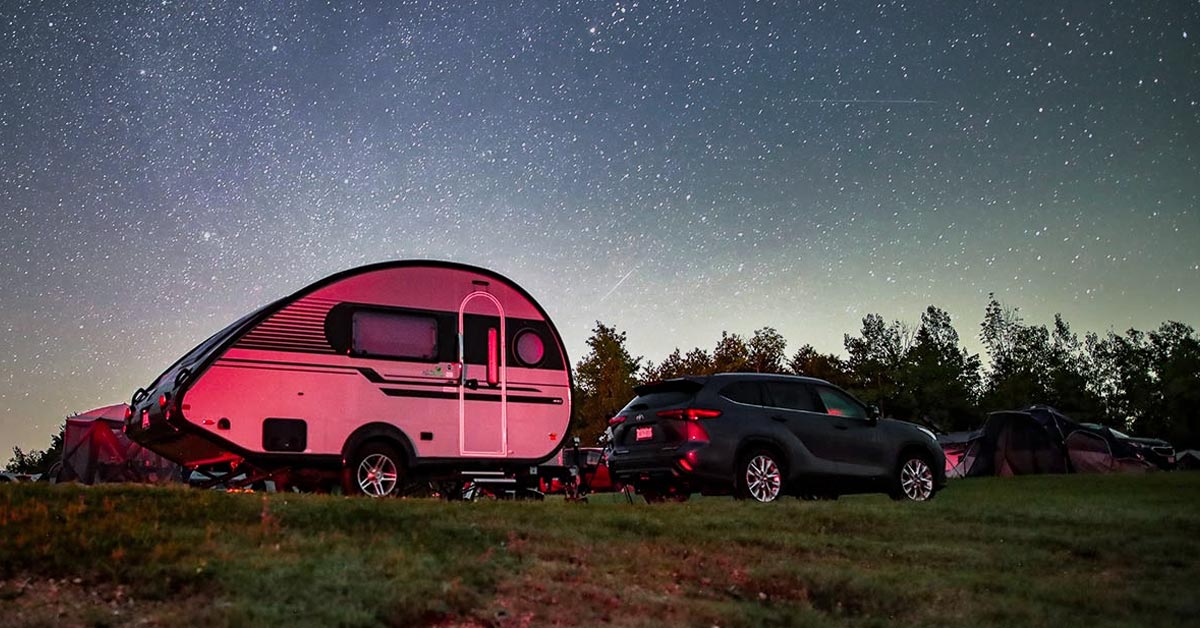
Dark sky camping has become a big part of how we travel. Whether we’re heading to a remote site or setting up at a star party, the goal is always the same: get away from artificial light and experience the night sky the way it’s meant to be seen.
What we’ve learned, though, is that your camper, and even the people around you, can completely change that experience.
Modern RVs are packed with bright LEDs, automatic lights, and “convenience” features. The problem is that a lot of that lighting is excessive, even for regular camping.
The impact of that extra light is easy to overlook, especially if you’re used to it. But once you’ve experienced a truly dark campsite, it becomes hard to ignore.
Good lighting doesn’t mean no lighting; it means using the right light, at the right time, in the right way.
In this guide, I’ll break down what dark sky camping actually is, why etiquette matters (even outside astronomy events), and how to make your camper or RV truly dark sky friendly.
What Is Dark Sky Camping?
Dark sky camping is exactly what it sounds like – camping in places where artificial light is minimal, allowing you to fully experience the night sky.
For some people, that means seeing the Milky Way for the first time. For others (like astrophotographers), it means capturing faint deep-sky objects that would be completely invisible from a city. Either way, darkness is the whole point.
And in many ways, that’s what camping has always been about. Getting away from artificial light, slowing down, and experiencing a more natural environment.
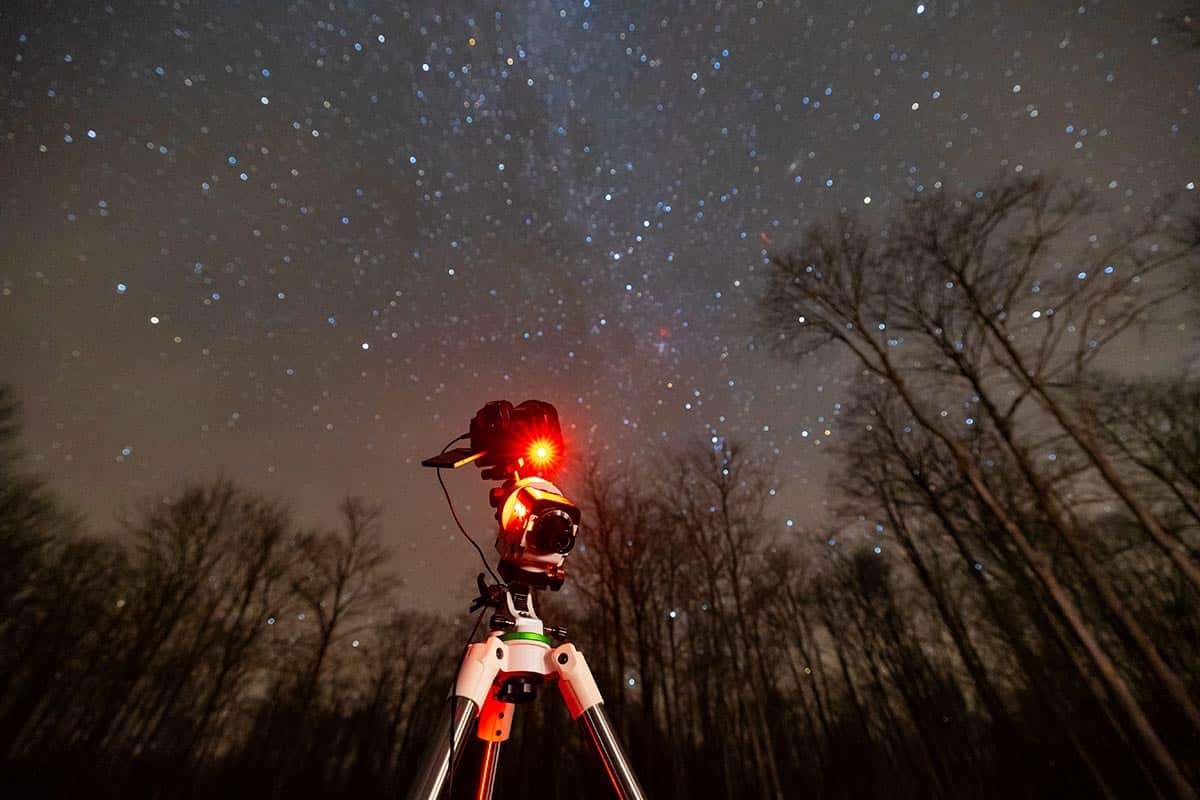
But truly dark skies are becoming harder to find as light pollution continues to spread. That’s why so many of us leave the city and head out camping to escape the constant glow of artificial light and experience a darker, more natural night sky.
More people are now traveling specifically to experience dark skies – making them more valuable, and more important to protect than ever.
Sources of Light Pollution While Camping
Artificial light can come from a few different sources, and it’s usually a combination of all of them that affects how dark a place actually feels.
Lighting from Campers and RVs
Modern campers are often equipped with a surprising amount of excessively bright exterior lighting – porch lights, awning lights, under-glow lighting, and accent LEDs.
Individually, they might not seem like much. But when multiple sites have these lights running into the evening and overnight, they can completely change the feel of a campground – turning what could be a dark, quiet space into something much brighter than most people expect.
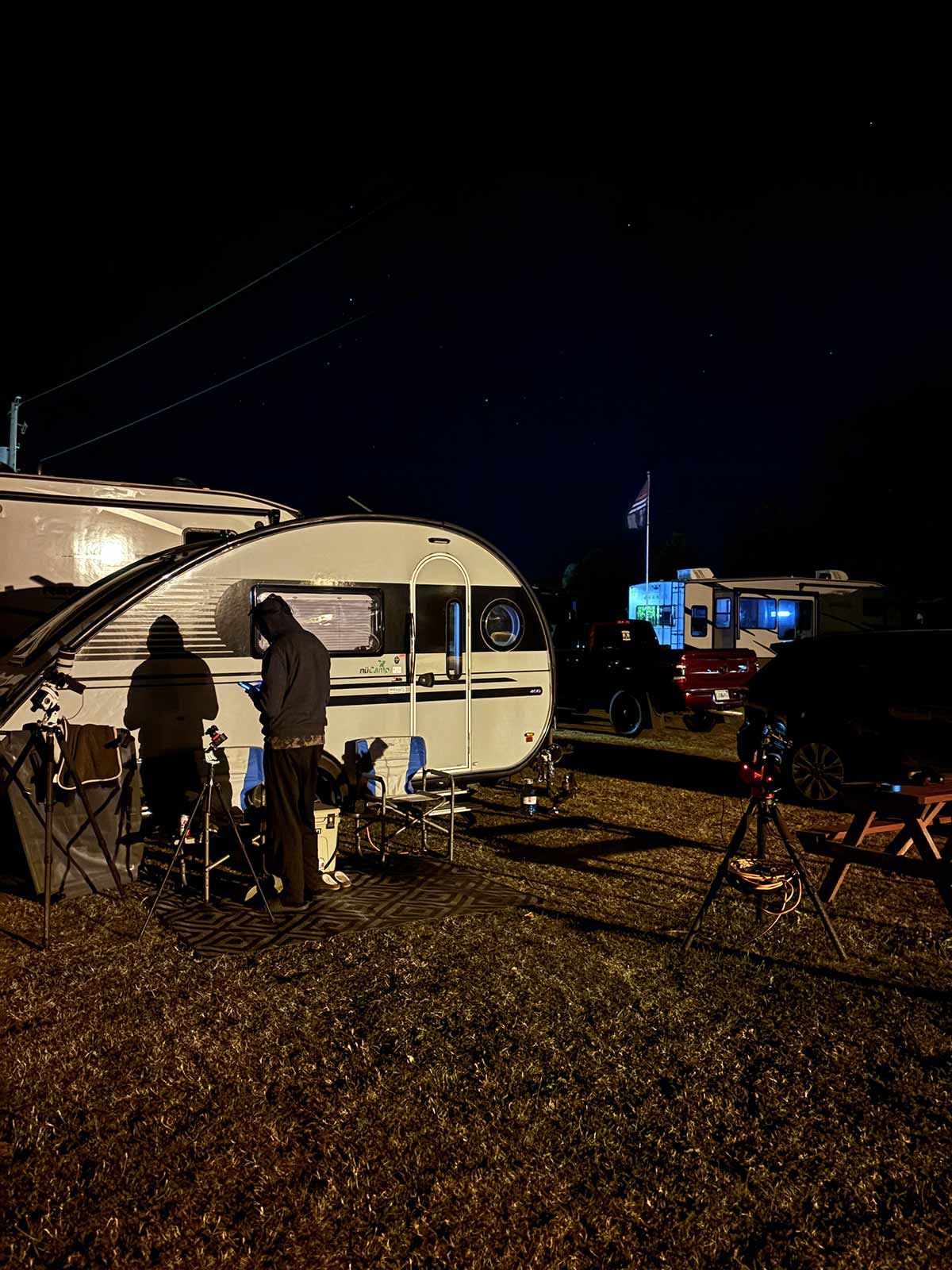
Someone else’s camping lighting was so bright, we couldn’t even enjoy sitting outside at night.
And it’s not just exterior lighting. Interior lights can have a similar effect, especially when they shine through windows and thin blinds. A brightly lit camper can easily glow into surrounding sites, adding to the overall brightness even if everything outside is turned off.
Decorative string lights, lanterns, and general campsite lighting also contribute – especially when they’re left on long overnight. A simple shift is to treat lighting the same way we treat noise – something that naturally winds down at night.
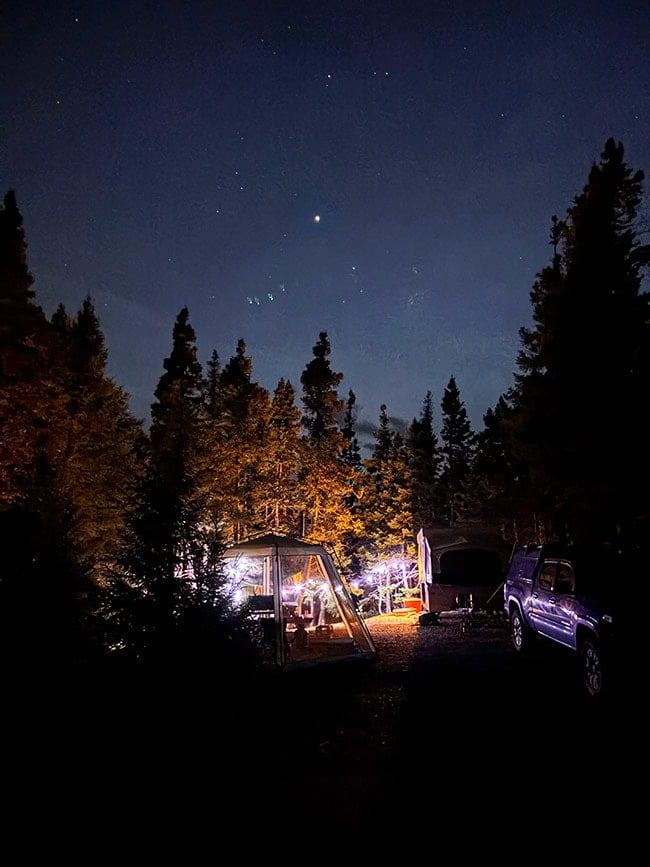
Decorative lights at a certified Dark Sky Preserve
Turning off exterior lights once you’re done using them, dimming interior lighting, angling lights downward or toward what you’re doing, and setting a personal “light curfew” around 9:00 or 10:00 PM can make a noticeable difference for the entire campground, without really changing how you camp during the day.
Because in a shared space like a campground, light doesn’t stay contained to one site – it spreads much farther than we expect.
Lighting from campground facilities
Campgrounds themselves can also be a major source of light.
Pathways, washrooms, office buildings, and shared spaces are usually lit for safety but the way that lighting is designed can vary quite a bit.
Many campgrounds, especially those located in parks or conservation areas, already have a strong focus on protecting the natural environment. Lighting is one area where small changes can make a meaningful difference – both for the camping experience and for the wildlife that call these places home.

Excessive bathroom lighting at an Ontario Parks campground
Dark-sky friendly lighting practices are easy to implement:
- Downward-facing fixtures that reduce unnecessary light spill
- Warmer colour temperatures that are less disruptive to insects and wildlife
- Timers or motion sensors so lights are only on when they’re actually needed
These changes don’t reduce safety, they improve it by focusing light only where and when it’s needed and maintaining visibility for campers.
A More Intentional Way to Use Light
None of this means camping in the dark or giving up convenience. It’s more about being intentional with how and when you use light.
Using softer lighting, keeping it directed toward what you’re doing, and simply turning lights off once you’re done with them – especially later in the evening – can make a noticeable difference without changing how you camp.
And in a shared environment like a campground, those small choices tend to go a long way, often shaping the experience for everyone around you, as well as the natural environment you’re there to enjoy.
Why Camping Etiquette Matters
Most of us already understand the basics of camping etiquette.
- We keep noise levels down, especially at night.
- We avoid walking through someone else’s site.
- We keep pets under control and respect shared space.
Those things are easy to recognize because they’re obvious. Lighting, on the other hand, is one of the few things that often gets overlooked.
Why People Go Camping in the First Place
The reality is, you don’t always know why the people around you chose that campsite. Some might be photographing the night sky. Others might be hoping to see the Milky Way for the first time. But for many people, it’s something simpler – they’re there to get away.
To remove themselves from the noise, the constant artificial light in the city, and the pace of everyday life – to sit outside a little longer, to enjoy a quiet evening next to a campfire, to experience what true darkness actually feels like again.
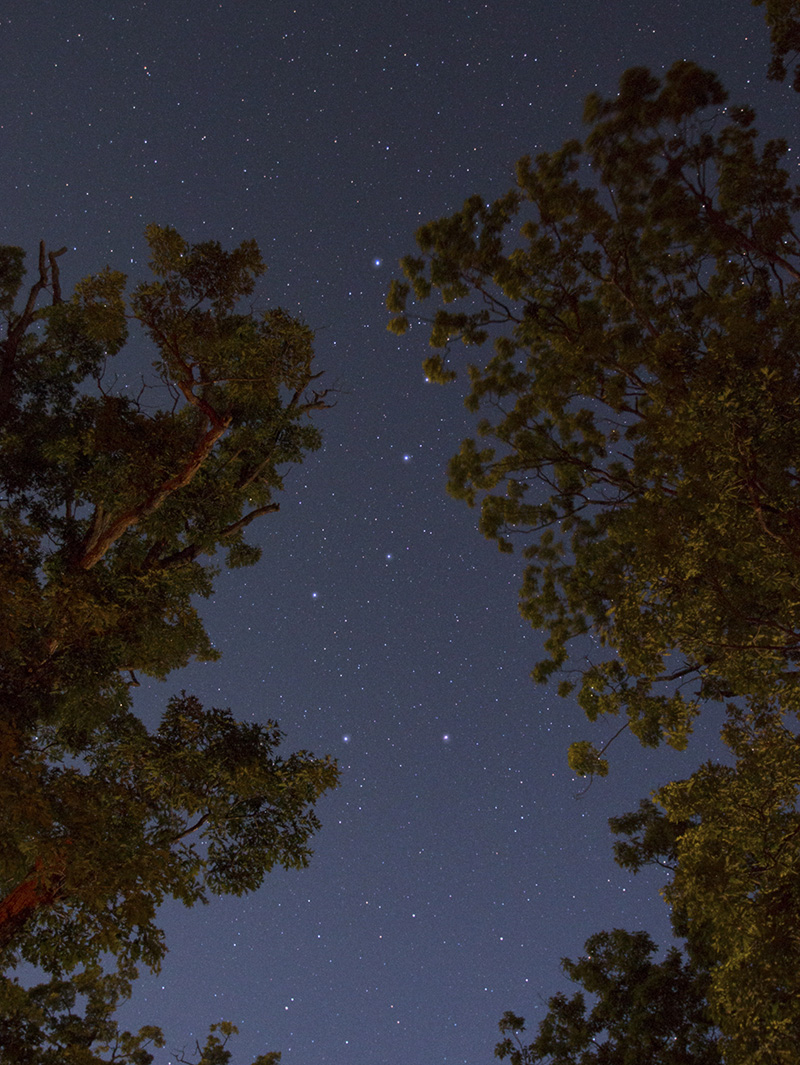
Stargazing while camping
And just like noise, lighting plays a role in that experience. A bright porch light, string lights left on all night, or a camper glowing from the inside can be just as disruptive as loud music – especially when you’re not even outside to use that light.
Because in the end, the whole point of getting out camping is to be in nature and for a lot of people, that includes the experience of natural darkness.
How Light Affects the Camping Experience
Reducing artificial light has a way of improving the experience for everyone. The campground feels quieter, darker, and closer to what you were probably hoping for when you decided to get away.
And that experience isn’t just about us. Many campgrounds are located in or near protected areas – provincial parks, national parks, and conservation lands—places where wildlife is part of the landscape.
Insects, birds, and other nocturnal animals all rely on natural darkness, and artificial light can disrupt those patterns in ways we don’t always see. Even fireflies, which depend on darkness to communicate, are becoming harder to find in areas with increasing light pollution.
Why It Matters Beyond Your Campsite
When we keep our lighting low while camping, we’re not just improving the experience for other campers – we’re also helping protect the environment we came to enjoy in the first place.
After all, we’re just visitors in these spaces. And in a shared environment like a campground, those small choices tend to carry farther than we expect.
Simple things like keeping exterior lights off when they’re not needed, dimming lights in the evening, and shutting them off completely at night can go a long way – without really changing how you camp.
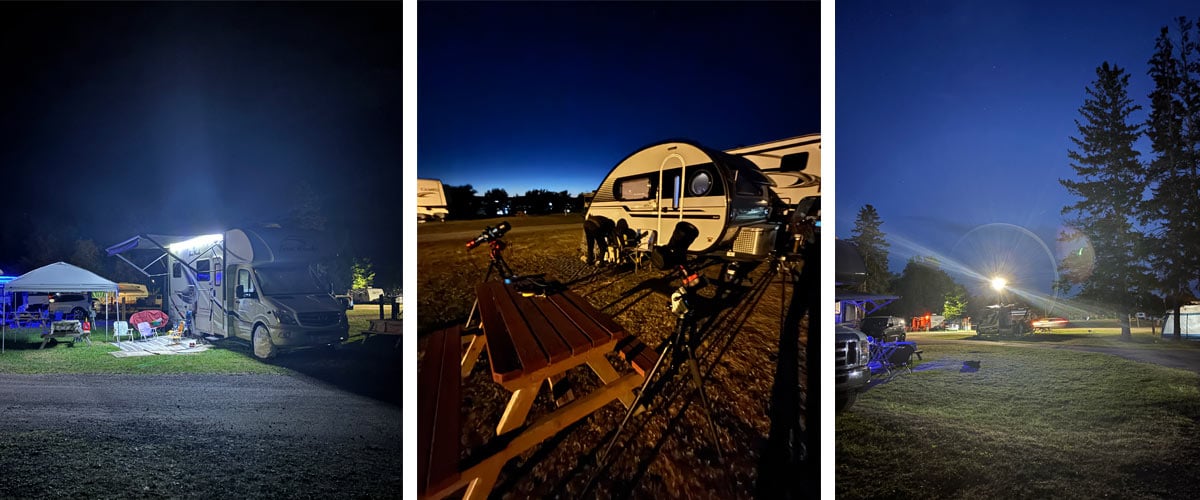
Bright-white LED awning lights and excessive bright lights lighting up our camper
For us, it’s just become part of the routine. We leave our porch light off, keep things low at night, and don’t really think twice about it anymore.
And one of the biggest benefits is what you gain in return – the ability to look up and see a truly dark, star-filled sky.
Finding Dark Sky Locations
If you’re specifically looking for darker skies, there are a few reliable ways to identify locations that offer a better experience.
Certified Dark-Sky Locations
One of the most helpful indicators is whether a site is part of the DarkSky International Dark Sky Places program, which designates certified Dark Sky Parks, Reserves, and Communities. In Canada, the Royal Astronomical Society of Canada (RASC) has a similar program that recognizes protected Dark Sky Sites across the country.
These locations are intentionally managed to preserve natural darkness. That often includes controlled lighting, public education, astronomy programming, and clear expectations around light use for visitors. In many cases, you’ll be introduced to these guidelines when you arrive.
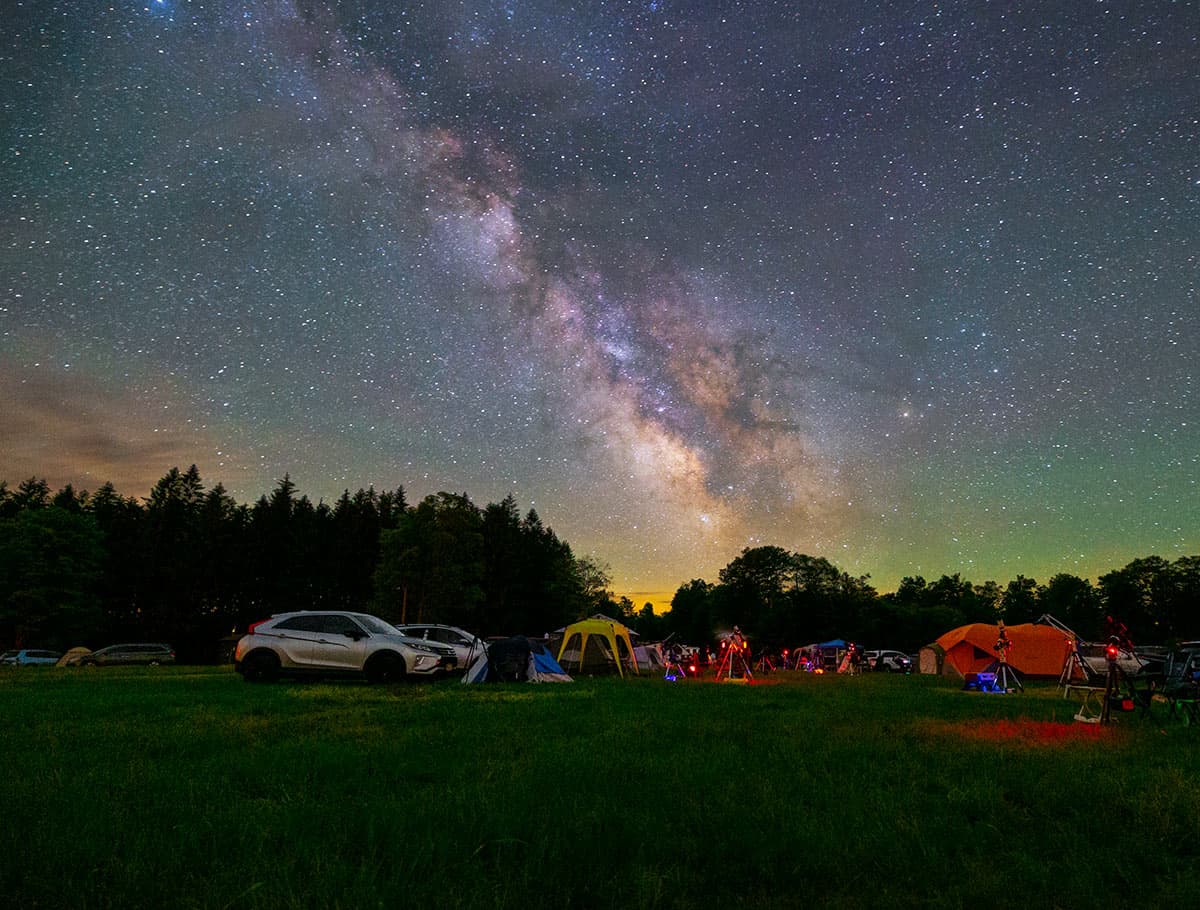
Milky Way from Cherry Springs State Park, a certified DarkSky Park
Dark-Sky Campgrounds
You can also look for campgrounds that actively promote dark sky experiences, whether that’s hosting stargazing events, offering astronomy programs, or prioritizing low-impact lighting throughout the property. Astrotourism has become very popular as more and more people continue to seek out dark skies.
Darker skies are typically found in:
- Remote campgrounds far from cities
- Public land or backcountry areas
- Rural regions with minimal development
- Astronomy-specific observing sites
A few examples of this are Spacious Skies Campgrounds or Dark Sky RV Park.
Using the Bortle Scale
Another useful tool (and one we use all the time) is the Bortle scale, which ranks sky darkness from 1 (pristine) to 9 (inner city) on a colour-coded map. The lower the number, the darker the sky, and the more you’ll be able to see.
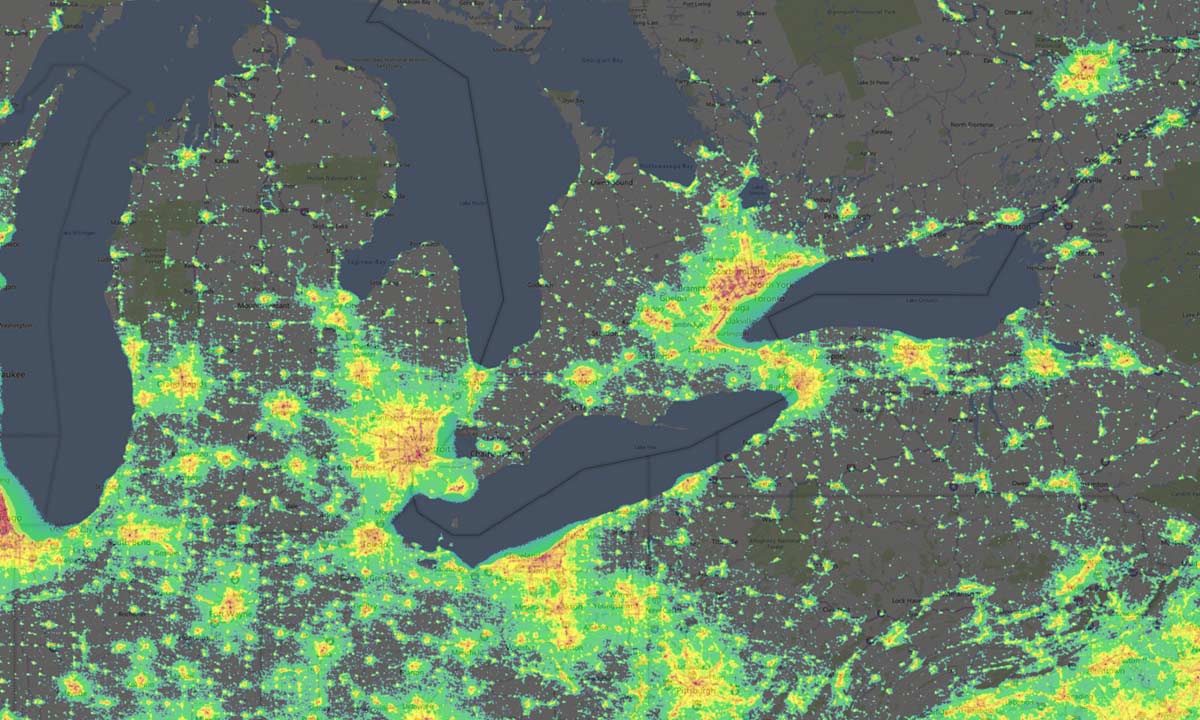
The dark coloured areas represent less light pollution, compared to the yellow/red which are high light pollution areas.
But even in locations known for good dark sky conditions, the experience can still vary. Nearby towns, road traffic, and surrounding development all contribute to light pollution – but within a campground, RVs and individual campers often have the biggest impact on how dark it actually feels.
Protecting Your Night Vision
Once you start reducing artificial light, the next step is getting comfortable in the dark and realizing how much you can actually see without it.
Your eyes take about 20–30 minutes to fully adapt to darkness. During that time, your night vision gradually improves, allowing you to see shapes, movement, and your surroundings far more clearly than you might expect.
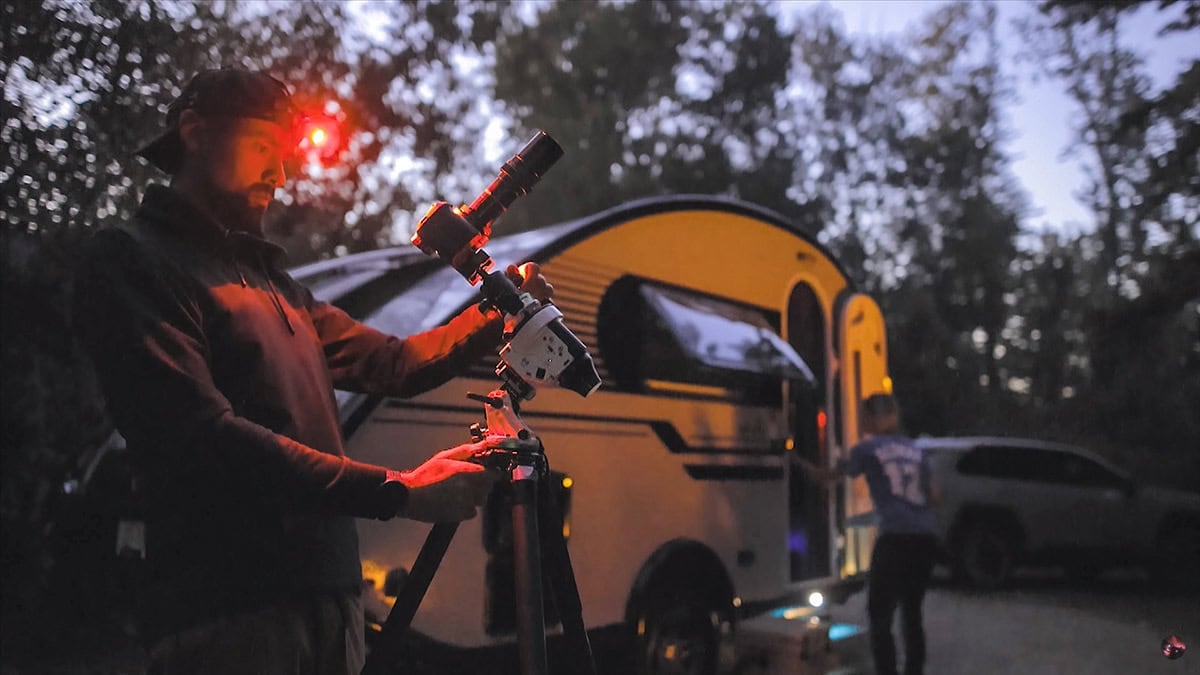
Using a red headlight while camping
But white light resets that process almost instantly. Even a quick burst, like a porch light, a phone screen, or a car interior light, can undo your night adaptation and force your eyes to start over. That’s why minimizing white light makes such a difference.
When you give your eyes time to adjust – more stars appear, faint details become visible, and on clear nights, you can begin to make out the structure of the Milky Way stretching across the sky.
So – when you need light, red light can help. Because it has less impact on night vision, it allows you to see what you’re doing without fully resetting your eyes, but it still needs to be used carefully.
Star Party Camping
A star party is where astronomy enthusiasts gather under dark skies, focused on observing or photographing the night sky. It is a hosted event that requires registration.
People bring telescopes, tracking mounts, cameras, imaging rigs, laptops, and power setups and often spend the entire night outside, which is much different from the casual camping stargazing experience.
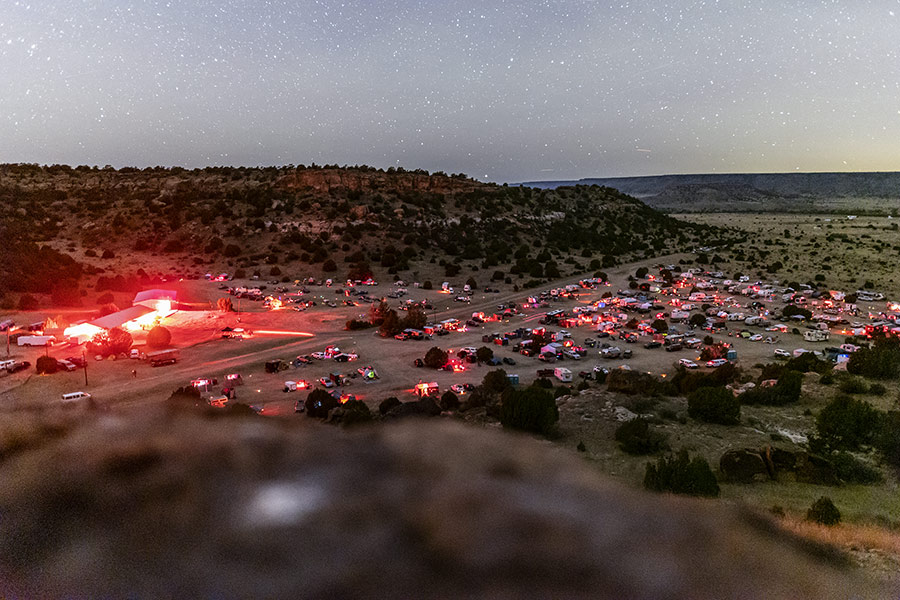
Okie-Tex Star Party in Kenton Oklahoma, where everyone is observing or photographing the night sky.
Because of that shared goal, and the distance many people travel to get there, light discipline becomes critical.
Astrophotographers may be taking exposures that last several minutes, while visual observers rely on fully dark-adapted vision. Even a quick burst of white light can reset that adaptation and disrupt someone’s entire session.
We’ve seen this firsthand, someone yelling across the field because a car door opened and the interior light came on. At that point, it’s not just noticeable – it affects everyone.
Dark Sky Etiquette vs. Star Party Rules
- Dark sky camping (general): Be aware. Use less light. Preserve the experience.
- Star party camping: Strict rules. No white light. No headlights. No exceptions.
Star Party Etiquette: What to Expect
If you’re attending a star party for the first time, this is where things become a bit more structured.
Because everyone is there to observe or photograph the night sky, light control isn’t just encouraged – it’s expected. Most events will go over these guidelines when you arrive, but it helps to know what to expect ahead of time.
Arrive before dark
Each star party handles this differently, but if you arrive late at night, you will not be allowed to drive onto the imaging field.
Headlights after dark can disrupt an entire observing field. So it is recommended that you arrive in the afternoon, leaving plenty of time to set up your tent/camper and your equipment with plenty of daylight.

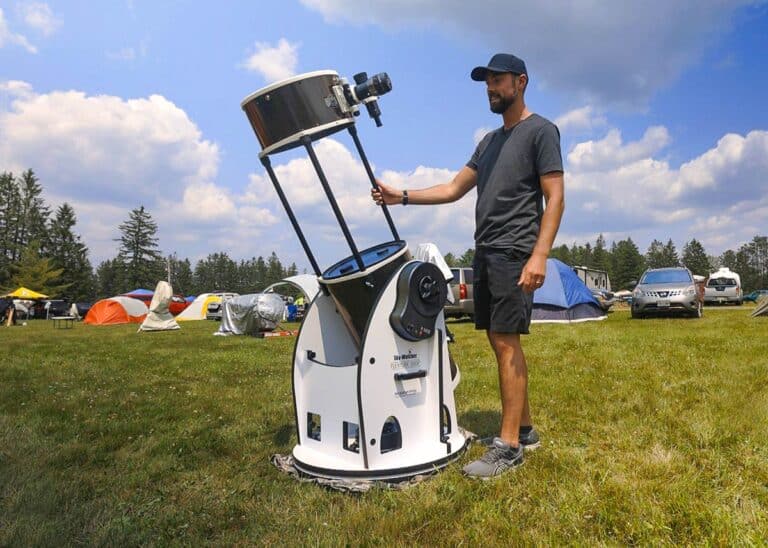
Setting up a Dobsonian telescope during the day
No white light after dark
Once it gets dark, the rule is simple: no white light.
- No headlights, interior car lights, trunk lights
- No white flashlights, or bright computer/camera/phone screens.
- No “just for a second” lights.
If you need light, use a dim red light and keep it as low and directed as possible. Add red filters to your screens to maintain your night vision and avoid nearby light.

Using red light at the Winter Star Party to adjust my telescope
Respect the shared space
Star parties are very much a shared environment, and everyone is working under the same conditions.
There are often quiet hours in the morning to allow those who were up all night imaging to rest.
Be mindful when moving around at night. Imaging fields can be filled with telescopes, tripods, and extension cords running to power sources—you don’t want to trip or accidentally disturb someone’s setup. If you’re walking around after dark, a dim red headlamp pointed at the ground is usually the best option.
It might feel strict at first, but once you experience a truly dark observing field, it makes a lot of sense—and quickly becomes second nature.
Building a Dark Sky–Friendly Camper Setup
So, what actually makes a camper dark-sky friendly?
From our experience, it comes down to a few key things:
- Being able to control or eliminate exterior lighting
- Preventing interior light from escaping
- Keeping the overall setup simple and low-impact
Most of this comes down to small adjustments, not major upgrades.
How we’ve adapted our Tab 400
Over time, we’ve made a series of simple changes that have made a big difference:
- Taping over exterior LEDs (and eventually unplugging them)
- Leaving the porch light off entirely
- Using the blackout shades to prevent interior light from leaking out
- Switching to dim red interior lighting for night use (using rear bicycle lights that we hang inside)
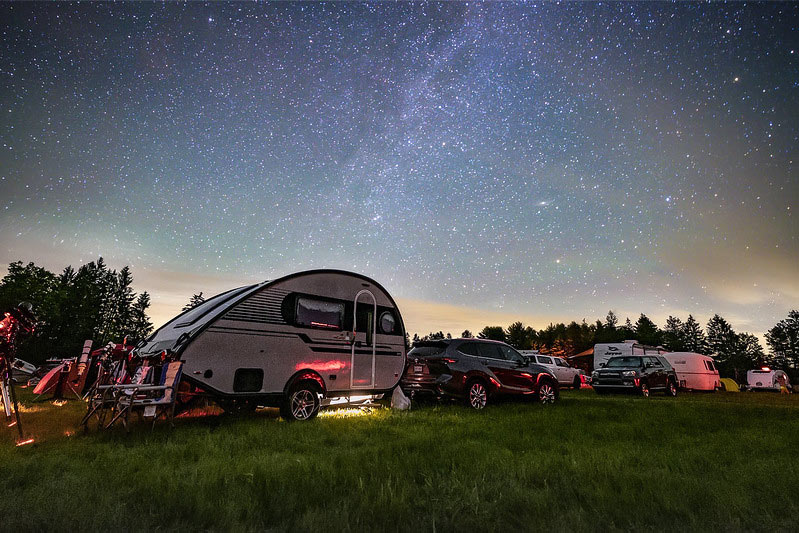
We taped over (and eventually unplugged) our small automatic stair light
How to set up your own camper
The easiest way to dial in your setup is to test it in the dark.
Walk around your camper at dusk or after dark and look for any visible light, both inside and out. You’ll usually find more than you expect.
- Eliminate or cover anything that’s visible from outside
- Keep tape or light covers on hand for quick fixes
- Make adjustments until your camper blends into the dark instead of standing out
Once it’s set up, you don’t really have to think about it again; it just becomes part of how you camp.
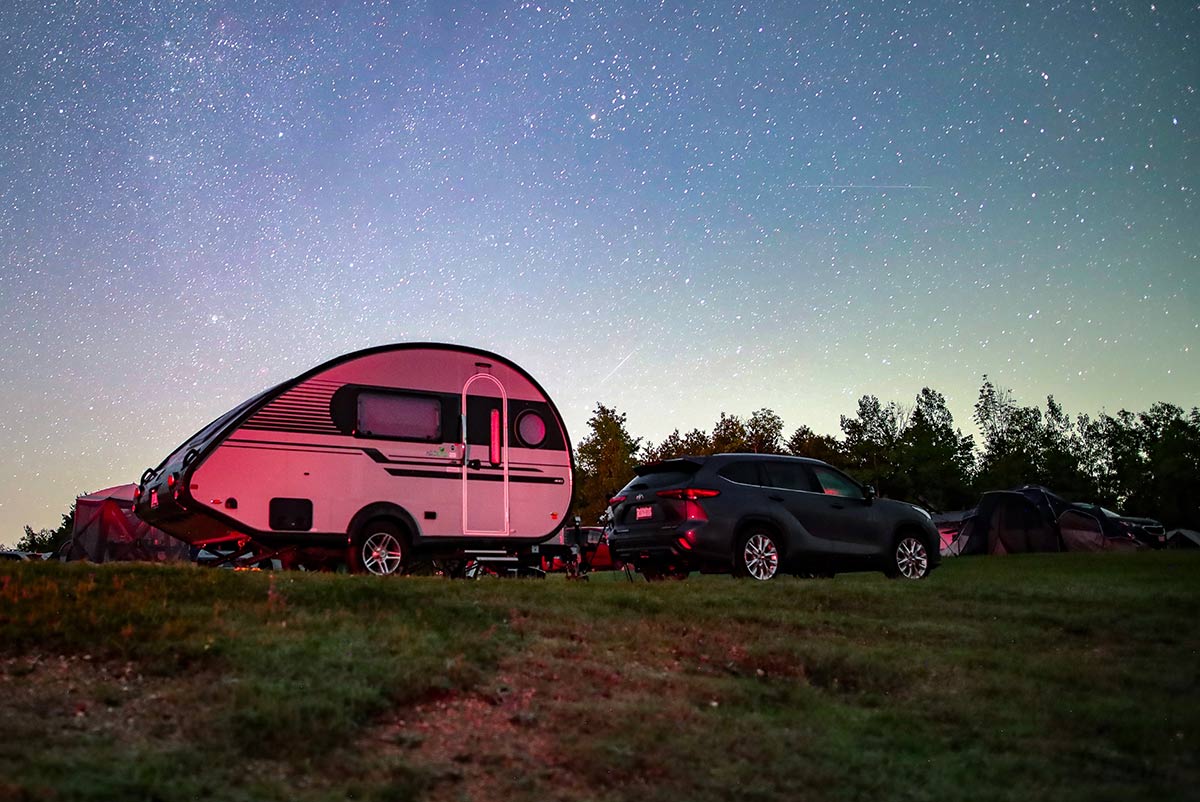
Camping under dark skies with no exterior camper light pollution (blinds up, lights off, automatic lights unplugged)
Be the Camper Everyone Loves Parking Next To

Ashley is an environmental educator, communication professional, and astrophotographer. She has extensive experience writing for diverse audiences to increase public awareness and engagement. Ashley is an active Advocate/Delegate with DarkSky International, helping to protect the nighttime environment from the harmful effects of light pollution through advocacy and outreach.
Related Content:
Excellent content and advice! We added a string of dimmable red fairy lights to the interior of our camper. It acts as a “night light” for our young kids keeps our eyes dark adapted as we go in and out throughout the night.