Rediscover the Night Sky: 6 Things You’re Missing Because of Light Pollution

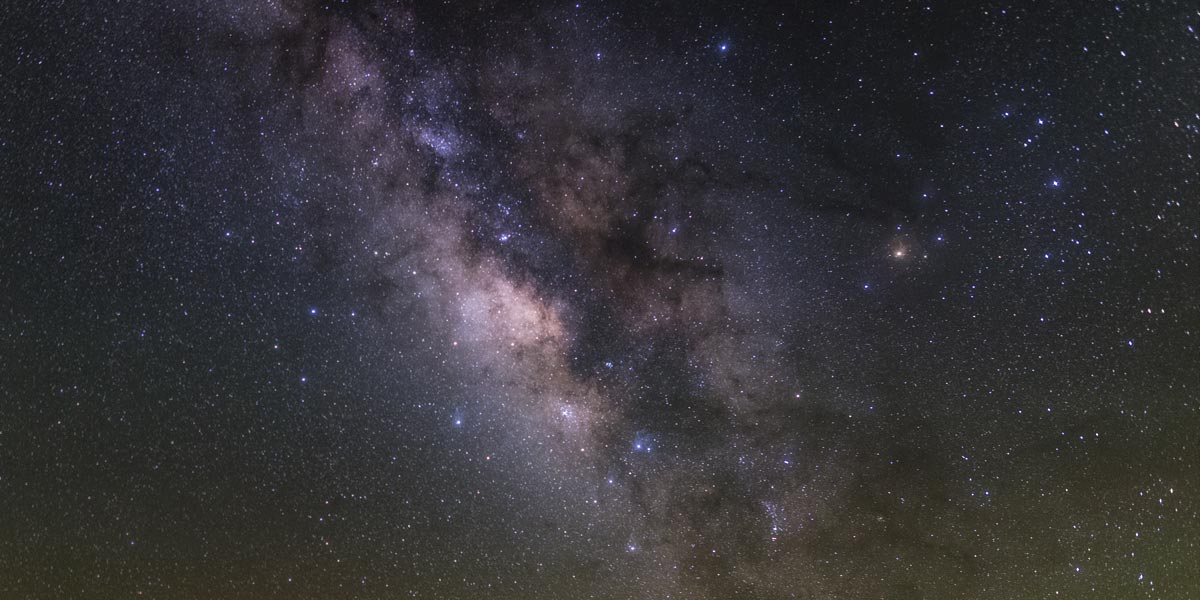
If you’ve ever stepped outside at night and looked up, it probably felt like you were seeing the night sky. A few bright stars, maybe a familiar constellation or two, and that’s it.
For most people, that is the night sky they know, but it’s only a small fraction of what’s actually there.
Over time, light pollution has changed our expectations. What was once a sky filled with stars has become something much more subdued, and for many, that’s all they’ve ever experienced. It’s easy to assume that’s just how the sky looks.
It wasn’t until my first time under a dark sky that I realized how much I had never actually seen before. The Milky Way core and its millions of stars. Beautiful detail and subtle structure that doesn’t exist in brighter locations.
This article isn’t about the complicated side of astronomy or astrophotography. It’s about rediscovering what the night sky really looks like and what light pollution has been quietly hiding from view – in celebration of International Dark-Sky Week.
1) The Milky Way (Our Galaxy)
One of the biggest differences between a light-polluted sky and a dark one is the Milky Way.
This faint, glowing band stretching across the sky is actually our home galaxy, seen from Earth looking out. It’s made up of millions of distant stars, along with clouds of gas and dust.
From a dark sky location, it’s unmistakable. But from most suburban or urban areas, it’s completely invisible.
My first time really seeing the Milky Way was as an adult at the Cherry Springs Star Party, and that experience is something I will never forget.

Milky Way from the Cherry Springs Star Party
I remember sitting there in my chair, looking up, not quite sure where to focus my attention. As it got darker and darker, there was so much to take in.
It wasn’t just a faint band across the sky – this band was textured, detailed, stretching from horizon to horizon. I couldn’t stop looking up, my mind wandering. It’s an experience that’s hard to fully describe until you see it for yourself.
Even in moderately dark skies (around Bortle 4), you might just begin to see it as a faint, hazy band. But under truly dark skies, it becomes something much more structured, something you can follow across the entire sky.
It’s Not Static – The Sky Changes Through the Night
One of the most surprising things about spending a full night under a dark sky is realizing how much the sky changes.
If you’re an astrophotographer, you’re already familiar with this. Carefully plan your targets and watch them drift across the sky as the night goes on. But for those new to observing, it’s something you might not expect at all.
The Milky Way slowly rises, arcs overhead, and shifts position as the Earth rotates. Constellations move with it, tilting and rotating hour by hour. It’s not a fixed backdrop; it’s something you can watch evolve.
Under light-polluted skies, it’s easy to miss this entirely. But in darker conditions, you begin to notice that the sky is dynamic and almost alive with motion.
2) Thousands of Faint Stars
Another immediate difference is simply the number of stars.
From a typical backyard, you might see a few dozen stars on a clear night. From a dark sky site, that number jumps into the millions.

City vs Dark Sky Shooting
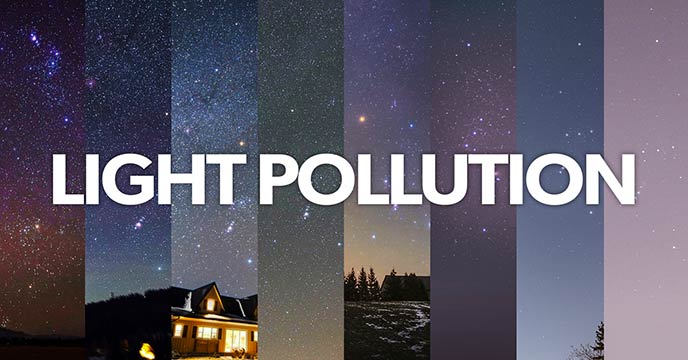
Light pollution hides the faintest stars first. As sky brightness increases, more and more of these stars disappear from view, leaving only the brightest ones behind.
This also changes how constellations appear. Under darker skies, familiar patterns can actually become harder to pick out, not because they’re gone, but because they’re surrounded by so many additional stars.
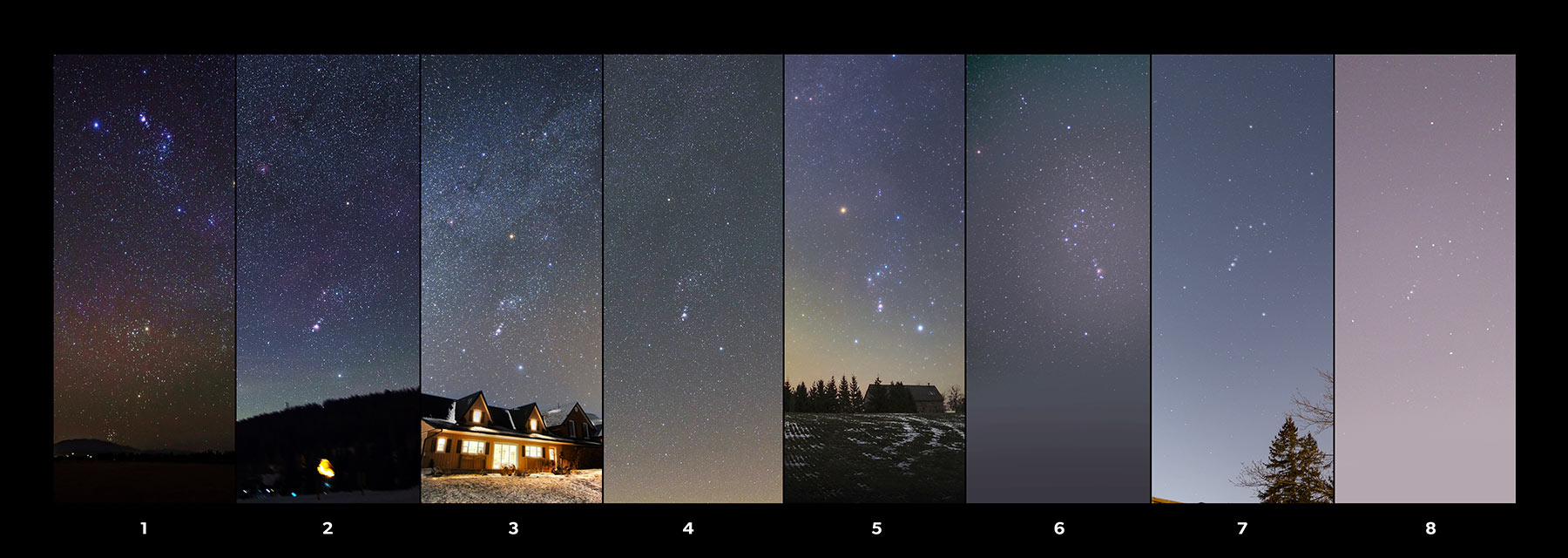
Orion Constellation from Bortle 1 to Bortle 8, showing the lack of detail and stars in the night sky.
If you have ever tried to polar align your telescope under truly dark skies, you know this.
Under light-polluted skies, Polaris stands out clearly as a bright reference point. But under a truly dark sky, it blends in among countless other stars making it surprisingly more difficult to identify. The sky goes from sparse to incredibly rich.
3) Galaxies & Nebulae (Visible to the Eye)
Another surprise for many people is that some deep-sky objects can actually be seen without a telescope.
The Andromeda Galaxy is visible to the naked eye from dark locations, appearing as a faint, elongated glow. The Orion Nebula shows up as a soft, misty patch in Orion’s sword.
When we were in Australia, seeing the Large Magellanic Cloud with the naked eye was one of those moments that really puts into perspective what’s possible under a dark sky. It’s not a faint smudge, it’s a distinct, detached patch of sky.
These objects are always there but in light-polluted skies, they’re usually completely hidden. Seeing them without any equipment can be a powerful moment. It’s often when the night sky starts to feel less like a collection of stars, and more like a vast, three-dimensional universe.
A Note for Astrophotographers
Under darker skies, it’s not just what you can see with your eyes that changes, the same is true for your camera.
Faint details that are difficult to capture from a light-polluted backyard begin to appear much more easily. Nebulae show more structure, galaxies reveal more of their shape, and the overall signal is much stronger.

The Horsehead Nebula under city skies (Bortle 6) vs dark skies (Bortle 2)
It’s one of the main reasons astrophotographers travel to dark sky locations; the difference in data quality can be significant.
4) The Sky Isn’t Just Black (Depth & Structure)
Even if you’ve seen the Milky Way before, there’s another level of detail that only becomes visible under very dark skies.
At first glance, the sky might appear as a simple black background with stars scattered across it. But under darker conditions, that changes completely.

Milky Way detail from the Southern Hemisphere
You begin to notice contrast – dark dust lanes cutting through the Milky Way, brighter star clouds clustered in certain regions, and subtle variations in brightness across the sky.
The Milky Way itself starts to look less like a smooth band and more like something textured and layered, and almost cloud-like in appearance. There are even hints of color.
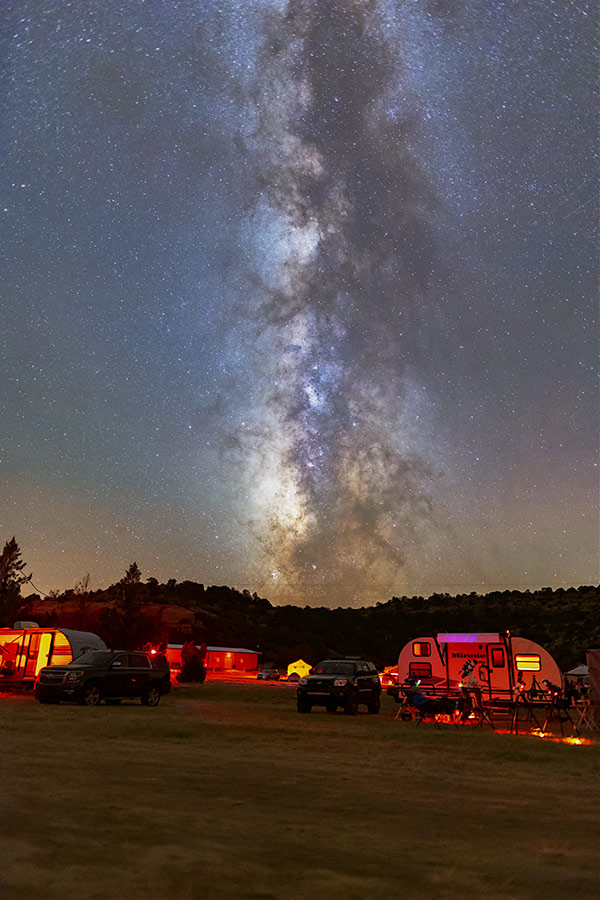
Milky Way under Bortle 1 skies in the Oklahoma desert
Instead of a washed-out gray sky, you may begin to notice warmer and cooler tones, especially in denser regions of the Milky Way. It’s subtle, but it adds to the sense that you’re looking into something complex and structured.
This is the difference between simply seeing the Milky Way, and seeing into it. In a Bortle 4 sky, you might recognize its presence. In a Bortle 1 or 2 sky, you begin to experience its depth.
5) Meteor Showers at Their Peak
Most people have tried to watch a meteor shower at some point in their life, but from a light-polluted sky, the experience can feel underwhelming.
You might wait several minutes between meteors (sometimes longer) never quite sure when the next one will appear. It becomes more about patience than anything else.
Under a truly dark sky, that experience changes. You begin to notice the fainter meteors that would otherwise be invisible. The sky feels more active.
Instead of waiting, you’re constantly watching and scanning, knowing another streak of light could appear at any moment.
During peak activity, it’s not unusual to see meteors every few minutes or even several within a short span of time. It turns into something much more immersive.
What once felt like a quiet, occasional event becomes something dynamic that you can get lost in for hours just by looking up.

‘The Perseid rain over the Kolonica Saddle’ by Petr Horálek (2015).
6) True Darkness (And What It Feels Like)
One of the most overlooked aspects of the night sky is darkness itself. It’s easy to think of darkness as simply the absence of light, but under a truly dark sky, it becomes part of the experience.
As your eyes begin to adjust, more of the sky slowly reveals itself. Fainter stars appear, subtle details come into view, and the sense of depth overhead begins to grow.
But the change isn’t just in the sky, it’s around you as well. Without the constant presence of artificial light, your surroundings feel different. Your eyes adapt not just to see more above, but to navigate the landscape in a more natural way.
The Experience of Darkness
As your eyes adjust, the sky becomes richer, and the environment around you changes.
There’s a stillness that’s hard to describe at first. Without the constant glow of artificial light, your surroundings feel different; they feel quieter, but also more alive.
You begin to notice things you might not have noticed before. The sound of wind moving through trees, insects, distant wildlife, and subtle movement in the landscape around you. Your sense of awareness shifts.
At first, it can feel unfamiliar. Not because anything is wrong, but because it’s something most of us rarely experience anymore. But after a few minutes, that feeling starts to settle.
Your eyes adjust. Your surroundings become clearer. The sky overhead fills with more and more detail. What felt unfamiliar begins to feel natural.
It’s a very different experience from stepping outside under a bright, urban sky where the night is never fully dark.
We’re Meant to Experience Darkness
For most of human history, darkness was a natural part of everyday life. We evolved under skies filled with stars, with natural cycles of light and dark shaping how we slept, moved, and experienced the world around us.
Today, artificial lighting has changed that experience. In many places, true darkness is hard to find, and with it, that connection to the natural night has started to fade.
But when you step outside under a truly dark sky (even briefly), it begins to come back. What felt unfamiliar at first starts to feel natural again.
Darkness isn’t just the absence of light. It’s part of a rhythm we’ve always lived with and something we’re still connected to, even if we don’t experience it as often.
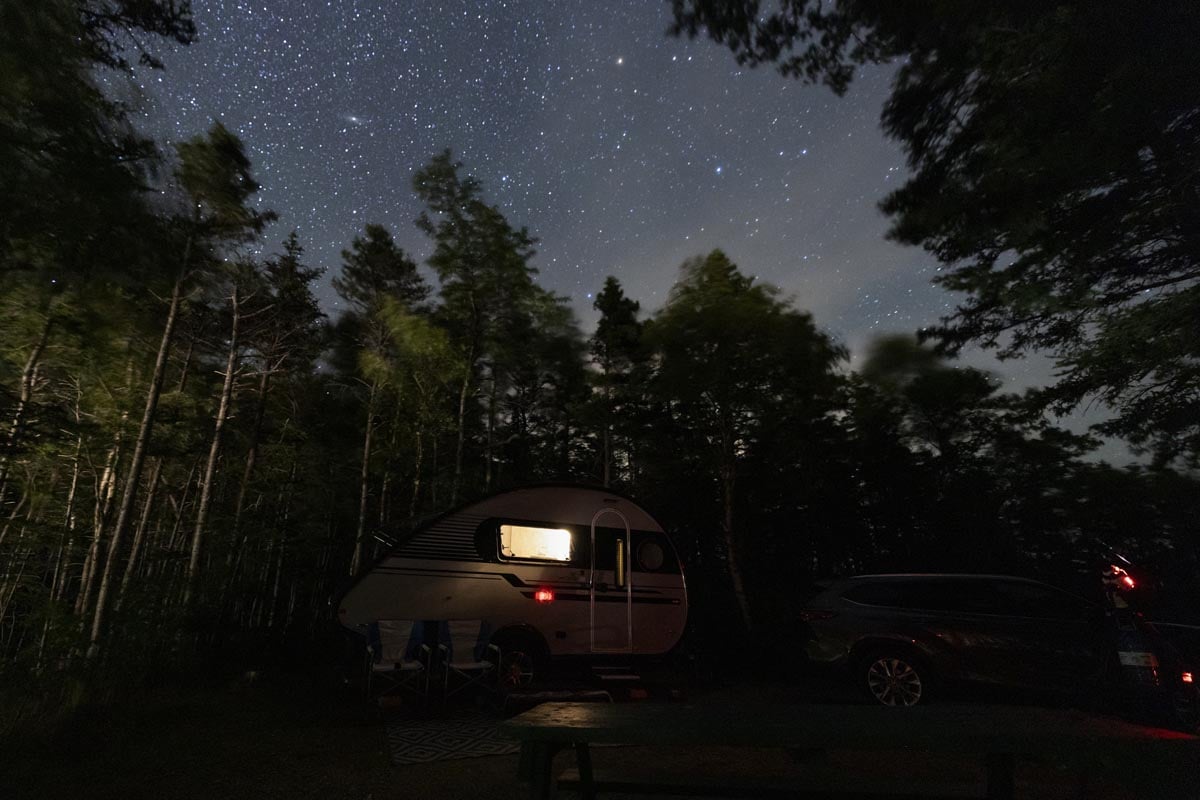
How to Experience More of the Night Sky
The good news is that experiencing more of the night sky doesn’t require perfect conditions or a remote, once-in-a-lifetime trip.
Much of what we’ve talked about is still within reach; you just have to make a few small changes. Even simple adjustments can reveal more than you might expect.
Pay Attention to the Moon Phase
The phase of the Moon has a major impact on how much you can see. A bright Moon can wash out faint stars and reduce contrast across the sky, even in otherwise dark locations.
If your goal is to see the Milky Way or fainter objects, planning around the new moon or observing when the Moon has set, can make a significant difference.
Seek Out Darker Skies
One of the most effective ways to see more is simply to get a little farther away from artificial light.
Light pollution maps can help you find darker areas nearby, but you don’t always need to travel far. Even a short drive outside of town can reveal a surprising increase in stars.
If you’ve only ever observed from your backyard, experiencing a darker sky for the first time can completely change your expectations of what’s possible.
Reduce Local Light
If you’re staying close to home, reducing nearby light sources can still improve your view.
Turn off outdoor lights when possible, or position yourself so that direct light isn’t entering your field of view. Even standing in the shadow of a building or setting up behind a fence can help block stray light.
These small adjustments improve contrast, making faint stars and details easier to see.
If you’re interested in taking it a step further, there are simple ways to reduce light pollution in your own space, which can make a long-term difference.
Let Your Eyes Adapt
One of the most overlooked steps is simply giving your eyes time to adjust.
It takes about 20–30 minutes for your night vision to fully develop. During that time, your eyes become more sensitive, allowing you to see fainter stars, more subtle details, and the ability to navigate without the presence of white light.
If you check your phone or look at a bright light, that process resets so it’s worth being intentional about limiting exposure.
Give Yourself Time Under the Stars
This is something that’s easy to overlook. Many people don’t realize how much more becomes visible just by staying outside, in darkness, longer.
Spending just a few minutes outside might give you a quick look at the stars but the experience changes the longer you stay.
As your eyes adjust and your surroundings settle, more details begin to emerge. The sky becomes richer, and you start to notice things you might have missed at first glance.
The Sky Is Still There
The night sky hasn’t changed. The Milky Way is still overhead. The stars are still there. The galaxies and nebulae haven’t gone anywhere. But for many of us, they’re hidden behind layers of artificial light at night (ALAN).
Spending time under a darker sky is a reminder of what’s always been there and what we still have the opportunity to experience.
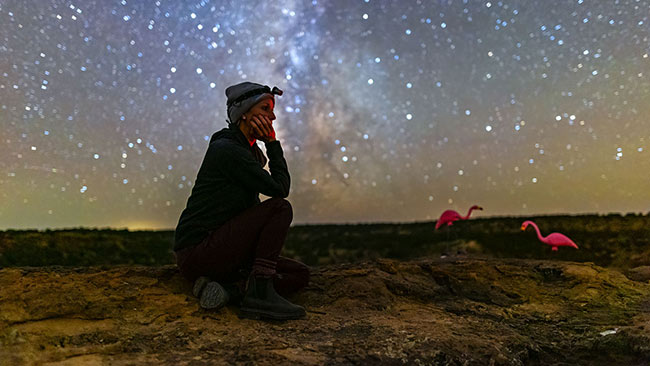
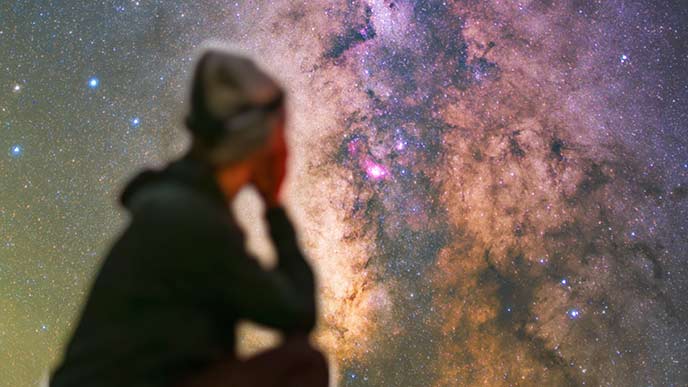
Sitting under Bortle 1 skies and the Milky Way at the Okie-Tex Star Party
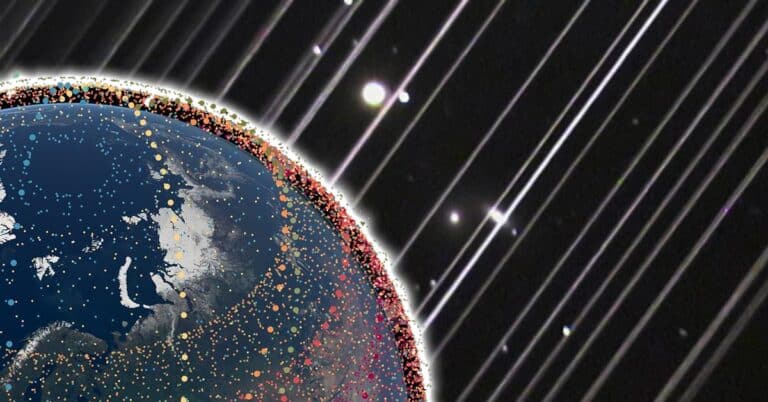
At the same time, truly dark skies are becoming harder to find. In many places, the glow of artificial light continues to expand, gradually pushing that experience farther out of reach. What was once a normal part of human life is now something many people have never seen.
But it doesn’t have to disappear. Even small efforts, like seeking out darker skies, being mindful of lighting, and simply taking the time to look up, can help preserve that connection.
Because once you’ve seen a truly dark sky, it changes the way you think about what the night is supposed to look like and that experience is something worth holding onto.

Ashley is an environmental educator, communication professional, and astrophotographer. She has extensive experience writing for diverse audiences to increase public awareness and engagement. Ashley is an active Advocate/Delegate with DarkSky International, helping to protect the nighttime environment from the harmful effects of light pollution through advocacy and outreach.