October 2026 Night Sky: What to See

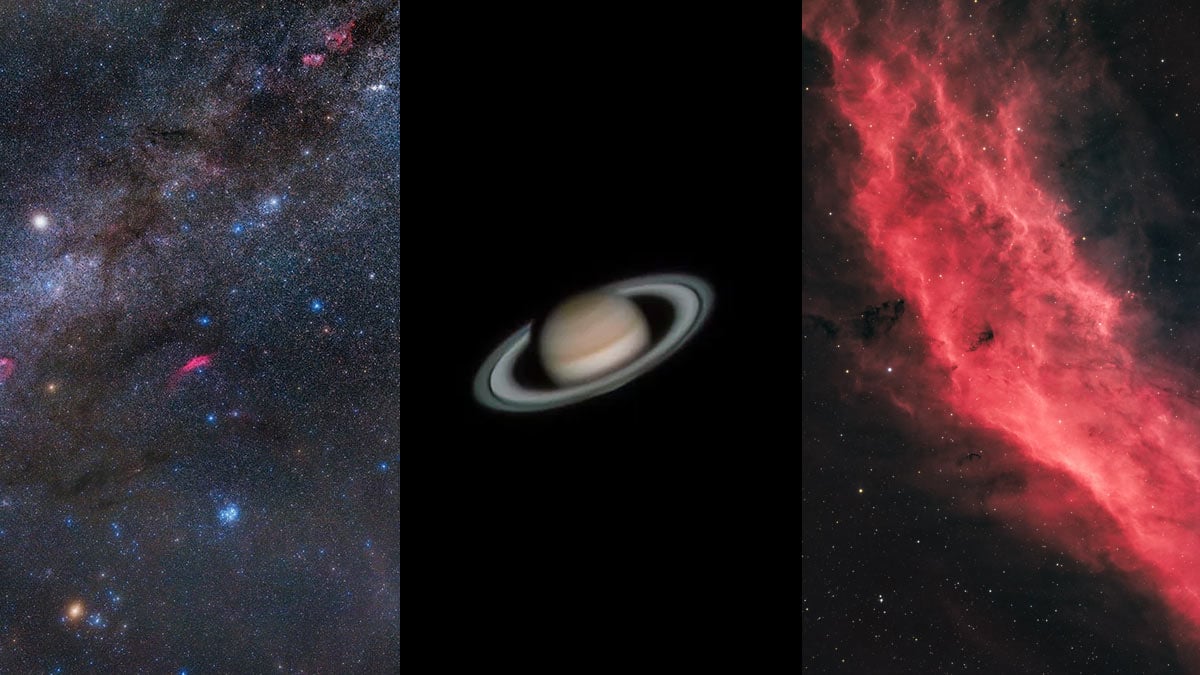
October gets off to a busy start, with several of the month’s best astronomy events packed into the first ten days.
Saturn reaches opposition on October 4, the Moon passes Mars and Jupiter over the following two mornings, and the Draconid meteor shower arrives just before the October 10 New Moon.
That New Moon also gives astrophotographers an excellent dark-sky window, just as fall targets such as the California Nebula, Andromeda Galaxy, and Heart and Soul nebulae move into good evening positions.
Later in the month, the Orionid meteor shower returns, Saturn gets an easy-to-find visit from the Moon, and October wraps up with the Hunter’s Moon.
Some of these events are best appreciated through a telescope or camera, while others are easy to see with nothing more than your eyes.
What to Watch During October
Here are the main astronomy events to look for this month:
- October 4: Saturn reaches opposition and is visible throughout the night.
- October 5–6: Look east before sunrise as the waning crescent Moon passes Mars and then Jupiter. From some locations, the Moon will pass directly in front of one of the planets.
- October 8–9: Watch for the Draconid meteor shower under exceptionally dark, nearly moonless skies.
- October 7–13: Take advantage of the New Moon to photograph the California Nebula and other fall deep-sky targets.
- October 21–22: Watch for the Orionid meteor shower, created by debris left behind by Halley’s Comet.
- October 24: Find Saturn beside the nearly full Moon in an easy evening pairing.
- October 25–26: Photograph the Hunter’s Moon as it rises near sunset.
The first half of the month offers the darkest skies, while the final week shifts toward bright, easy-to-find targets such as Saturn and the Moon.
In This Guide
- October events at a glance
- Moon phases
- Events by location
- Saturn at opposition
- Moon with Mars and Jupiter
- Draconid meteor shower
- Photograph the California Nebula
- Orionid meteor shower
- Moon near Saturn
- Photograph the Hunter’s Moon
October 2026 Astronomy Events at a Glance
| Event or Target | Best Date | Best For | Equipment |
|---|---|---|---|
| Saturn at opposition | October 4 | Planetary observers and imagers | Naked eye or telescope |
| Moon with Mars and Jupiter | Before sunrise October 5–6 | Early risers and photographers | Naked eye, binoculars, telescope, or camera |
| Draconid meteor shower | Evening of October 8 into October 9 | Meteor watchers | Naked eye, or camera and tripod |
| California Nebula under a New Moon | October 7–13 | Deep-sky astrophotographers | Camera and telescope, camera lens, or smart telescope |
| Orionid meteor shower | October 21–22 | Meteor watchers | Naked eye, or camera and tripod |
| Moon near Saturn | Evening of October 24 | Visual observers and photographers | Naked eye, binoculars, or camera |
| Hunter’s Moon | October 25–26, depending on time zone | Everyone, especially photographers | Naked eye, binoculars, or camera and telephoto lens |
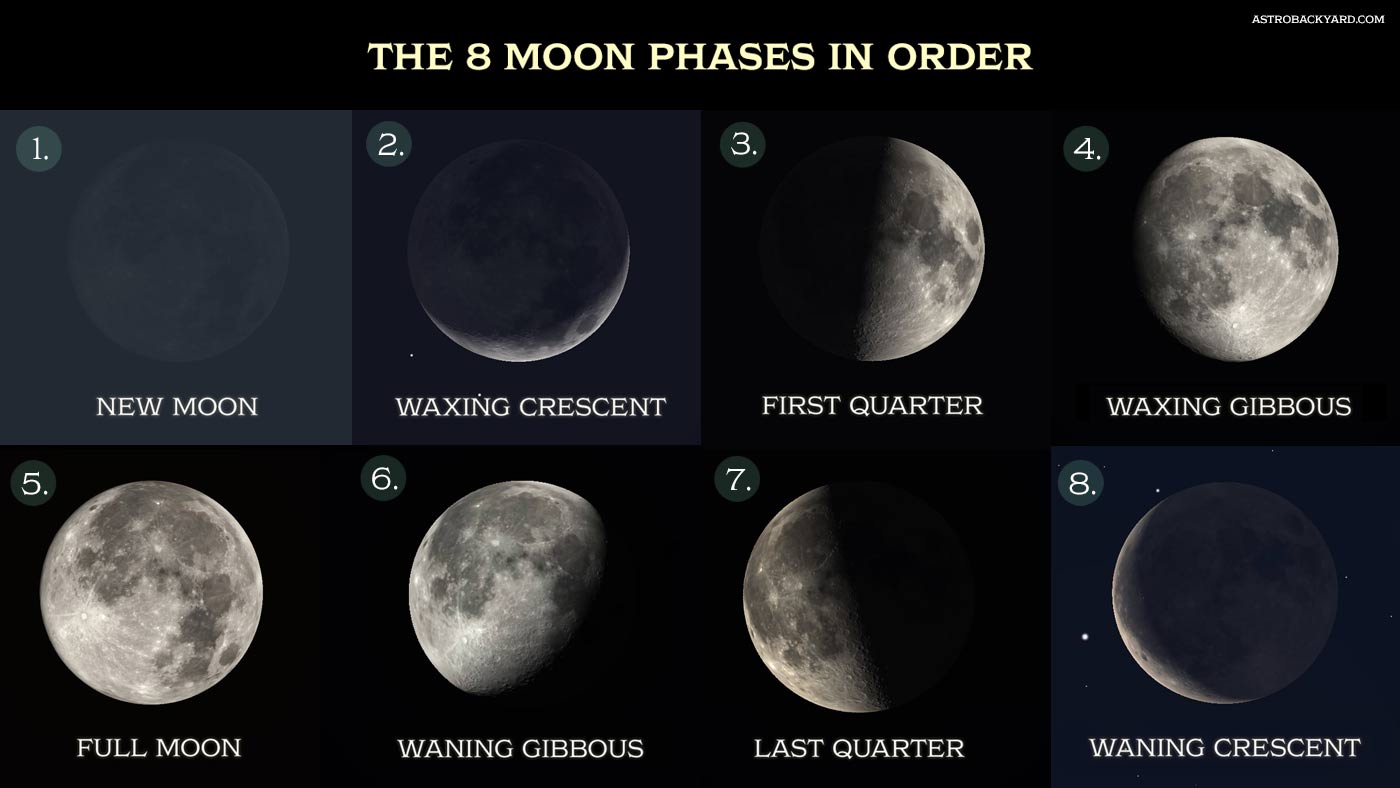
Moon Phase
Moonlight has a noticeable effect on this month’s observing conditions.
The October 10 New Moon gives us excellent conditions for the Draconids and deep-sky imaging, while the bright waxing Moon makes the Orionids more challenging later in the month.
The dates below are based on Universal Time, so a phase may fall on the previous calendar date in some North American time zones.
| Moon Phase | Date | What It Means for Observing |
|---|---|---|
| 🌗 Last Quarter | October 3 | Darker evenings as the Moon rises later |
| 🌑 New Moon | October 10 | The best dark-sky window for deep-sky observing and astrophotography |
| 🌓 First Quarter | October 18 | A good evening for viewing craters and surface details along the lunar terminator |
| 🌕 Full Moon | October 26 | The October Full Moon rises near sunset; in the Northern Hemisphere, it is the Hunter’s Moon |
Most of October’s highlights are visible across North America, but there are a few important differences depending on where you live. The Moon’s occultations of Mars and Jupiter follow limited geographic paths, while the Draconids strongly favour Northern Hemisphere observers.
Which October Events Can You See From Your Location?
Most of October’s highlights are visible across North America, but there are a few important differences depending on where you live. The Moon’s occultations of Mars and Jupiter follow limited geographic paths, while the Draconids strongly favor Northern Hemisphere observers.
| Region | Best October 2026 Highlights | Important Limitation |
|---|---|---|
| Canada and the United States | Saturn at opposition, Moon with Mars and Jupiter, Draconids, California Nebula, Orionids, Moon near Saturn, and the Hunter’s Moon | The October 5–6 occultations are only visible from certain locations, and the Orionids are affected by moonlight |
| Europe | Saturn at opposition, Draconids, California Nebula, Orionids, Moon near Saturn, and the October Full Moon | The Jupiter occultation mainly favours parts of the Americas |
| Central and South America | Saturn, Moon and planet pairings, Orionids, and the October Full Moon | The Draconid radiant becomes less favourable as you move farther south |
| Southern Hemisphere | Saturn, Orionids, and the October Full Moon | The Draconids are primarily a Northern Hemisphere event, and the deep-sky recommendations in this guide are written for mid-northern latitudes |
| Mid-northern dark-sky locations | Draconids, California Nebula, other fall deep-sky targets, and Orionids | The bright waxing Moon interferes with the Orionids later in the month |
| Urban and suburban locations | Saturn, Moon with Mars and Jupiter, Moon near Saturn, and the Hunter’s Moon | Light pollution makes the California Nebula and meteor showers more difficult |
1. See Saturn at Opposition
Best time: October 4, 2026
October starts with one of the best planetary observing opportunities of the year.
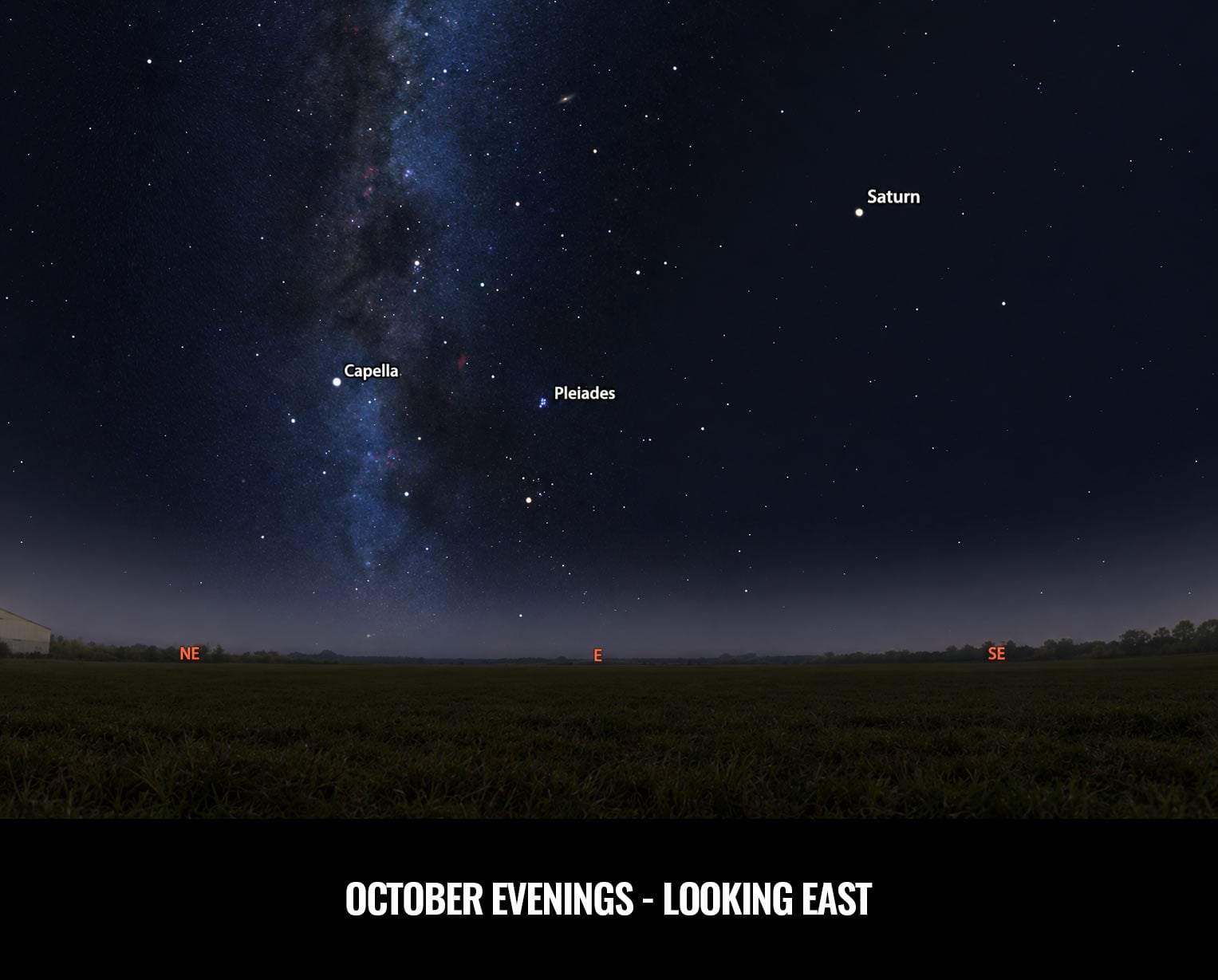
Saturn reaches opposition on October 4. This happens when Earth passes between Saturn and the Sun, placing the planet opposite the Sun in our sky.
Around opposition, Saturn rises near sunset, reaches its highest point around the middle of the night, and remains visible until around sunrise. It is also near its brightest and largest apparent size for the year.
You don’t need a telescope to find Saturn. To the naked eye, it looks like a bright, steady point of light. But this is definitely one of those events where pulling out a telescope makes a big difference.
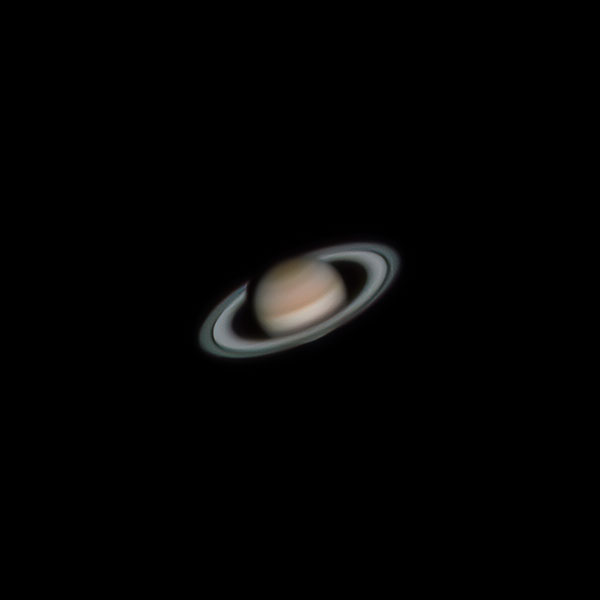
Saturn through a telescope
Even a small telescope can reveal Saturn’s rings, while larger instruments and steady atmospheric conditions may show more structure in the rings and some of Saturn’s brighter moons.
The rings are still relatively narrow compared with the wide-open views we had several years ago. Earth crossed Saturn’s ring plane in 2025, and the rings are gradually opening up again. By opposition this year, they should be clearly visible through a small telescope but still noticeably thinner than they appear in many familiar Saturn images.

Saturn wide-field view
You also don’t have to observe Saturn on the exact night of opposition. Its brightness and apparent size change very little over the course of a few days, so if October 4 is cloudy, try again on the next clear night.
Light pollution isn’t much of a problem either. Saturn is bright enough to observe from a city or suburban backyard, making this one of the easiest telescope events of the month.
2. See the Moon Pass Mars and Jupiter Before Sunrise
Best mornings: October 5 and October 6, 2026
The mornings immediately after Saturn’s opposition bring two more easy solar-system events.
On October 5, the waning crescent Moon passes very close to Mars. The two will appear together in the morning sky, making the Moon an easy guide if you aren’t used to finding Mars.
From some parts of Canada, the Moon will actually pass in front of Mars in a lunar occultation. Most observers, however, will simply see a close Moon–Mars pairing.
The following morning brings an even closer encounter.
On October 6, the Moon passes extremely close to Jupiter. From parts of the Americas, the Moon will pass directly in front of Jupiter, temporarily hiding the planet from view.
The exact visibility and timing of the occultation depend heavily on where you are, so check a planetarium app or occultation map for your location. Even if you’re outside the occultation path, the close Moon–Jupiter pairing will still be worth seeing.
Jupiter will be very easy to identify. It will be the bright point of light beside the crescent Moon, while Mars will appear noticeably fainter and warmer in colour the morning before.
Both mornings also offer nice photography opportunities. A telephoto lens can isolate the Moon and planet, while a wider focal length gives you room to include the horizon and the colours of the pre-dawn sky.
If you have a telescope set up on October 6, Jupiter is worth a closer look before twilight becomes too bright. Even a small telescope can reveal its four bright Galilean moons and some detail in its cloud bands.
3. Watch for the Draconid Meteor Shower
Best time: Evening of October 8 into October 9, 2026
The Draconids aren’t usually one of the meteor showers I would suggest planning an entire night around, but the observing conditions are especially favourable this year.
The shower is expected to peak during the evening of October 8 across much of North America.
The Draconids typically produce only around five meteors per hour under ideal conditions, so don’t expect anything like the Perseids. The big advantage this year is the Moon.
The shower arrives just before the October 10 New Moon, giving us an almost completely dark sky. That means even the fainter Draconid meteors have a better chance of standing out.
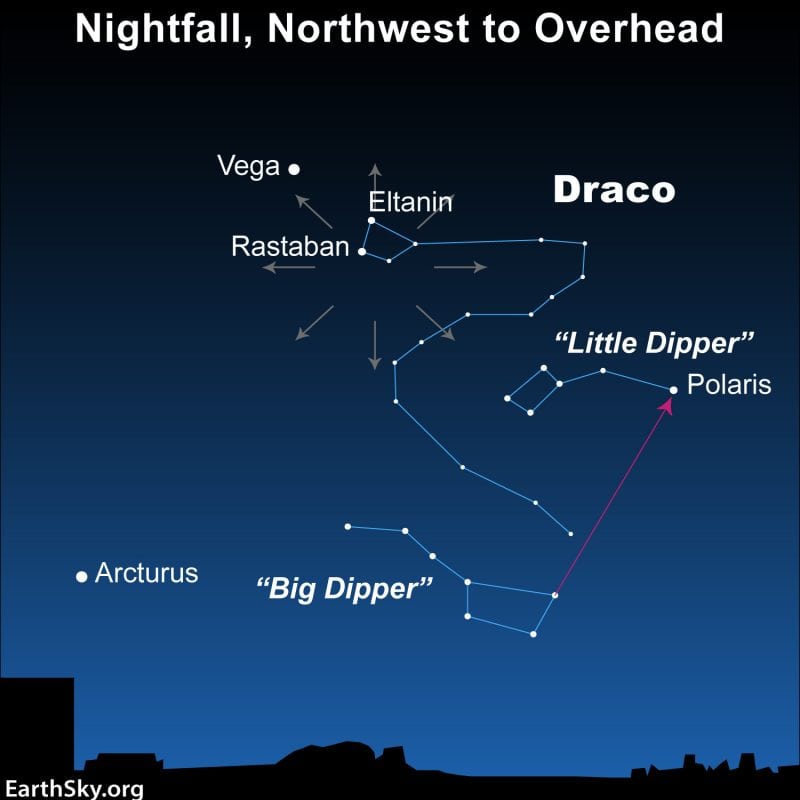
Radiant point for the Draconids meteor shower | EarthSky.org
There’s another reason this is an easy shower to watch: you don’t need to stay outside until the middle of the night.
Unlike many meteor showers that are best before sunrise, the Draconid radiant in the constellation Draco is already high in the evening sky for much of the Northern Hemisphere. That makes the hours after nightfall a good time to look.
Draconid meteors are also relatively slow-moving, which can make them easier to notice as they cross the sky.
You don’t need to look directly at Draco. Find the darkest location you reasonably can, give your eyes time to adjust, and watch a large area of the sky.
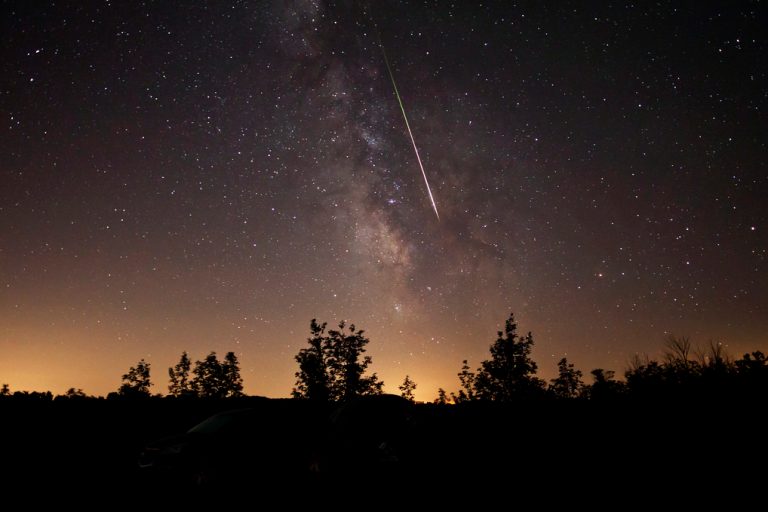
For photography, use a wide-angle lens on a sturdy tripod, focus manually on the stars, and take continuous exposures. With a lower-rate shower like this, collecting lots of frames gives you the best chance of catching one.
4. Photograph the California Nebula Around the New Moon
Best nights: Roughly October 7–13, 2026
The stretch around the October 10 New Moon is the part of the month I would build a deep-sky imaging session around.
One target that fits this time of year particularly well is the California Nebula (NGC 1499) in Perseus.
The California Nebula is a large hydrogen-rich emission nebula located about 1,500 light-years away. From mid-northern latitudes, fall through winter is one of the best times of year to photograph it.
It is also much larger in the sky than you might expect. The nebula stretches roughly 2.5 degrees across, or about five times the apparent width of the Full Moon.
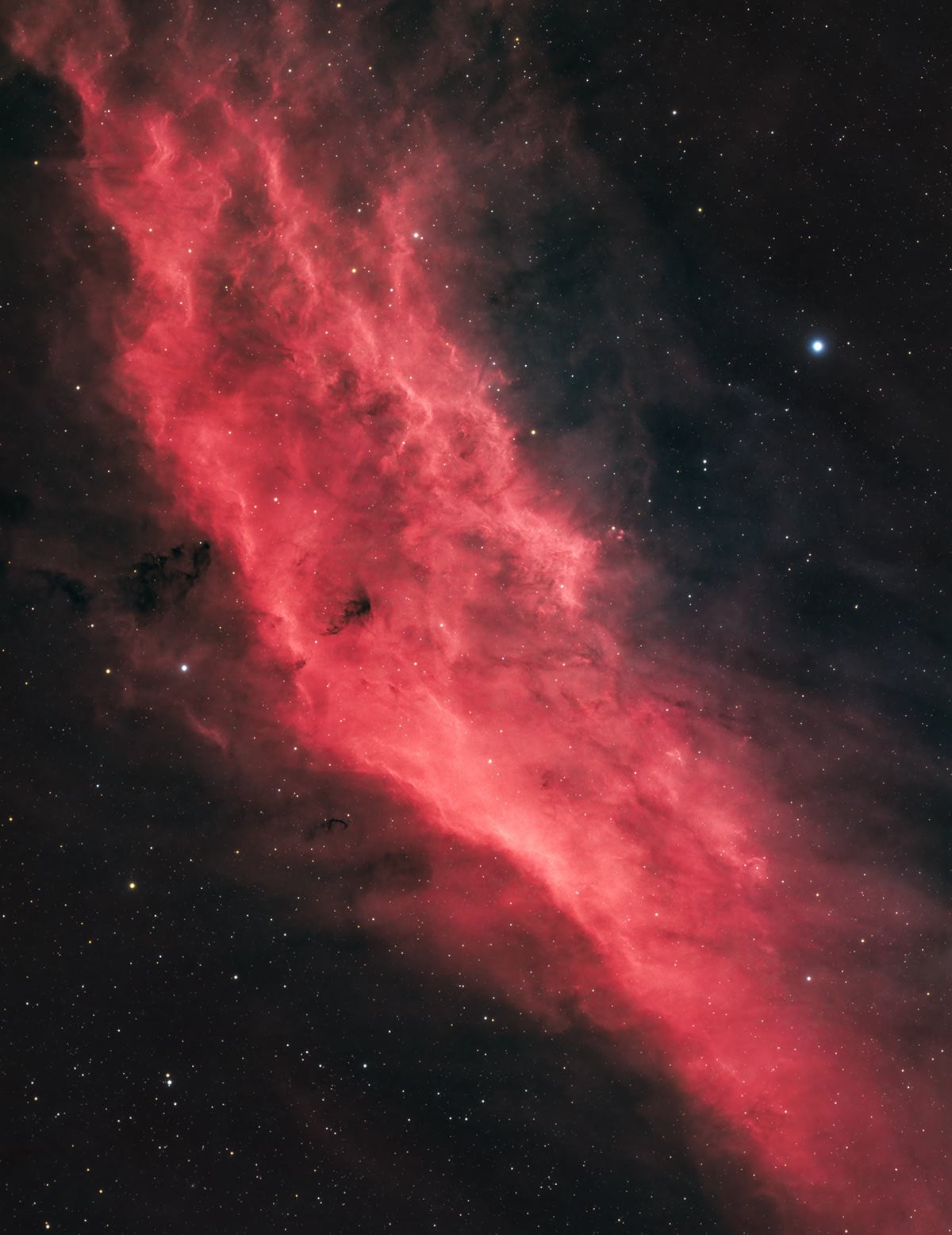
The California Nebula.
That means you don’t necessarily need a large telescope. A small refractor or telephoto camera lens can actually be a better fit.
A focal length around 135mm can frame the entire nebula nicely, while a small refractor gives you a closer look at its brighter structures.
Visually, the California Nebula is challenging because its light is spread across such a large area. Even under a dark sky, it won’t look anything like the detailed red images produced through long-exposure photography.
A camera is where this target really starts to come alive. Because it is dominated by hydrogen-alpha emission, an astro-modified camera or a dedicated astronomy camera is particularly effective. A narrowband or dual-narrowband filter can also help if you are imaging from a light-polluted area.
Other deep-sky targets worth considering during the October New Moon include:
- Andromeda Galaxy (M31)
- Triangulum Galaxy (M33)
- Heart Nebula (IC 1805)
- Soul Nebula (IC 1848)
- Double Cluster in Perseus
- Pleiades (M45)
Some of the summer targets in Cygnus are still available during October too, although they are moving farther west as the evening progresses.

October is a great month to photograph the Andromeda Galaxy.
5. Watch for the Orionid Meteor Shower
Best time: Late October 21 into the morning of October 22, 2026
The second meteor shower of the month comes with a much stronger reputation, but less cooperative Moon conditions.
The Orionids are active throughout much of October and are expected to peak around October 21–22. Under dark, ideal conditions, the shower can produce around 10–20 meteors per hour.
These meteors come from debris left behind by Halley’s Comet.
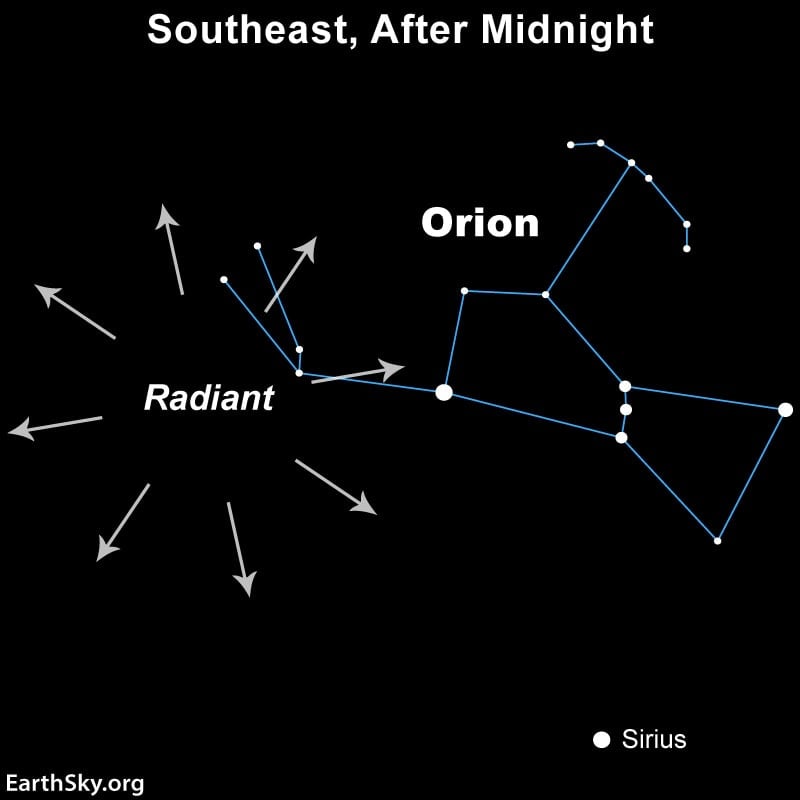
The Orionids radiant point near the upraised club of the constellation Orion | EarthSky.org
As Earth moves through that debris trail, tiny particles enter our atmosphere at extremely high speeds. Orionid meteors travel at about 66 kilometres per second, making them some of the faster meteors you’ll see during the year.
Unfortunately, the Moon isn’t nearly as helpful for the Orionids as it is for the Draconids.
A bright waxing gibbous Moon will be in the sky during part of the peak, washing out many of the fainter meteors. The best opportunity will come after the Moon sets and before morning twilight begins.
That means the hours before sunrise are your best chance.
The radiant is near the constellation Orion, but don’t stare directly at it. Meteors can appear anywhere across the sky, and longer trails are often visible farther away from the radiant.
If you’re photographing the shower, use a wide-angle lens and point toward a large, relatively dark part of the sky. With the bright Moon around for part of the night, you may need to adjust your exposure settings compared with a completely moonless meteor session.
The conditions aren’t perfect this year, but if you’re willing to wait until after moonset, the Orionids are still worth watching.
6. See the Moon Near Saturn
Best time: Evening of October 24, 2026
If you missed Saturn at opposition earlier in the month, October 24 gives you an extremely easy way to find it. The nearly full Moon passes about 7 degrees from Saturn that evening.
That isn’t an especially tight conjunction, but in this case that works well for casual observing. Both objects are bright and easy to see with the naked eye, and the separation is wide enough to make a noticeable pairing in the evening sky.
Once the sky darkens, find the bright Moon and look nearby for Saturn.
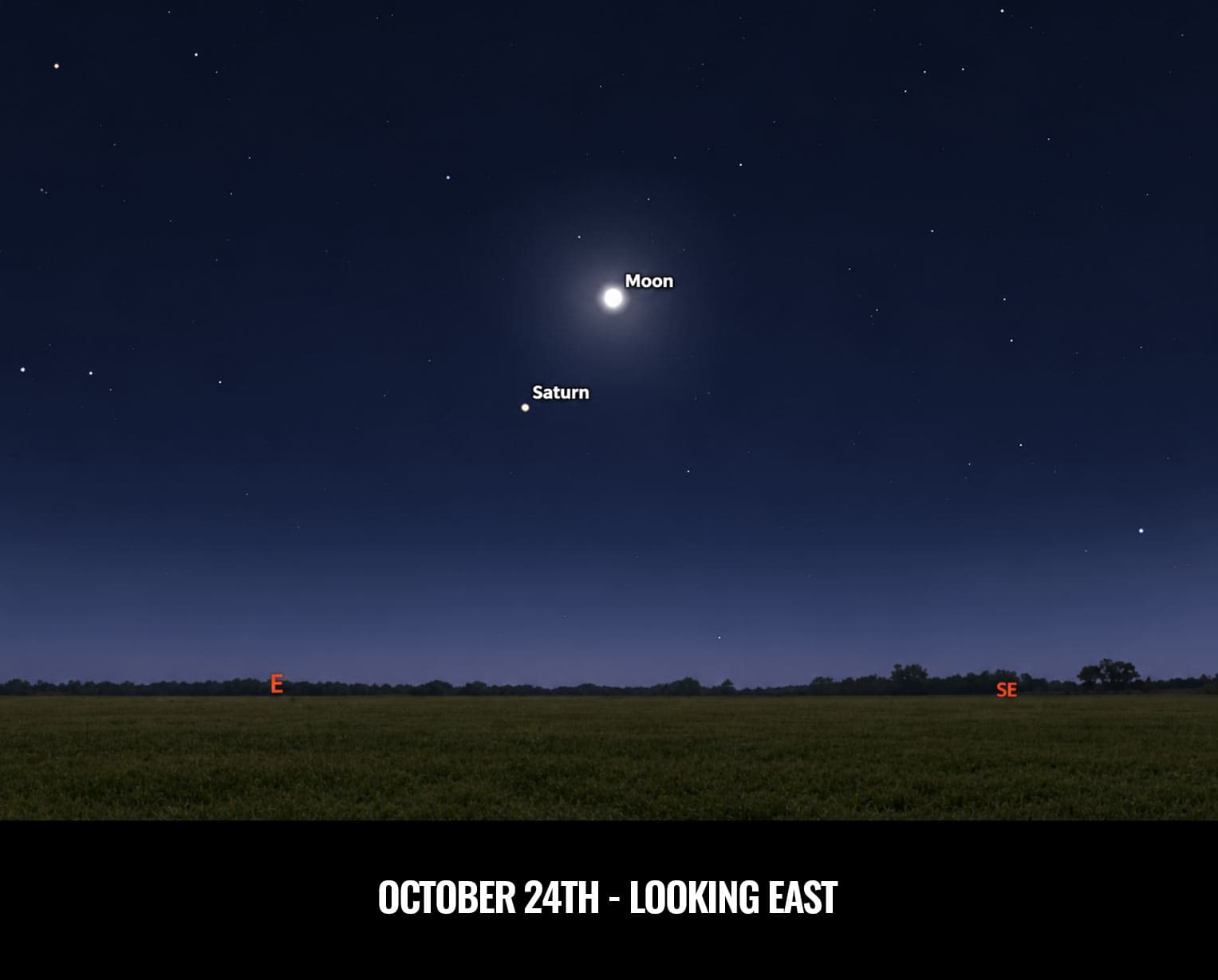
This is a particularly good event for beginners who have never knowingly identified Saturn before. Once you know what you’re looking at, you may be surprised by how easy the planet is to find again on future nights.
Because Saturn reached opposition only a few weeks earlier, it is also still in an excellent position for telescope observing. After you’ve found it using the Moon, put a telescope on Saturn and look for the rings.
For photography, you’ll want a wider field of view than you would use for a close conjunction. A standard or short telephoto lens can capture both objects together, while a wider composition gives you the opportunity to include a landscape or foreground subject.
The Moon will be very bright by this point in the month, so it isn’t a great night for faint deep-sky observing. But for an easy evening astronomy event from the backyard, this one is hard to miss.
7. Photograph the Hunter’s Moon
Best time: October 25–26, 2026, depending on your time zone
The final event on this month’s list is also the easiest one to see.
The October Full Moon is traditionally known as the Hunter’s Moon. In 2026, the Moon reaches its exact full phase just after midnight EDT on October 26. That means the exact Full Moon occurs late on October 25 across much of the rest of North America.
For photography, the exact minute of the Full Moon isn’t especially important. What matters more is when the Moon rises and where it will appear along your horizon.

Related Article: How To Photograph the Moon
A Full Moon rising shortly after sunset can look much more interesting than one photographed high in a black sky. The low Moon gives you the chance to include a foreground subject such as a tree, building, lighthouse, mountain, barn, or distant skyline.
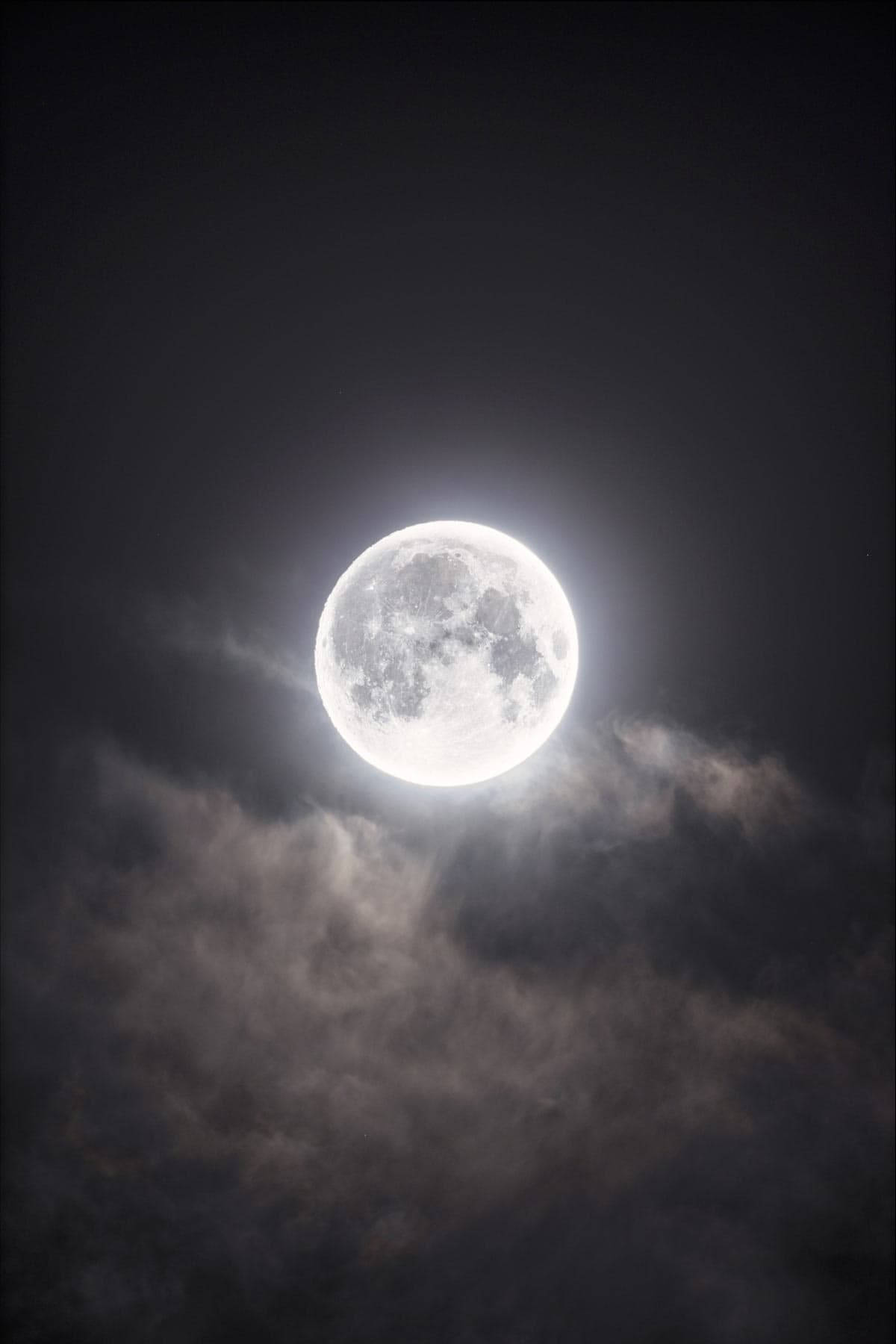
The Hunter’s Moon captured with a DSLR and Lens from our backyard.
A long telephoto lens can make the Moon appear much larger relative to that foreground, but you need to plan your shooting position carefully.
Check the Moon’s rise time and azimuth for your location beforehand and work backward from the foreground you want to use. Moving even a relatively short distance can significantly change where the Moon appears behind a distant object.
Because the Moon is so bright, you don’t need especially dark skies. In fact, this is one of the easiest astrophotography opportunities of the month from an urban or suburban location.
And, of course, you don’t need a camera. If the weather is clear, step outside around moonrise and watch the Hunter’s Moon come up.
Plan Your October Under the Stars
If you’re deciding which October nights are worth keeping open, these are the dates I would prioritize:
- Planetary viewing: Keep October 4 open for Saturn at opposition. It remains an excellent telescope target throughout the month.
- Early risers: Watch the Moon pass Mars and Jupiter before sunrise on October 5–6.
- Meteor showers: The Draconids have excellent Moon conditions on October 8, while the Orionids are better after moonset around October 21–22.
- Deep-sky astrophotography: Keep roughly October 7–13 open, with the darkest skies centred around the October 10 New Moon.
- Fall targets: The California, Heart, and Soul nebulae are moving into good positions, along with Andromeda, M33, the Double Cluster, and the Pleiades.
- Beginners: October 24 is an easy night to identify Saturn using the nearly full Moon as your guide.
- Lunar photography: Start planning a Hunter’s Moon composition ahead of October 25–26 rather than choosing a foreground at the last minute.
October nights can also get surprisingly cold once you’re standing still beside a telescope or camera for a few hours. Even if the afternoon feels comfortable, bring an extra layer if you’re heading somewhere darker and planning to stay out late.
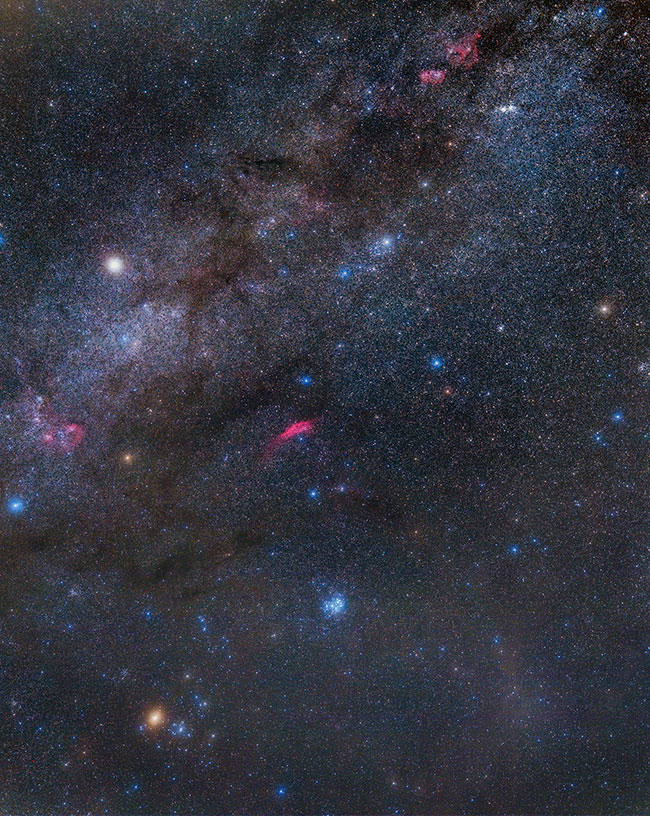
Deep-Sky Objects in the Fall Sky (looking towards Perseus).
Make the Most of October’s Clear Nights
October is a great month to spend more time under the stars, with earlier darkness and plenty of opportunities to enjoy the night sky before the colder months settle in.
As always, clear weather will ultimately decide which events you get to see, so keep an eye on the forecast and take advantage of the nights that cooperate. Even if you miss a specific date, many of this month’s planets and deep-sky targets will still be waiting on the next clear night.
Hopefully, you get a few good ones this October.

Ashley is an environmental educator, communication professional, and astrophotographer. She has extensive experience writing for diverse audiences to increase public awareness and engagement. Ashley is an active Advocate/Delegate with DarkSky International, helping to protect the nighttime environment from the harmful effects of light pollution through advocacy and outreach.