November 2026 Night Sky: What to See

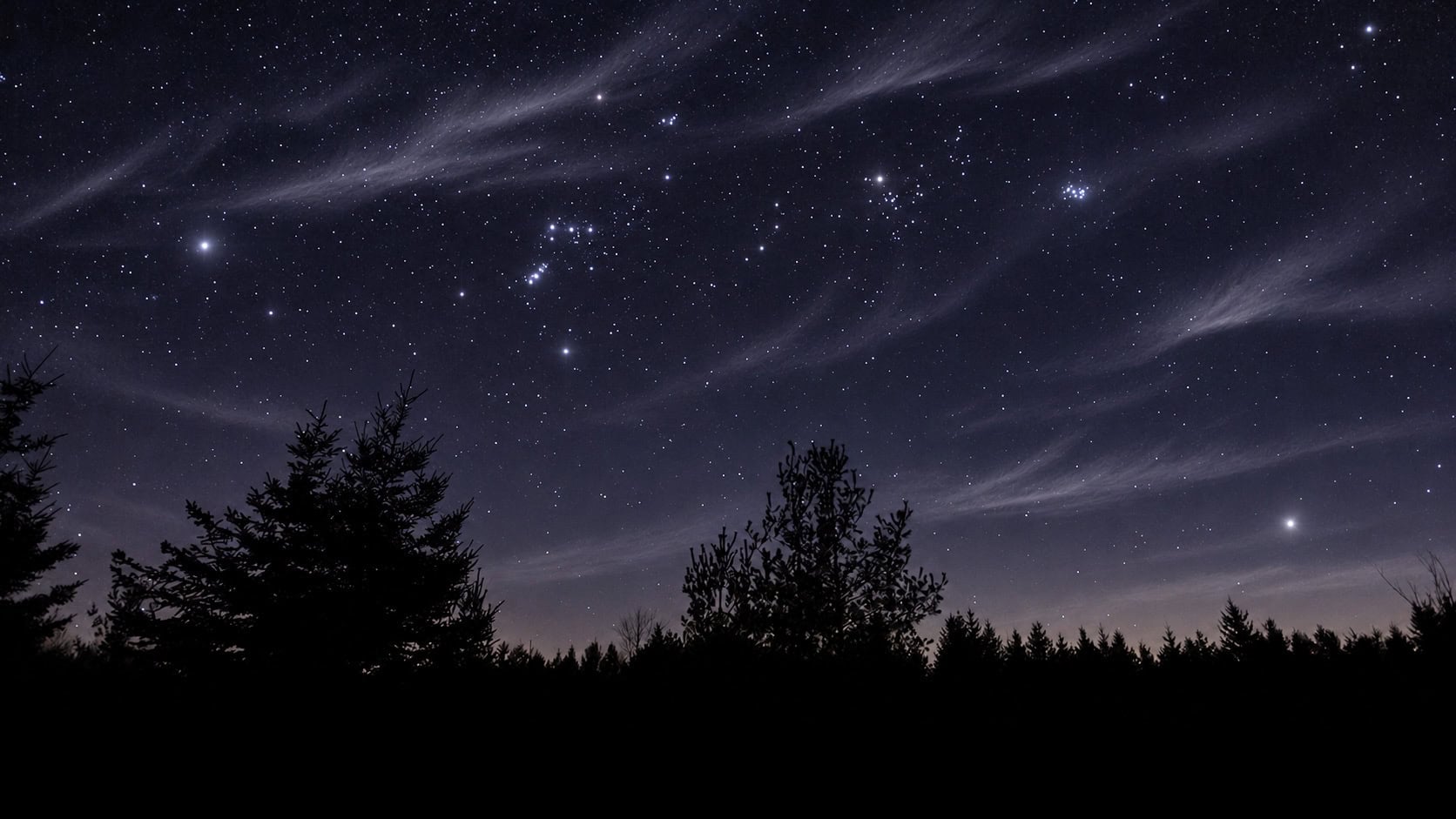
The best astronomy events in November 2026 include the Taurid and Leonid meteor showers, a close pairing of Mars and Jupiter, the full Beaver Supermoon on November 24, and Uranus at opposition on November 25.
November brings longer nights and a nice mix of things to see, whether you are heading outside with a telescope, setting up a camera, or simply looking up before breakfast.
The first half of the month offers darker skies for galaxies, star clusters, and occasional Taurid fireballs. Around the middle of November, Mars and Jupiter gather in the morning sky, followed by the Leonid meteor shower. Later, the Moon takes over with a bright, easy-to-enjoy finale.
Here are the dates worth keeping open, along with a few ways to make the most of whatever clear weather comes your way.
Only have time for three things? Look for Mars and Jupiter before sunrise on November 15–16, watch for Leonids after moonset on November 17–18, and enjoy the Beaver Supermoon around moonrise on November 24. All three can be enjoyed without a telescope.
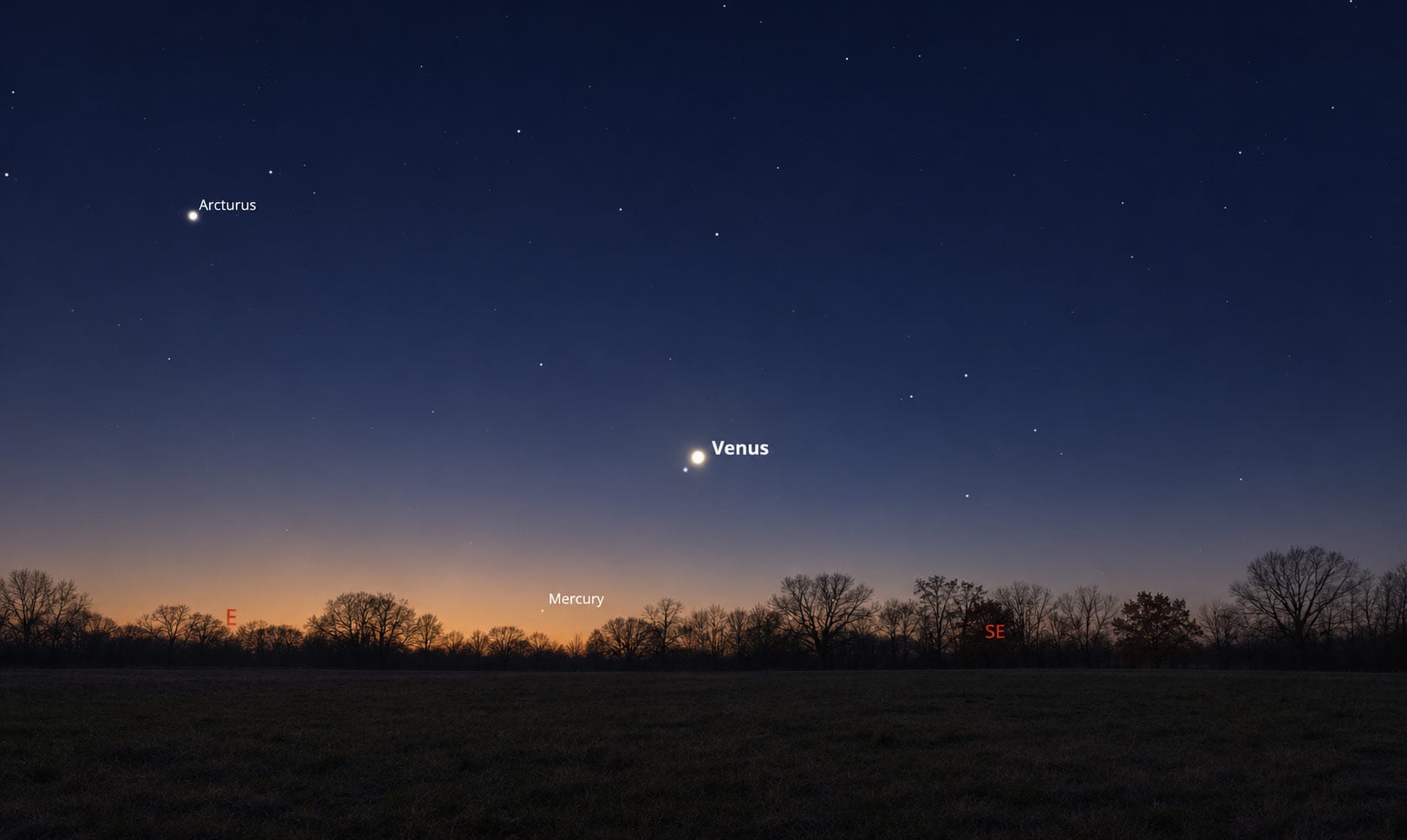
The planet Venus sits next to the bright star Spica on the morning of November 10.
What to Watch During November
- November 4–5 and 11–12: Watch for Southern and Northern Taurid meteors.
- November 7–10: Find Venus, the crescent Moon, and Spica in the dawn sky.
- Around November 9: Use the New Moon for deep-sky observing and photography.
- November 15–16: See Mars and Jupiter close together before sunrise.
- November 17–18: Look for Leonids after moonset and before dawn.
- November 20: Find Mercury before sunrise and the Moon near Saturn that evening.
- November 24–25: Enjoy the Beaver Supermoon and Uranus at opposition.
- November 30: Catch the Moon near Jupiter, Mars, and Regulus.
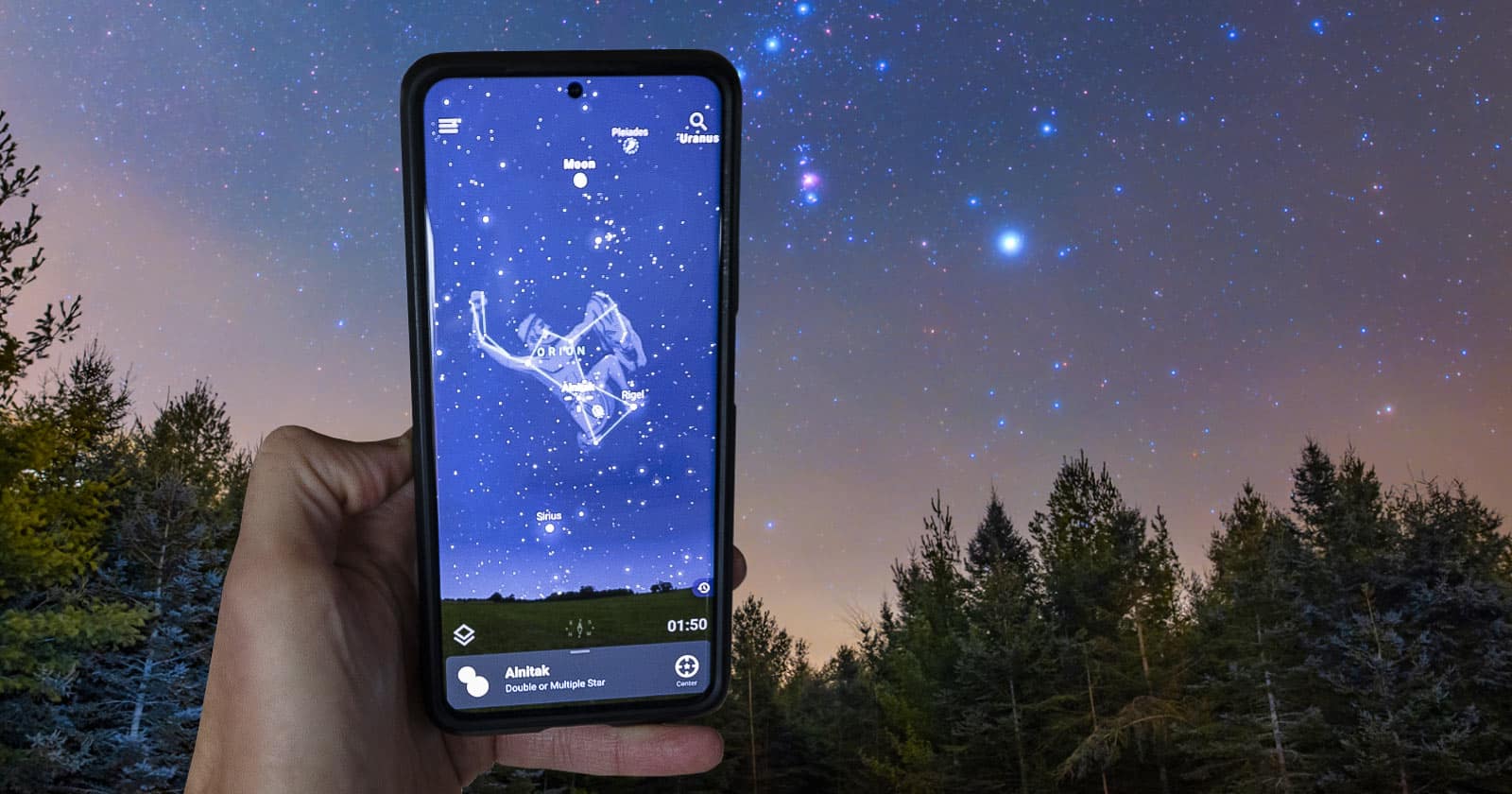
Related Article: The Best Astronomy and Stargazing Apps to help you learn the night sky.
November 2026 Astronomy Events at a Glance
These are useful observing windows, rather than appointments you must catch to the minute. For close approaches, the view changes with your location and the time you look.
| Event | Best Date / Time | What You Need |
|---|---|---|
| Southern Taurids | November 4–5; late night | Eyes; optional camera and tripod |
| Venus, Moon, and Spica | November 7; before sunrise | Eyes and an open eastern horizon |
| New Moon / deep-sky window | Around November 9 | Binoculars, telescope, or imaging setup |
| Northern Taurids | November 11–12; late night | Eyes and a dark sky |
| Mars near Jupiter | November 15–16; before dawn | Eyes or binoculars |
| Leonids | November 17–18; after moonset | Eyes and patience |
| Mercury at western elongation | Around November 20; before sunrise | Clear east-southeast horizon |
| Moon near Saturn | November 20; evening | Eyes; telescope for the rings |
| Beaver Supermoon | November 24; moonrise | Eyes or camera |
| Uranus at opposition | November 25; late evening onward | Binoculars or telescope; star chart |
Moon Phases in November 2026
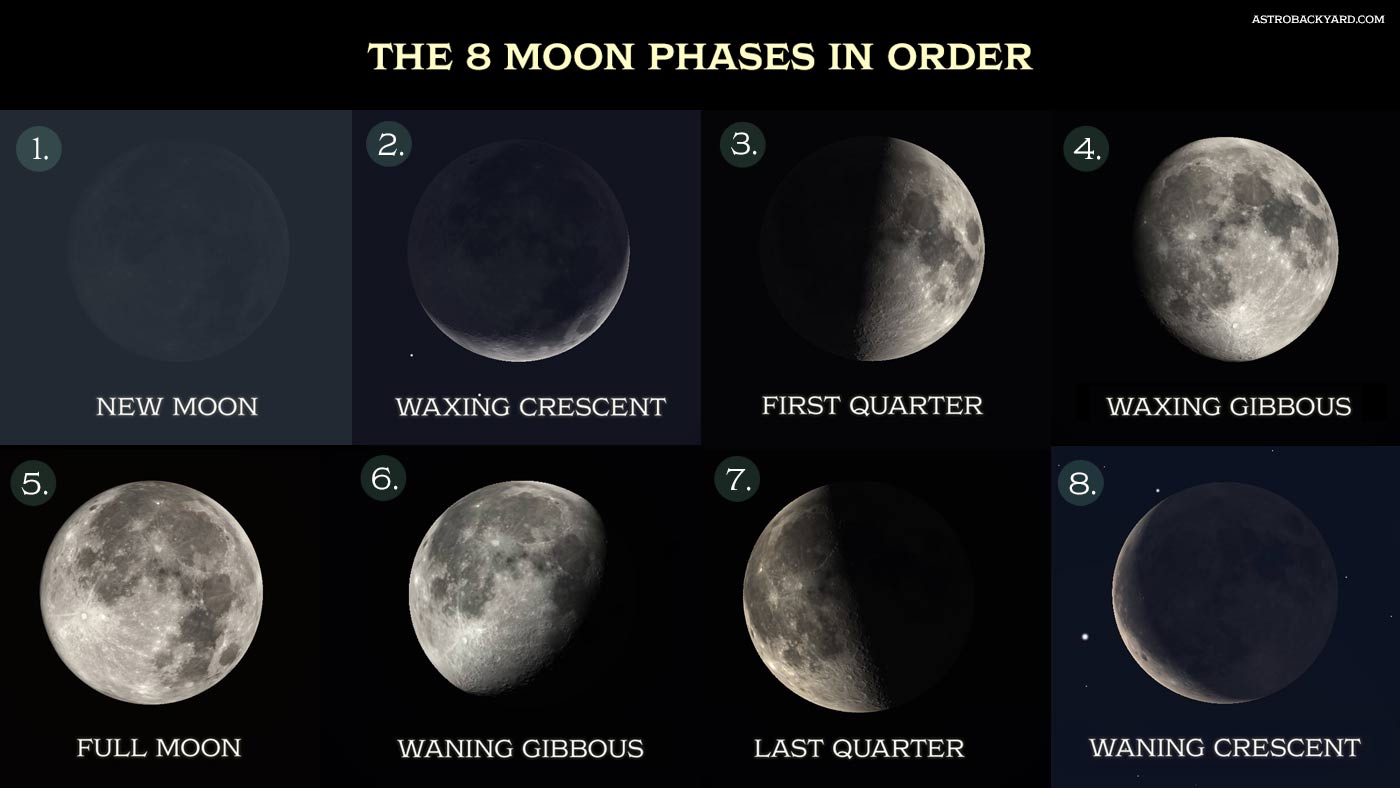
Moonlight makes a big difference when planning a meteor watch or photographing faint objects. The New Moon arrives on November 9, while the Full Moon brightens the final week.
Times below follow the U.S. Naval Observatory’s lunar phase calculations. UTC is Universal Time; EST is Eastern Standard Time.
| Moon Phase | Date and Time | Observing Opportunity |
|---|---|---|
| Last Quarter | November 1 20:28 UTC / 3:28 p.m. EST |
Dark evenings before moonrise |
| New Moon | November 9 07:02 UTC / 2:02 a.m. EST |
Moonless nights for faint targets |
| First Quarter | November 17 11:48 UTC / 6:48 a.m. EST |
Evening lunar detail; darker hours after moonset |
| Full Moon | November 24 14:53 UTC / 9:53 a.m. EST |
Beaver Supermoon photography |
The New Moon falls on the evening of November 8 in Pacific Standard Time. Wherever you live, check local moonrise and moonset times rather than relying on the phase alone.
Which November Events Can You See From Your Location?
This guide focuses on mid-northern latitudes, including Canada, the United States, and much of Europe. Many highlights also work farther south, but directions, altitude, and available darkness change.
| Location | Good Choices | Keep in Mind |
|---|---|---|
| Canada, U.S., and Europe | Meteor showers, morning planets, autumn deep-sky targets | Local timing and horizons matter |
| Southern Hemisphere | Moon, bright planets, Orion, and meteors | Mercury’s morning appearance is less favorable |
| City or suburban backyard | Moon, Saturn, Jupiter, Mars, and bright clusters | Faint meteors and galaxies lose contrast |
| Dark rural site | Taurids, Leonids, galaxies, and reflection nebulae | Choose moonless hours and clear skies |
If you are choosing an observing site, the Bortle Scale helps explain how sky brightness affects the view. Getting away from nearby lights can help even when a long drive isn’t practical.
1. Watch for Taurid Meteors and Fireballs
Best nights: November 4–5 and November 11–12
The Taurids are a good excuse to spend some quiet time under the stars. Their two branches, the Southern and Northern Taurids, have broad activity periods, so you don’t have to catch one exact night.
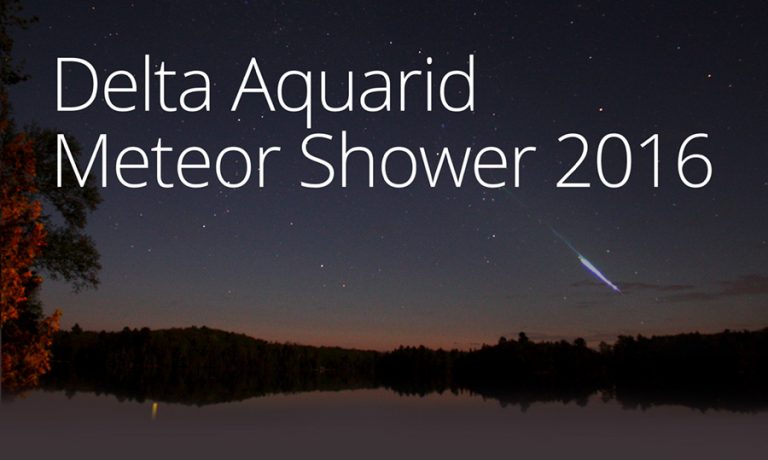
The Southern Taurids peak around November 5, followed by the Northern Taurids around November 12. The International Meteor Organization’s calendar lists both showers and their observing conditions.
Expect a slow trickle rather than a sky full of shooting stars. Each shower typically produces only around five meteors per hour under ideal conditions, although an occasional bright fireball can make the wait worthwhile.
Taurus climbs higher as the evening progresses, making late evening through the hours after midnight useful. The Northern Taurids benefit from a thin waxing Moon that leaves most of the night dark.
For photography, aim a wide-angle lens at a broad patch of sky, focus carefully on a star, and take repeated exposures. Check a test frame for star trailing and an overly bright background before leaving the sequence running.
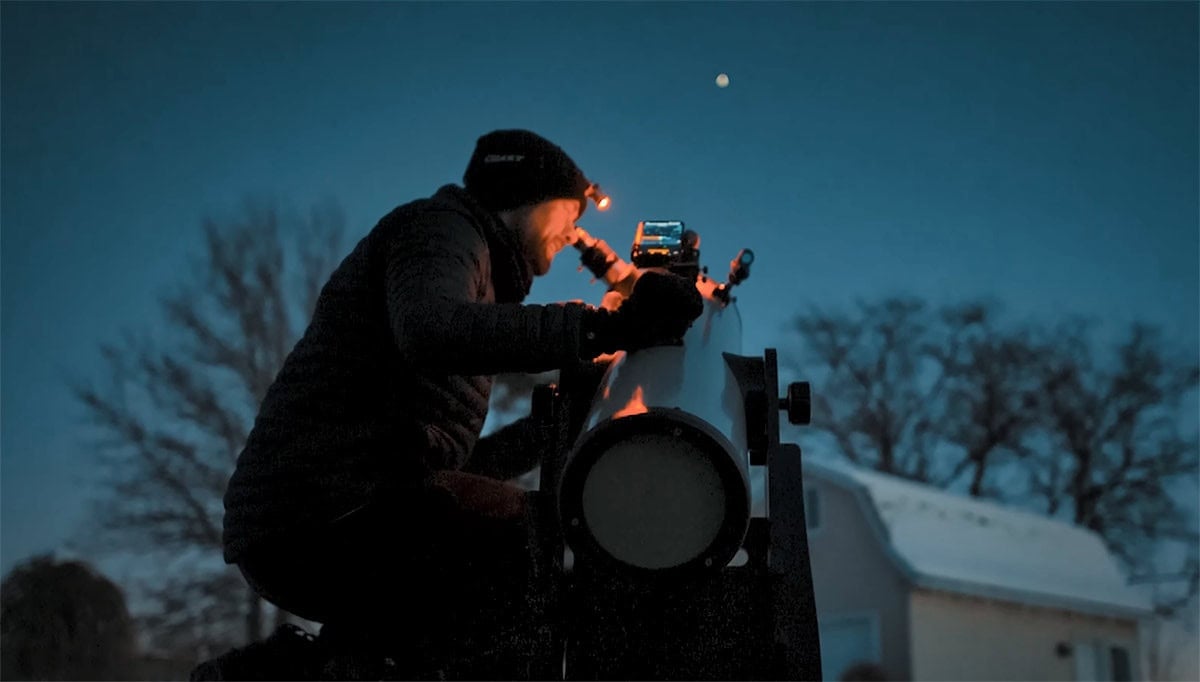
Meteor-watching tip: Use your eyes, not a telescope. A wide view gives you a better chance of spotting a meteor. Bring a reclining chair, let your eyes adjust, and keep your phone screen dim.
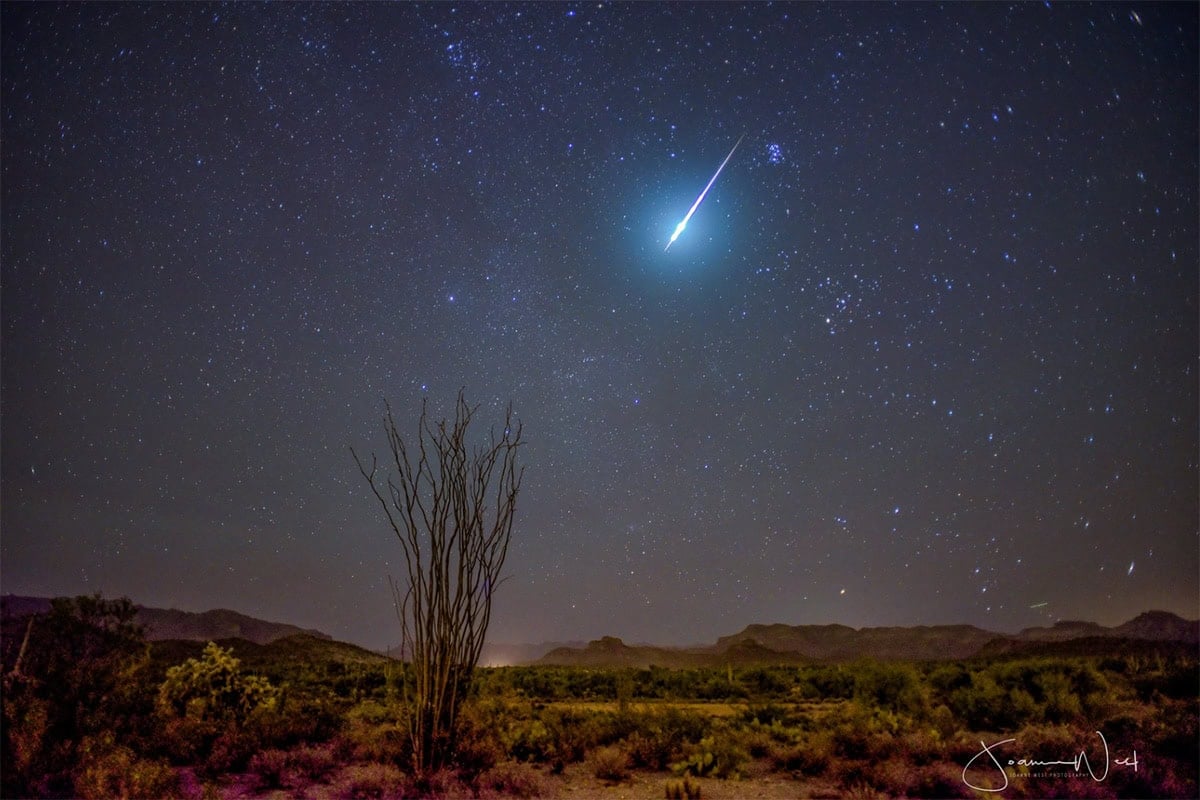
An incredible photo of a Taurid Fireball captured by Joanne West.
2. Find Venus, the Crescent Moon, and Spica
Best mornings: November 7 and around November 10
Look low in the east-southeast before sunrise on November 7 for a thin crescent Moon near brilliant Venus and the star Spica. A clear horizon will matter much more than expensive equipment.
Venus is the obvious bright point. Spica, the brightest star in Virgo, is fainter and will disappear into the brightening sky sooner. Around November 10, Venus and Spica remain an attractive pairing after the Moon has moved away.
This is a nice opportunity for a simple landscape photograph. Include a tree, shoreline, or rooftop, and adjust your exposure as the sky brightens. The changing colors of dawn can be just as interesting as the objects themselves.
Venus becomes increasingly prominent through November. In a telescope, its crescent shape is the feature to look for, rather than surface detail. Finish binocular or telescope observations before sunrise, and never sweep near the Sun.
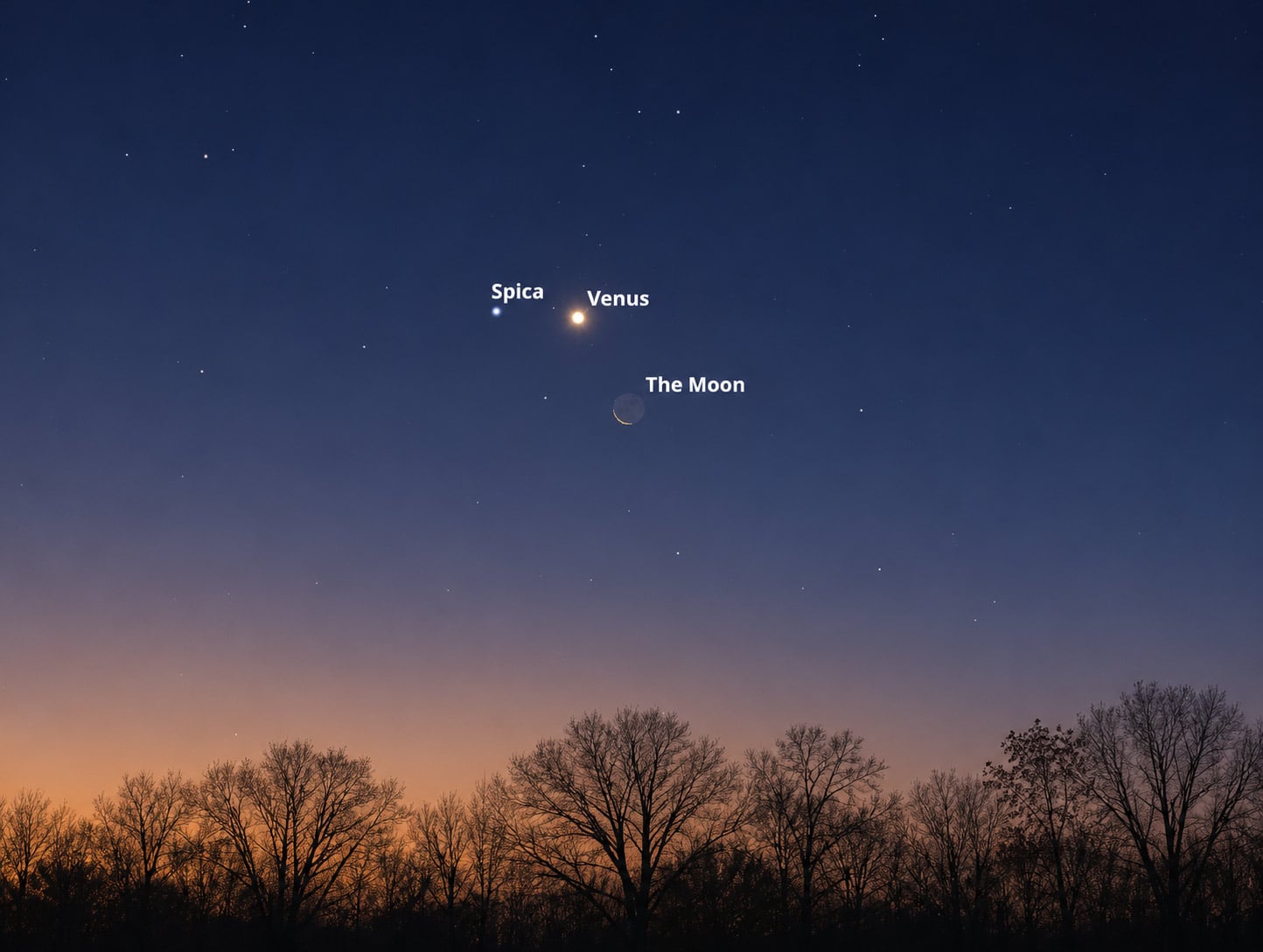
The crescent Moon, Spica, and planet Venus on November 7.
3. Use the New Moon for Galaxies, Clusters, and Nebulae
Best window: Moonless hours during roughly November 4–13
The November 9 New Moon is the date I would build a deep-sky session around. Nearby nights can work just as well if your target is high and the Moon is below the horizon.
The Andromeda Galaxy is an excellent evening choice. Binoculars show its brighter central region as an elongated glow; photographs reveal much more of its structure. Keep expectations realistic at the eyepiece, especially from a suburban backyard.
The Pleiades star cluster is another favorite. Its bright stars are rewarding in binoculars, while capturing the surrounding blue reflection nebulosity benefits from dark skies and plenty of exposure time.
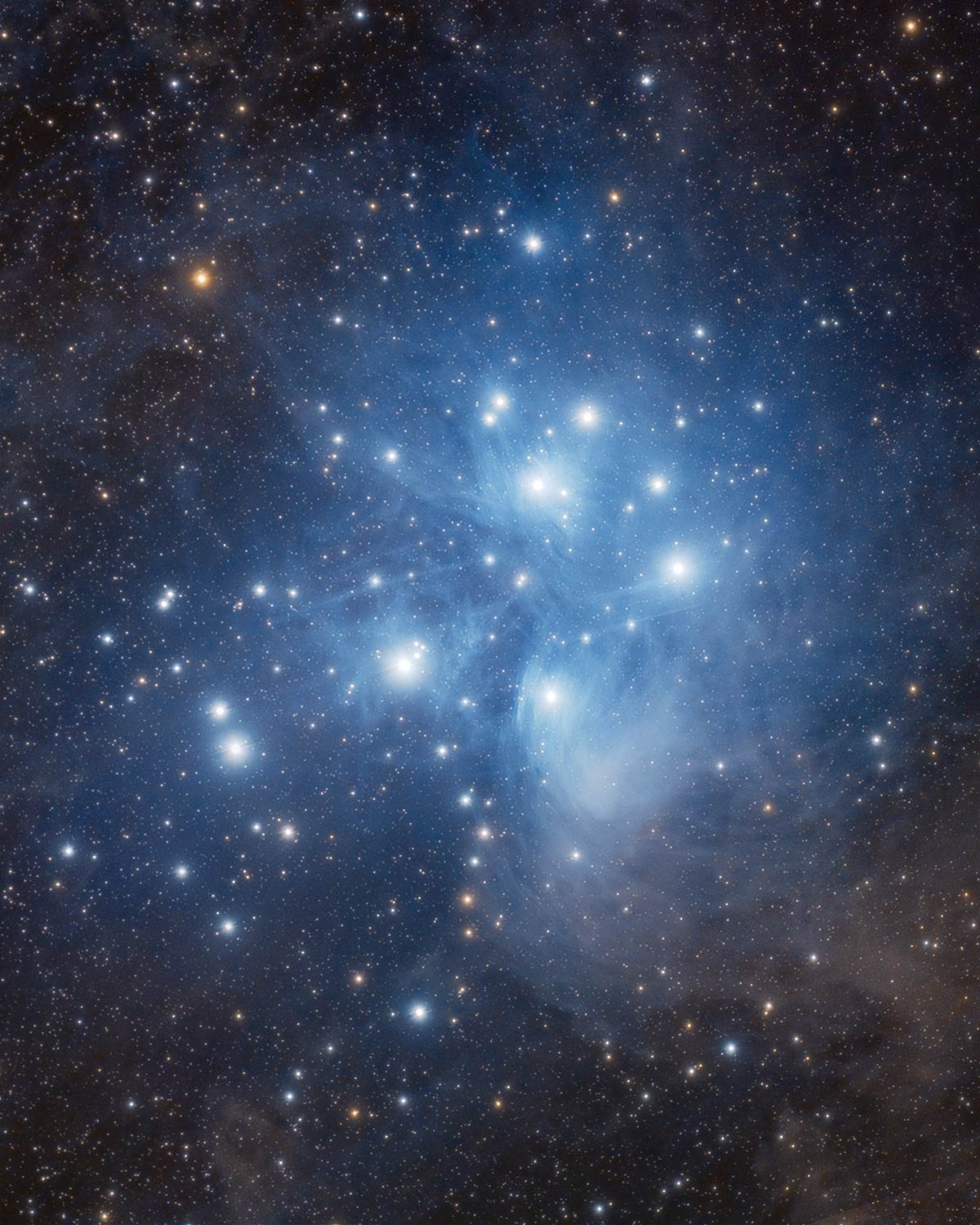
The Pleiades Star Cluster in Taurus. Photo by Trevor Jones.
Farther north, the Double Cluster in Perseus makes a wonderful low-power telescope target. Try framing both clusters together instead of immediately increasing magnification.
For nebula photographers, the Heart Nebula is well placed from mid-northern latitudes. A suitable dual-band filter can help isolate its emission with a color camera, but that same approach is poorly suited to the Pleiades’ broadband reflected starlight.
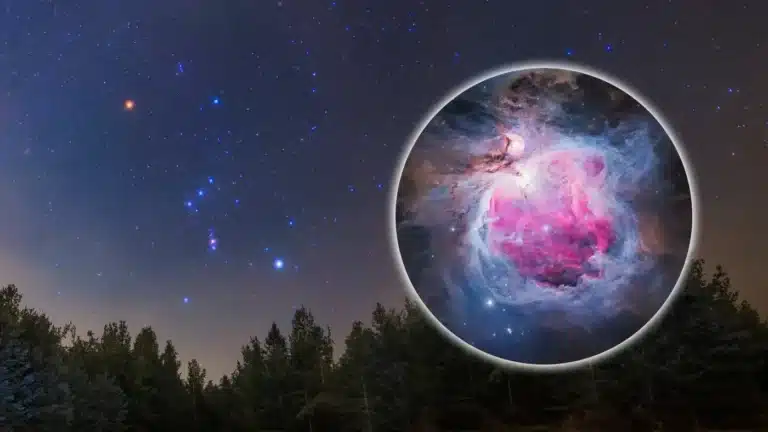
Later in the night, look east for the three stars of Orion’s Belt. Beneath the belt in Orion’s sword, the Orion Nebula gives beginners a bright, satisfying target. Let it climb above the horizon haze before judging the view or starting your main imaging run.
Imaging plan: Start with an autumn target already high in the sky, then switch to Orion later. Collecting more usable frames on one or two targets usually beats rushing through a long list.
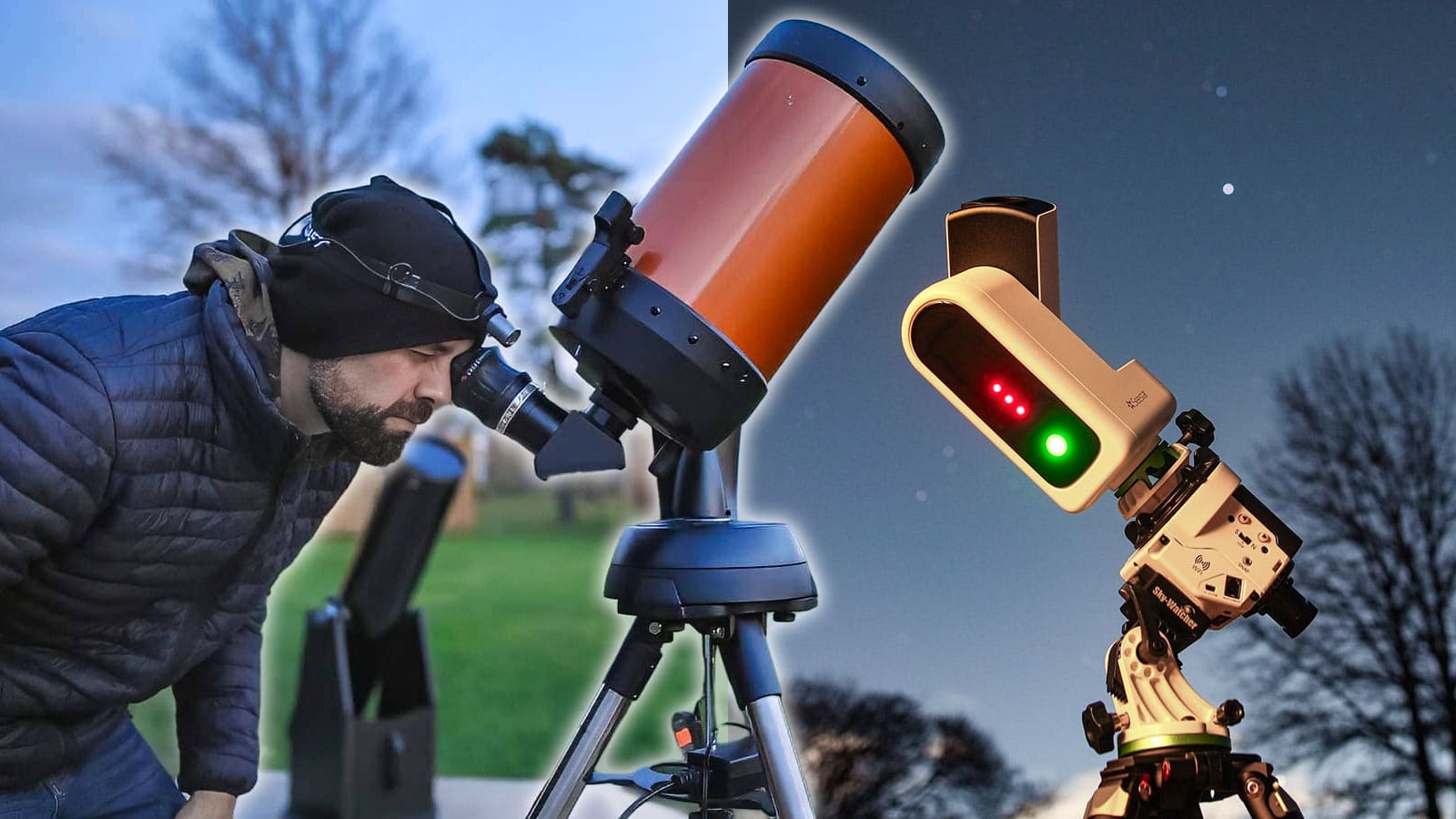
Related Article: The Best Telescope for Beginners (My Top 2 Options)
4. See Mars and Jupiter Close Together
Best mornings: November 15–16, with good views on nearby dates
This is one of November’s easiest highlights. Mars and Jupiter appear about 1.2 degrees apart around midmonth, roughly a little more than twice the apparent width of the Full Moon.
Look toward the southeast before dawn from mid-northern latitudes. Jupiter is much brighter, while Mars has a warmer, orange tint. Regulus, Leo’s brightest star, adds another point of light nearby.
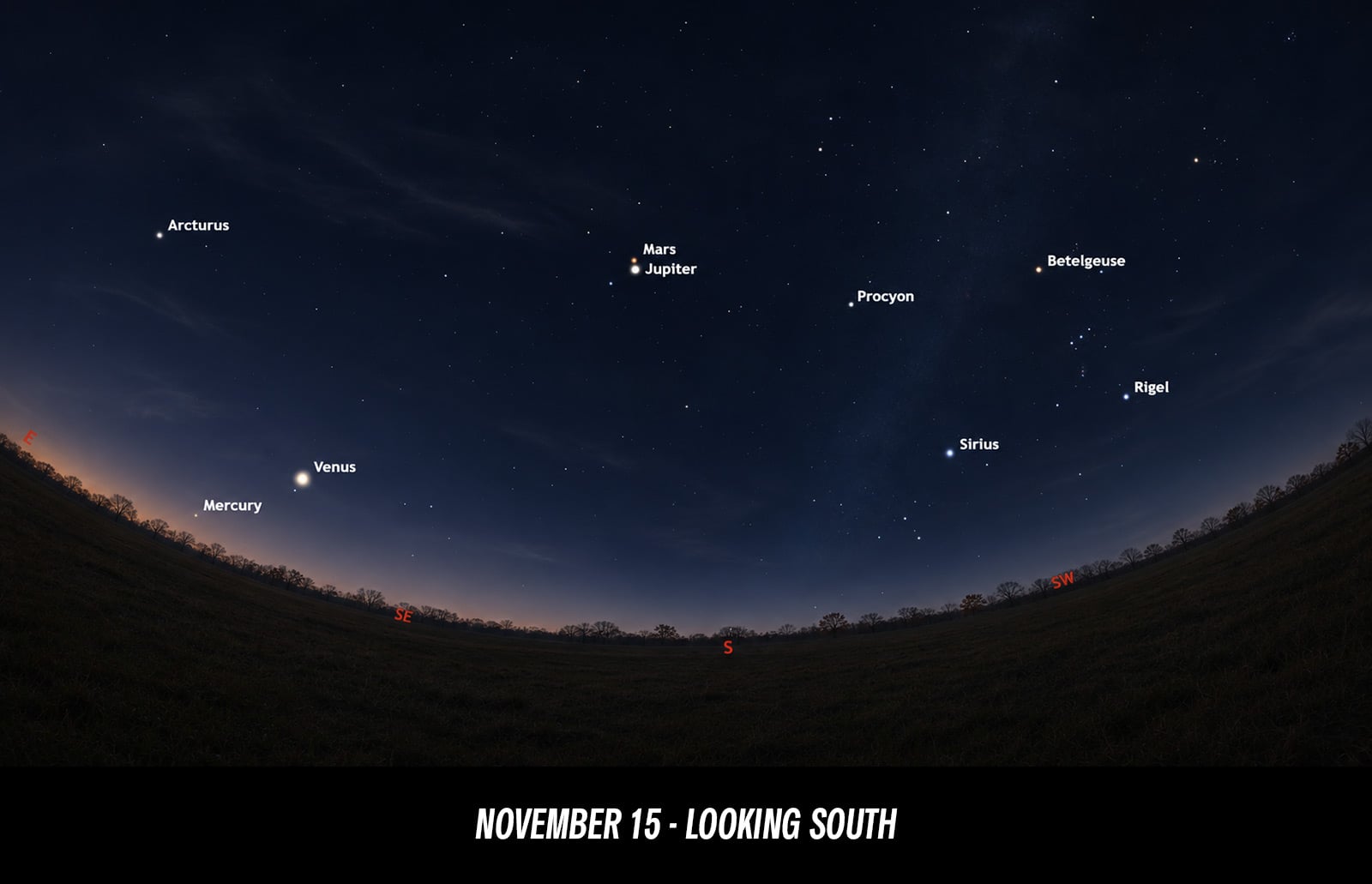
The pairing is a line-of-sight effect: the planets remain far apart in space. Watching their positions change over several mornings makes that motion easier to appreciate.
Binoculars comfortably frame both planets. A telescope with a sufficiently wide true field can also fit them together, although higher magnification means examining them separately.
For newcomers learning how to use a telescope, start with a low-power eyepiece. Jupiter’s bright moons are rewarding targets; detailed views of Mars are more demanding because its disk is still small.
A camera and telephoto lens can record the pairing without resolving planetary details. Take a test exposure and shorten it if the planets become streaks.
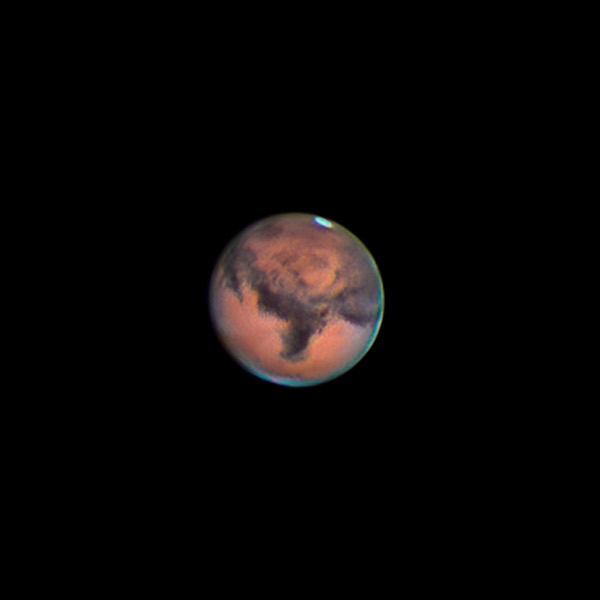
The planet Mars photographed through an 11-inch telescope (2020). Photo by Trevor Jones.
5. Watch the Leonid Meteor Shower After Moonset
Best window: Predawn on November 17 and 18, especially the night of November 17–18
The Leonids are November’s best-known meteor shower, produced by debris from Comet 55P/Tempel-Tuttle. Their meteors enter the atmosphere quickly and can leave brief glowing trails.
Major monthly guides favor November 17–18, while some specialist calendars list November 16–17. Rather than treating one date as a guarantee, use either clear predawn morning. NASA’s November skywatching guide recommends the early hours of both November 17 and 18 after moonset.
The Moon reaches first quarter on November 17 and sets around late evening or midnight in many northern locations. Check locally, then aim for the darker hours as Leo rises higher.
Don’t expect a meteor storm. Around 10–15 meteors per hour is an optimistic dark-sky guide, and actual counts may be much lower. Clouds, light pollution, and a low radiant all reduce what you see.
Watch a wide area rather than staring directly at Leo. Mars and Jupiter will still be nearby, giving you something else to enjoy between meteors.
6. Catch Mercury Before Sunrise
Best mornings: Around November 20 and the following few days
Mercury reaches greatest western elongation on November 20, appearing about 20 degrees from the Sun. This makes the second half of November a useful morning observing opportunity, particularly in the Northern Hemisphere.
Despite the word “western,” look toward the east-southeast before sunrise. Mercury is west of the Sun in the sky, so it rises ahead of it.
Choose a location with a low, unobstructed horizon. Venus will be much brighter; use a current sky chart to identify Mercury rather than assuming the next bright point is the right one.
Try roughly 45–60 minutes before your local sunrise, adjusting for your latitude and horizon. Mercury stays low, so a clear forecast does not always mean a clear view through haze. Put binoculars and telescopes away before the Sun rises.
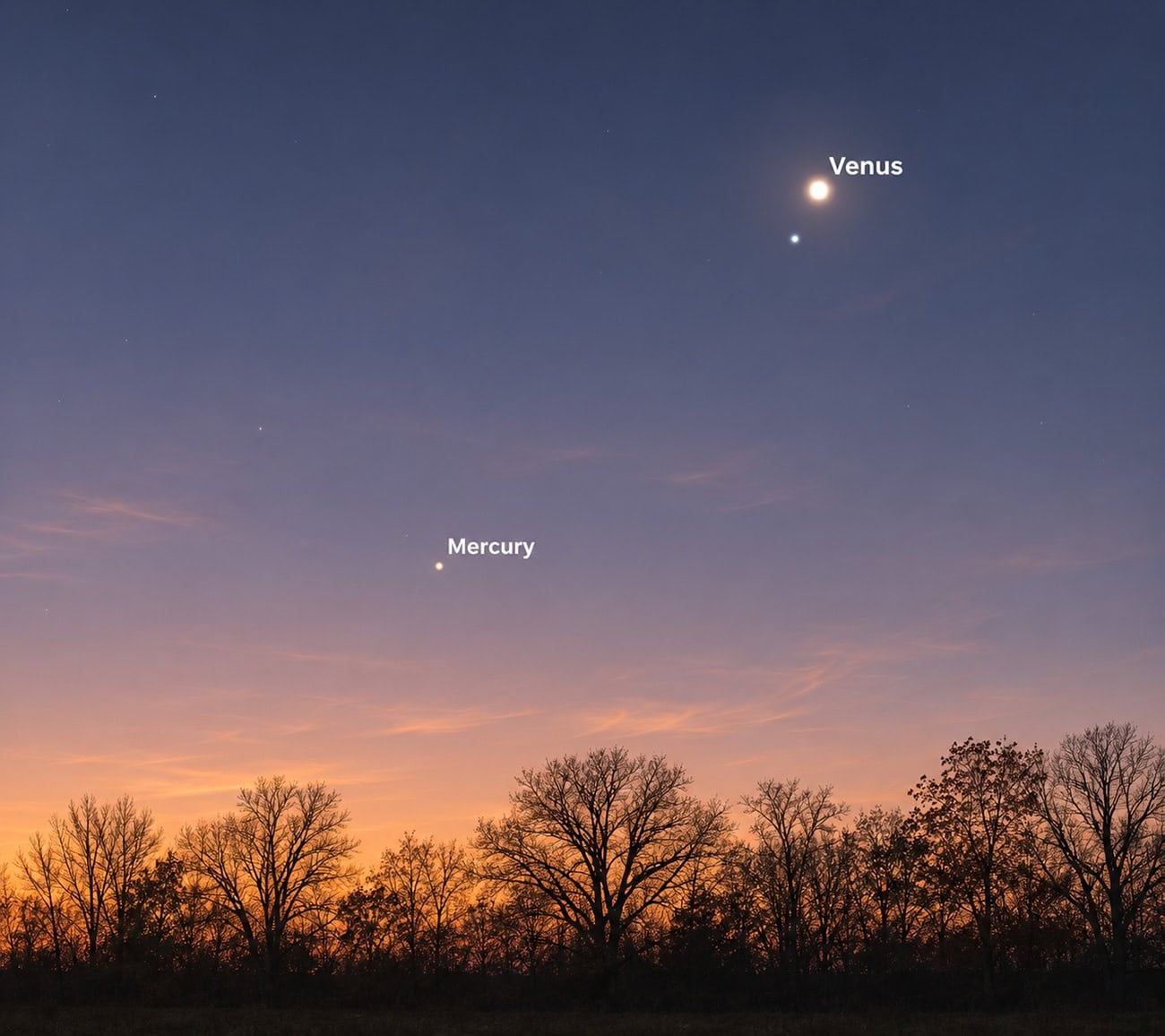
Planet Mercury in the morning sky on November 12.
7. Use the Moon to Find Saturn
Best evening pairing: November 20
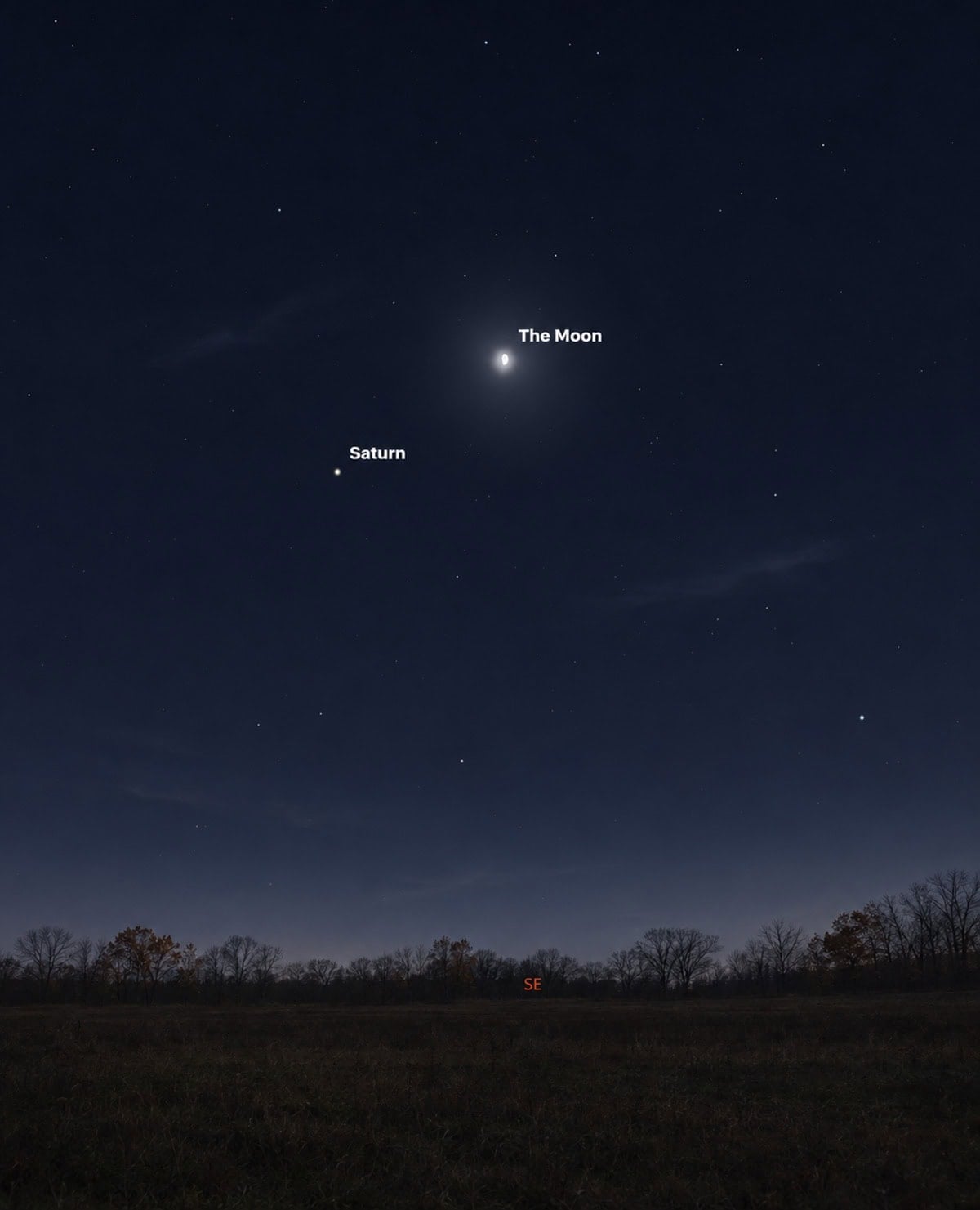
Saturn remains a rewarding evening target after October’s opposition. On November 20, the waxing gibbous Moon appears near it, providing an easy signpost for anyone still learning the planets.
Find the Moon, then look nearby for Saturn’s steady, pale light. They won’t necessarily fit together in a telescope, so enjoy the wide view first.
Then point your telescope at Saturn. The rings remain relatively narrow compared with their more open appearance in other years, but seeing Saturn through a telescope is still a memorable experience.
Give the telescope time to cool and increase magnification gradually. If the planet looks like it is boiling, atmospheric turbulence may be limiting the view. A smaller, sharper image is often more satisfying than a large blur.
8. Photograph the Full Beaver Supermoon
Full Moon: November 24 at 14:53 UTC / 9:53 a.m. EST
November’s Full Moon is commonly called the Beaver Moon, and this year it is also a supermoon. The full phase occurs near the Moon’s closest approach to Earth, making it somewhat larger and brighter than average.
The difference is subtle. NASA explains that the often-quoted maximum size and brightness differences compare a close Full Moon with one at its farthest distance, not an ordinary Full Moon.
For photography, plan around local moonrise on November 23 or 24. The Moon will look nearly full on both evenings, and your foreground composition matters more than the exact instant of full phase.
A distant barn, tree, or skyline gives the scene scale. Scout your position beforehand, check the Moon’s rising direction, and use a tripod. Our Moon photography guide covers the exposure and equipment choices.
Before dawn on November 24, the Moon also passes close to the Pleiades. Parts of North America can see it cover individual cluster stars, but visibility and timing are location-dependent. Lunar glare makes this a telescope challenge rather than an easy naked-eye display.

9. Find Uranus at Opposition
Opposition: November 25
Uranus reaches opposition in Taurus, opposite the Sun in our sky and available through the night. Look in the region between the Pleiades and Aldebaran, using a detailed chart to identify the correct point of light.
At approximately magnitude 5.6, it is within binocular reach, but a telescope is needed to distinguish its tiny disk. Expect a small, pale blue-green world, not the richly detailed planet shown in spacecraft photographs.
One catch this year: Opposition falls just after the Full Moon. Uranus remains observable, but moonlight makes star-hopping harder. Try a moonless evening earlier in November too; the planet’s appearance changes very little over a few weeks.
Photographers can record its position among the stars with a tracking setup. Resolving the disk is a different challenge that calls for longer focal length and steady air.
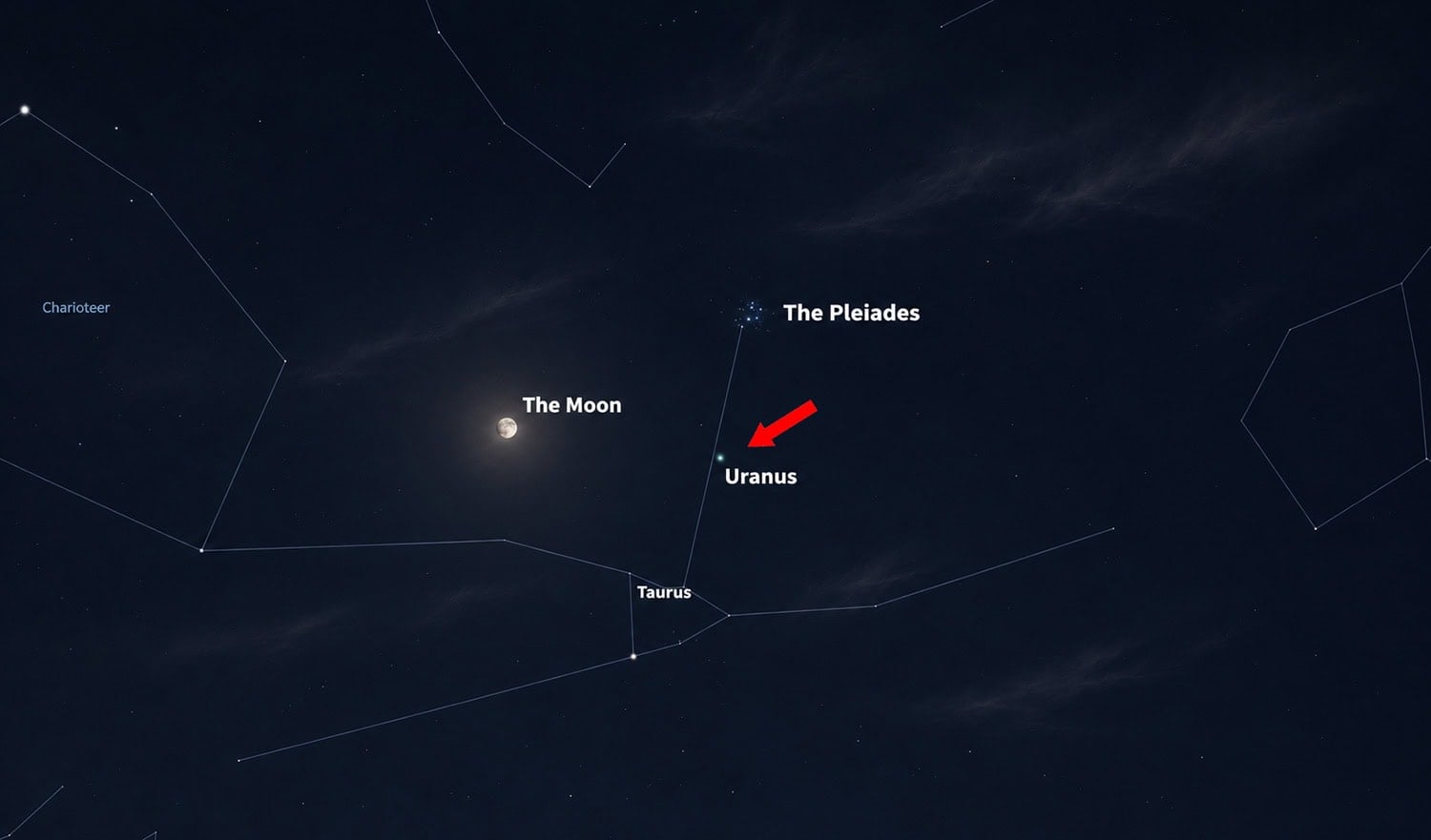
The location of Uranus at opposition on November 25th
Plan Your November Under the Stars
If you are deciding where to spend your observing time, I would keep the plan simple:
- Early November: Prioritize moonless deep-sky sessions and watch for Taurids while your camera runs.
- Mid-month: Set an early alarm for Mars and Jupiter, then use clear predawn hours for Leonids.
- Late November: Enjoy Saturn, plan a Moon photograph, and try finding Uranus.
Save one more morning for November 30, when the Moon gathers near Jupiter, Mars, and Regulus. It is an easy way to finish the month with a familiar landmark pointing out a few new ones.
Bring warm layers, check your batteries, and watch for dew or frost on exposed optics. November rewards preparation, but you don’t need an elaborate setup to enjoy it. Sometimes a few clear minutes outside are enough.
Sources and Observing Resources
Dates and highlights were cross-checked against the references below. Use a planetarium app set to your location for local visibility and rise/set times.
- High Point Scientific: November 2026 night sky guide
- Astronomy: November planets and lunar encounters
- BBC Sky at Night: November stargazing roundup
- National Geographic: November night-sky events
- Space.com: November observing calendar
- Timeanddate: November sky guide

Ashley is an environmental educator, communication professional, and astrophotographer. She has extensive experience writing for diverse audiences to increase public awareness and engagement. Ashley is an active Advocate/Delegate with DarkSky International, helping to protect the nighttime environment from the harmful effects of light pollution through advocacy and outreach.