
Smart Telescope vs Traditional Telescope: Which is Better in 2026?

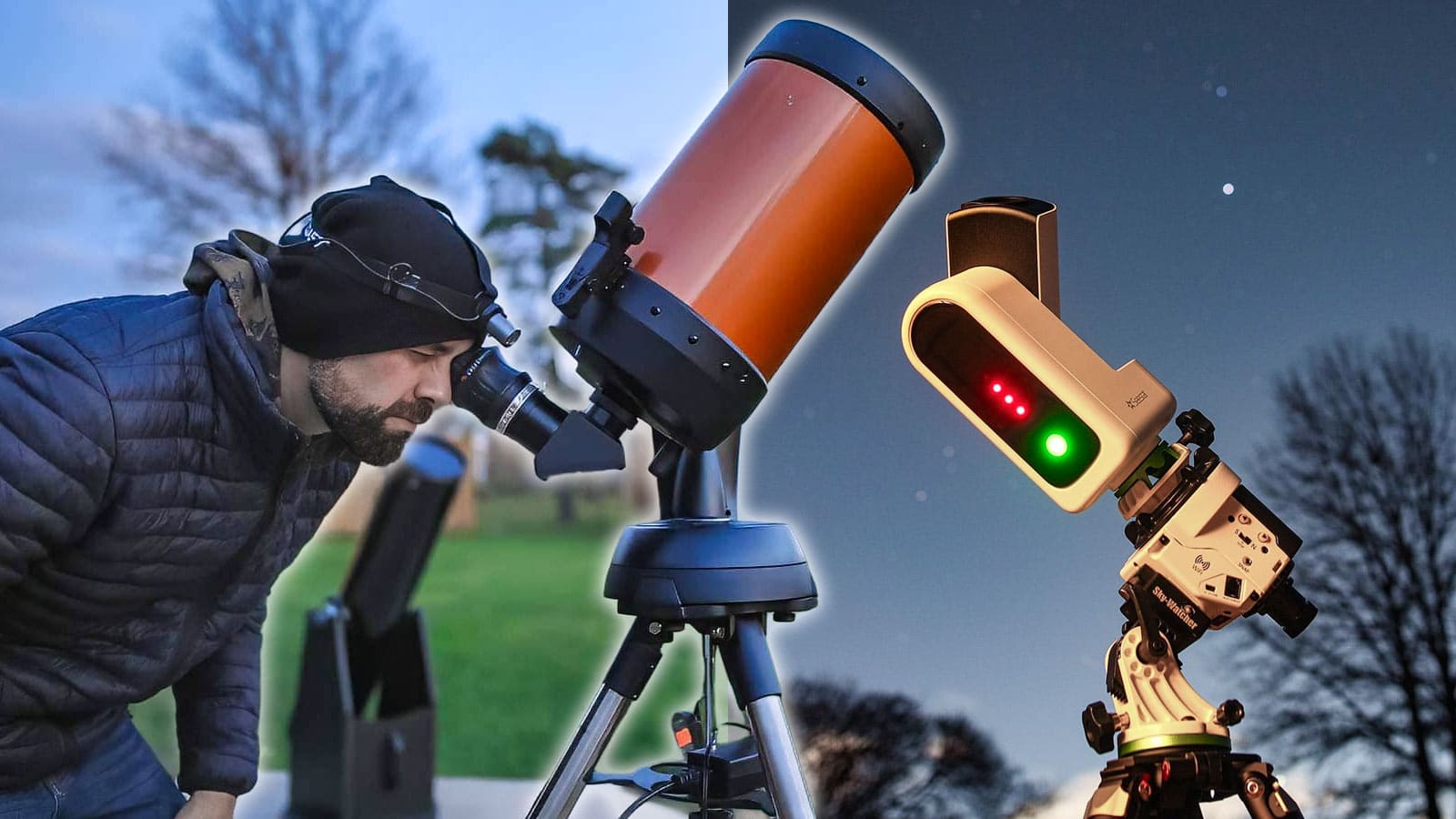
If you’ve been researching telescopes lately, you’ve probably noticed something: a lot of people are skipping the classic eyepiece route and jumping straight into smart telescopes.
Smart telescopes can find targets for you, track them, and build a bright, detailed image on your phone or tablet using live stacking (a technique that steadily improves the image as more data is captured).
But traditional telescopes still offer something special: real-time observing through an eyepiece, tons of options, and a clear path to serious planetary viewing and high-end astrophotography when you’re ready.
I still remember my first time seeing the planet Saturn through a telescope, and it was an experience like nothing else. In fact, I feel so strongly about having an experience like this that my best telescope recommendation remains an 8-inch Dobsonian.
In this guide, I’ll break down the key differences in plain language and help you decide which one fits your goals, your budget, and your personality.
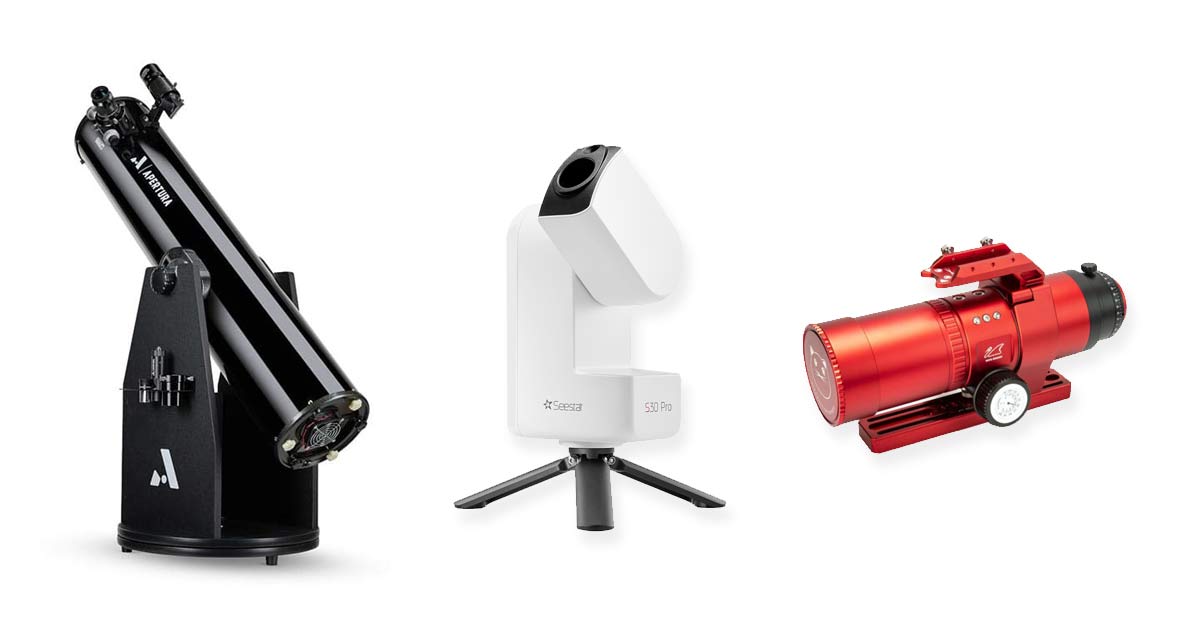
My Top Choice (Each Category)
If you just want the short answer, here are my top picks for each style of telescope experience.
| Category | My top pick | Why it’s the best choice |
|---|---|---|
| Best for Visual | Apertura AD8 8-inch Dobsonian reflector |
Big aperture for the money, simple to use, and delivers that classic eyepiece observing experience. |
| Best for Astrophotography | William Optics RedCat 51 Compact astrograph (51mm) |
A purpose-built imaging scope that’s beginner-friendly, and excellent for wide-field nebulae and galaxies. |
| Best Smart Telescope | ZWO Seestar S30 Pro All-in-one smart telescope |
Fast setup, guided app experience, shareable results with automated tracking and stacking. |
What Makes it a ‘Smart’ Telescope?
A smart telescope is an all-in-one, app-controlled system that aligns itself (often using plate solving), automatically finds objects, tracks them, and displays a steadily improving image on your device.
Instead of looking through an eyepiece, you watch the view “build” over time as the telescope captures many short exposures and stacks them. This is part of electronically assisted astronomy (EAA), and it’s a big reason smart telescopes work so well from light-polluted suburbs.
Not only do you get a better ‘view’ of the object through photography, but you have a digital souvenir of the experience to share with your friends and family or online.
The ZWO Seestar S50 is one of the most popular smart telescopes on the market, and it performed well in my tests.
Why Smart Telescopes Have Gained Traction
I first experienced a smart telescope back in 2021 (the Vaonis Stellina), and I must admit, at that time, I had no idea how popular these types of telescopes would become.
I was skeptical that people would adopt this new type of astronomy experience, and I didn’t realize how fast the technology would evolve.
The key benefits of a smart telescope are:
- Fast setup and fewer pieces to manage
- Beginner-friendly success rate (less “trial and error”)
- Deep-sky objects look far better on-screen than through an eyepiece in most backyards
- Easy sharing for family, friends, and outreach

I took this picture of the Triangulum Galaxy with the Seestar S50 in regular alt-az mode.
The Big Tradeoff
While it is exciting to see a galaxy or nebula in detail on your phone (that you chose to capture), the limitations of these devices eventually reveal themselves.
Smart telescopes are built for convenience, so you’re usually working inside a more “closed” ecosystem than a modular traditional setup.
They are an all-in-one package with a fixed system that is not built for future upgrades.
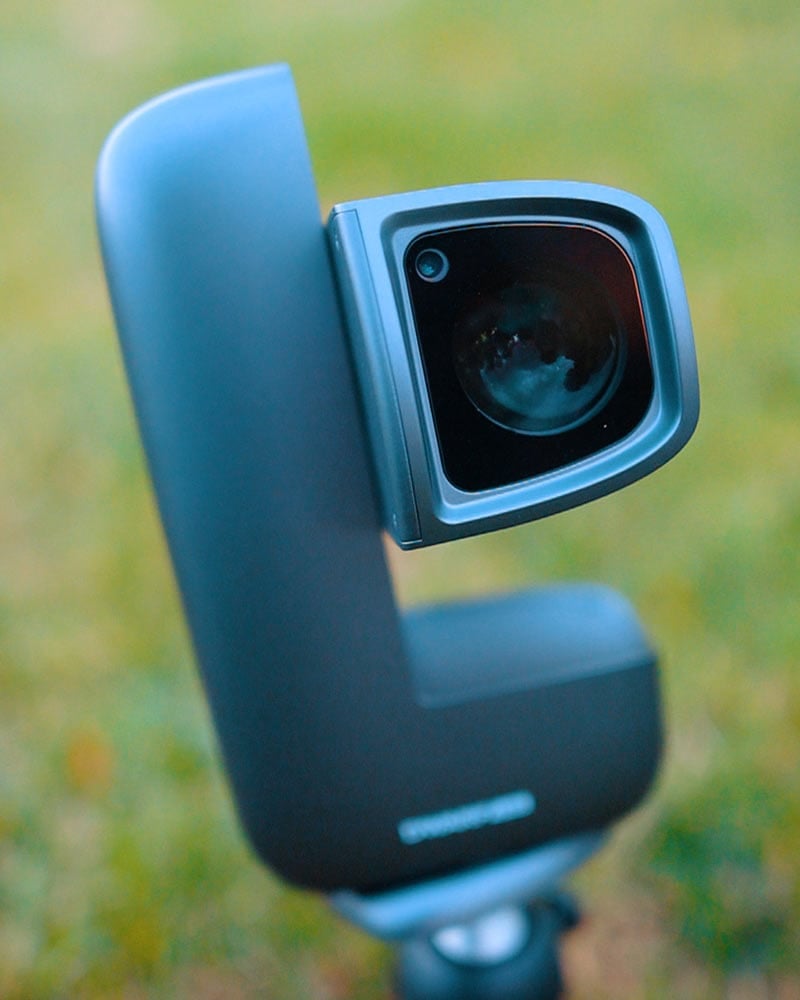
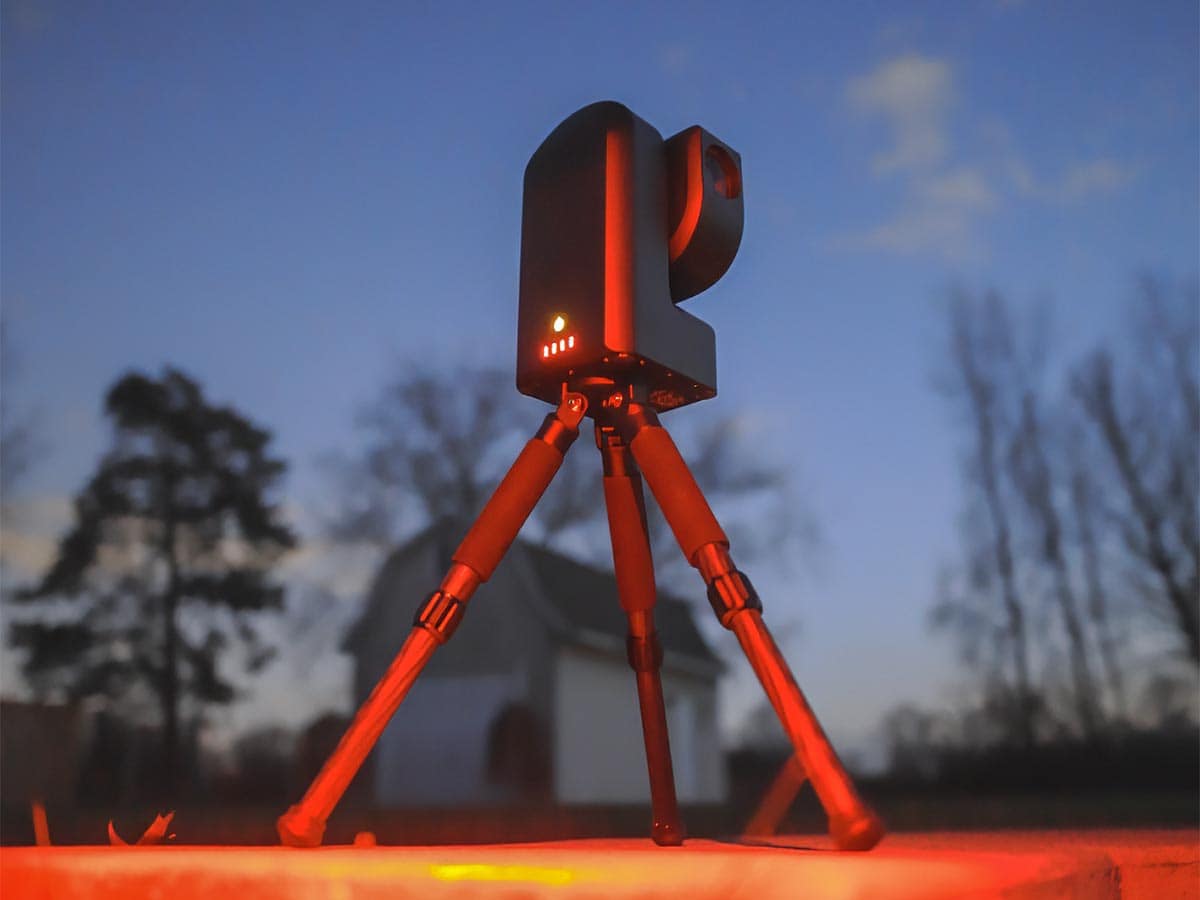
The DWARF mini is an extremely capable smart telescope that actually fits in your pocket.
The Traditional Telescope Route
A traditional telescope usually means an optical tube (refractor, reflector, or catadioptric) on a mount (manual, GoTo, alt-az, or equatorial). For visual observing, you look through an eyepiece.
These types of telescopes are straightforward to use and enjoy, once you have familiarized yourself with the setup routine and learned what each component does.
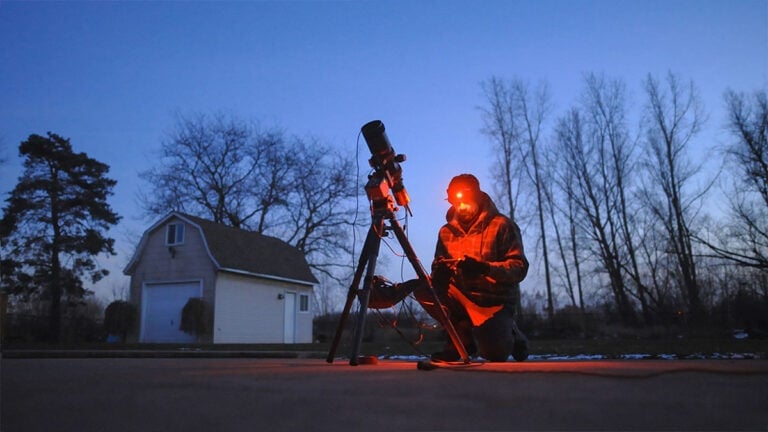
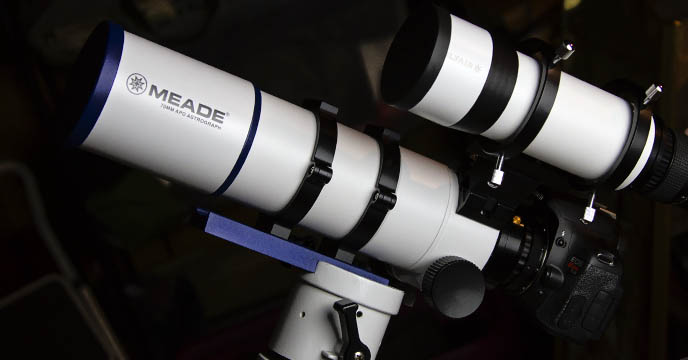
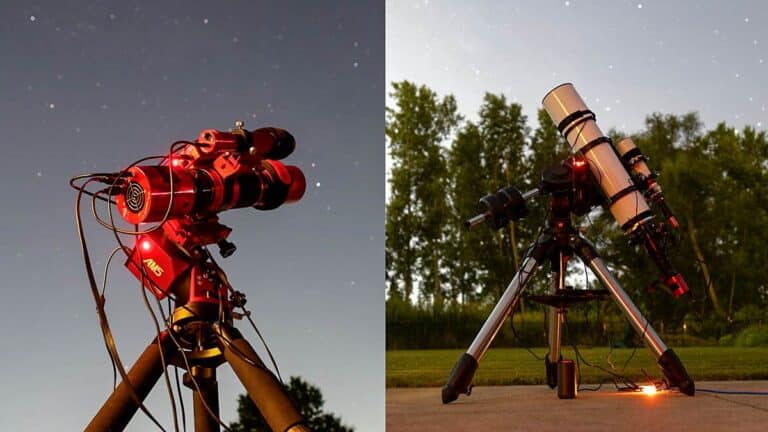
For astrophotography, you can build a system over time: tracking mount, camera, guiding, filters, software, and so on. Over the years, I have built several astrophotography rigs that excel in many different forms of astro imaging.
Traditional telescopes still offer the widest range of options for aperture, focal length, and accessories, which is why they remain the standard for people who want to build a custom setup and push performance in the long term.
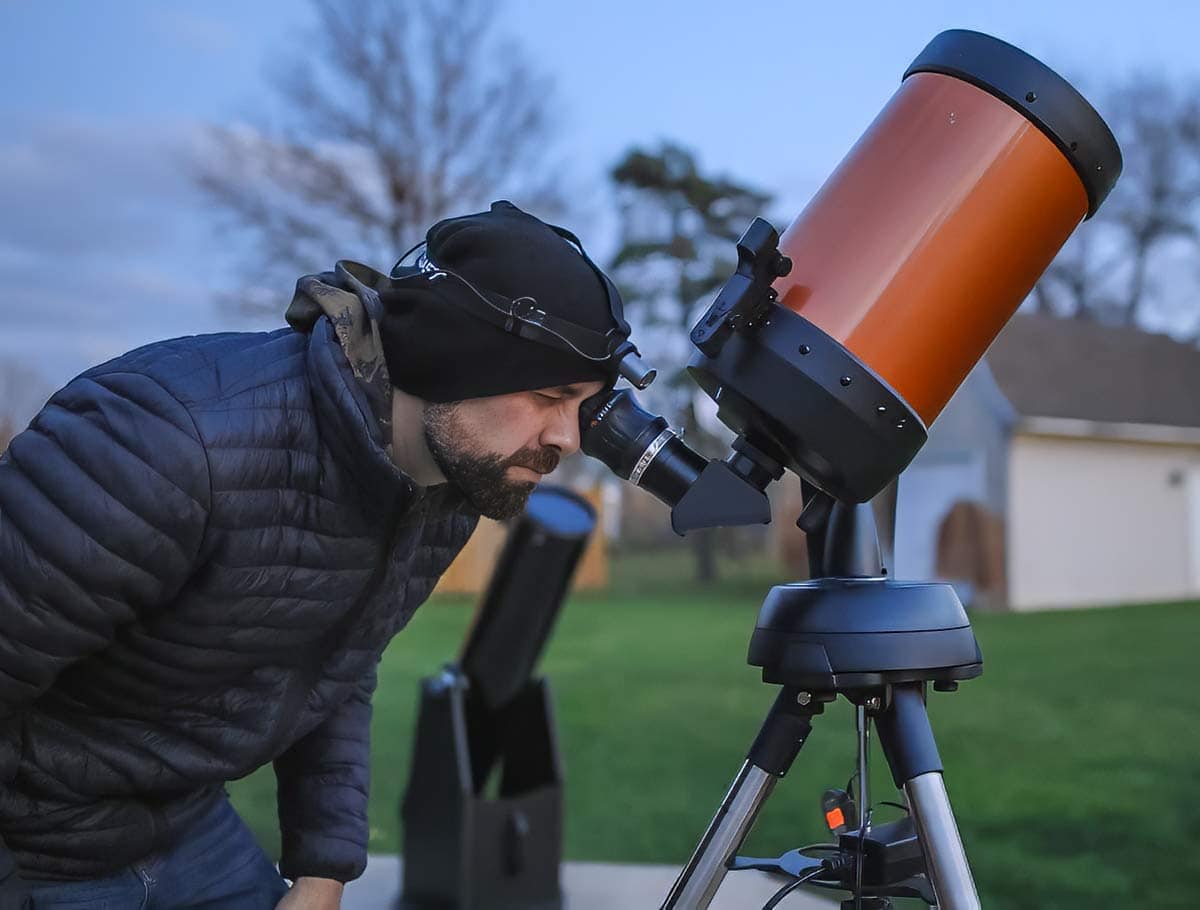
The Celestron Nexstar 8SE excels at visual observing in my backyard, especially on the moon and planets.
The Real Difference
With a traditional scope, you’re usually looking through an eyepiece, your eyes adapting to the dark, teasing out subtle detail in real time as the object drifts or snaps into focus.
This is an experience like nothing else, as it truly is a ‘live’ view of the night sky, not an image. It’s kind of like looking at a person face-to-face vs. a photograph of them, and astronomy purists will always value this experience.
Smart telescopes, on the other hand, are built around screen-based imaging: the scope captures photons with a camera, stacks frames, and shows you a processed view on your phone or tablet.
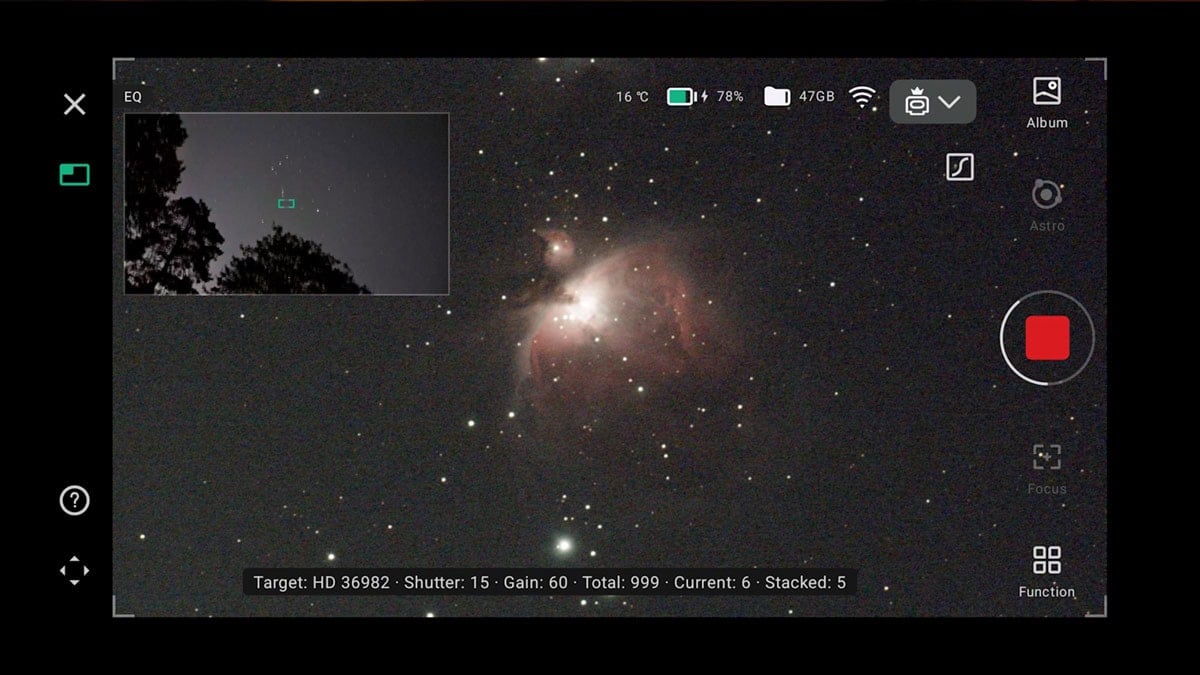
Through live stacking, smart telescopes like the DWARF mini display a near-real-time view.
That can be incredibly convenient (and often more detailed), but true visual observing is a very different experience from watching an image on a screen.
This is the decision point most people don’t realize they’re making. While both options involve an optical instrument designed to view and capture objects in space, the experiences are vastly different.
Smart Telescope Experience
You’re watching an image created by a camera sensor and software stacking. The result is often brighter, more detailed, and more satisfying on deep-sky targets from suburban skies.
The smart telescope tracks the object’s apparent motion across the sky, and with enough exposure time, rewards you with a jaw-dropping image you can save and edit however you want.
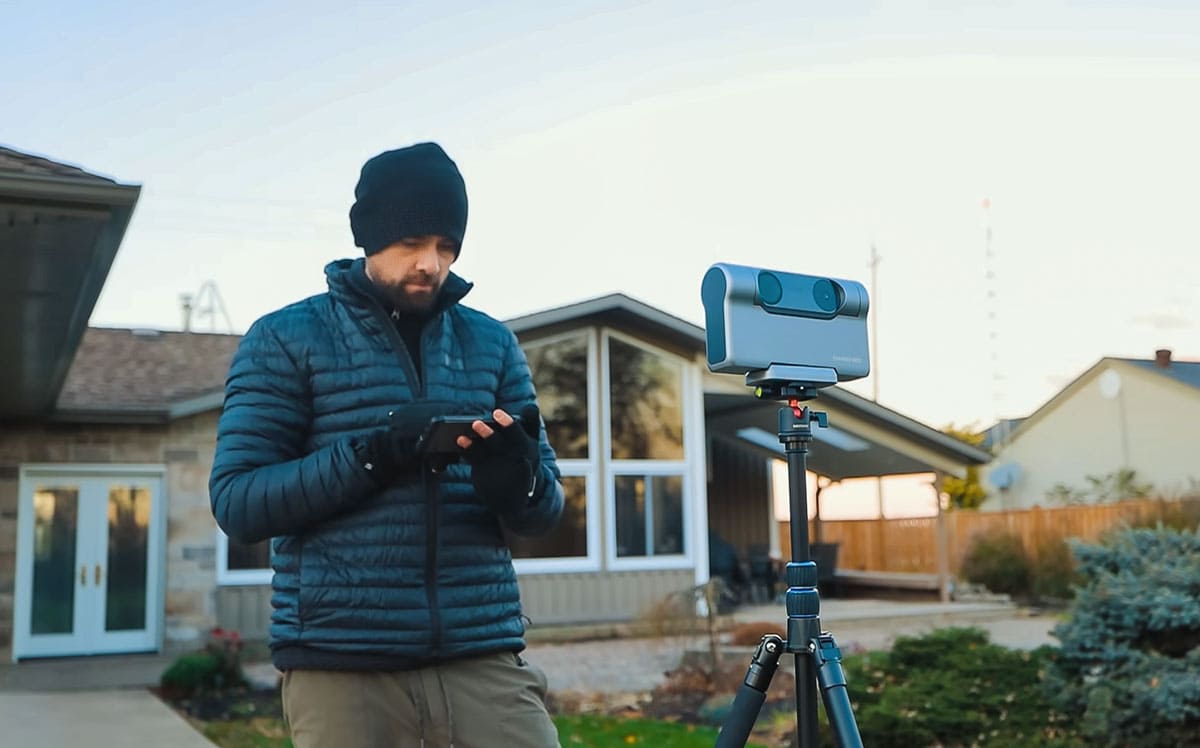
I control the DWARF 3 using a dedicated app on my phone.
Traditional Telescope Experience
You’re observing directly with your own eyes. It’s immersive, immediate, and the Moon and planets can look incredible. But many deep-sky objects are faint and subtle (especially under light pollution) and don’t resemble the colorful photos you see online.
If you want the classic “I’m actually seeing it” feeling, traditional is hard to beat. If you want jaw-dropping deep-sky views from your backyard, smart telescopes are often the faster path.

I’ve been using the Apertura AD8 Dobsonian telescope to observe planets since 2018.
Setup Time and Learning Curve
As someone who has taught others to enjoy astronomy through a telescope for over a decade, I know beginners’ struggles firsthand.
When I entered the hobby many years ago, the learning curve was extremely steep, and the term ‘astrophotography’ was not a mainstream term as it is now.
Smart telescopes: designed to reduce friction
A smart telescope gets you to the finish line (a beautiful, crisp image of a nebula or galaxy) in the quickest and most enjoyable way possible.
The first smart telescope to do this in extraordinary fashion was the ZWO Seestar S50. I couldn’t believe how easy it was to capture a successful image on night 1.
Most smart telescopes follow the same simple workflow:
- set it on a tripod
- power it on
- connect your phone/tablet
- auto-align via plate solving
- tap a target and start stacking
That reliability is a big reason they’ve taken off, and also why traditional astrophotographers feel a little resentment. “It shouldn’t be that easy”.
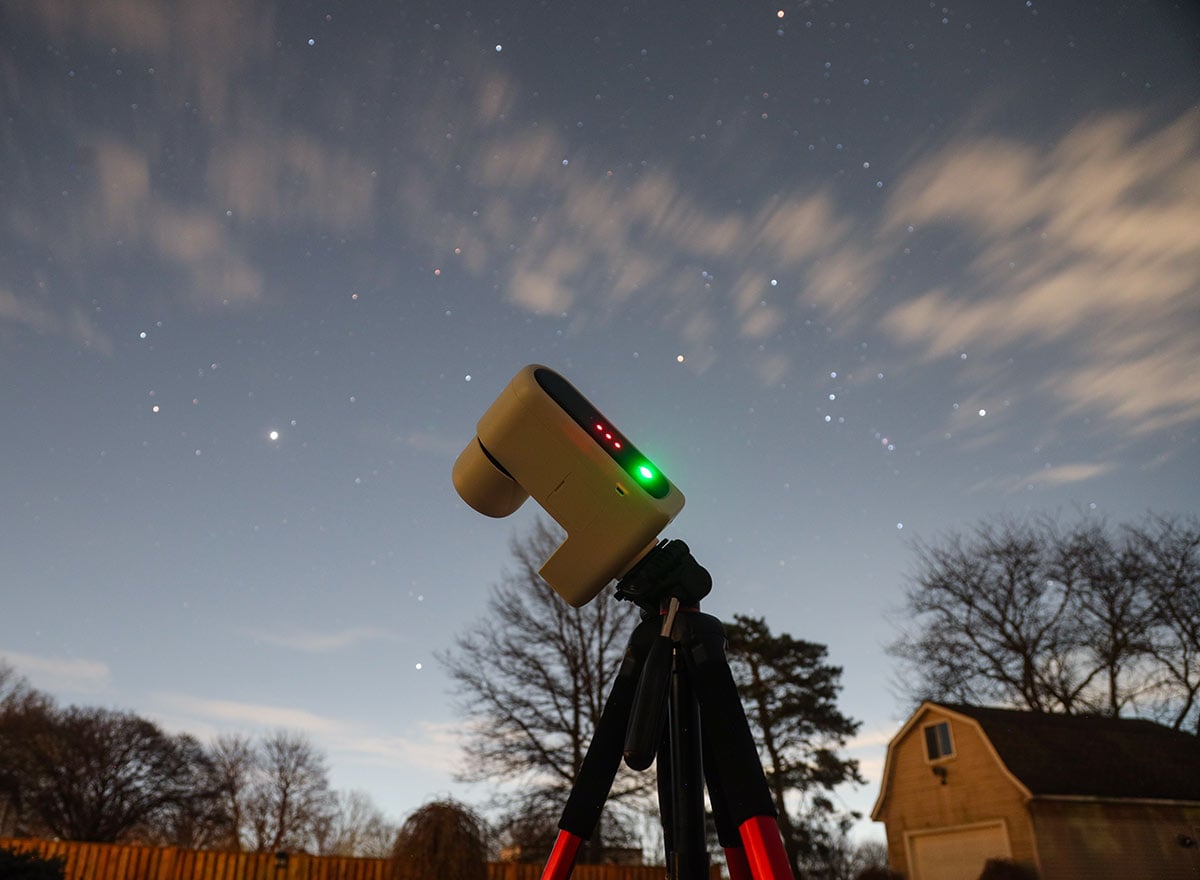
The Seestar S30 Pro can automatically find and track your chosen object in the night sky.
Traditional Telescopes: Range from Simple to Advanced
Traditional doesn’t automatically mean “hard.” For example, a Dobsonian is one of the simplest and most rewarding beginner telescopes for visual observing. In fact, I strongly recommend an 8-inch Dobsonian for beginners because it provides a straightforward way to learn the sky.
It forces you to actually spend time outside and learn the night sky, which is a rewarding part of the experience that smart telescopes can skip.
Where the learning curve ramps up is when you want tracking, precision framing, and astrophotography workflows (polar alignment, guiding, camera control, calibration frames, processing).
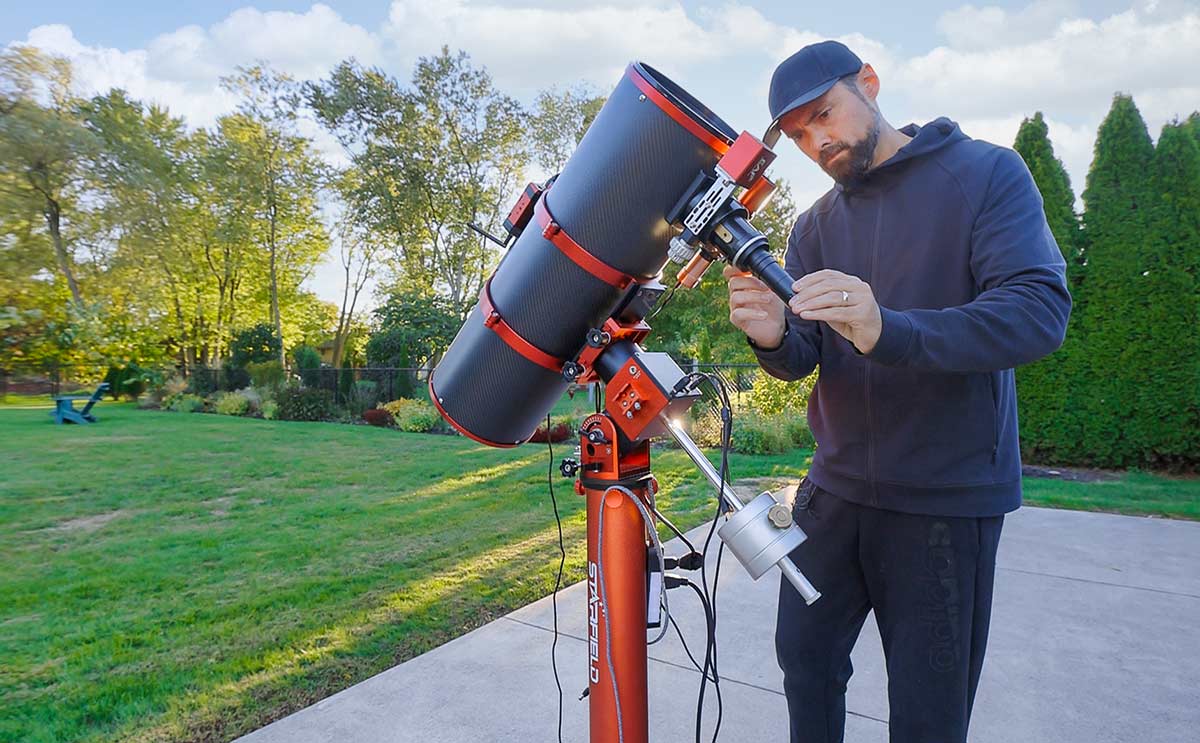
When you start using a traditional telescope for deep-sky astrophotography, the setup time and number of additional accessories needed grow.
What Can You See? Deep-Sky vs Planets
Deep-Sky Objects (Nebulae, Galaxies, Clusters)
Smart telescopes usually excel here because live stacking quickly pulls faint details out of the background, even in city skies.
Traditional telescopes can be excellent too, especially with a larger aperture under dark skies, but the visual experience is usually more subtle than that of stacked imaging on a screen.
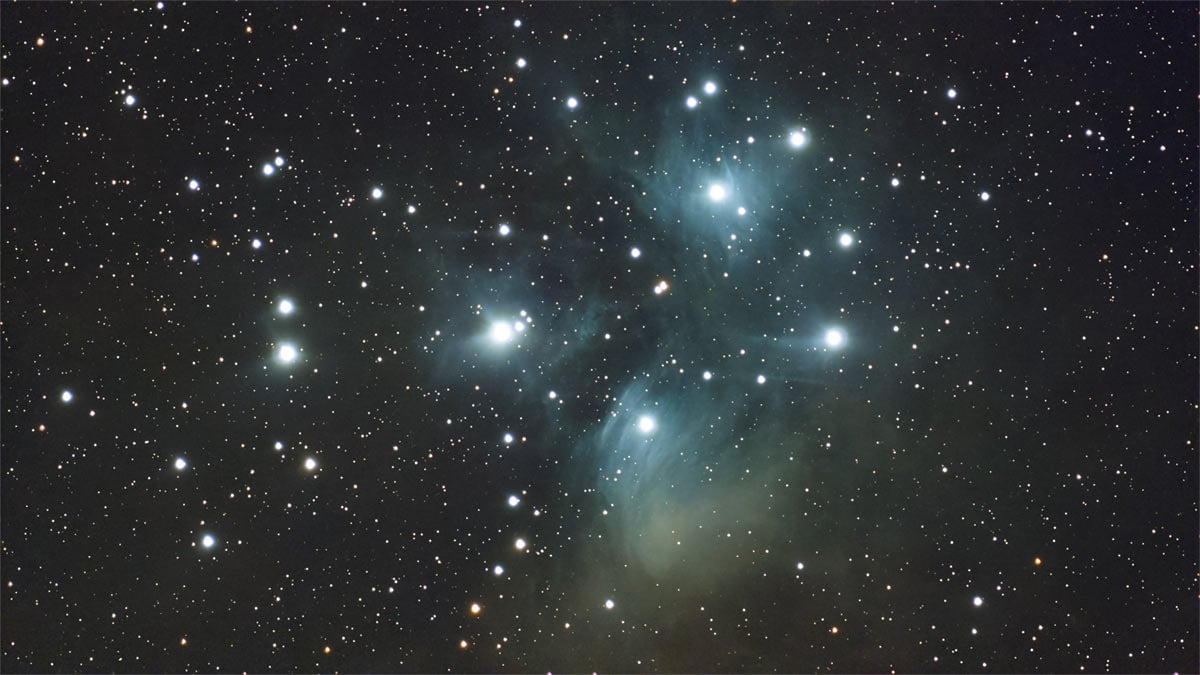
I captured the Pleiades Star Cluster using the DWARF mini smart telescope.
Planets and the Moon
Traditional telescopes often win here. Planets are small targets and reward high-magnification and longer-focal-length designs. Your own smart telescope hub makes this point clearly: for close-up planetary views, a traditional long-focal-length scope is the better tool.
Smart telescopes can do the Moon very well (and some handle solar and lunar modes nicely), but many models are optimized for wider deep-sky imaging rather than high-magnification planetary detail.
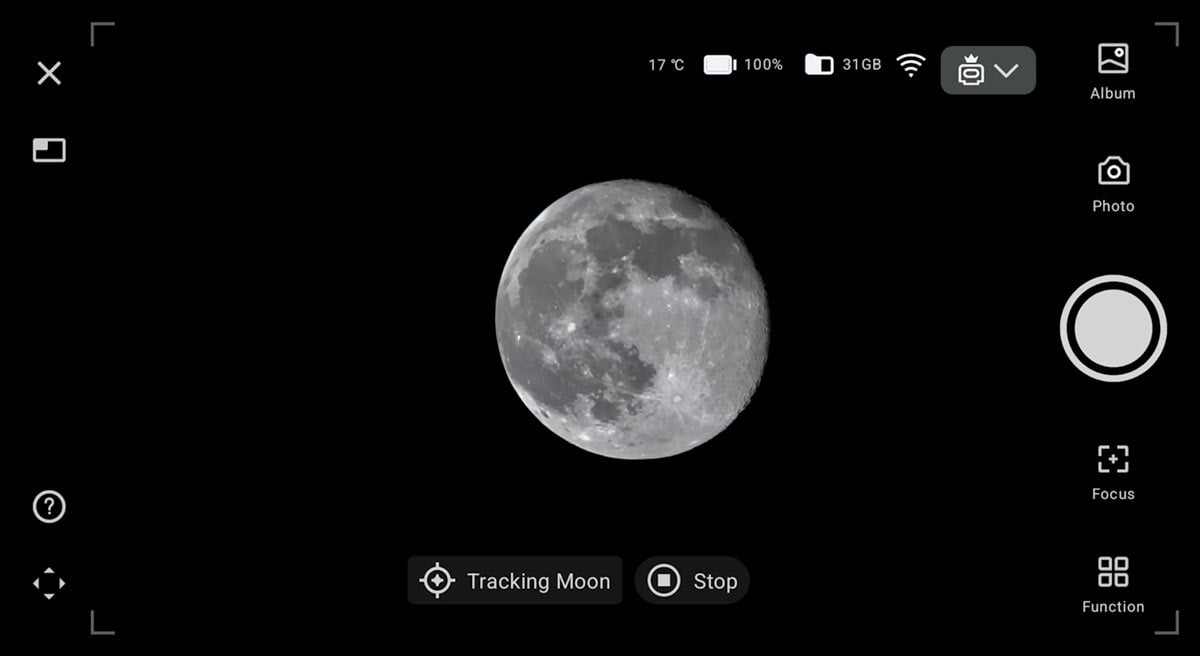
The moon is a great target for a smart telescope; however, planets appear very small and underwhelming.
Astrophotography: Fast Start vs Maximum Control
Smart telescopes: great results with fewer steps
If your goal is to capture shareable images quickly, smart telescopes are built for that. They combine tracking, imaging, and stacking into one workflow.
Some smart ecosystems also offer features that are extremely complex to replicate manually, like automatic mosaics and stacking observations across multiple nights.
Traditional Setups: The Long Game
Traditional astrophotography is modular. You can choose every component and optimize for your favorite targets. Over time, this path can outperform any all-in-one solution, especially for specialized imaging, filters, and high-end cameras.
But it comes with a learning curve and more troubleshooting. If you’re like me, you welcome this challenge, and the process of building out a customized system is half the fun.

Related Article: The Best Astrophotography Telescopes Available in 2026
Portability and Travel
Astronomy gets dramatically better under dark skies. The biggest upgrade you can make isn’t a new telescope; it’s a darker location.
Smart telescopes are often excellent travel companions because they reduce the “pile of gear” problem. Vaonis specifically frames smart telescopes as ideal for nomadic astronomy: fewer bulky accessories and quicker observing while camping, road-tripping, or traveling.
Traditional setups can travel too, but once you add tracking mounts, counterweights, cables, and power, it becomes a commitment.
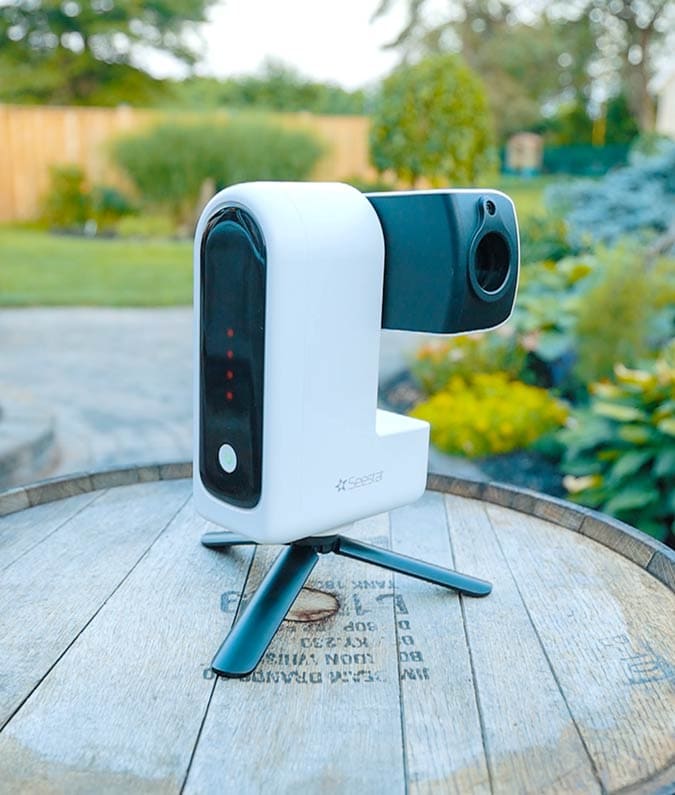
Smart telescopes are the clear winner in terms of portability and quick setup.

The views through my 14″ Dobsonian telescope (especially planets) are jaw-dropping. However, it comes outside less simply due to its size.
Cost: What you Pay For
This is where comparisons get messy, so here’s the simple way to think about it:
- A smart telescope price usually includes the optics, mount, camera, and software in one package.
- A traditional visual setup can be very affordable (especially Dobsonians), but a traditional astrophotography-ready setup can grow quickly once you add the mount, camera, guiding, controller, and accessories.
If you’re comparing visual observing only, traditional usually delivers more aperture per dollar. If you’re comparing a complete imaging system, smart telescopes can be more cost-effective than they first appear.
| Feature | Smart Telescope | Traditional Telescope |
|---|---|---|
| How you observe | On a screen (camera + stacking) | Through an eyepiece (visual), or camera if imaging |
| Setup | Fast, automated alignment (often plate solving) | Ranges from simple (Dob) to advanced (AP rig) |
| Deep-sky performance (suburban) | Usually excellent due to live stacking | Often subtle visually unless dark skies / big aperture |
| Planets & Moon | Moon is strong; planets often not the main focus | Often best choice for high magnification planetary |
| Upgrades & customization | Limited (integrated ecosystem) | Very flexible and modular |
| Best for | Quick success, EAA, easy imaging, travel, outreach | Eyepiece observing, planets, long-term mastery, max control |
So… Which One Should You Choose?
A traditional telescope is all about the hands-on experience. Learning the sky, using an eyepiece, and enjoying that true visual observing moment when an object pops into view.
A smart telescope is more about screen-based imaging, convenience, and quick, shareable results through automated tracking and stacking.
Traditional setups can be more flexible and upgradeable, while smart scopes are streamlined and beginner-friendly.
The good news is you’re not locking yourself in. You can start with a smart telescope and grow into a more manual setup later, or begin with a traditional setup and add imaging tools over time.
Here are the “real life” decision rules that I’ve seen hold up.
Choose a smart telescope if:
- you want quick setup and consistent results
- you mainly care about deep-sky objects from the backyard
- you like the idea of EAA and live stacking (watching the image improve in real time)
- you want a system you’ll use often because it removes friction
If you’re leaning toward a smart telescope, I currently recommend the ZWO Seestar S30 Pro as my top choice.
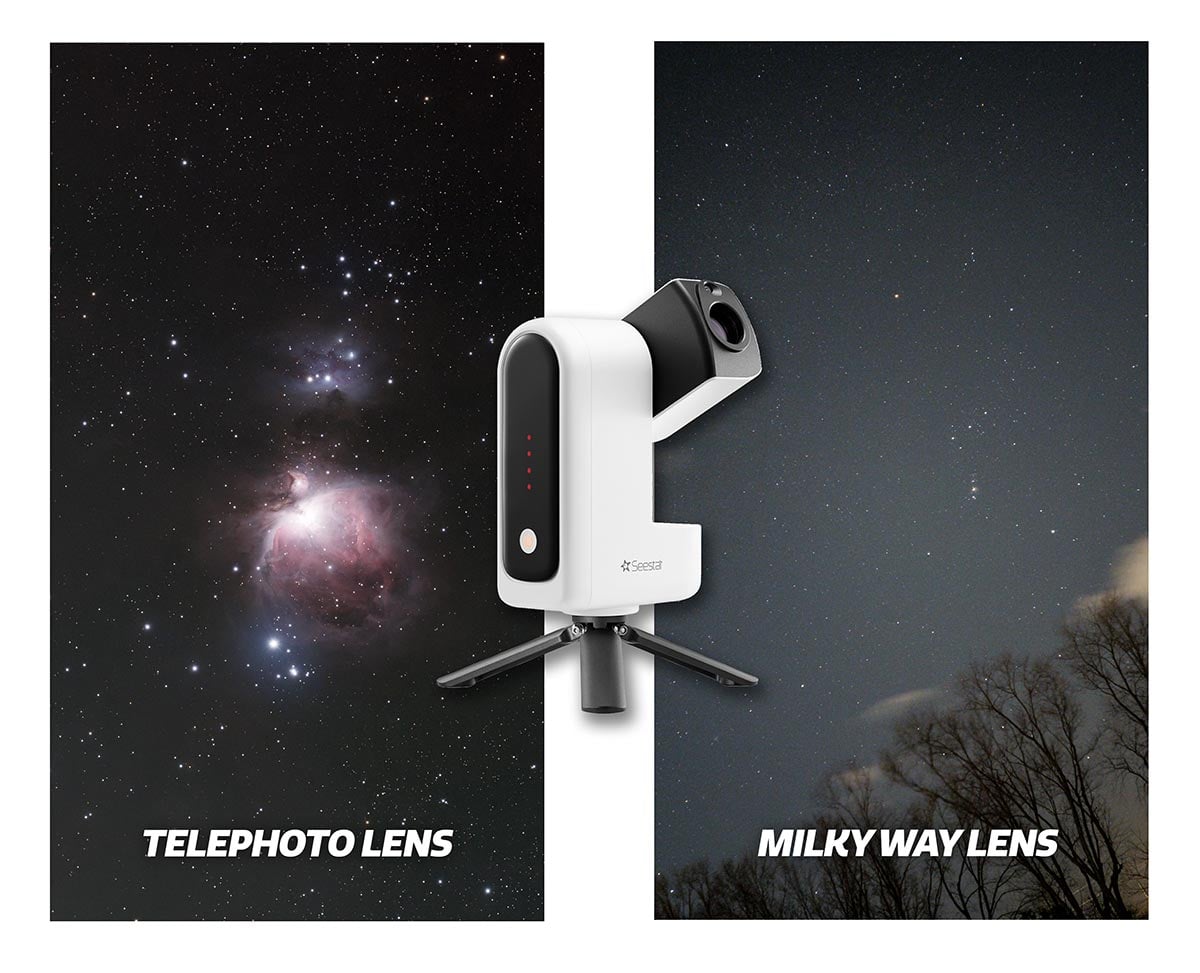
The Seestar S30 Pro features a dual-lens design that lets you capture wide-angle Milky Way photos.
Choose a traditional telescope if:
- you want eyepiece observing and the classic stargazing feel
- your main targets are the Moon and planets at high magnification
- you enjoy building and upgrading a modular system over time
- you want maximum flexibility for long-term astrophotography growth
If you’re not sure, see my “Best Telescope for Beginners” article to better understand your desired observing style and patience level.
Quick note: Even within “traditional” telescopes, the best choice depends on whether you plan to attach a camera for astrophotography. For imaging, a wide-field refractor is often the go-to because it’s easier to track, focus, and get sharp stars across the frame. For visual observing, a larger-aperture Dobsonian usually gives you the biggest wow-factor at the eyepiece for your money.

If the visual experience (through an eyepiece) is what you value most, an 8-inch Dobsonian is the way to go. (Apertura AD8)
An Insightful Reader Perspective
An insightful comment on the AstroBackyard Facebook page suggested that beginners don’t necessarily have to choose between a smart telescope and a traditional telescope. One of the best paths forward may be to start with a smart scope, while also joining a local astronomy club.
Smart telescopes offer quick setup, familiar technology, and impressive electronically assisted views of deep-sky objects that are difficult to achieve with many beginner optical setups. At the same time, traditional eyepiece views of the Moon and planets still provide a visceral, memorable observing experience that screens can’t fully replace.
Local astronomy clubs help bridge that gap. Experienced members often share views through high-quality equipment, explain what you’re seeing, and help newcomers make better decisions before investing in more advanced gear. That combination can keep the excitement alive and reduce the chances of a first telescope ending up unused in a closet.
The Best of Both Worlds
A lot of people end up with the best of both worlds. Personally, the type of telescope I use depends on the situation and even the time of year.
At a star party under dark skies, a big visual Dobsonian just makes the most sense for immersive eyepiece viewing and jaw-dropping views.
But for a quick gap in the clouds in January, I’m running outside with the Seestar S50 because it sets up fast and can grab a satisfying deep-sky EAA image before the sky closes again.
A smart telescope is perfect for quick weeknight sessions and travel, while a traditional scope shines on planets and offers a long-term upgrade path. And you can expand in either direction.
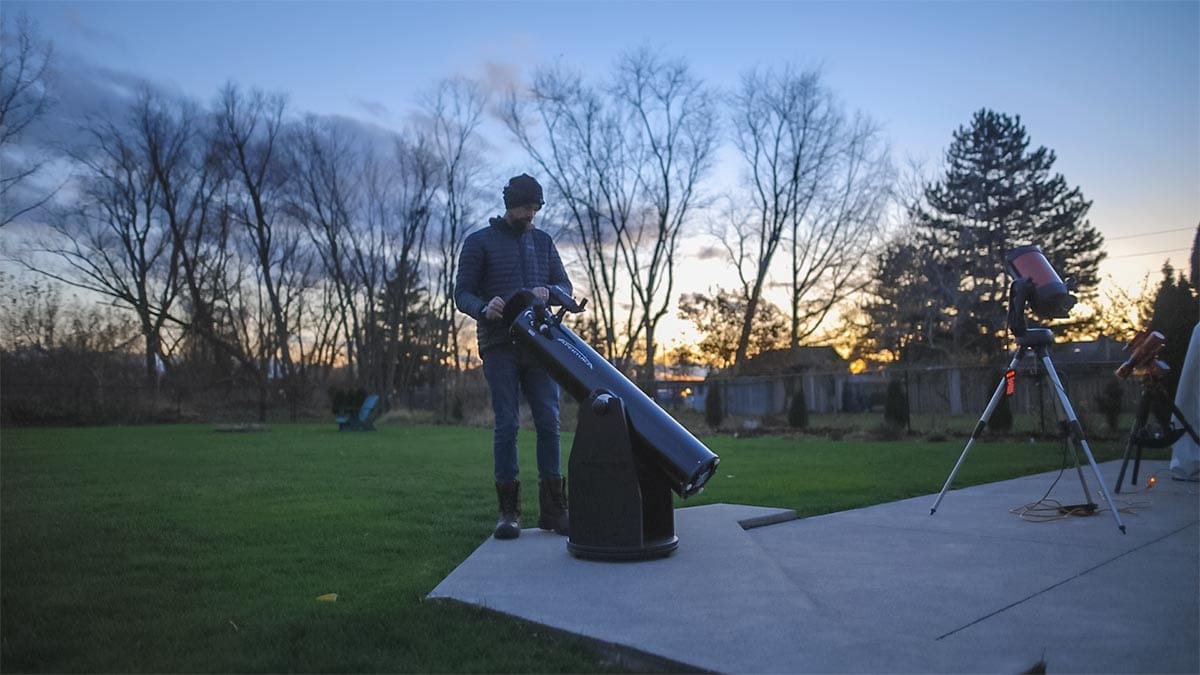

Trevor Jones is an astrophotographer and a valued member of the RASC. His passion is inspiring others to start their astrophotography journey on YouTube so they can appreciate the night sky as much as he does. His images have been featured in astronomy books & online publications, including the NASA Astronomy Picture of the Day (APOD).
Related Content:

I bought my first telescope back in the mid 80’s, it was a 4.5 900mm reflector on a EQ mount, I saw some deep sky objects with it, even saw Haley’s comet with it. I had to rely on Sky and Telescope magazine and A Field Guide To The Stars And Planets Menzel & Pasachoff 1983 to learn the constellations and where to find objects. (Wish I still had it.) Then in the 90’s I ordered a 13.1 Coulter Odyssey I saw in a Sky and Telescope ad. That thing was so much clearer and brought the objects I saw to life as it would collect so much more light. The one thing that was missing from those was being able to share what I saw with others. When the Dwarf3 was announced I started looking into it, I liked that it would do EQ mode compared to the Seestar S50, so I pre-ordered it, when I received it I was able to share what I captured with others. After a while I also purchased a Seestar S50, because I wanted to image deeper objects. I also own a Sky- Watcher GTI, ASI Air, Rokinon 135 2.0, a Canon T8i and a Canon RP that I have used for astrophotography and regular photography. One of the things I like about the smart telescopes is that I can program the targets I want to shoot, set them up and let them run all night. Thank you Trevor for all your astro content, it has helped me learn a lot about this hobby!