
The Best Weather Apps for Astronomy

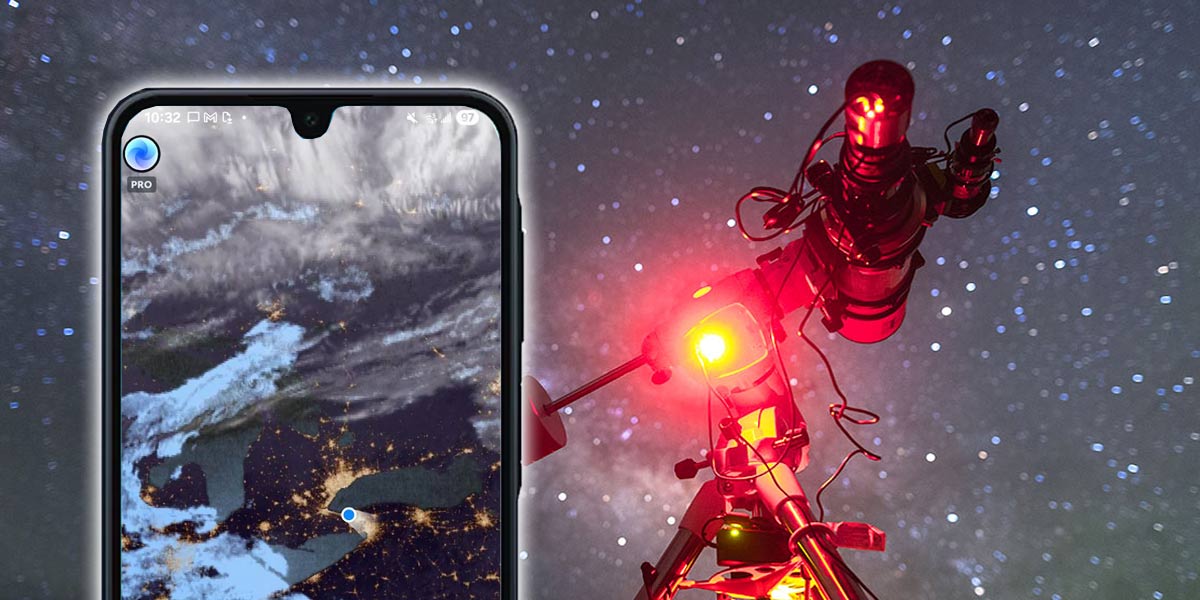
A good weather app can save you a lot of frustration when you’re planning a night under the stars. The best weather apps for astronomy go beyond a basic clear-or-cloudy forecast, helping you check things like cloud cover, seeing, transparency, wind, humidity, and even smoke before you drag all your gear outside.
If you spend any time observing or imaging, you already know the hard truth: a “clear” forecast does not always mean a good night. You can have a cloud-free sky ruined by poor transparency, bad seeing, or gusty winds, and sometimes a forecast that looked perfect a few days ago completely falls apart by sunset.
That’s why having the right astronomy weather app matters, whether you’re planning an imaging session from the backyard or heading out to a darker site.
This article focuses specifically on weather forecasting apps for astronomy. If you’re looking for the full list of the best astronomy apps overall, check out my complete guide to the best astronomy apps.
My Top 6 Astronomy Weather Apps
I use these astronomy weather apps almost every day to plan my astrophotography sessions, whether I’m starting a new deep-sky project or want to capture a time-lapse of the next meteor shower.
Each one gives me a slightly different perspective on the night ahead, from cloud cover and transparency to live satellite views and general local weather, and together they help me decide when it’s worth setting up my gear.
| App | Best For | Main Strengths |
|---|---|---|
| Astrospheric | Serious imaging sessions | Astronomy-specific forecasts, excellent cloud prediction, smoke/transparency insight, and one of the best all-in-one planning tools for astrophotographers. |
| Clear Outside | Quick observing decisions | Easy to read, beginner-friendly, great hourly cloud layers, darkness data, and light pollution info in a very simple layout. |
| Clear Sky Chart | Seeing and transparency checks | Fantastic for comparing cloud cover, transparency, and seeing at a glance, especially if you already know how to read the chart. |
| Meteoblue | Comparing Forecast Models | Useful charts, maps, and model comparisons to build a better overall picture of the upcoming conditions. |
| Zoom Earth | Tracking clouds in real time | Excellent live satellite and radar views for seeing cloud movement, storm development, and whether conditions are improving or getting worse. |
| The Weather Network | General local weather awareness | Strong hourly forecasts, radar, local alerts, and temperature/wind trends that help you sanity-check broader conditions before setting up. |
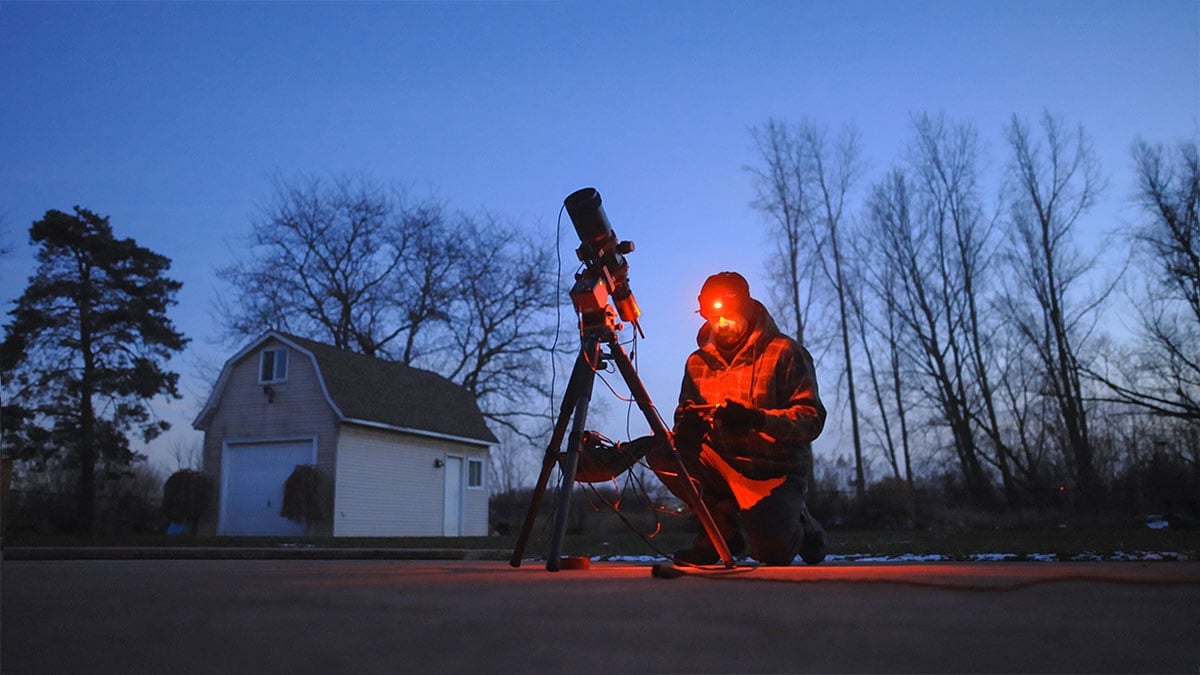
I use a mix of astronomical forecasts to maximize every potential hour of clear-sky time.
Astronomical Weather Forecasting
I use astronomy weather apps daily to plan my astrophotography sessions, and over time, I have learned that no single app tells the whole story. While most of the time each app paints a similar story, sometimes, they are way off.
For this reason, I use a mix of apps to get a high-level overview of upcoming weather, and before planning important dark sky trips during a new moon, I need to make sure the forecast is accurate. I make the final call based on everything I have seen.
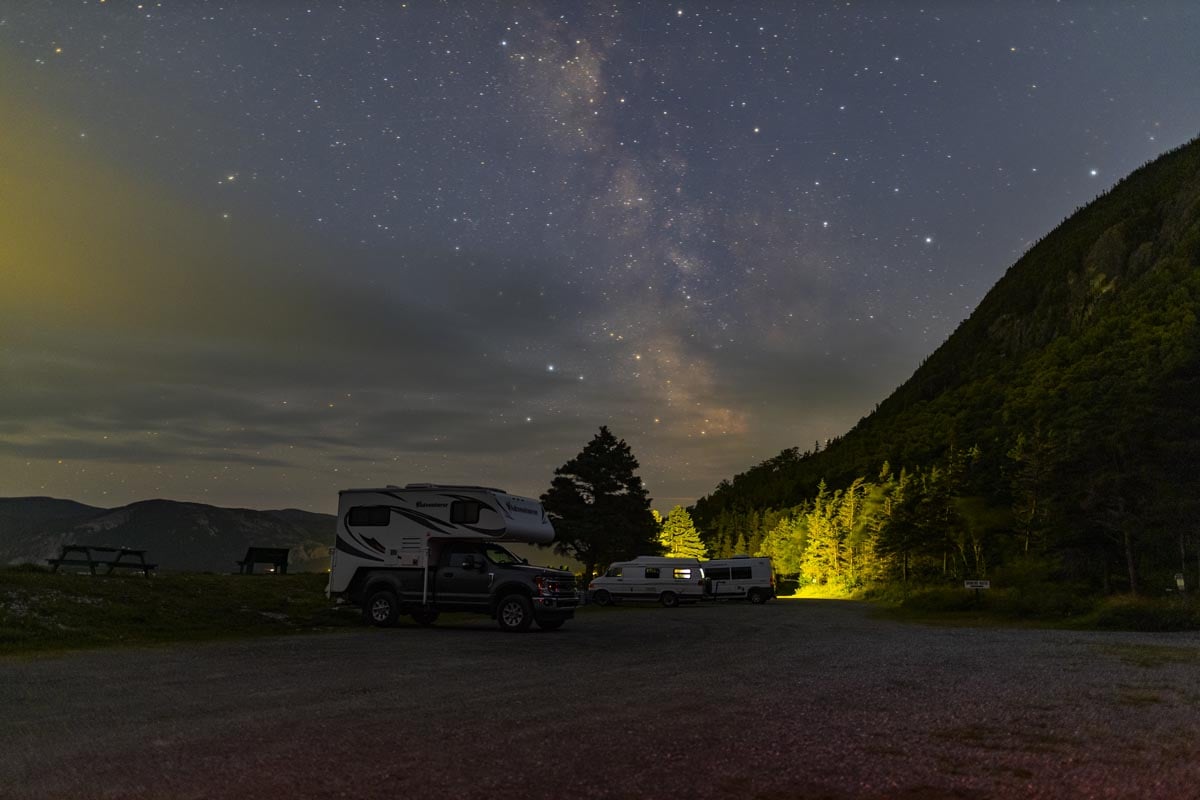
In fact, I currently have 6 weather apps on my phone, and the ones I use most are Astrospheric, Clear Outside, Clear Sky Chart, Meteoblue, Zoom Earth, and the Weather Network.
So, what is the best astronomy weather app for beginners? My honest answer is that the best choice is usually a combination of astronomy-specific tools and a general weather app.
If I had to recommend one app to start with, it would be Astrospheric. But the real secret is understanding what each app does well, and using them together.
If you are looking for the best stargazing weather app overall, Astrospheric is my top pick. It offers an excellent balance of detailed cloud forecasts, seeing conditions, transparency data, and an easy-to-use interface for amateur astronomers and astrophotographers.
What Makes a Good Astronomy Weather App?
Most people looking for an astronomy weather app are really just trying to answer one question: Is it worth setting up tonight?
The tricky part is that astronomy weather is a lot more nuanced than a standard forecast. A clear sky on your weather app does not necessarily mean good conditions for observing or imaging.

A useful astronomy weather app will include detailed information on cloud layers. High clouds are especially annoying for astrophotographers.
A useful astronomy app should show you more than cloud cover alone. Things like transparency, seeing, wind, humidity, temperature, moon phase, and true darkness all play a role in whether the night is actually worth your time.
It also helps when that information is easy to read at a glance, because after a long day, most of us are not in the mood to interpret a pile of complicated charts.
That is what separates a genuinely helpful astronomy weather app from a basic forecast tool. The best ones give you the information you actually need to make a quick call on the night ahead.
Best Astronomy Weather App Overall: Astrospheric
- Operating System: iPhone, Android
- Free or Paid: Free base version/subscription for premium features.
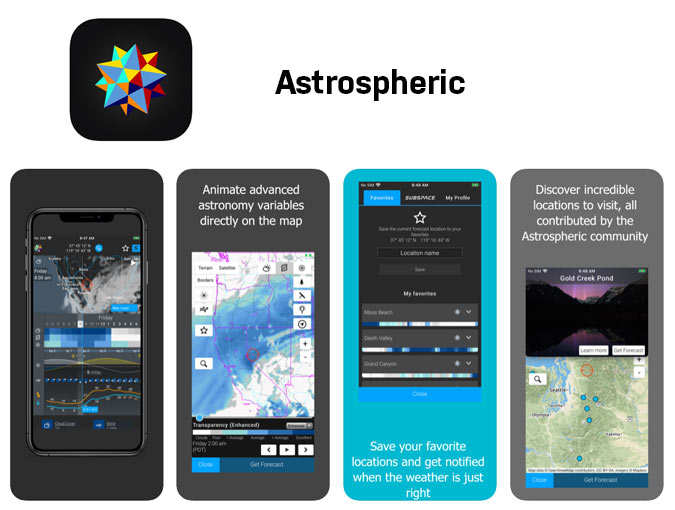
If I had to pick just one, Astrospheric would be my choice for the best astronomy weather app overall.
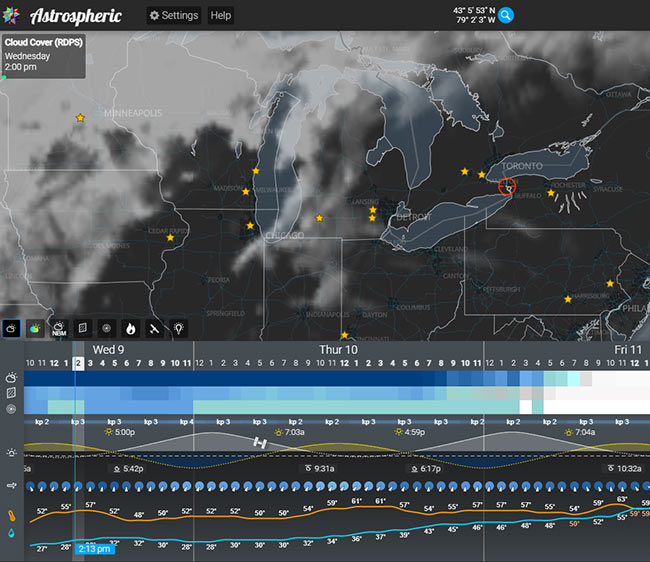
It is built specifically for astronomers and astrophotographers, and that shows right away. Instead of giving you a generic forecast, it focuses on the information that actually affects your night under the stars: cloud cover, transparency, seeing, smoke, wind, humidity, temperature, and detailed sun and moon data.
What I like most about Astrospheric is that it helps me make an actual decision. I can look at the hourly forecast and quickly figure out whether I am dealing with a short imaging window, an all-night opportunity, or a session that is not worth the setup time.
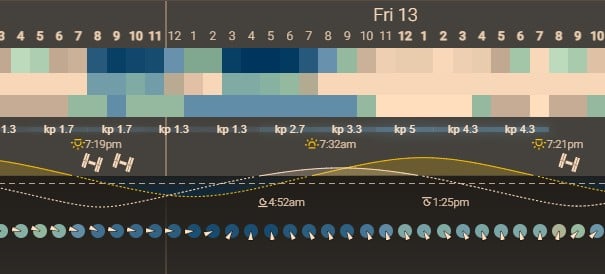
The best-case scenario is dark blue squares for each cloud layer.
That matters when you are hauling out a mount, telescope, guide camera, power supply, and everything else that comes with astrophotography.
For beginners, it can feel a little data-heavy at first, but once you learn what the main graphs mean, it becomes incredibly valuable. If you are serious about finding the best astronomy weather app for astrophotography, start here.
Location Limitations of Astrospheric
Astrospheric is primarily designed for North America, and while the website can be accessed more broadly, the mobile app is only released in countries with full coverage from its core RDPS forecast model.
That means users outside the app’s supported forecast domain may be able to browse the service, but they may encounter missing model data or location errors when requesting a forecast. Even within supported regions, some advanced layers, such as the cloud ensemble, have a smaller coverage area than the main forecast.
For a Quick Glance: Clear Outside
Clear Outside is one of the easiest astronomy weather tools to recommend to a beginner.
The layout is clean, the forecast is color-coded, and it gives you the core information you want before stepping outside: low, medium, high, and total cloud cover, along with moonrise, moonset, and darkness times. That alone makes it incredibly useful for quick checks.
This app has a handy feature that provides a rough Bortle Scale reading for your current location, which is very helpful when scouting out new dark-sky spots to set up your telescope.

I like Clear Outside when I want a fast answer without diving too deep into the weeds. It is one of those apps where you can open it, scan the next few hours, and immediately know whether the night is promising. For beginners, ease of use matters a lot.
It does have limitations. It is not as detailed as Astrospheric, and it does not provide the same level of transparency and seeing information. But that is also part of its appeal. It is straightforward, free, and excellent for a high-level read on the night ahead.
Alternative Local Forecast: Clear Sky Chart
- Operating System: Web-based app
- Free or Paid: Free
The Clear Sky Chart is not the prettiest tool on this list, and it definitely feels more old-school than the others. But I still use it, and for good reason.
For many observing locations across North America, the Clear Sky Chart gives you a visual block chart showing cloud cover, transparency, seeing, darkness, wind, and humidity. Once you get used to reading the chart, it becomes a very fast way to judge whether a location is worth the trip.
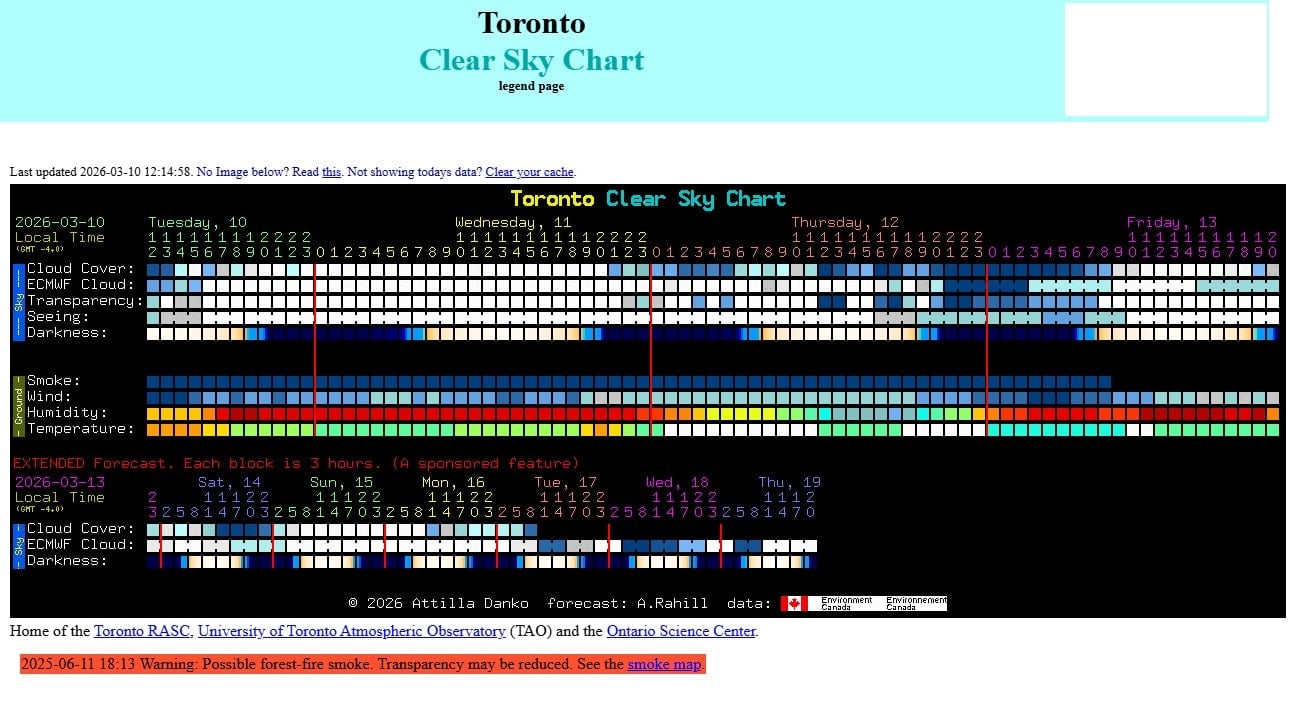
This is one of the tools I trust most when I want a second opinion for a specific observing site. The interface may not win any design awards, but it is practical, proven, and still widely used because it works.
If you are planning a dedicated stargazing trip or heading to a familiar dark site, the Clear Sky Chart is an excellent backup check. I would not call it the best astronomy weather app for beginners in terms of design, but I would absolutely call it one of the most useful forecasting resources to keep in your toolkit.
Multi-Model Comparisons: Meteoblue Weather & Maps
- Operating System: iPhone, Android
- Paid or Free: Free base version; in-app purchases/subscription for premium features.
Meteoblue Weather & Maps is another excellent app to include in your astronomy weather toolkit, especially if you want a broader, more detailed view of the forecast before committing to a night outside. The app offers forecasts for virtually any location, along with weather maps, a visual meteogram, and multi-model comparisons that help you see how different forecast models line up.

Meteoblue is useful for astronomy because it helps you look beyond a single forecast number or app summary. Instead of relying on one source, you can use its charts, maps, and model comparisons to build a better overall picture of the upcoming conditions.
It is not strictly an astronomy-only app, but it is a strong companion to dedicated stargazing weather tools, as it provides more context and another layer of confidence when checking the forecast. If you like to compare sources before heading out with your telescope or camera, Meteoblue is definitely one to consider.
Why Zoom Earth and the Weather Network Still Matter
This is where my approach probably differs from the typical “top 6 apps” roundup. Even though this article is about the best astronomy weather app, I do not rely entirely on astronomy-specific tools. I always cross-check with general weather apps, especially when I am planning something important.
Zoom Earth
Zoom Earth is fantastic for getting a big-picture view of weather systems. I use it to watch cloud movement, fronts, and radar patterns in real time. If an astronomy app says the skies should clear after midnight, Zoom Earth gives me a better sense of whether that clearing trend actually looks believable on the broader map.
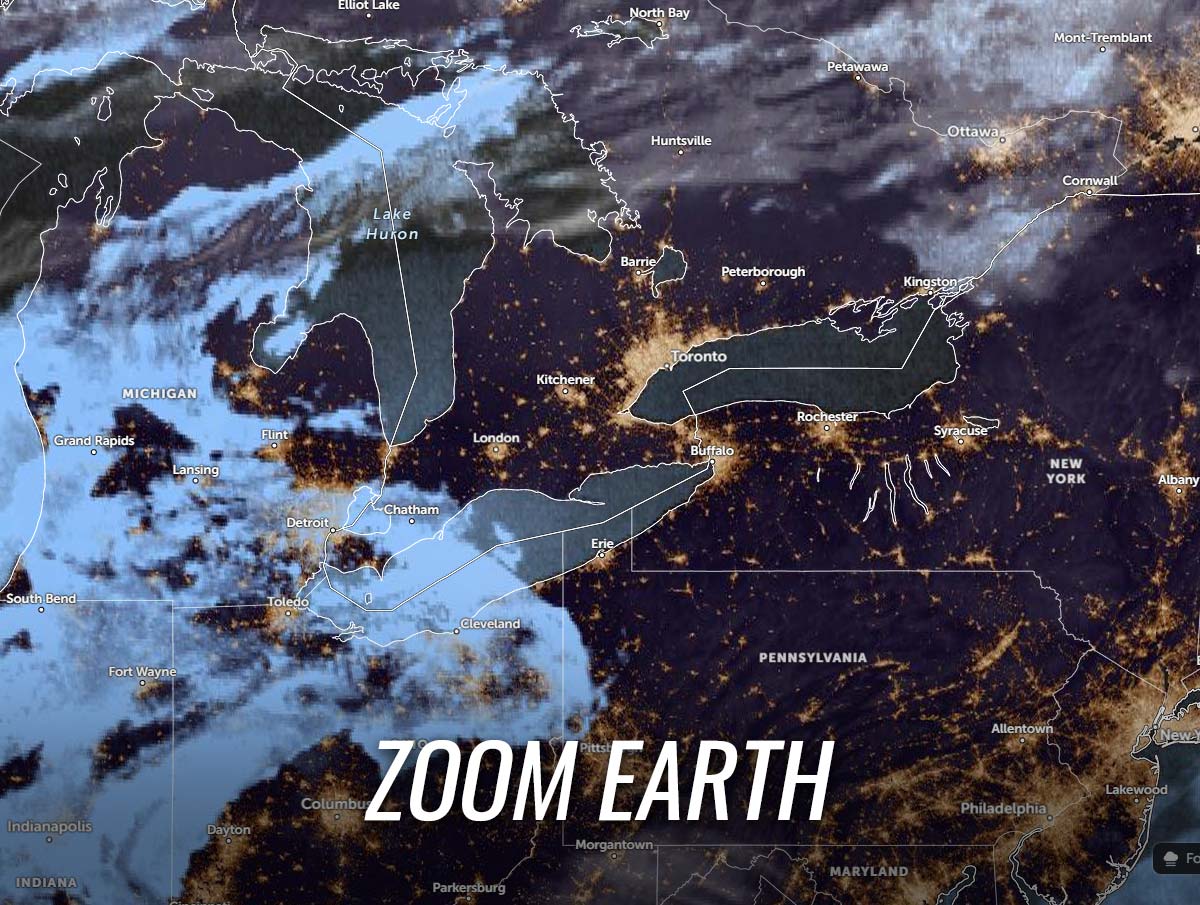
The Zoom Earth real-time satellite view helps me understand the movement of clouds – on their way in or out.
The Weather Network is another one I check constantly. It is not designed specifically for astronomy, but it is useful for the basics: hourly temperature, wind, precipitation chances, and the overall local forecast.
Sometimes, that practical information matters just as much as transparency graphs. A perfect sky is a lot less enjoyable when the wind is howling, and the temperature drops harder than expected.
That is why I currently keep 5 weather apps on my phone. Each one helps answer a slightly different question, and together they give me a much more complete picture than any single app on its own.
Planning My Astrophotography Sessions
My routine is pretty simple now, but it took years to settle into it.
First, I check Astrospheric for the detailed astronomy forecast. I want to know whether cloud cover, seeing, transparency, and smoke are trending in the right direction. Then I switch over to Zoom Earth for a broader weather context, which helps me spot red flags that the astronomy apps might not make obvious right away.

Related Article: The Best Astrophotography Targets By Season
I find the Zoom Earth satellite view to be super helpful for noticing ultra-localized cloud formations, and I can better predict what my night will look like using the animations. I really only use this tool on the day of my observing or astrophotography session, usually only a few hours before.
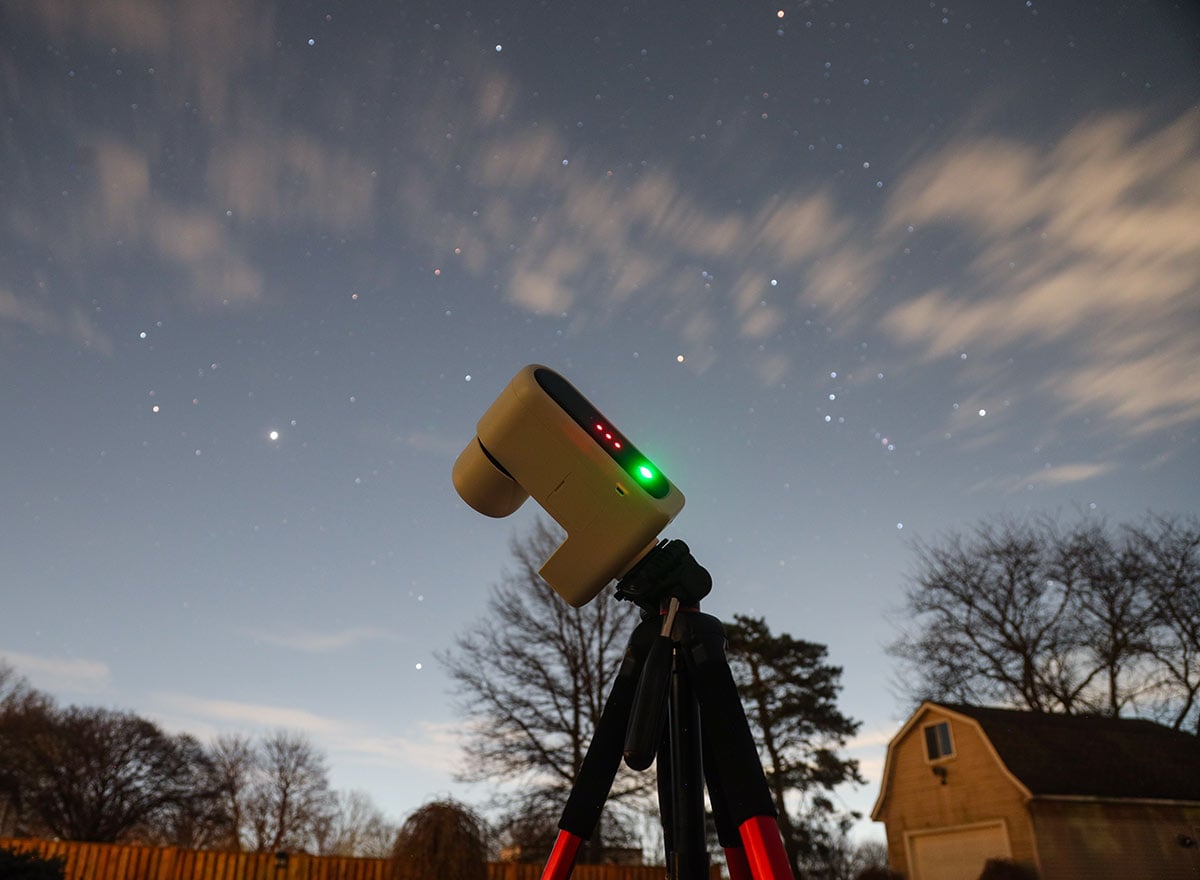
On nights when I will only get a few gaps in the clouds, I often set up a smart telescope in place of a robust deep-sky rig.
This process becomes even more important around the new moon phase. During the week leading up to and following the new moon is a critical time to capture precious broadband data. I often travel up to 3 hours or more to shoot under dark skies.
Before planning important dark sky trips during a new moon, I need to make sure the forecast is accurate. That usually means checking multiple apps across several days and watching whether the models begin to agree with each other.
If all of them are pointing in the same direction, I feel a lot more confident loading the car and making the drive.
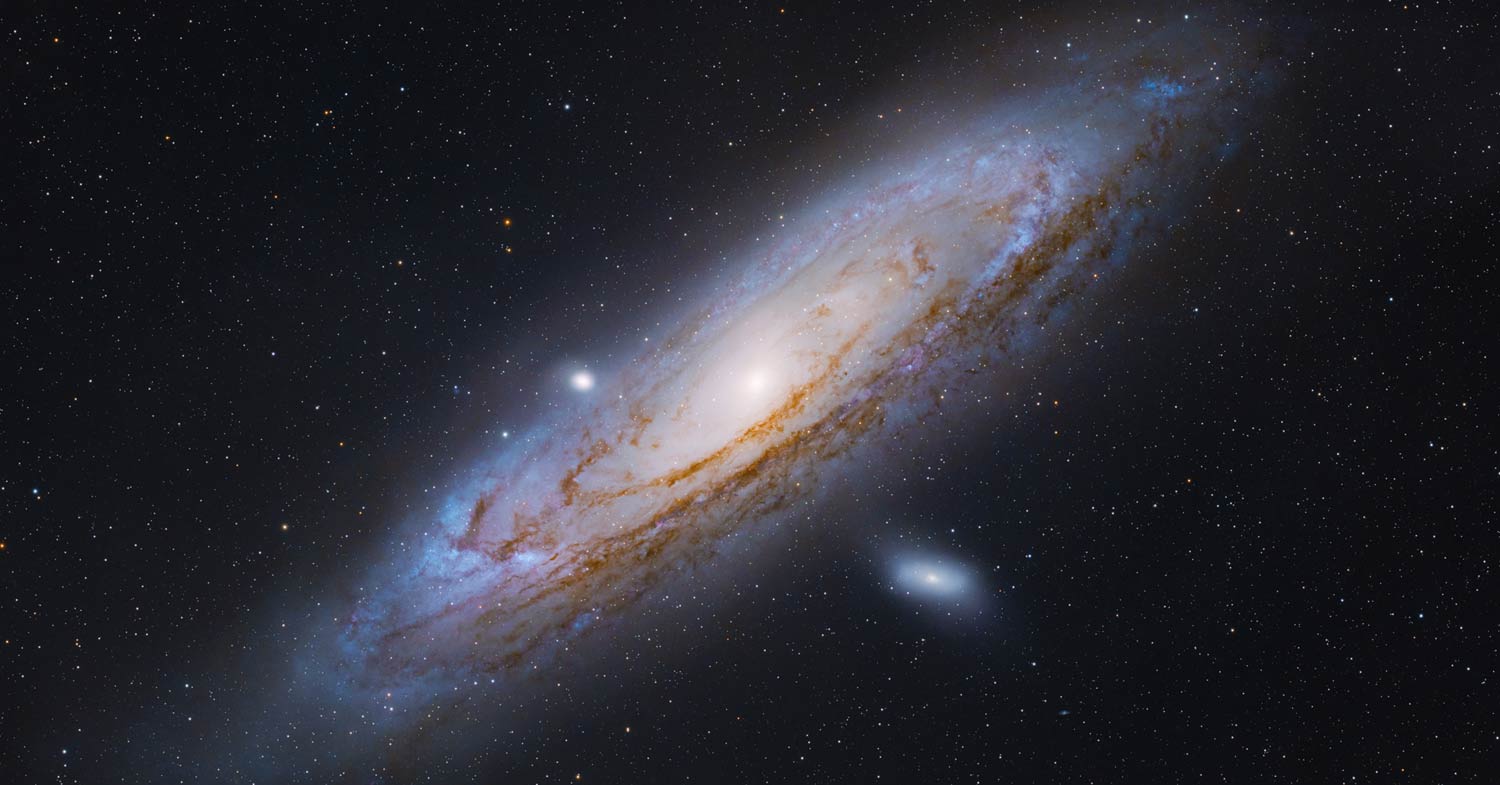
I drove to a dark sky site (Bortle 3) to capture this image of the Andromeda Galaxy.
See the Northern Lights: My Aurora Forecast & Alerts
If northern lights viewing is on your astronomy bucket list, My Aurora Forecast & Alerts is a handy app to keep on your phone. It focuses specifically on aurora activity, making it easy to check current conditions, view forecast maps, and see how likely the aurora is to be visible from your location.
One of the most useful features is its alert system, which can notify you when geomagnetic activity increases enough to make a sighting possible. For astrophotographers and skywatchers in higher latitudes, that can be especially helpful during periods of strong solar activity when the aurora may appear unexpectedly.

I was able to capture the northern lights in my backyard thanks to an ‘aurora alert’ on my phone.
While it is not a full astronomy weather app in the same way as a cloud forecasting tool, it fits nicely into the broader category of astronomy weather because aurora visibility depends heavily on space weather conditions.
Final Thoughts
If there is one thing I would tell every beginner, it is this: do not obsess over finding one perfect app. Weather forecasting is hard, and astronomical weather forecasting is even harder.
Two apps can look at the same night and give you very different expectations. That does not mean one is useless. It usually means you need a little more context.
That is why I use a mix of apps to get a high-level overview of upcoming weather, and why I still cross-check everything before a serious session. The more you use these tools, the better you get at spotting patterns, understanding your local climate, and deciding when it is worth setting up.
 Trevor Jones is an astrophotographer and a valued member of the RASC. His passion is inspiring others to start their astrophotography journey on YouTube so they can appreciate the night sky as much as he does. His images have been featured in astronomy books & online publications, including the NASA Astronomy Picture of the Day (APOD).
Related Content
- The Best Smartphone Apps for Astronomy and Stargazing
- The Best Astrophotography Telescopes Available in 2026 (Complete Guide)
- The ZWO ASI2600MC Air Made My Life Easier: Here’s How


Hi Trevor
Weather service mismatches inspired me to create something that was easy for beginners, rather than the complex services that exist out there, or jumping between lots of weather apps, so I created Astro Seeing, trying to get consensus on weather from multiple sources in one place with hints of seeing quality – check it out and let me know any feedback you have.
https://app.astroseeing.com/
Hi Trevor,
I wonder how would you like Astro Conditions app (https://apps.apple.com/us/app/astro-conditions/id6759236025). I released it a few months ago. It’s open source and free (https://github.com/gdombiak/AstroViewingConditions).
Regards,
Gaston