
Newfoundland Road Trip: Dark Skies, Camping, & Stargazing

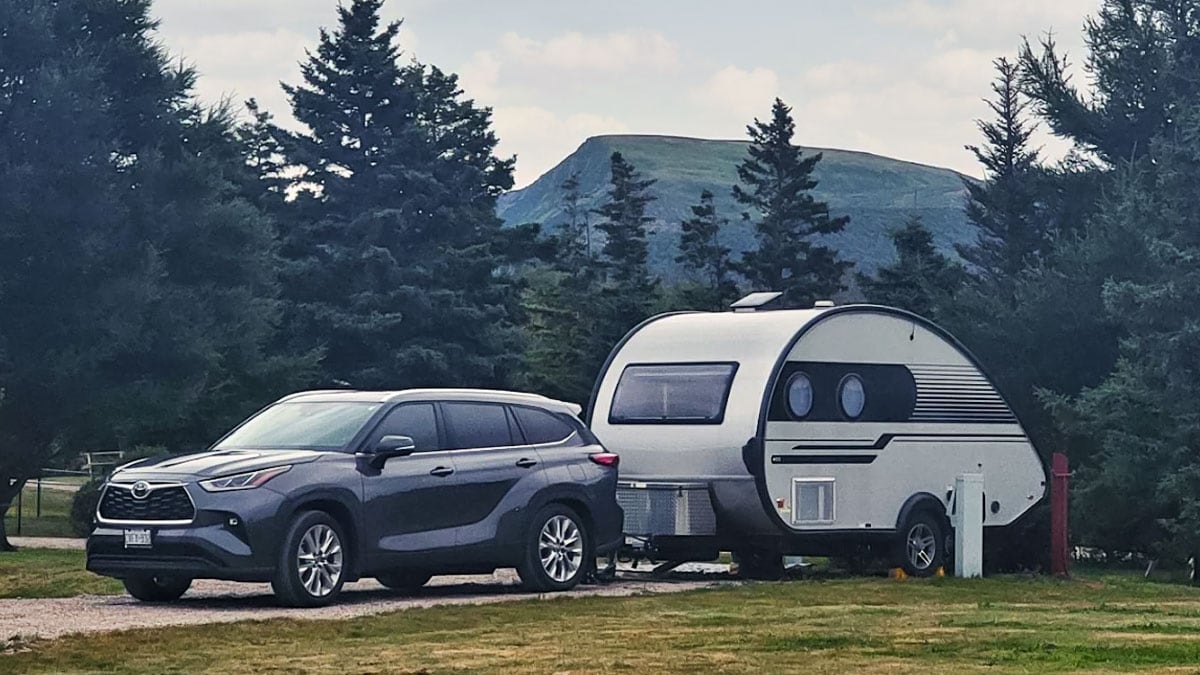
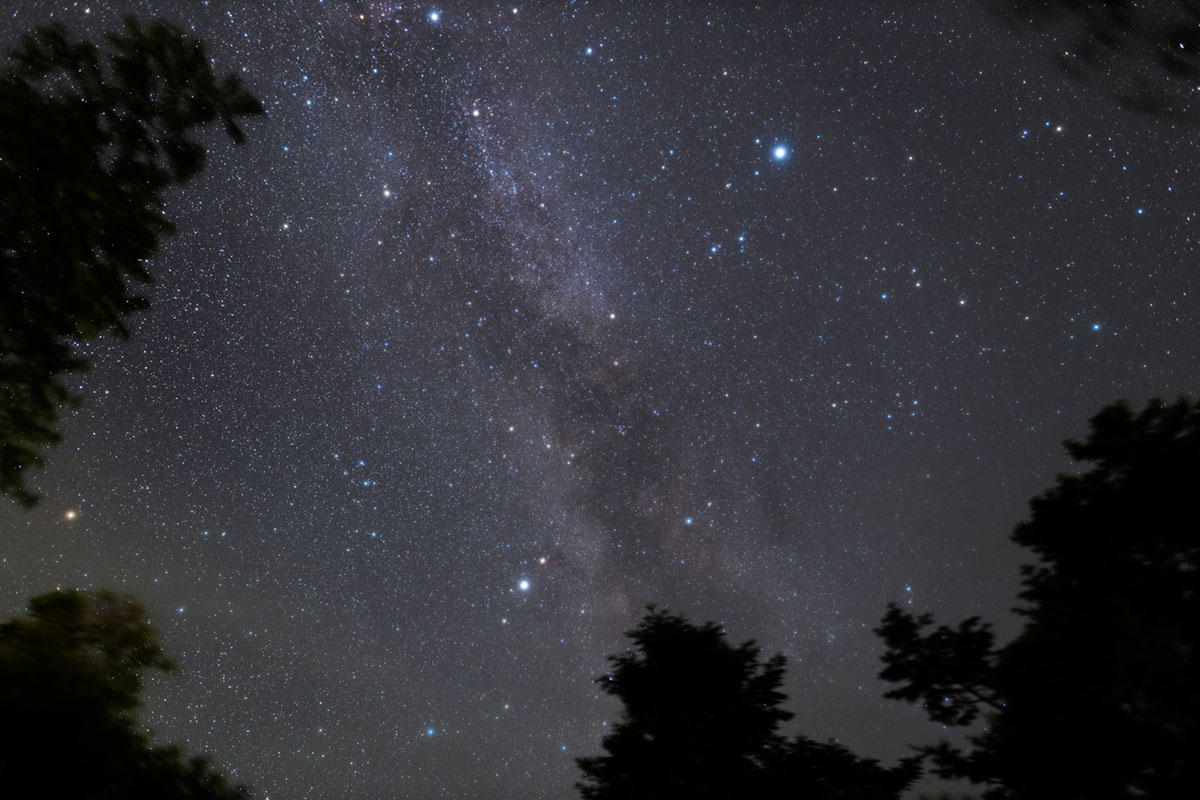
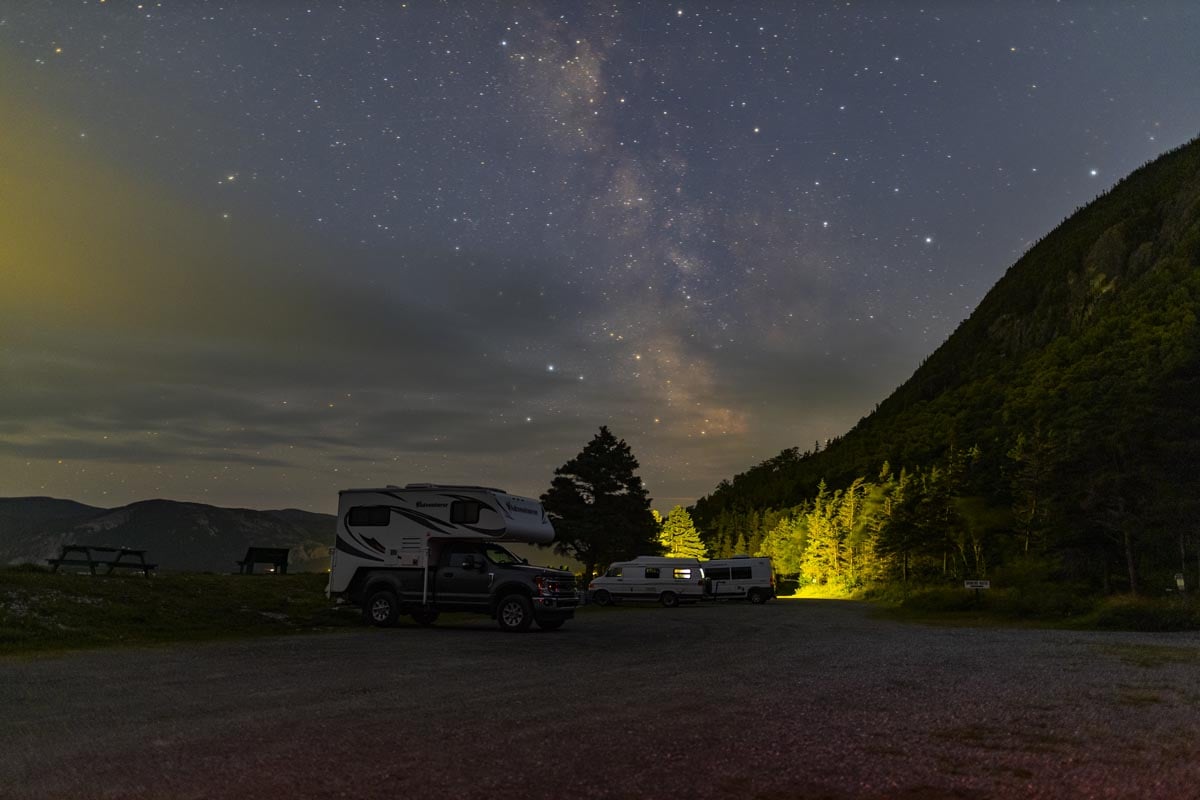
The dark skies of Blow Me Down Provincial Park in Newfoundland.
Trip Planning
We’d been dreaming about this trip ever since we bought our camper back in 2021.
Newfoundland has always been high on our list – not just for its incredible dark skies, but also for its endless natural beauty and outdoor adventures.
And for me, the island special. My parents are from Newfoundland, so I’ve spent a lot of time there (Trevor even proposed to me on Signal Hill!). But there were so many parts of the province I had yet to see.
When we finally committed to a three-week trip, the planning began. Based on the drive from southern Ontario to North Sydney, Nova Scotia (where the ferry departs for Newfoundland), is about 20 hours. So we gave ourselves 4 days to get there and back, plus 12 days on the island.
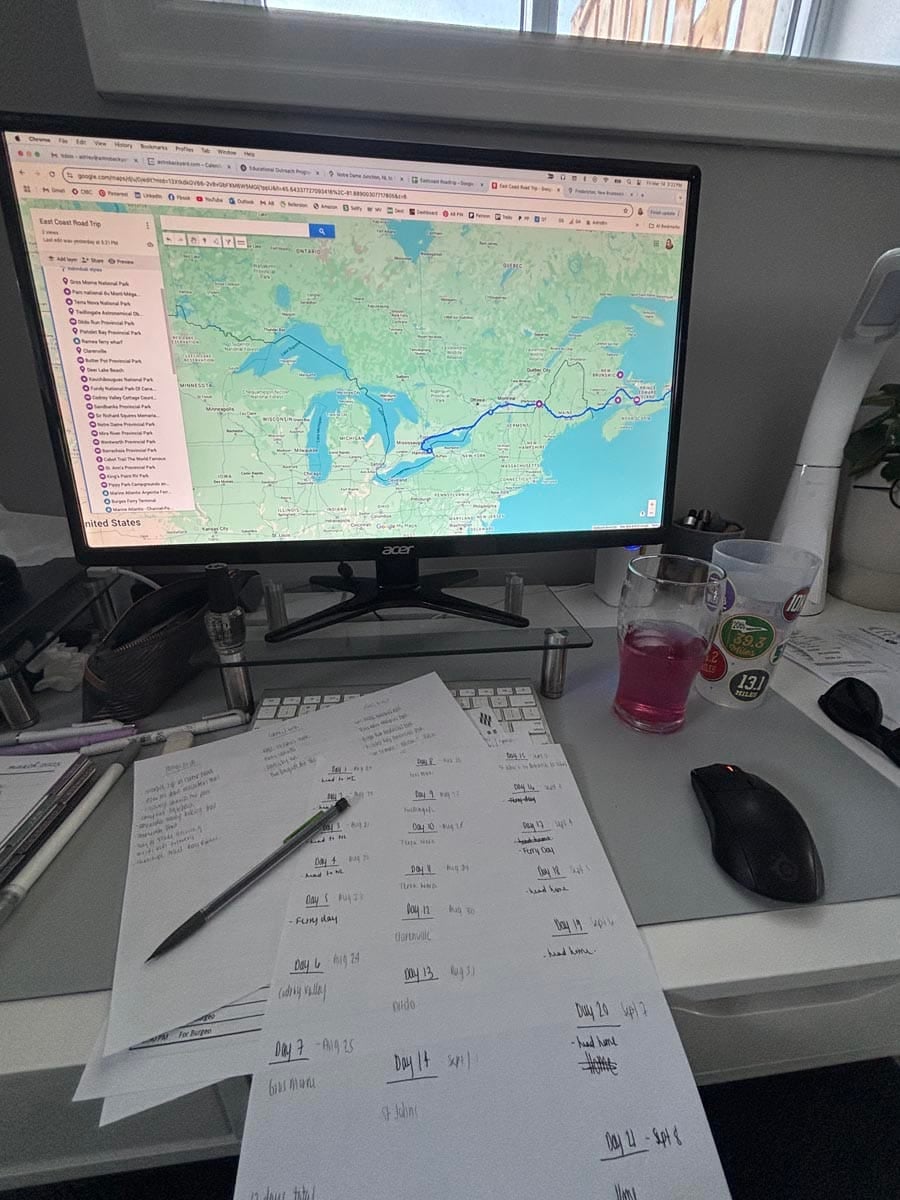
Using Google MyMaps to plan our camping trip in March.
We decided to split the drive into more manageable days (no more than 5.5 hours), since we were towing the trailer.
Hauling a camper means everything takes a little longer, and even routine stops become more strategic, making sure gas stations or restaurants had enough space for us to pull in and out safely.
For big trips like this, I like to create a Google MyMap. I plan the route, our stops, and things we’d like to do and see. The Newfoundland and Labrador website is also a great resource for planning.
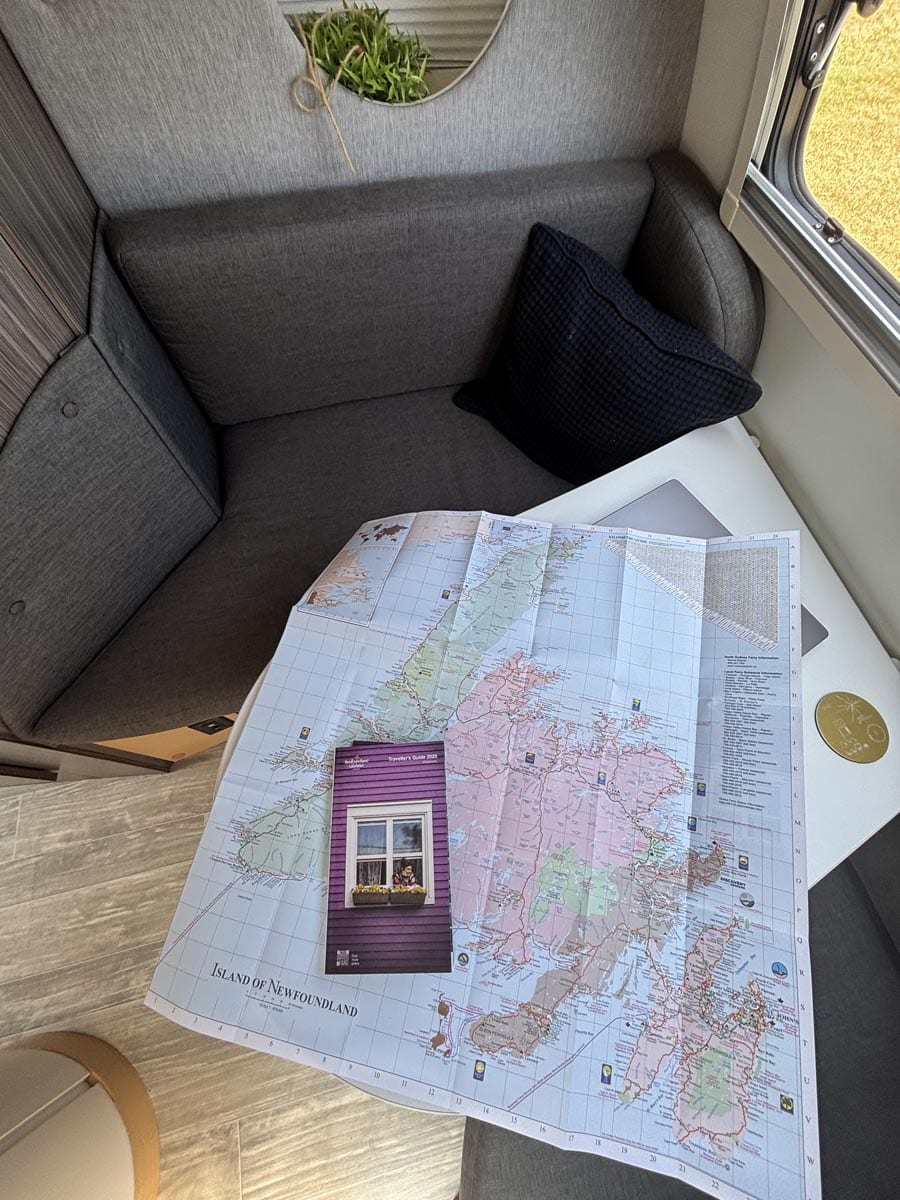
Newfoundland Travellers Guide and Map
Trip Overview
- Total distance: 6,000 km
- Duration: 3 weeks (4 days driving to NF, 13 days in NF, 4 days driving home)
- Campgrounds: 12 (2 National Parks, 3 Provincial Parks, 7 Private Campgrounds)
- Provinces crossed: Ontario, Quebec, New Brunswick, Nova Scotia, Newfoundland
- Highlights: Gros Morne National Park, scenic hikes, family visits, and unforgettable night skies.
What to Know Before You Go
Timing Your Trip
We planned our trip for August, when Newfoundland typically experiences some of its nicest weather. June and July are also fantastic months to visit.
We timed our visit to line up with the August new moon, which gave us beautifully dark skies for stargazing and astrophotography.
Where possible, we also chose campgrounds that were located under dark skies with a low Bortle class.
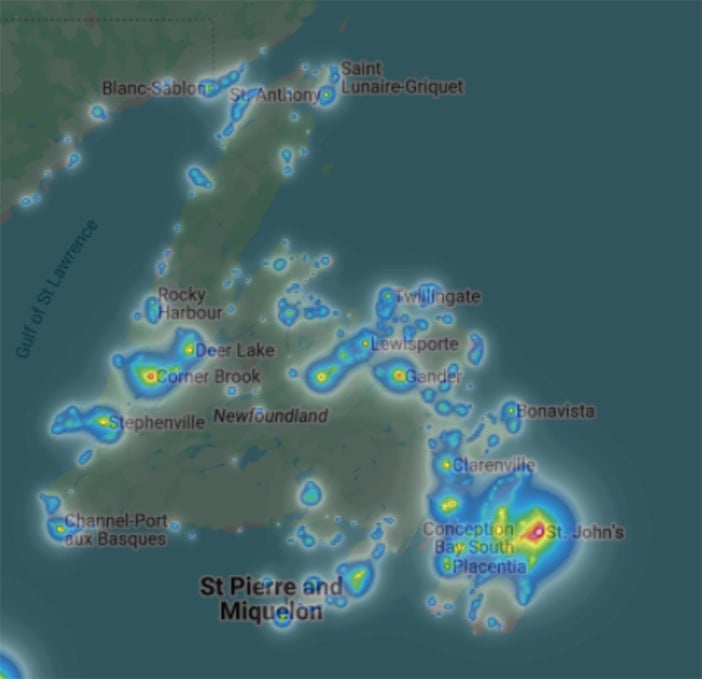
Light Pollution Map for Newfoundland. No colour and dark and light blue areas signify dark skies.
Because summer is the most popular time to travel, it’s important to book early.
Secure your ferry crossing as soon as you’ve chosen your dates, and reserve campsites well in advance, especially in sought-after spots like Gros Morne National Park.
We booked 6 months in advance for the ferry and many of the popular campgrounds.
Ferry Crossings
The only way to get your camper to Newfoundland is by ferry with Marine Atlantic, which sails from North Sydney, Nova Scotia, to Port aux Basques (7 hours) on the west coast of the island OR Argentia, closer to St. John’s on the east coast (16 hours overnight). Both offer food, lounges, and comfortable seating, so you can relax and enjoy the ride.
As mentioned, if you’re traveling in peak summer, it’s essential to book your ferry crossing well in advance as spots for vehicles and cabins sell out quickly.
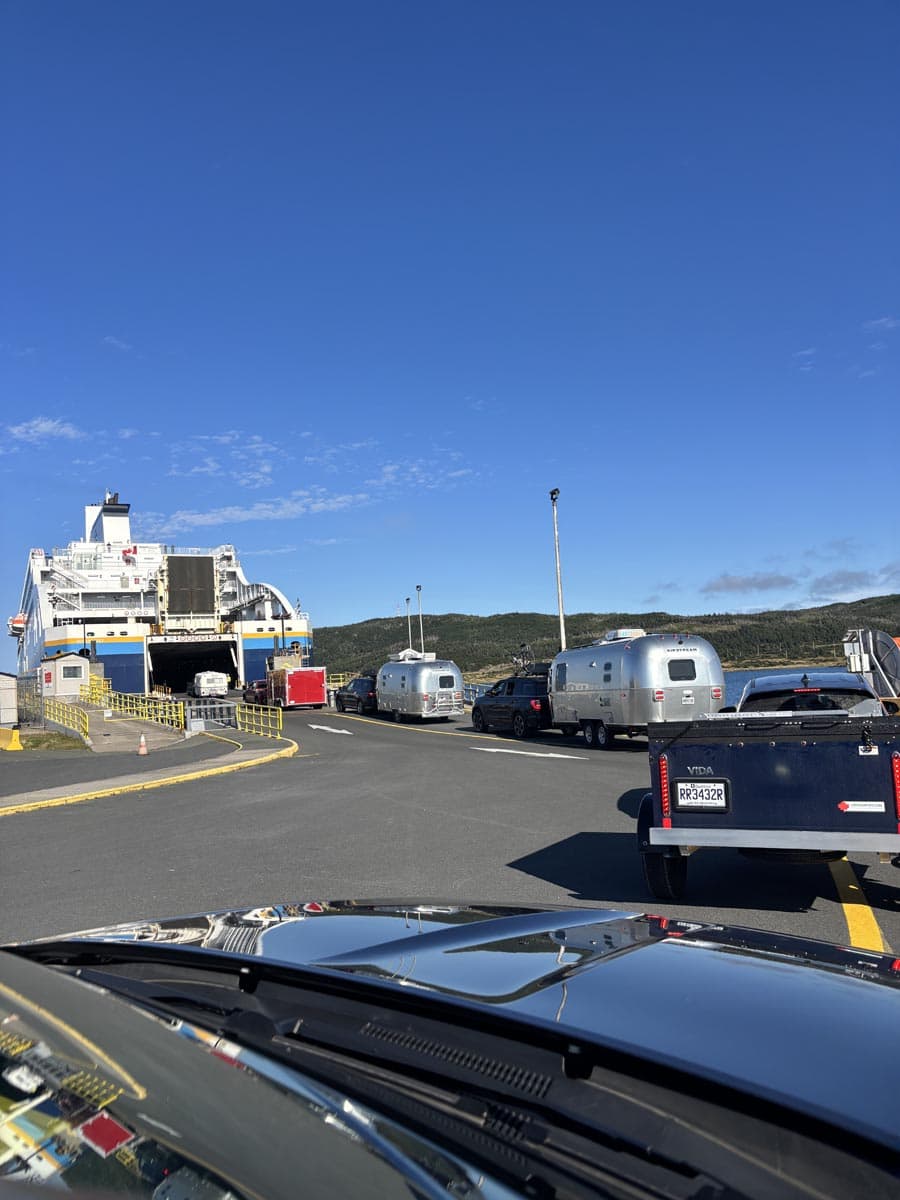
Boarding our return ferry in Argentia, Newfoundland.
We sailed into Port aux Basques, traveled across the province from west to east, and then departed via Argentia. Our sail to the island was rough thanks to an offshore hurricane, and both of us ended up seasick.
We booked pet-friendly cabins for both crossings, which provided a private room with beds and a bathroom, allowing Rudy to be off-leash. They were especially important for the longer overnight sailing, where we were able to sleep through the night, shower in the morning, and leave the ship rested, ready to hit the road again.
Technically, your pet is not allowed on the bed, but we brought a blanket to place over the bedding for Rudy to sleep on.
There is a pet relief area on a designated exterior deck, though it was small and our dog was hesitant to use it. so to avoid him refusing to go, we let him use the exterior deck and just cleaned up after. We also pulled over at a gas station immediately after exiting the longer ferry ride so he could go to the bathroom.
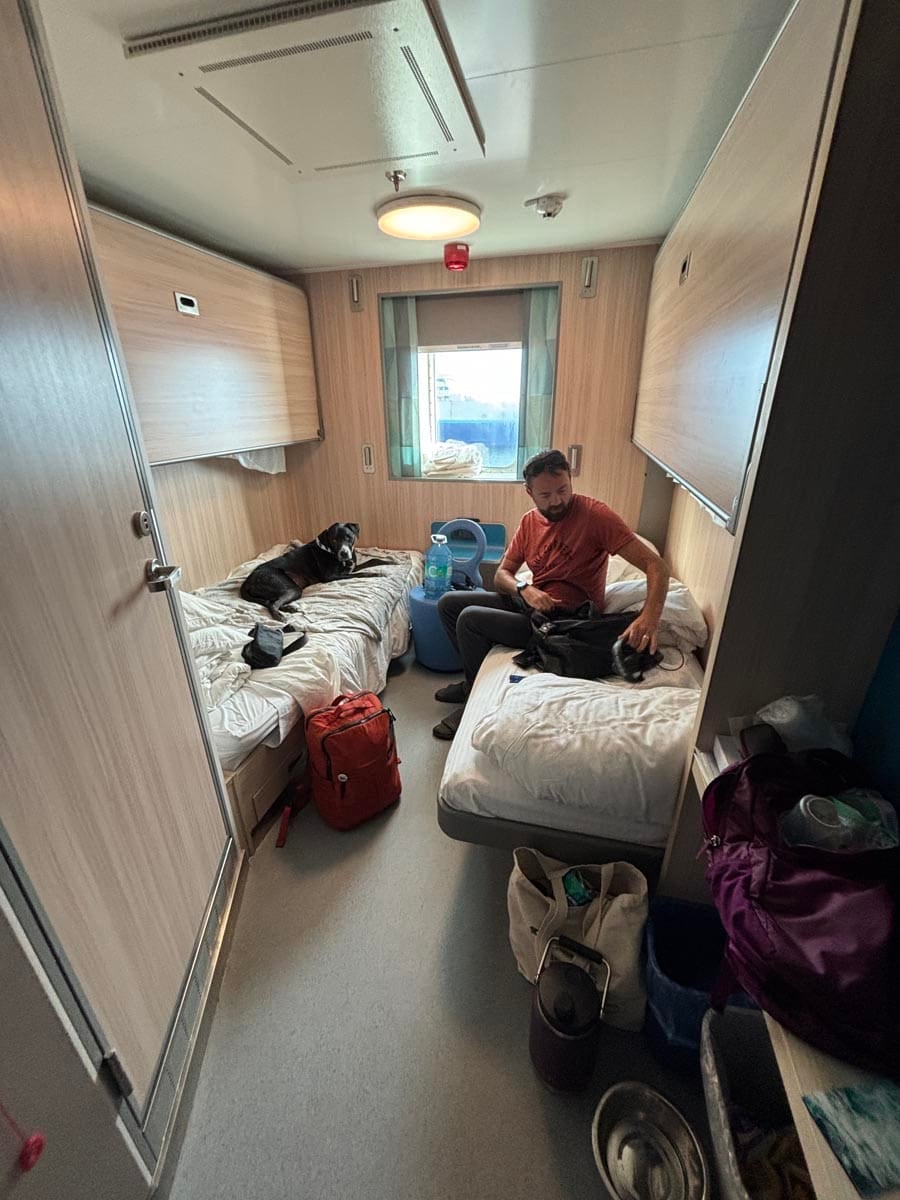
4-person pet-friendly cabin (top bunks pushed up) on the Ala’suinu vessel.
When you book, you will be charged for a variety of fees, including:
- Boarding per person (adult/child/infant). Pets are free.
- Vehicle type (what size trailer you are bringing)
- Cabins (optional)
- Reserved Seating (optional)
Tips for the Ferry
-
- Vehicle Length: When they ask for vehicle length during registration, be sure to include your TOTAL length of your tow vehicle and trailer.
-
Measure carefully: When booking, provide the exact length (or a little extra) of your vehicle and camper. Staff will measure at check-in, and if your details don’t match, you risk being denied boarding with deck space being so tightly planned.
- Budget Accordingly: The Argentia ferry is longer, and therefore, more expensive. Take this into account when planning your trip.
-
Pet-friendly Options: There are limited pet-friendly cabins, so book early. We found the cabins to be well worth the extra cost to keep your dog comfortable.
-
Arrive Early: Aim to be at the terminal about 2-3 hours before departure. Boarding usually begins 1.5 hours ahead of departure time and is a bit of a process. It’s less stressful if you’re already checked in and waiting.
-
Pack a ferry bag: After parking your camper on deck, you won’t have access to it. Have a bag ready with essentials like snacks, water, dog food/bowls, warm layers, PJ’s for an overnight, toilet trees for shower, and something to pass the time. They provide towels for showers.
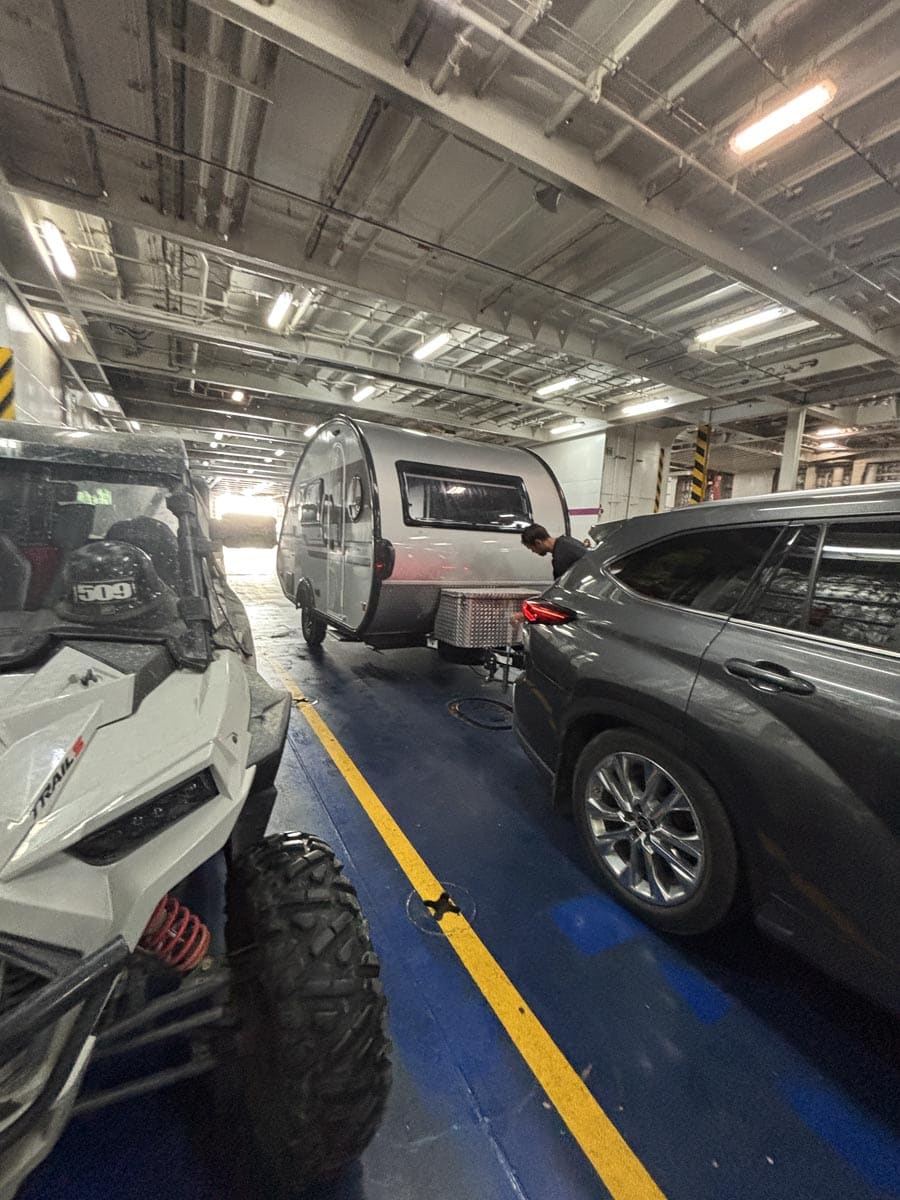
If you use a Curt Wireless Break Controller, be sure to unplug it to avoid a dead battery. Don’t forget to plug it back in when you leave.
Booking Campgrounds
In the summer of 2025, the Canadian government offered discounts on all National Park stays and free entry to parks via the Canada Strong Pass.
Given that more Canadians were opting to vacation closer to home, we recognized the importance of booking our campsites in advance.
National and provincial parks, especially Gros Morne National Park and Terra Nova National Park, are among the most popular destinations in Newfoundland.
Campsites here can sell out months in advance, so it’s best to make reservations as soon as you’ve booked your ferry crossing.
To give you an idea of how quickly they fill up: we booked Gros Morne in March for our August trip, and there were already only a handful of sites left.
Private campgrounds tend to be easier to book at the last minute and often offer added conveniences such as laundry facilities, WiFi, or on-site restaurants. They’re a good option if you want more flexibility, but amenities and overall quality can vary quite a bit, so check reviews ahead of time.
Keep in mind that most Provincial Parks (ParksNL sites) don’t offer power or water connections. If you’re dependent on hookups, make sure to confirm what’s available before reserving.
Driving in Newfoundland
Newfoundland is larger than most people expect, so plan for plenty of driving time between destinations.
Roads can be rough in places, with potholes, construction, steep elevation changes, and the occasional sharp or angled turn. Fuel stations are also limited in remote areas, so top up whenever you can.
Cell service is spotty across the province, making it important to download maps ahead of time and be prepared for limited connectivity if you need assistance.
That said, the drives are incredibly scenic, with coastal views, rugged landscapes, and plenty of chances to spot wildlife along the way – the journey can be just as memorable as the destination.
Dog-Friendly Travel
Most provincial and national parks in Newfoundland welcome dogs on leash, which means you can enjoy plenty of trails together.
Just be mindful of local wildlife and keep your pup close, especially in areas where you might encounter moose or seabirds/shorebirds (the coast of Newfoundland is a nesting place for Piping Plovers).
As mentioned, when traveling by ferry, you’ll have the option to book a designated cabin, a kennel, leave them in your vehicle, or stay with them on the boat deck.
Campground Breakdown
The first four campgrounds were all one-night stays as we made our way to Newfoundland.
Woodlands Campground, Ingleside, ON
- Park Type: Parks of St. Lawrence
- Amenities: Washrooms, showers, laundry ($), electric/water sites, dump station, online booking
- Pros: Water views, clean, space to walk
- Cons: some uneven sites, no physical park map, dump station not on grounds
- Cost: $86 for one night
Our first stop was just for one night as the journey to Newfoundland got underway.
The site overlooked the water, making for a calm and relaxing start to the trip. With our stay came tickets to Upper Canada Village, though the timing didn’t work out for us to use them.
The dump station was not easy to find and we had to ask the park attendant where to find it – it was only a short drive to another one of their sites.
On the return leg, we stopped here again for another overnight.
Chez Jean, Saint-Antonin, QB
- Park Type: Private/Family Owned
- Amenities: Washrooms, showers ($), laundry ($), full service sites, online booking
- Pros: Bilingual, convenient location, small walking trail
- Cons: Sites are small with limited privacy
- Cost: $50 for one night.
This campground required a deposit to secure the reservation, which was easily handled over the phone — the staff spoke English and had no issue taking my credit card details. On arrival, they walked us through the check-in process without any difficulties.
Although the campground map was only available in French, it was straightforward enough to figure out. With full-service sites available, we didn’t need to worry about finding a dump station before heading out.
Overall, it worked well as a convenient stopover, but the sites offered little in the way of privacy, so it’s not the kind of place we’d normally choose for a longer stay.
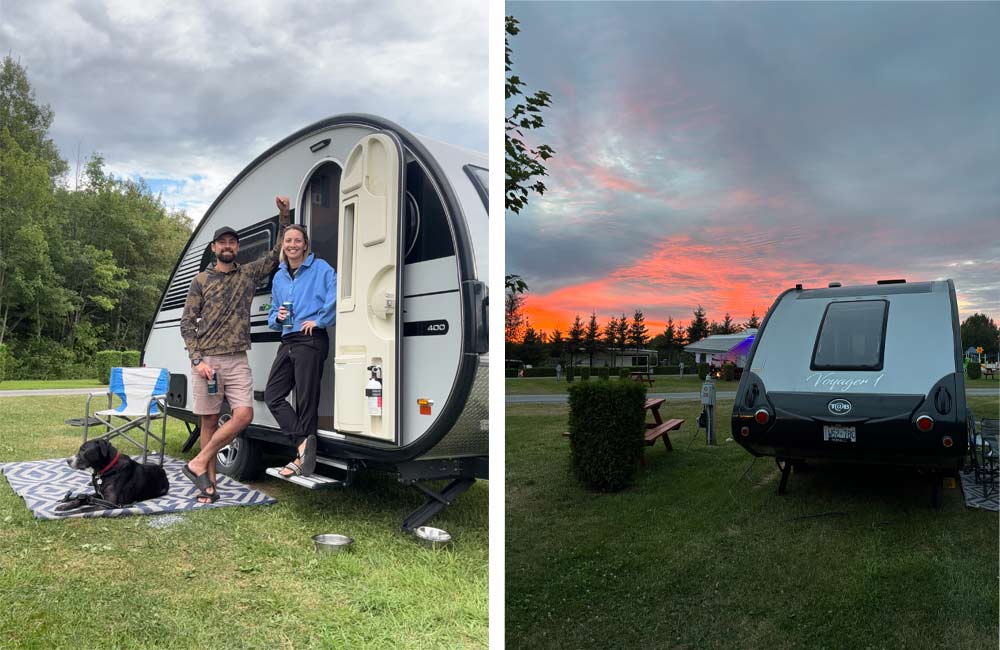
Parlee Beach, Pointe-du-Chêne, NB
- Park Type: Provincial Park
- Amenities: Washrooms, showers ($), laundry ($), electric/water sites, dump station
- Pros: Close to the beach
- Cons: Bad lighting, busy, loud, and more costly than other parks
- Cost: $86 for one night
We picked this campground thinking the sites would be near the beach, but that wasn’t the case. Instead, it turned out to be a very busy and noisy park with significant light pollution – even a bright spotlight shining across the grounds.
The atmosphere wasn’t particularly peaceful. Guests were loud and rowdy, so we eventually retreated into the camper to get some quiet.
It felt more like a spot where locals came to party than a place designed for campers hoping to enjoy nature and unwind.
Arm of Gold, North Sydney, NS
- Park Type: Private/Family Owned
- Amenities: Washrooms, showers ($), laundry ($), full service sites
- Pros: Water views, clean facilities, convenient location, food truck on site
- Cons: Limited privacy, lots of large rigs
- Cost: $100 for two nights
This park was the closest option we found to the ferry terminal, and at just XK away, it made for a very convenient stop.
The facilities were clean and well-maintained. The campground attracts numerous large Class A RVs, and with more sites being pull-through, there is limited privacy.
It does offer some nearby water views and a few small paths that are perfect for short walks. A food truck is available on-site during designated hours, adding a convenient touch.
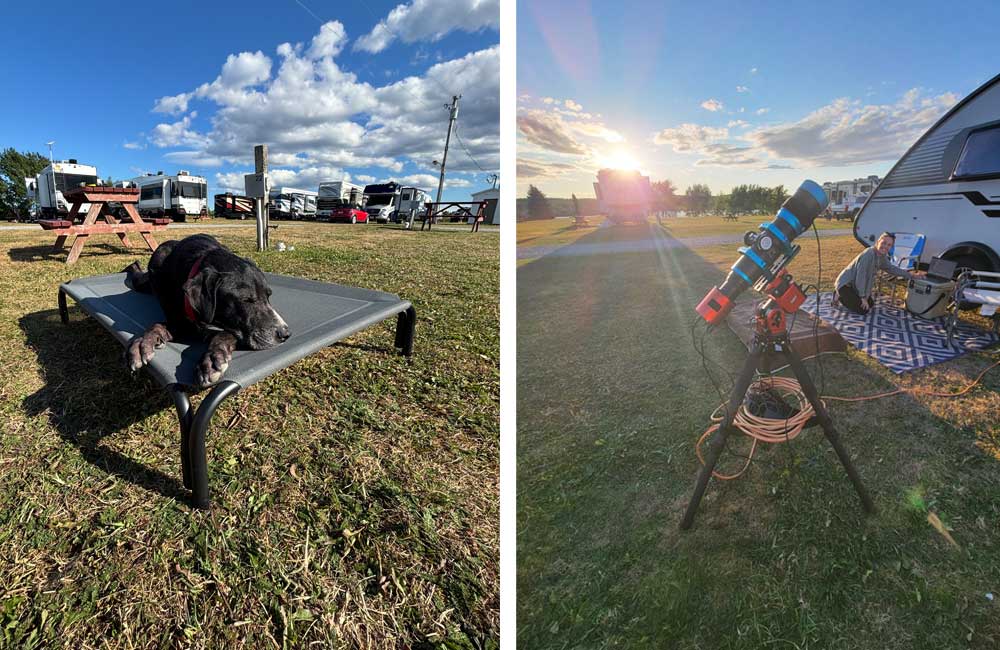
We were lucky to catch a clear night for some astrophotography during our stay. Although there was some localized light pollution from the park lights, we managed to block it out by setting up behind a tree and came away with great views of the night sky.
Grand Codroy RV, Codroy NF (1 night)
- Park Type: Private/Family Owned
- Amenities: Washrooms, showers, laundry ($), full service sites, dog area
- Pros: Close to ferry, friendly/helpful staff, extremely well maintained, roomy sites, small 1K hiking trail
- Cons: We only stayed one night
- Bortle Scale: 2
- Cost: $45 for one night
The staff at this park were exceptionally friendly and welcoming, offering plenty of helpful information when we checked in.
Since this was our first stop off the ferry and we arrived in the evening, we really appreciated the time they took to share maps, local highlights, a regional magazine, and even their campground newspaper.
The park also features a lovely craft shop showcasing handmade items from local artists.
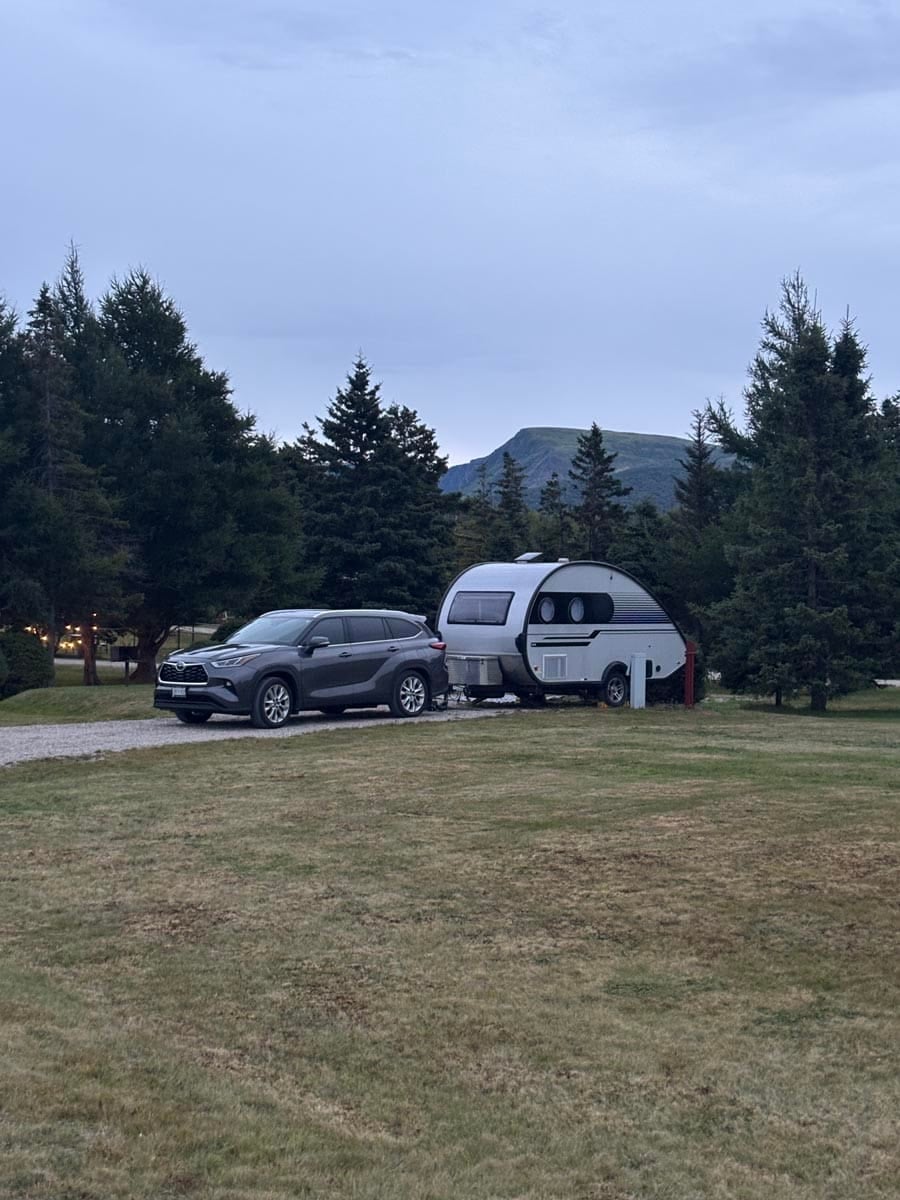
Grand Codroy RV Park.
The grounds were immaculately maintained, featuring a small dog park and a short 1K trail that led into the nearby woods.
From the campground, you could see mountain views in the distance, set against the stunning scenery the area is known for.
Our only regret was that we only stayed for one night.
Blow Me Down, York Harbour, NF (1 night)
- Park Type: Provincial Park
- Amenities: Washrooms, showers, laundry ($), dump station, cell signal
- Pros: Quiet, dark skies, beautiful scenery, interesting hikes (5K trail/lookout)
- Cons: Rough drive in (roads/construction/elevation changes), off the beaten path
- Bortle Scale: 3
- Cost: $34 for one night (includes $7 vehicle pass)
I chose this campground because the views and hikes looked incredible — and they didn’t disappoint.
Getting there was a bit of a challenge with road construction and elevation changes, but it was well worth it for such a stunning location.
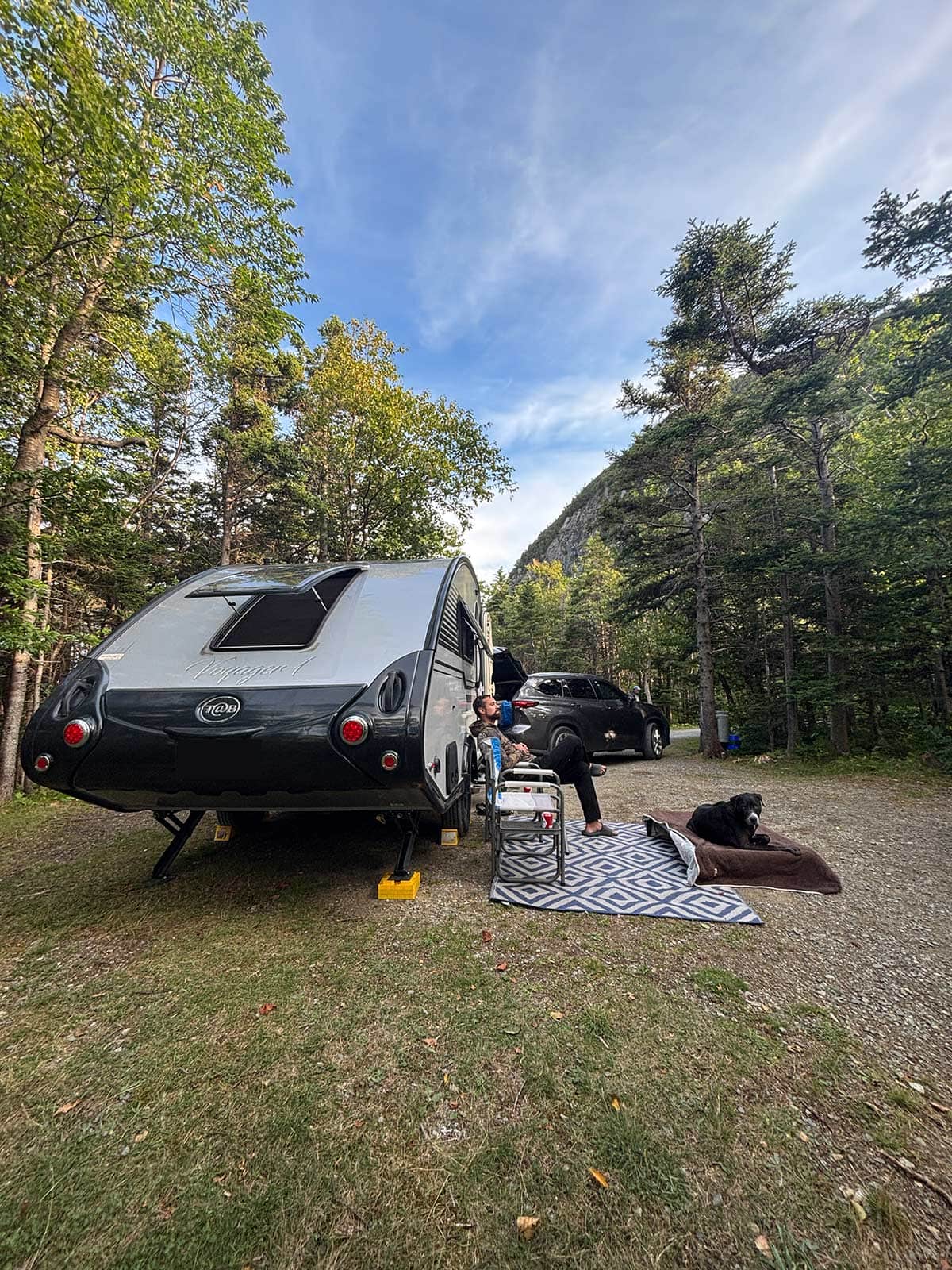
The campground has no hookups for power or water, which kept campsites free from bright lights and made the night skies exceptionally dark. With no major towns nearby, it was one of the best spots we had for stargazing.
We enjoyed the clearest night of our trip here, so we headed down to the beach for some Milky Way shots and also captured Andromeda peeking through the trees from our campsite.
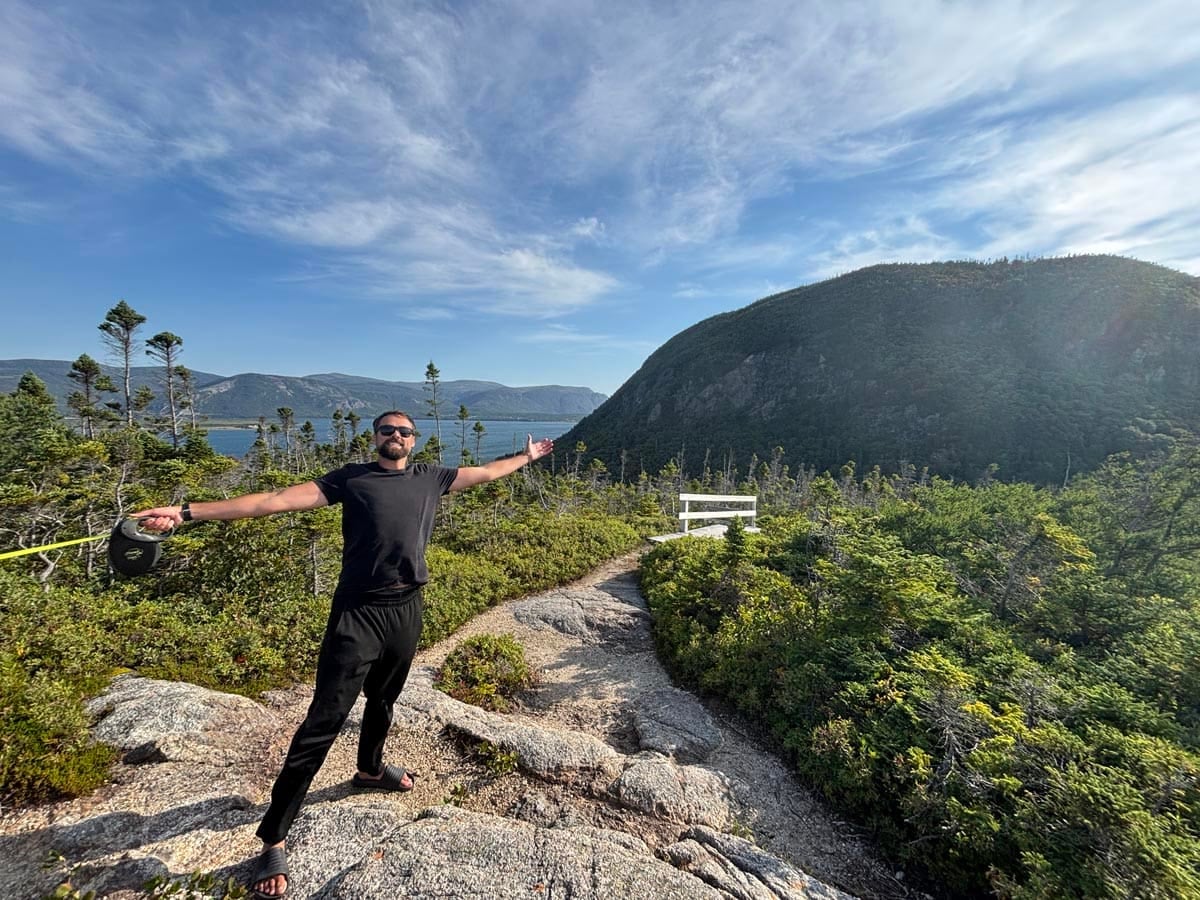
Trevor at Governor’s Lookout.
The hikes were unique — a wooden staircase tucked to the left of the beach climbs the cliff up to an observation deck at the top of the mountain (known as Governor’s Lookout), offering spectacular views.
It’s easy to see why the park earned the name “Blow Me Down”! There’s also an additional 5K trail we didn’t have time for, but it looks well worth exploring.
Gros Morne National Park, Rocky Harbour NF (2 nights)
- Park Type: National Park
- Amenities: Washrooms, showers, electric/water sites, dump station
- Pros: Ocean views, quiet, huge trail network, lots of history, town close by
- Cons: No cell signal, no laundry, Wifi only in certain locations
- Bortle Scale: 2
- Cost: $70 for two nights (after a 25% federal discount)
Gros Morne National Park is world-renowned for its ancient geology and dramatic scenery, recognized as a UNESCO World Heritage Site.
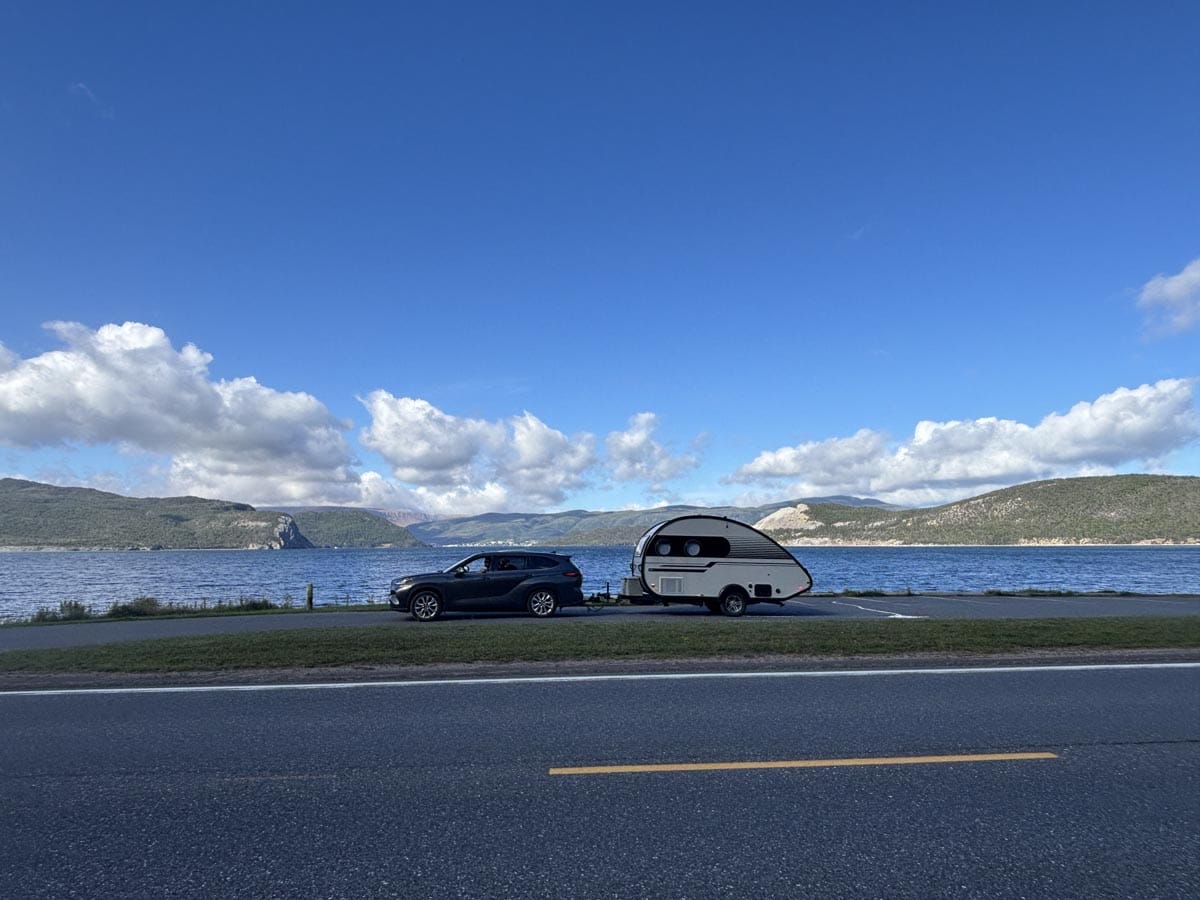
Exceptional views from everywhere!
We camped at the Green Point (site 1), and it quickly became one of our all-time favourite campgrounds.
The site offered sweeping ocean views, easy access to the Coastal Trail, and a set of stairs leading down to an incredible geological outcrop. Our loop was also peaceful and quiet, with most campers simply soaking in the scenery.
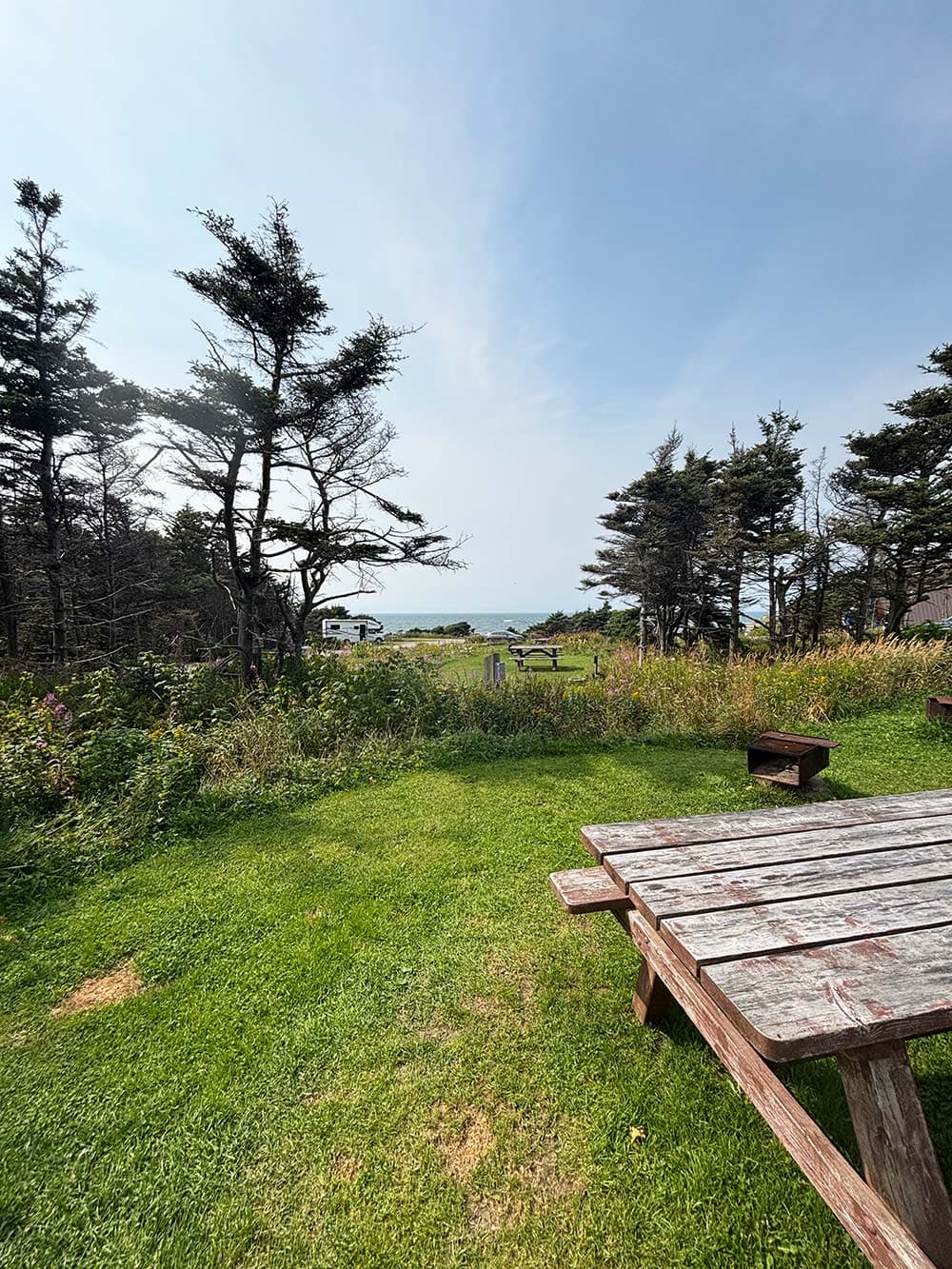
Green Point Campground, view from site #1.
The facilities felt brand new — spotless washrooms, modern comfort stations, and even a nearby building with Wi-Fi and a dishwashing sink. The Visitor’s Centre and the Discovery Centre are also great places to check out.
There’s no shortage of adventures in the park: hike the famous Tablelands, take a boat tour on Western Brook Pond, or tackle the 17 km loop to the Gros Morne Mountain summit for jaw-dropping views.

Tablelands hike on a misty, foggy day.
And after a day of exploring, the nearby town of Rocky Harbour is a great spot to grab dinner.
Peytons Woods, Twillingate, NF (2 nights)
- Park Type: Private
- Amenities: Washrooms, showers, laundry ($), full service sites, dump station
- Pros: Water views, huge trail network, great shops, loads of charm
- Cons: expensive groceries, spotty park wifi
- Bortle Scale: 4
- Cost: $103 for two nights
This park is situated right in the heart of Twillingate, a quintessential Newfoundland town renowned for its charm.
On our first night, we stumbled upon the town’s trail network—beautifully laid out and home to some of the most scenic hikes of our trip.
While the Lighthouse Trail is a popular recommendation, we’d also suggest French Beach and part of the Spencer’s Park Trail, which were just as memorable.
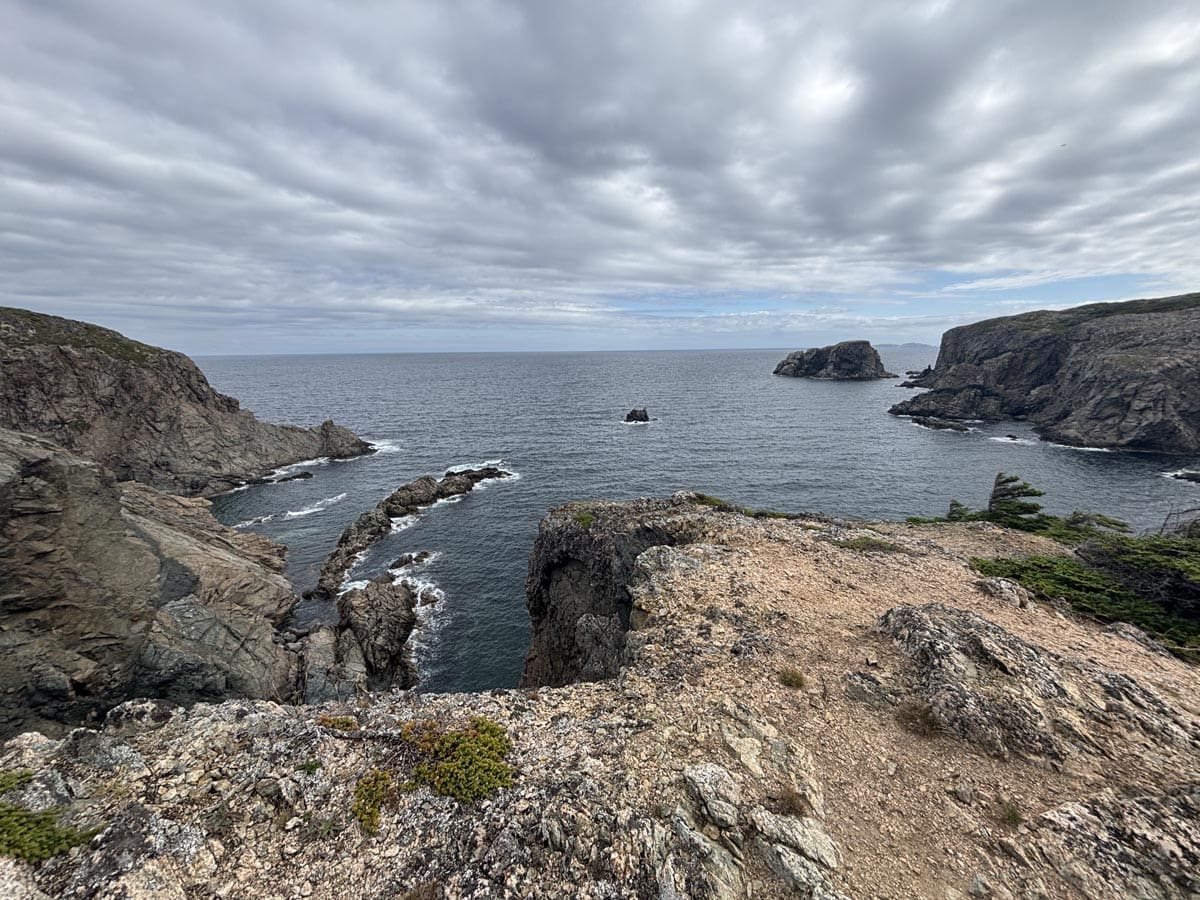
French Beach Trail is part of the Rockcut Trails system.
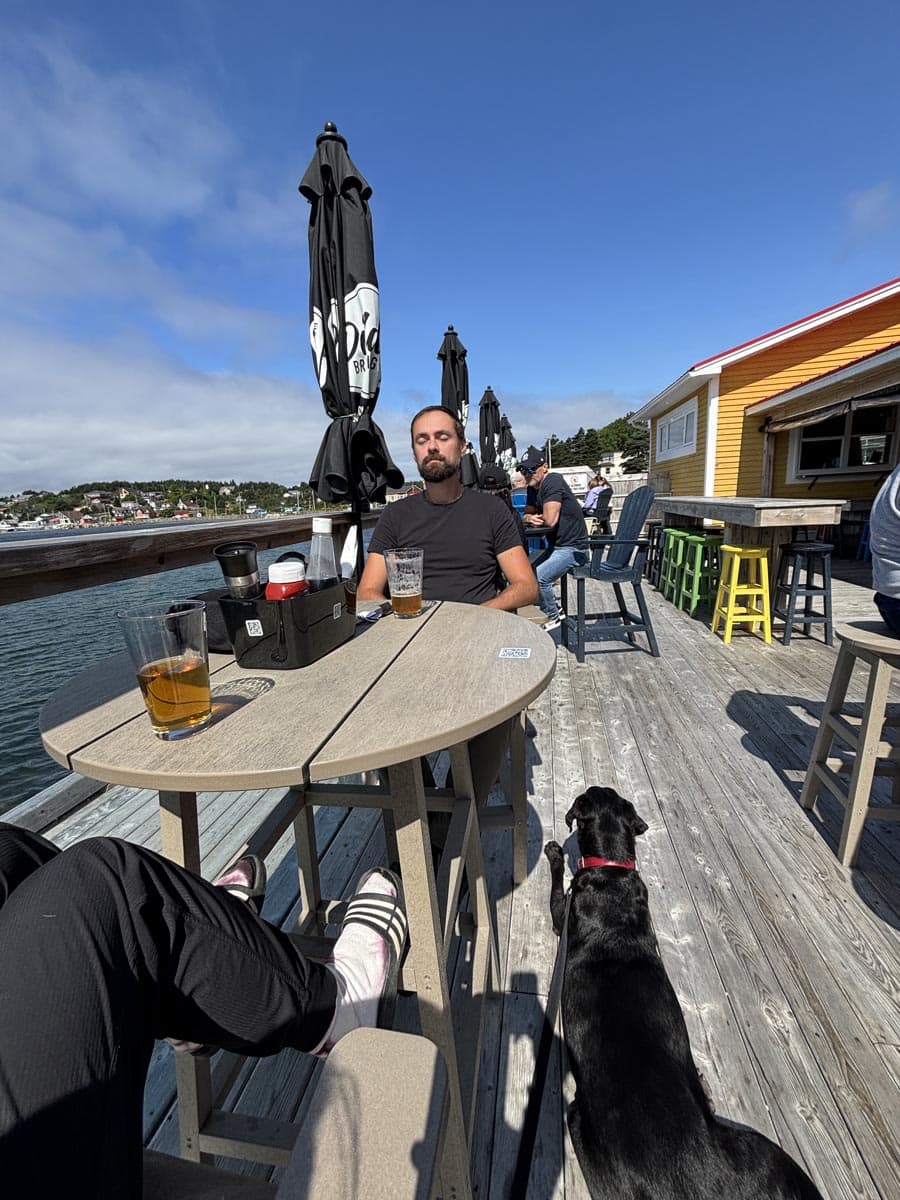
Twillingate itself has plenty to offer. We stopped by the Great Auk Winery to sample some fun local wines (and grab a few souvenirs), and Split Rock Brewery for a pint.
A dinner down by the harbour capped off the evening with one of the most stunning sunsets we’ve ever seen.
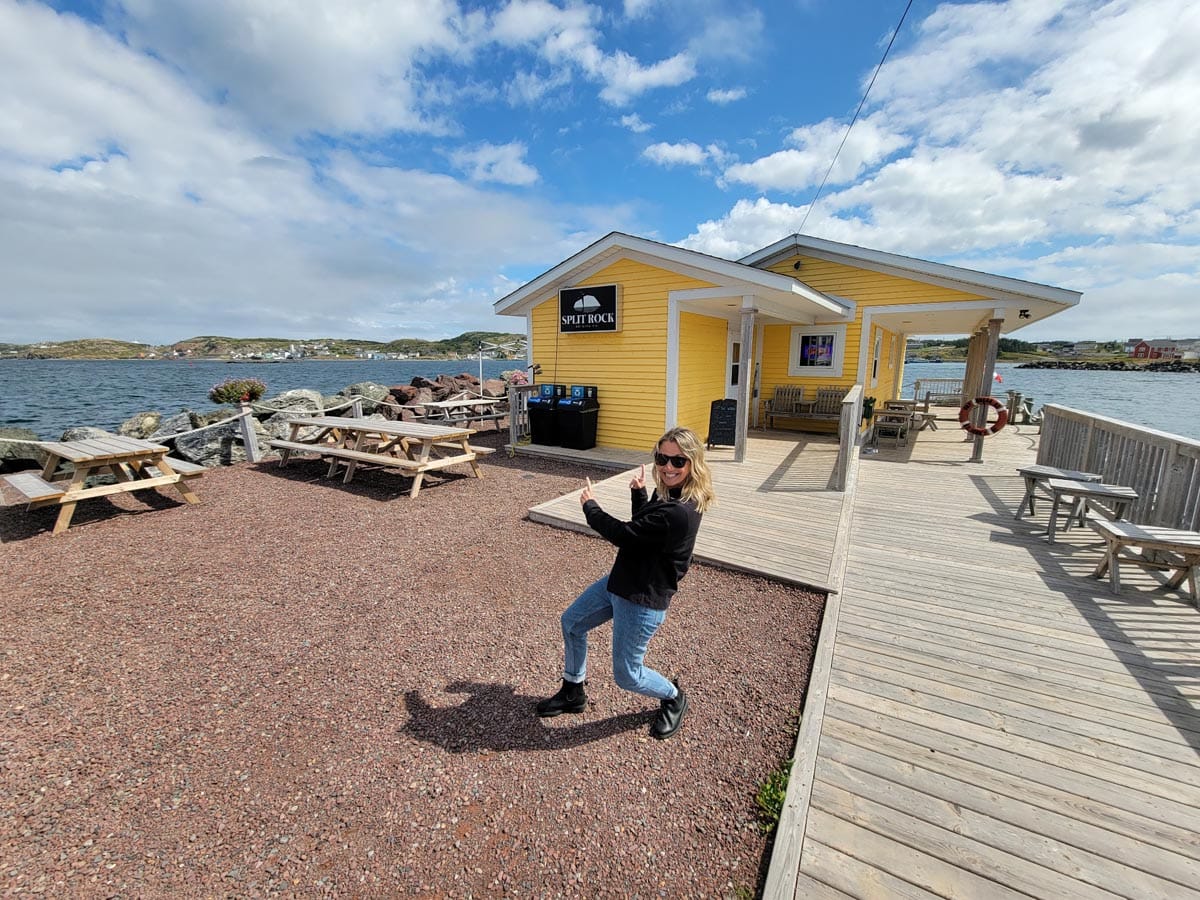
We were happy to find Split Rock Brewing after it was mislabeled on Google Maps.
Wi-Fi was spotty, but it worked near the park office, which gave me the chance to catch up on some work while running a few loads of laundry.
All in all, this location was one of the highlights of our trip.
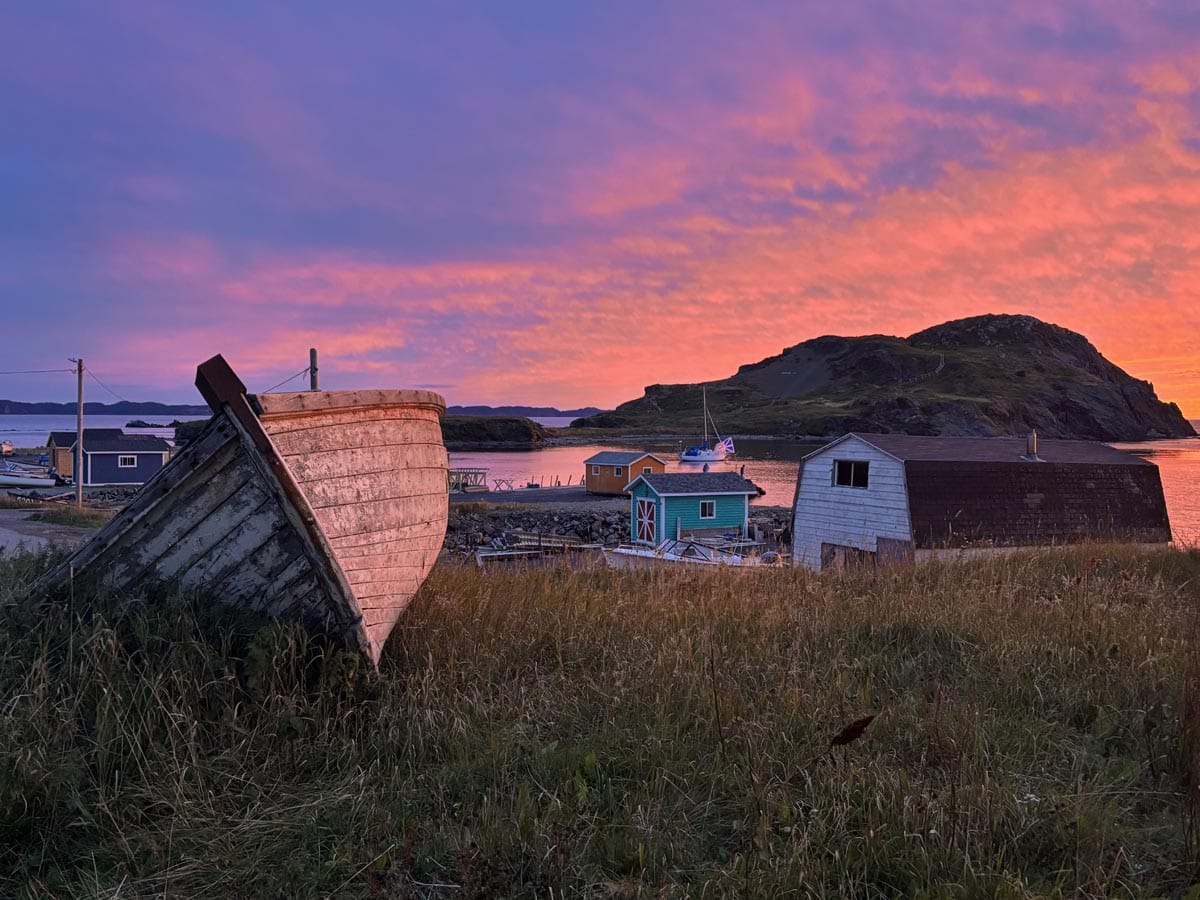
Twillingate Sunset (and a great hike up that small mountain in the background).
Terra Nova National Park, Glovertown NF (2 nights)
- Park Type: National Park
- Amenities: Washrooms, showers, electric sites, water fill, dump station
- Pros: Dark Sky Preserve, Huge trail network
- Cons: No staff patrolling at night if there are issues, bad experience
- Bortle Scale: 2
- Cost: $60 (after a 25% federal discount)
I wish I had a more glowing review to share, but this campground ended up being one of our least enjoyable stays, which is a shame because we were looking forward to it.
Our site at the Norman Sound campground was great, and the location had a lot of potential; however, the experience was marred by noise and disruptions from nearby campers.
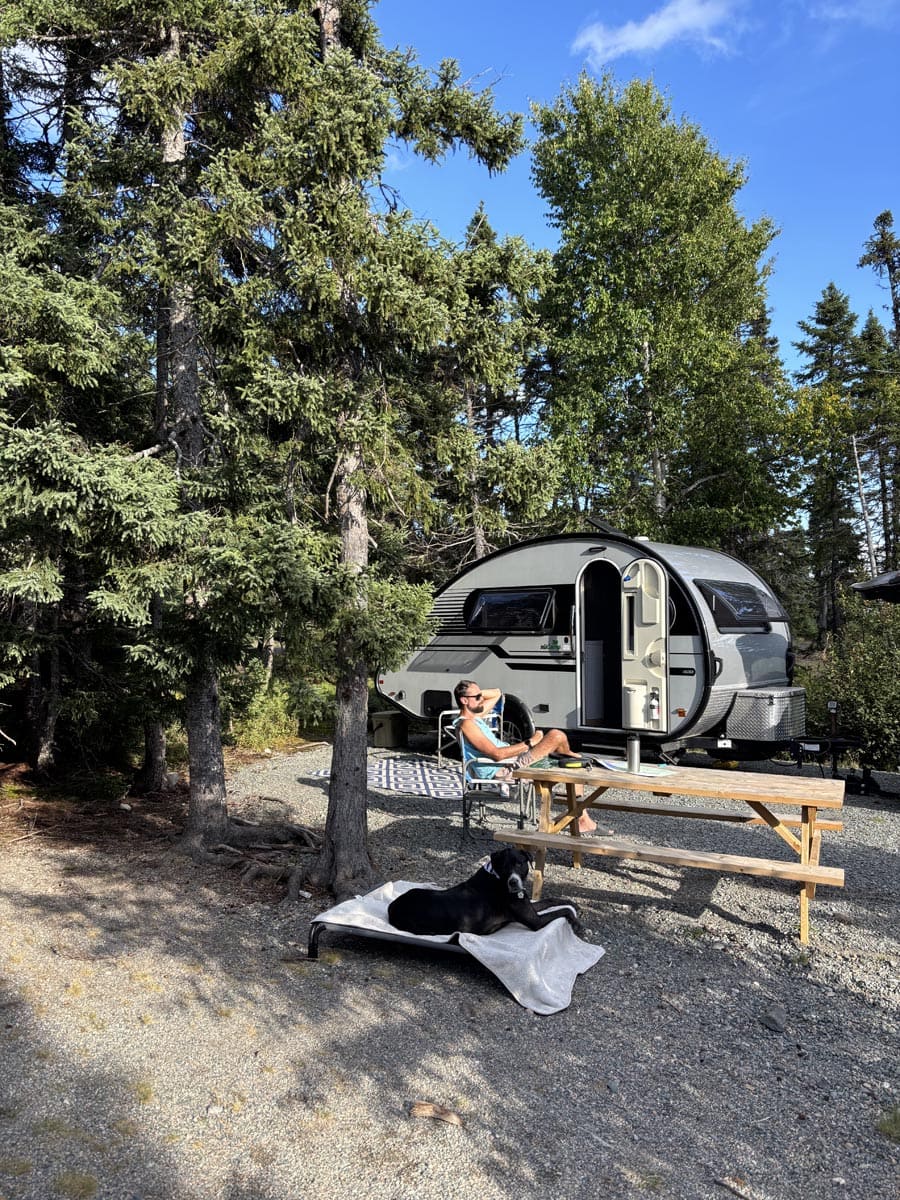
Our site (#77) at Norman Sound Campground.
It was a busy long weekend at the end of summer, and unfortunately, the atmosphere wasn’t as peaceful as we’d hoped.
With no staff presence in the evening and no one answering the park phone line, it felt like there was little support in managing the situation.
It seemed as though a group of families let their kids have the run of the park, which involved a lot of screaming and noise, (and not the kind of noise kids make when having fun).
Adding to the frustration, this park is a certified Dark Sky Preserve (the only one in NF), yet light pollution from camper lanterns and string lights cuts into the night sky views.
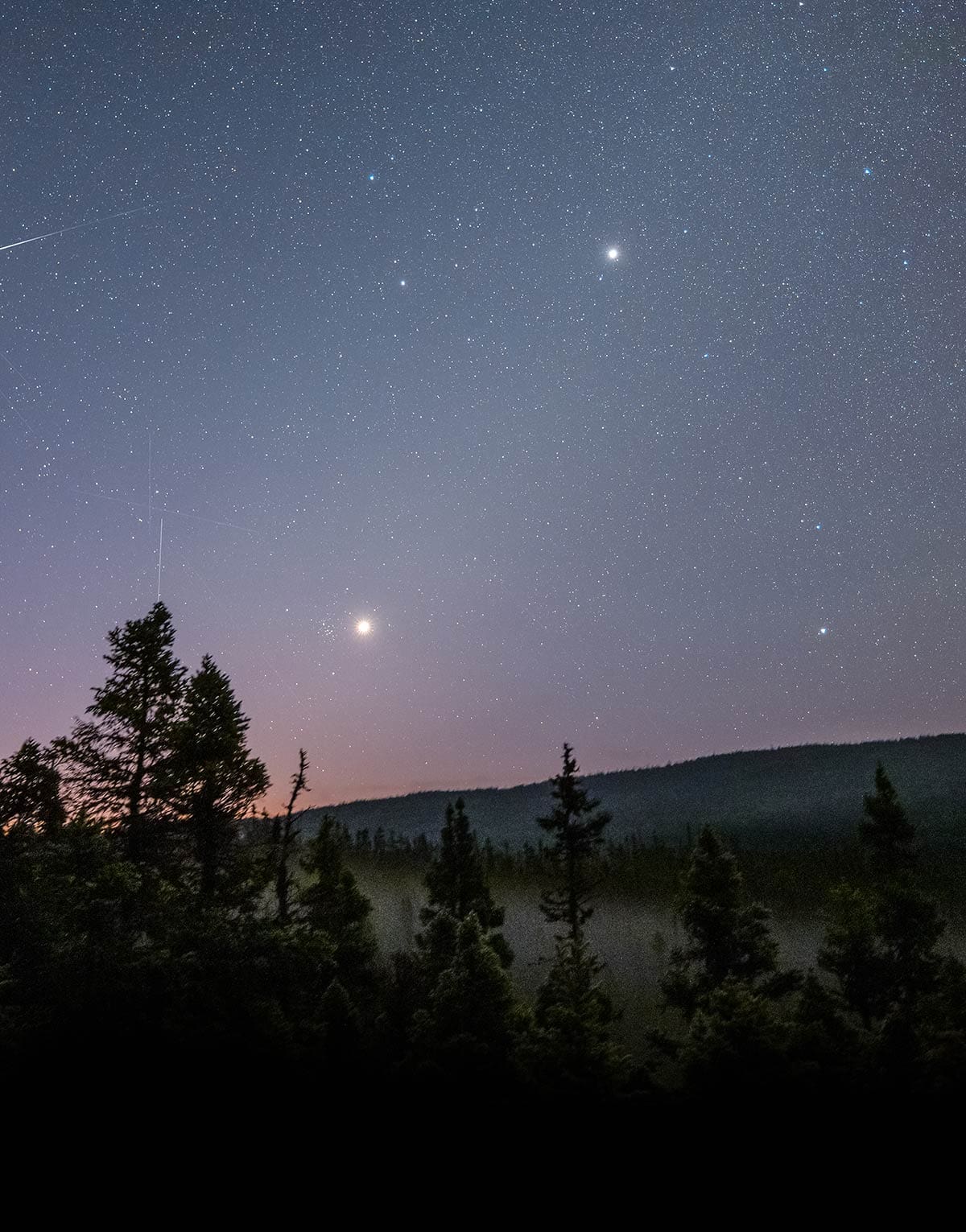
The planets Jupiter and Venus rising in the early morning hours at Terra Nova.
While some neighbours were understanding when asked to turn off their lights, it was disappointing to see how few campers followed proper camping etiquette at this dark sky site.
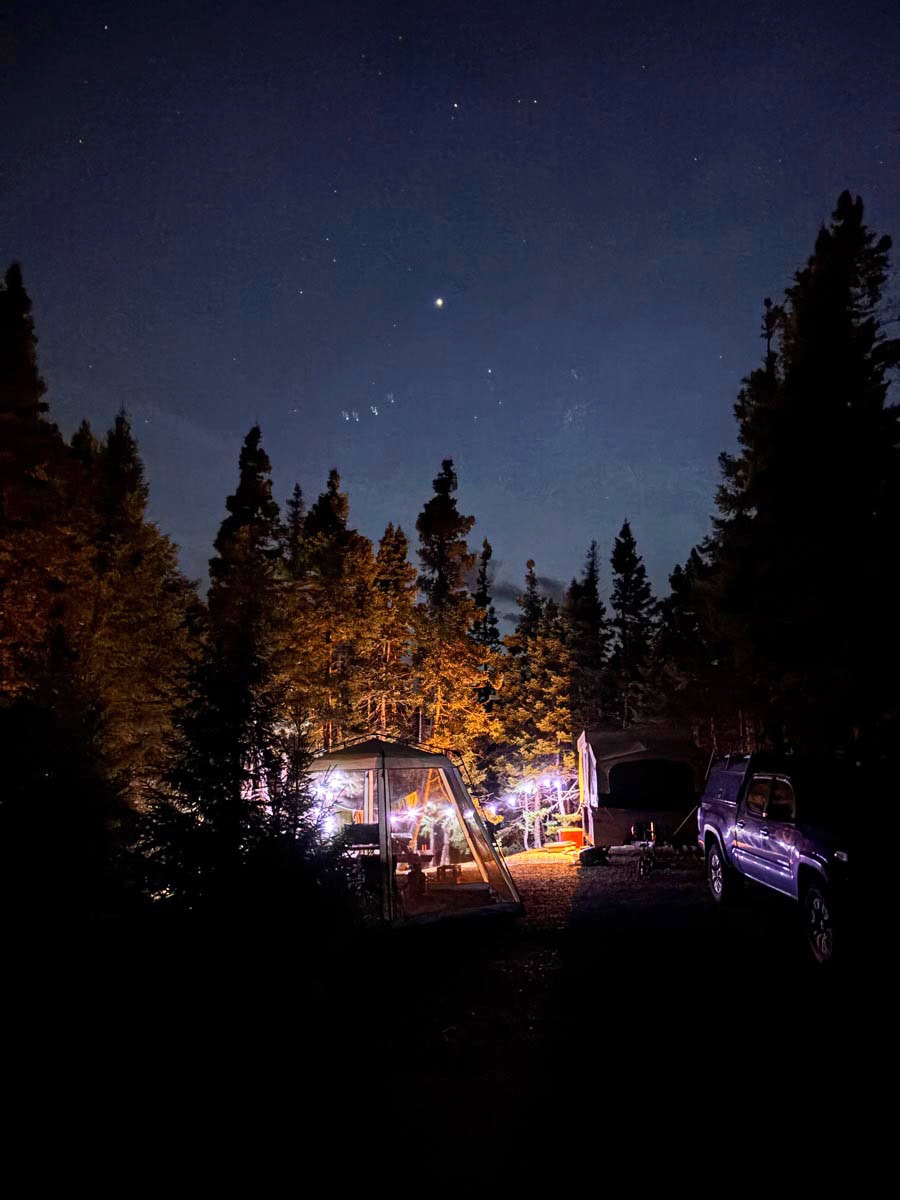
Bright LED lights at our neighbour’s campsite
That said, there’s a lot to love here, and I’d really like to give it another try. The trail network is beautiful, and the visitor centre is excellent, filled with informative exhibits and displays. Hopefully, a future visit will showcase the park at its best.

Terra Nova National Park Visitors Centre.
Pippy Park, St.John’s, NF (2 nights)
- Park Type: Private
- Amenities: Washrooms, showers, laundry ($), full service sites
- Pros: Close to downtown for sightseeing, cell signal, trails connect to the local park
- Cons: Lots of light pollution, wifi only at pull-through sites, and washrooms are far from pull-through sites.
- Bortle Scale: 5
- Cost: $115 for two nights
This campground made a great home base for quick trips into the city—whether for sightseeing, grabbing a meal, strolling down the famous George Street, or picking up souvenirs.
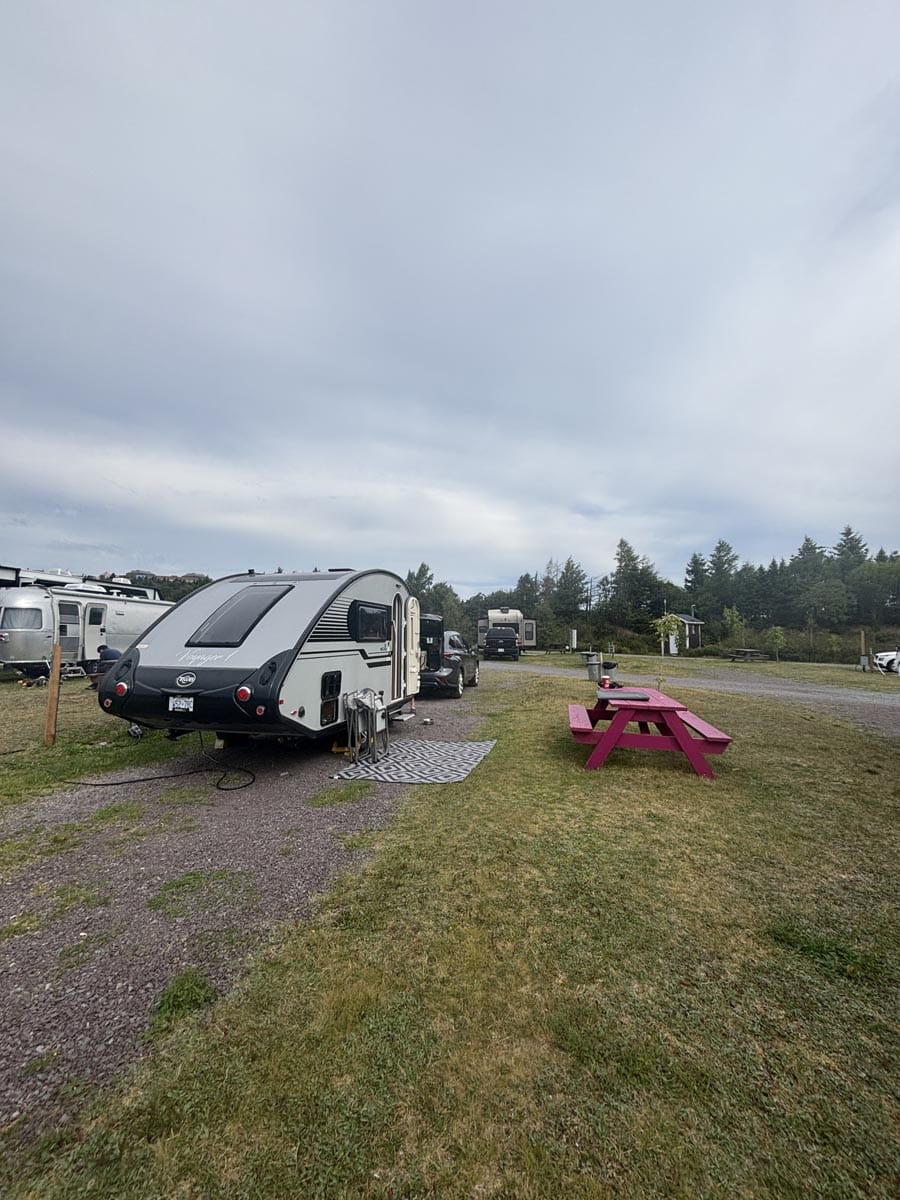
It was only a short drive to Signal Hill, Quidi Vidi, and downtown St. John’s, and about 30 minutes from other must-see spots like Cape Spear.
After several days without signal or Wi-Fi, we opted for a pull-through site here to guarantee connectivity. The campground is conveniently located near Pippy Park and its trails, making it easy to squeeze in a hike without leaving the area.
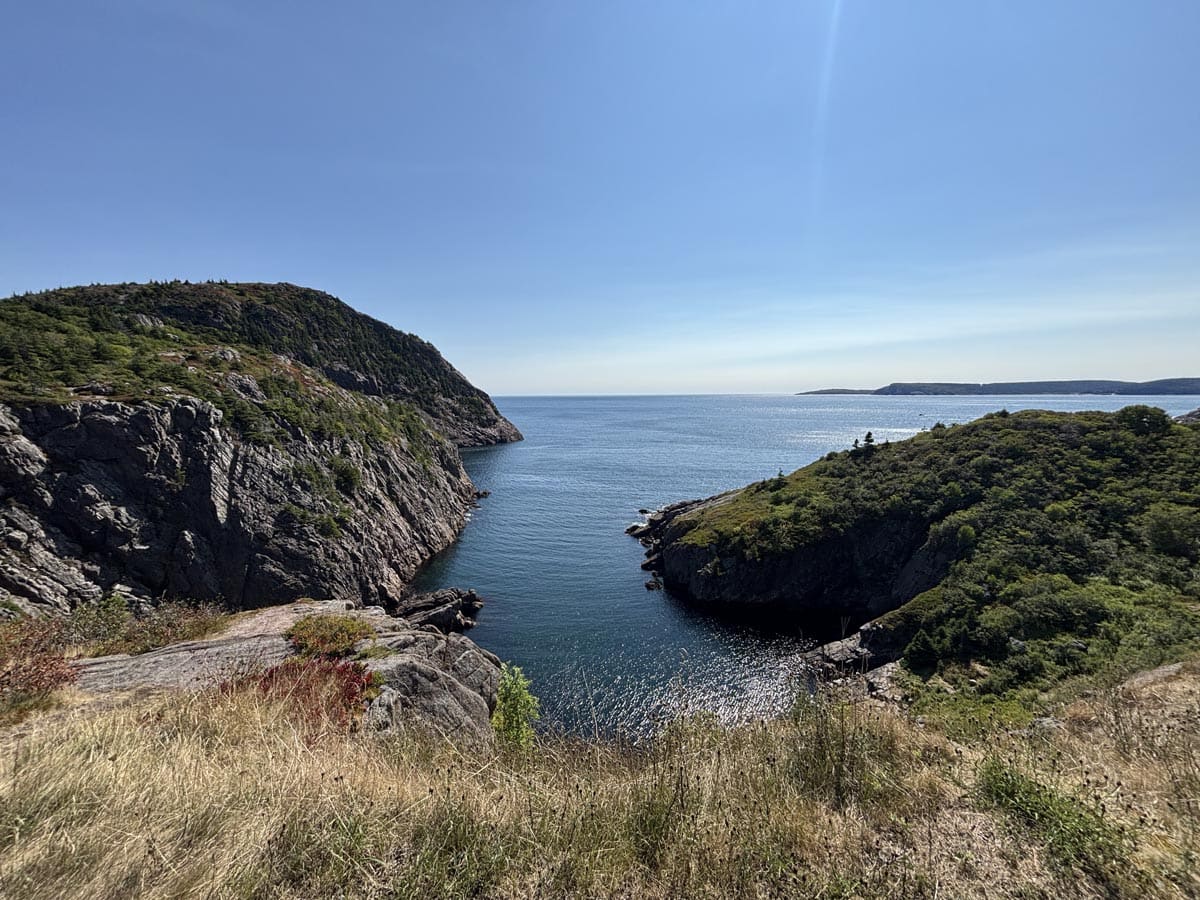
Signal Hill Trail Views.
While the pull-through didn’t offer quite the “camping escape” experience we usually look for, it was the perfect choice for convenience and for catching up on some work.
Sunset RV, Argentia, NF (1 night)
- Park Type: Port of Argentia
- Amenities: Washrooms, showers, laundry, full-service sites
- Pros: Ocean views, convenient location, town close by
- Cons: Cash/e-transfer only (they did let us know in advance)
- Bortle Scale: 4
- Cost: $35 for one night
This campground is owned by the local port authority, as the property was an old US Navy base.
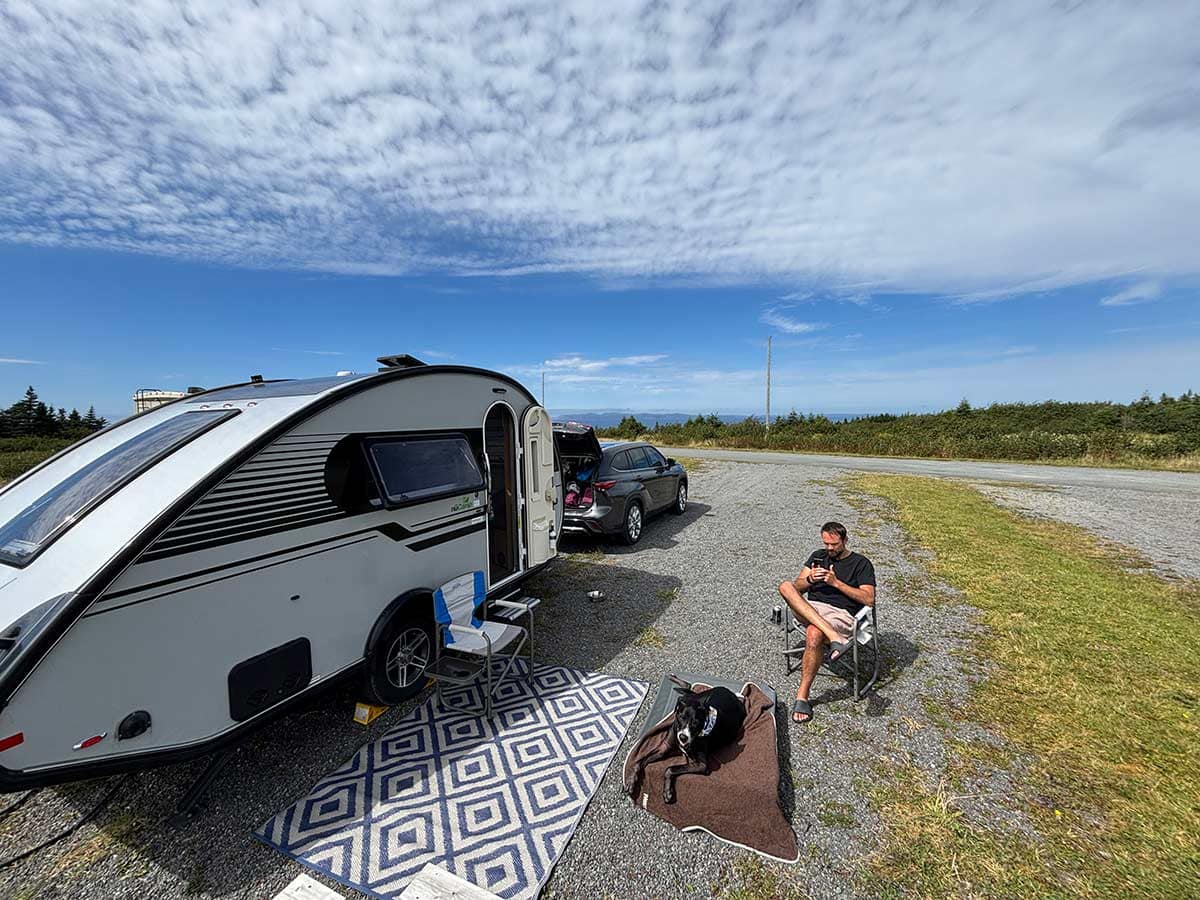
Clear signage directed us toward the main office, although its location among surrounding commercial buildings made it feel like we might be heading in the wrong direction. When we arrived, there was no one on-site, so we called the number provided and we were told to take whichever site we wanted. When the attendant arrived, we paid in cash.
The area has some nice extras nearby, including a trail network and Castle Hill National Historic Site, which is definitely worth a visit. Plus, you are a short 2.5 KM distance from the ferry, which means packing up and heading over is stress-free.
Loch Lomond, Amhurst NS (1 night)
- Park Type: Private
- Amenities: Washrooms, showers ($), laundry ($), full service sites
- Pros: Convenient location, clean/private washrooms and showers
- Cons: Small sites, weird concrete pad to maneuver around
- Cost: $47 for one night
We picked this campground purely for its convenience. It’s right off the Trans-Canada Highway in Amherst, Nova Scotia, making it an easy stop on our route home.
The location was practical, with plenty of nearby amenities like grocery stores, gas stations, and restaurants.
The park itself sits beside a pond and seems to cater mostly to seasonal campers. The single-stall bathrooms and showers were spotless, which was a nice surprise after a long travel day.
It served its purpose as a one-night stopover. Being within a comfortable distance of the ferry also meant our first drive after crossing wasn’t too long or exhausting, which made getting back on the road the next morning much easier.
Highlights of the Trip
- Best Campground: Gros Morne National Park was absolutely breathtaking—the scenic drives, the hikes, and the charming towns all added to the experience. Our time camping there was equally wonderful: quiet, peaceful, with beautiful views and just a small loop of fellow campers nearby. Having a town close at hand was also a big plus for picking up groceries, grabbing dinner, doing laundry, or shopping for souvenirs. We could have easily spent a week here!
- Best Hikes/Trails: Governors Lookout at Blow Me Down Provincial Park, Coastal Trail and Tablelands at Gros Morne National Park, French Beach in Twillingate, Ladies Lookout at Signal Hill
- Favourite Stargazing Moments: Blow Me Down Provincial Park. The skies were really dark, there was (almost) no surrounding light pollution, and we got some great nightscapes
- Memorable Activities: Dildo Brewery, Split Rock Brewery, Great Auk Winery, Visiting Family, Dinner (The Shamrock) on Water St. in St. John’s
Cost Summary
This was our major summer trip, and we were surprised to find that our total expenses came to just over $5,000 CAD.
Our total includes two pet-friendly cabins, as well as travel for ourselves and our trailer. This total reflects the 50% discount offered by the Canadian federal government for travel to Newfoundland in August of 2025.
Ferry costs can vary depending on the port you choose—for example, using Port Aux Basque for both your outbound and return trips will be cheaper than using the Argentia ferry.
Here is our cost breakdown to give you an idea of what to expect, rounded to the nearest dollar:
- Ferry: $1,000
- Campgrounds: $900
- Gas/Fuel: $1,500
- Food/Groceries: $1,200
- Souvenirs: $450
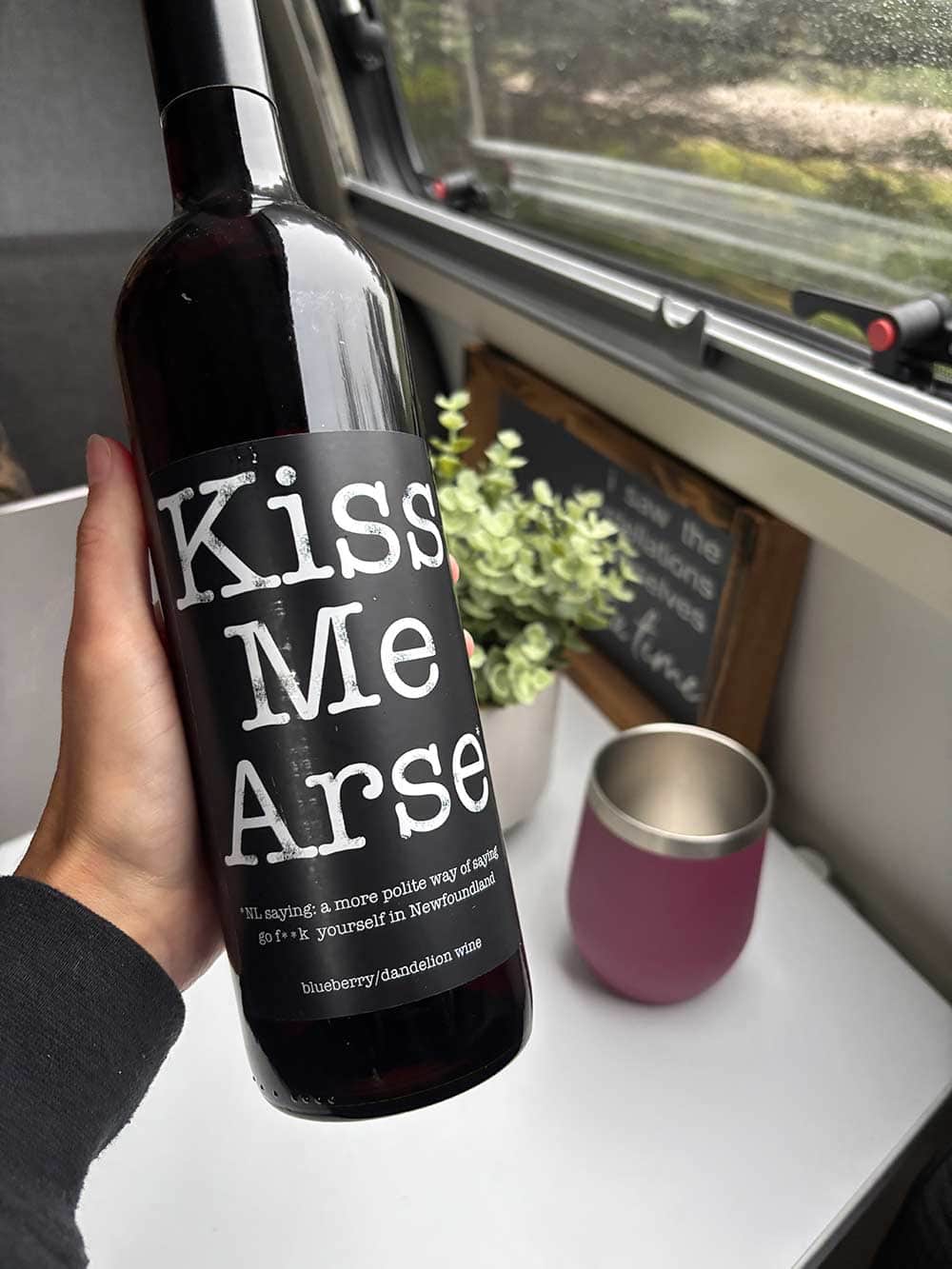
Cheeky Wine from Great Auk Winery in Twillingate.
Practical Tips
-
Know your setup: Some provincial park sites are better suited for tents or small trailers, while others can handle larger RVs. With our 18-foot trailer, we rarely had to worry about size.
-
Expect limited cell service: Download maps, directions, and ferry schedules ahead of time, make reservations when possible. There are large pockets of limited to no cell service along the drive and once you reach many campgrounds.
-
Carry change: At some parks you’ll need coins for showers and laundry, so keep a stash handy.
-
Pack for all weather: the weather changes quickly – fog, rain, and wind can roll in fast. Layers, a good rain jacket, and warm clothes for cool nights are essential.
-
Watch for wildlife: Moose are common, especially near roadways at dawn and dusk. Drive carefully and stay alert.
-
Book ahead in peak season: Ferry spaces and campgrounds fill quickly in summer, so book early!
-
Stock up in cities: In remote towns, groceries, fuel, and supplies can be limited or more expensive. It’s smart to top up when you pass through larger communities
-
Mind the insects: Depending on the season, blackflies and mosquitoes can be intense. Pack your bug spray.
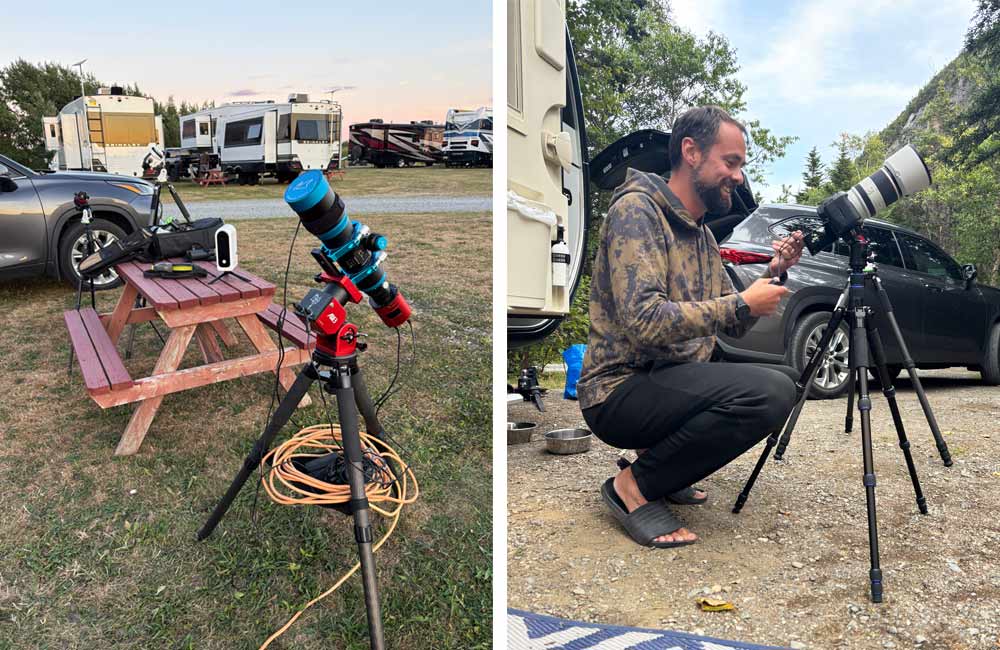
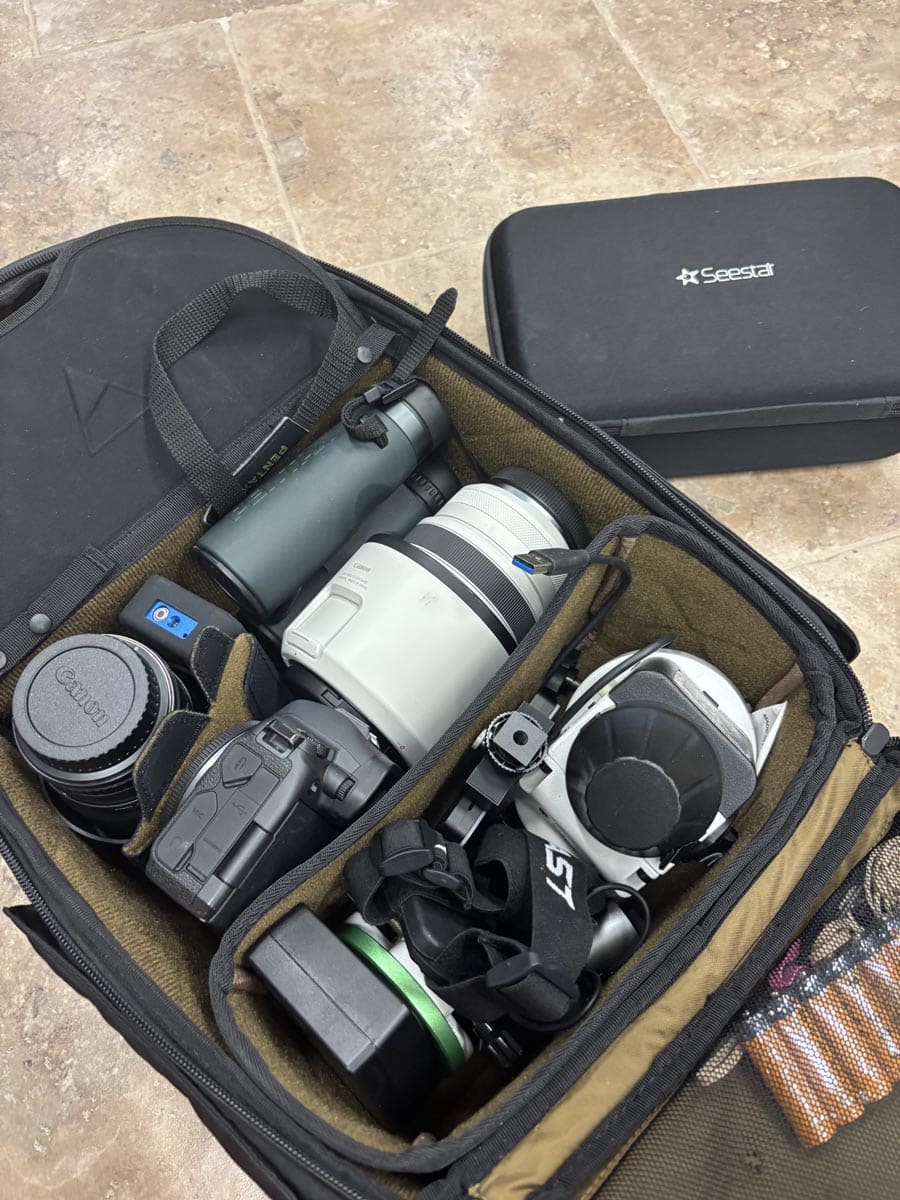
- Astrophotography: we kept our gear light using star trackers, DSLR cameras, camera lenses and tripods. Though we did bring one deep-sky setup, our goal was to capture more nightscapes given the beautiful scenery.
- Dark skies: though there are plenty of dark skies in the province, use the light pollution map to help you find campgrounds located in the darkest pockets. Try sites that don’t have electric hook ups, as they limit opportunities for people to plug in additional exterior lights.
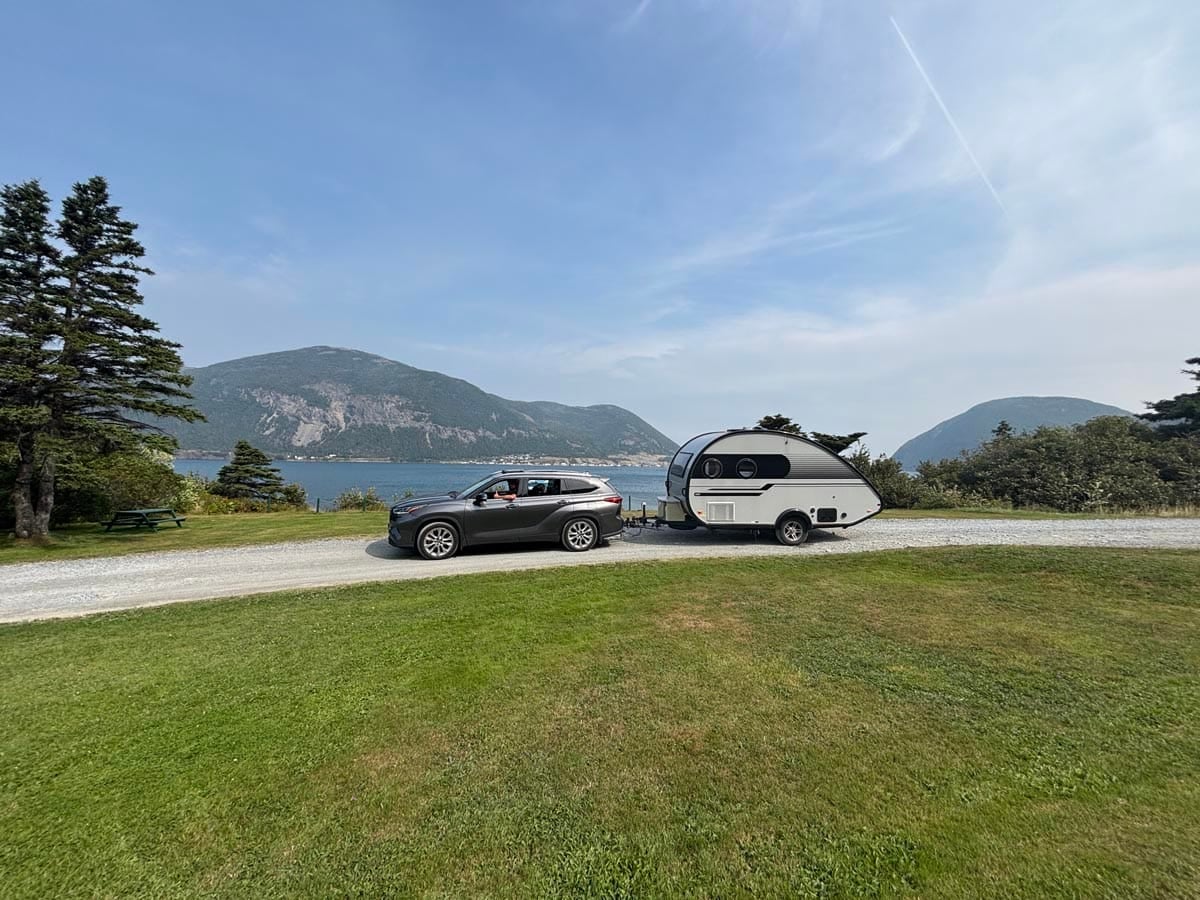
Blow Me Down Provincial Park.
Other Places to See
While there are endless beautiful spots to see in Newfoundland, here are a few that we would have loved to have explored if we had more time:
-
L’Anse aux Meadows: The only confirmed Viking settlement in North America, and a UNESCO World Heritage Site.
-
Fogo Island: Known for its rugged coastal scenery, fishing villages, and the world-famous Fogo Island Inn.
-
Bonavista: A historic town where John Cabot first landed, with colorful row houses, a lighthouse, and puffin viewing.
-
Trinity: A picture-perfect town with preserved 18th-century buildings, theatre, and boat tours for whales and icebergs.
-
Elliston: The “Root Cellar Capital of the World,” also one of the best places to see puffins up close.
-
Cape St. Mary’s Ecological Reserve: Home to one of North America’s largest seabird colonies.
-
Torngat Mountains National Park: Remote, wild, and stunning, offering dramatic fjords and Inuit cultural connections.
-
Cape Bonavista Lighthouse & Dungeon Provincial Park: Incredible coastal views, UNESCO geosite, and unique sea-arch formations.
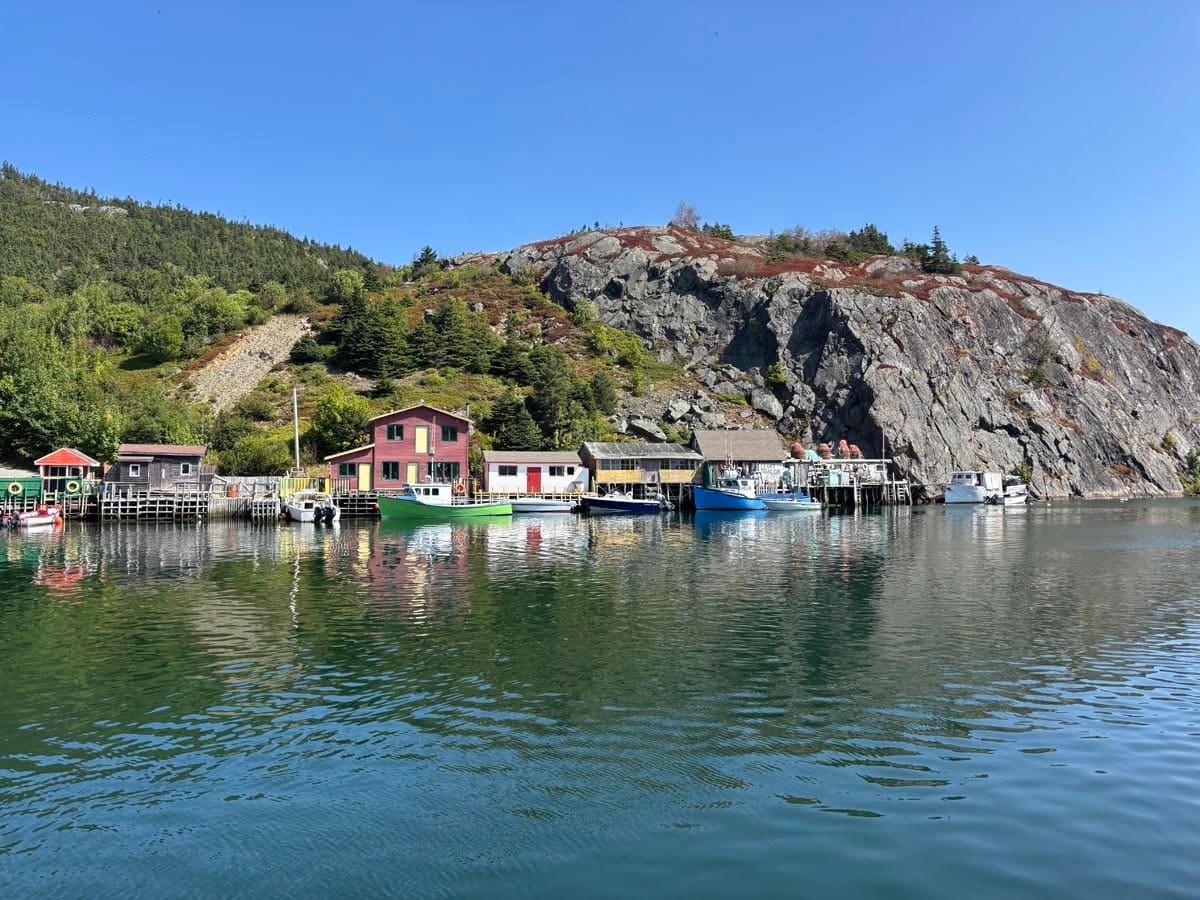
Quidi Vidi, St. John’s.
Internet from the Road
And if you’re reading this and wondering why we haven’t jumped on board with Starlink for better internet while working on the road, there’s a reason.
While it’s a popular option among RVers and travelers, we’re not comfortable supporting a company that contributes so heavily to light pollution with the sheer number of satellites it has launched.
These satellites reflect sunlight and create bright trails across the night sky, making it harder for astronomers and stargazers to enjoy natural darkness. As passionate dark-sky advocates, we’ve seen firsthand how this impacts the night sky we love and work so hard to protect.
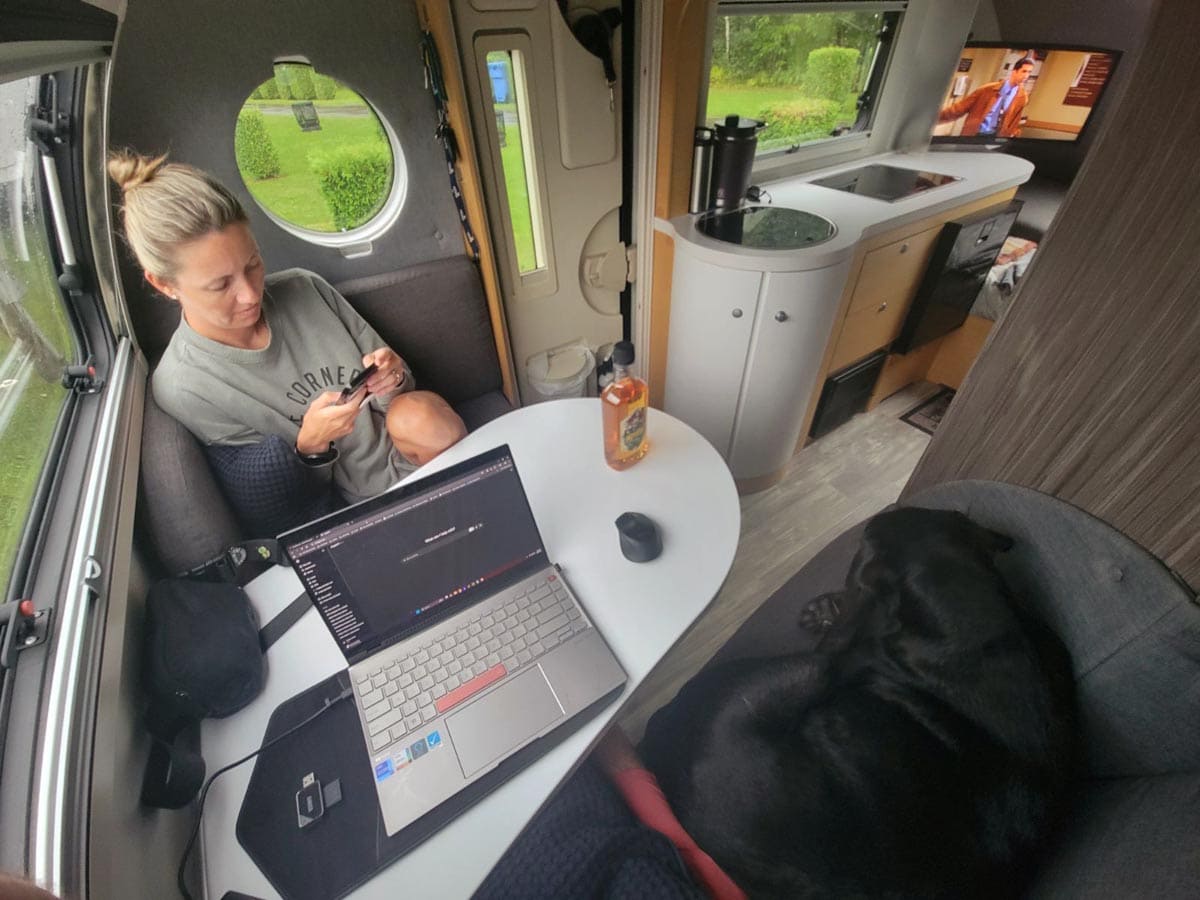
Working from the road (you can ignore the liquor bottle on the table).
That said, we also recognize that there may not be a perfect alternative available. However, we remain committed to exploring our options—ways to stay connected without contributing to the very problem we care so deeply about.
It’s not always easy, but for us, it’s worth the extra effort. If you know of other companies or solutions we should check out, we’d love to hear about them in the comments.
Light Pollution While Camping
Light pollution is something many campers don’t think about, but it should be treated similarly to noise when it comes to campground etiquette. Most parks already have quiet hours, and it’s worth thinking about lights the same way.
The whole point of camping is to escape into nature, so it’s important that we give others the chance to enjoy it fully.
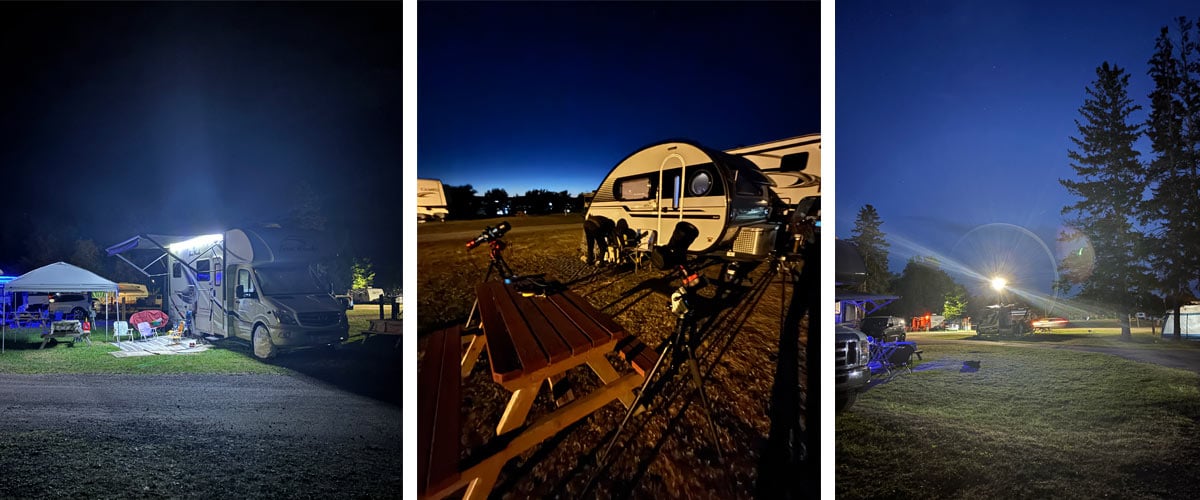
Various light pollution we experience on our trip. Some where from other campers, some where from park facilities/infrastructure.
Leaving bright lights on all night detracts from the experience and can spoil someone else’s opportunity to stargaze, photograph the night sky, or simply enjoy the calm of a truly dark evening.
Here are some ways you can help limit light pollution for others:
- Turn off exterior lights and lanterns once you’re done with them or when you’re no longer sitting outside
- Practice a light curfew, turning off your light by 10/11 PM
- Limit outdoor decorative lights
- If you need lighting while camping, use amber or red lights (not bright white LEDs) and keep them directed toward the ground.
A little light courtesy not only protects the night sky – it helps everyone embrace the real beauty of camping, which is connecting with nature.
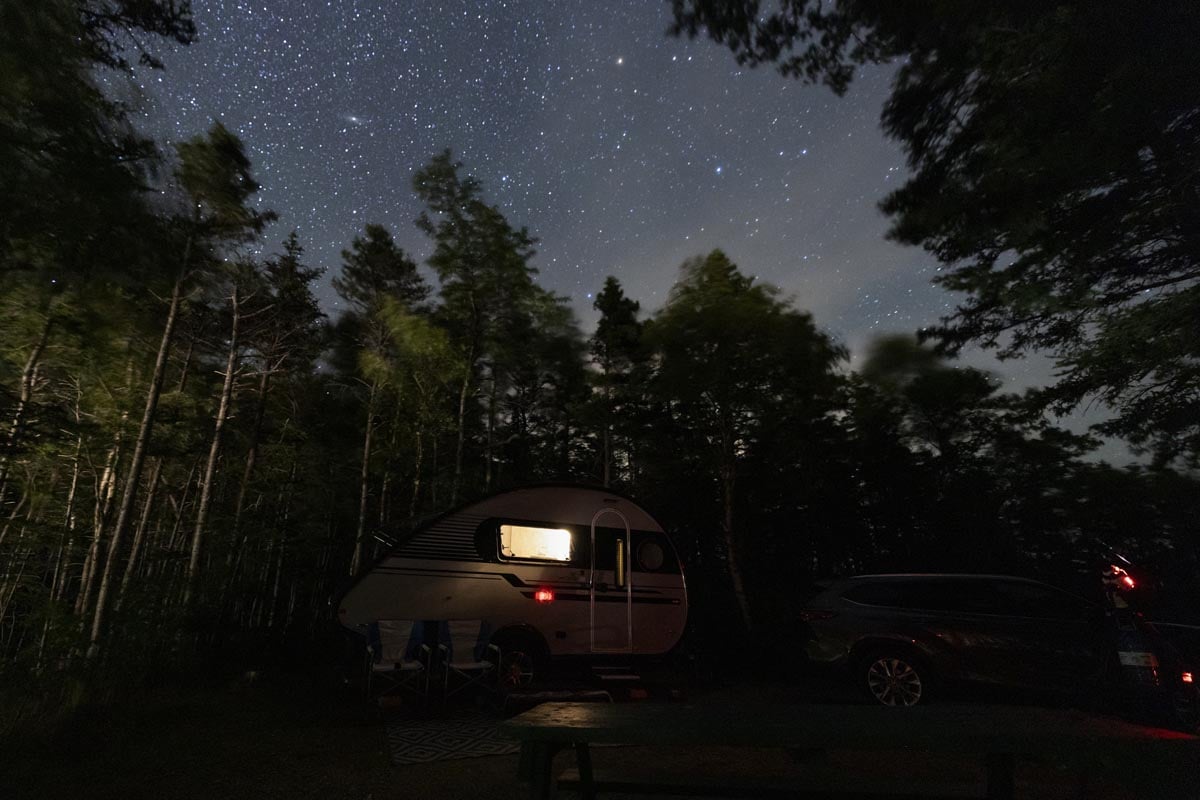
Night Sky at Blow Me Down Provincial Park
Conclusion
This trip was everything we had hoped it would be – part adventure, part relaxation, and filled with starry nights.
Newfoundland’s mix of rugged landscapes, friendly people, and dark skies makes it one of the best destinations for anyone who loves camping and astronomy.
If you’re planning your own Newfoundland road trip and want advice on campgrounds, stargazing spots, or astrophotography gear, drop a comment below – we’d love to share more tips!
We will absolutely return to Newfoundland with our Tab 400 ready for new adventures!
Clear and dark skies!

Ashley is an environmental educator, communication professional, and astrophotographer. She has extensive experience writing for diverse audiences to increase public awareness and engagement. Ashley is an active Advocate and Delegate with DarkSky International, helping to protect the nighttime environment from the harmful effects of light pollution through advocacy and outreach.

Thank you so much for this in-depth review of your trip to Newfoundland. It will definitely help our next adventure with our Tab 320.
So glad you found it helpful! The Tab 320 would be such a perfect little camper for exploring Newfoundland. Wishing you an amazing adventure when you go!
Thanks for posting this. Have friends and family back on the “Rock” and it’s been awhile since I’ve been back home. Hearing that there are great dark skies there is all the incentive I need to make a trip back. Live in Alaska and while that’s pretty grand, the winters can be fairly hard on an astrophotographer!
That’s wonderful to hear! There are fantastically dark skies in Newfoundland, and it’s extra special when it’s tied to going back home. Alaska must be incredible for astrophotography too, even if those long winters make it a challenge! Hopefully you’ll get to enjoy the best of both worlds.
While there is virtually no chance that I’ll ever have a chance to take a camper van trip around Newfoundland, living as I do in New Zealand, this was a great read, and I enjoyed living vicariously through your experience. Thanks!
Hey, thanks James. I imagine there are many beautiful places to camp in New Zealand!
A packed itinerary and a great breakdown of the trip for any interested parties! Kudos’! Feel free to hit up the local RASC during your next trip. We have a great group of people here. The Fall Astronomy Day / Observe the Moon was Sept 27th this year at the Geo Center. Great content, keep it up! Thank you
We looked for RASC events after we booked our trip, but sadly there wasn’t a lot going on throughout the summer (no meetings etc.). We had missed the Dark Sky Celebration at Terra Nova NP by a few weeks and we were gone before Astronomy Day.
Thank you for this information. I am planning to travel in Newfoundland in June and July this year. I had not considered the private parks and planned to go to the provincial parks only. Do you have any recommendations for the Avalon Peninsula? I may reverse the trip and start here and leave through Port aux basque. Do you have any suggestions? I will be camping with my 1997 Eurovan.
I highly recommend staying at some of the private parks. They are all family owned, and you really get a feel for the people of the island while supporting their family business. As mentioned in the post, we did a mix. For the Avalon Peninsula, we stayed at Pippy Park (close to St.John’s) and Sunset RV in Argentia (for our ferry ride home). Both were great. We also looked at Butterpot Provincial Park and Stillwater RV park near Dildo. Again, I think most (maybe all) Provincial Parks offer non-powered sites, so your required amenities will come into play when deciding where to book. Have a great time Heather!
Thank you for sharing this detailed review! I’m still in the “hoping and dreaming” phase of travel planning, but if my plans work out I may be replicating much of your trip in my own future Tab-360 after I retire in a few years.
Looking forward to some amazing dark skies!