SVBONY SV550 Telescope Review: Serious Astrophotography on a Budget

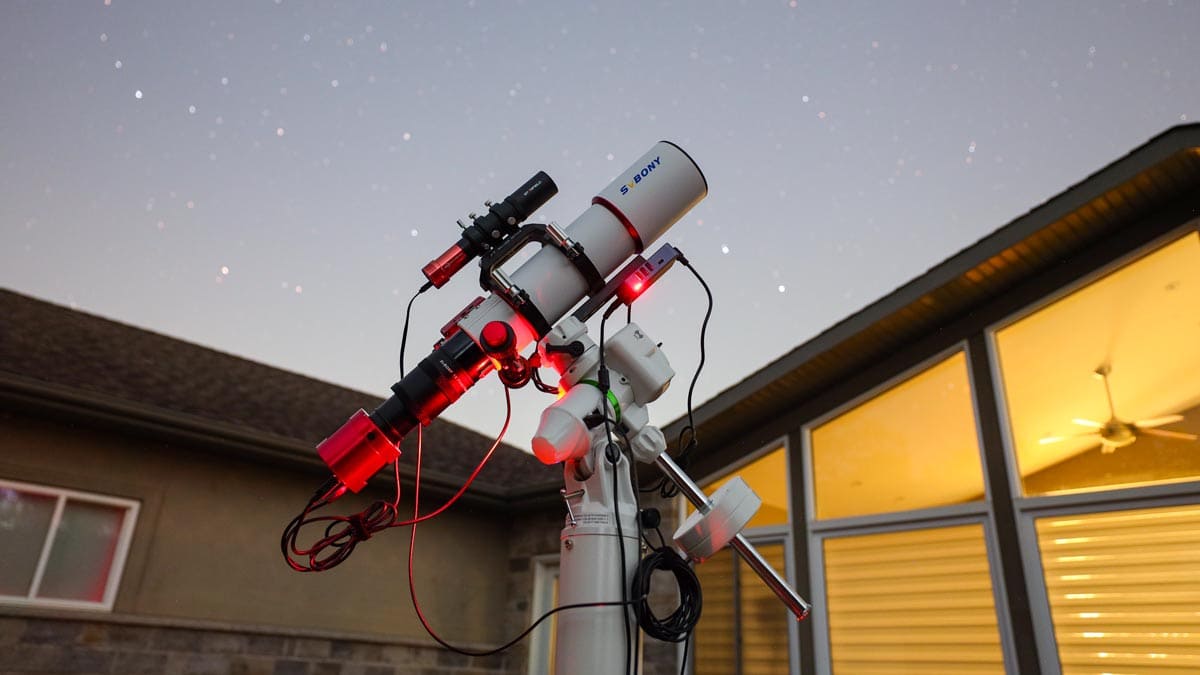
If you’ve been looking at entry-level refractor telescopes for astrophotography and wondering whether it’s worth stepping up to a triplet APO, the SVBONY SV550 deserves a close look.
Available in both 80mm and 122mm apertures, the SV550 telescope is designed with astrophotography in mind, but it’s also a capable instrument for visual observing.
In this review, I’ll share how the 80mm SV550 performs in the real world, highlight its strengths and weaknesses, and explain whether it’s worth adding to your imaging lineup.
This was the telescope featured in my budget astrophotography build, which was put together using affordable components throughout.
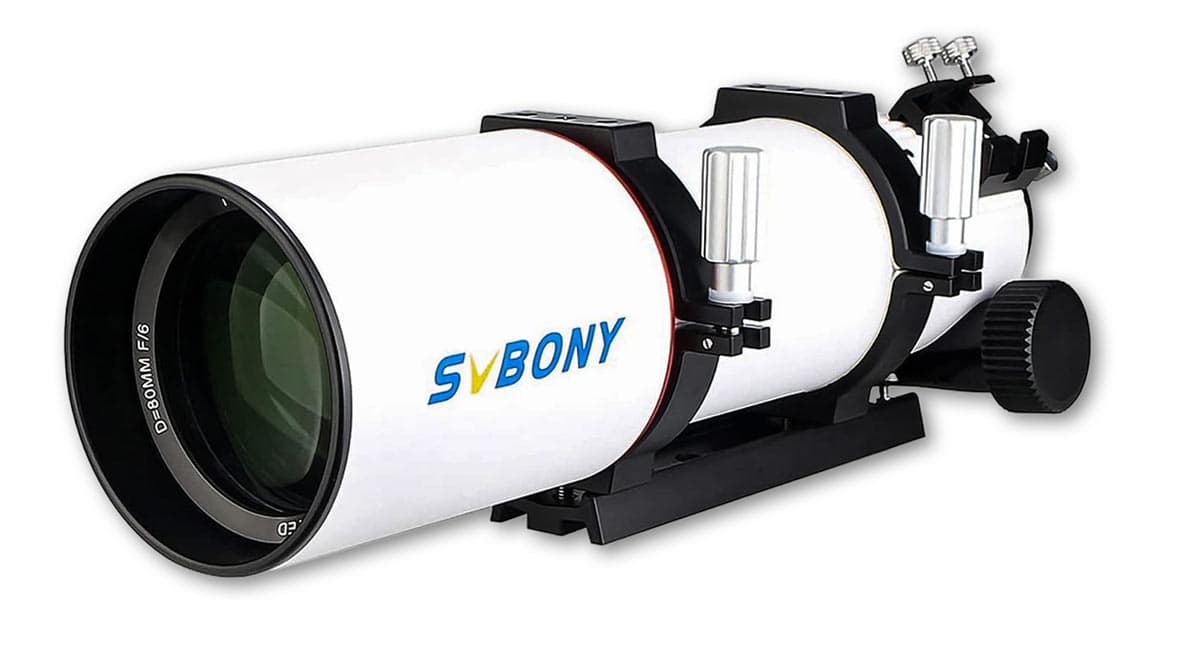
The SVBONY SV550 80mm Triplet APO Telescope is available on Amazon. I recommend getting the package that includes the field flattener.
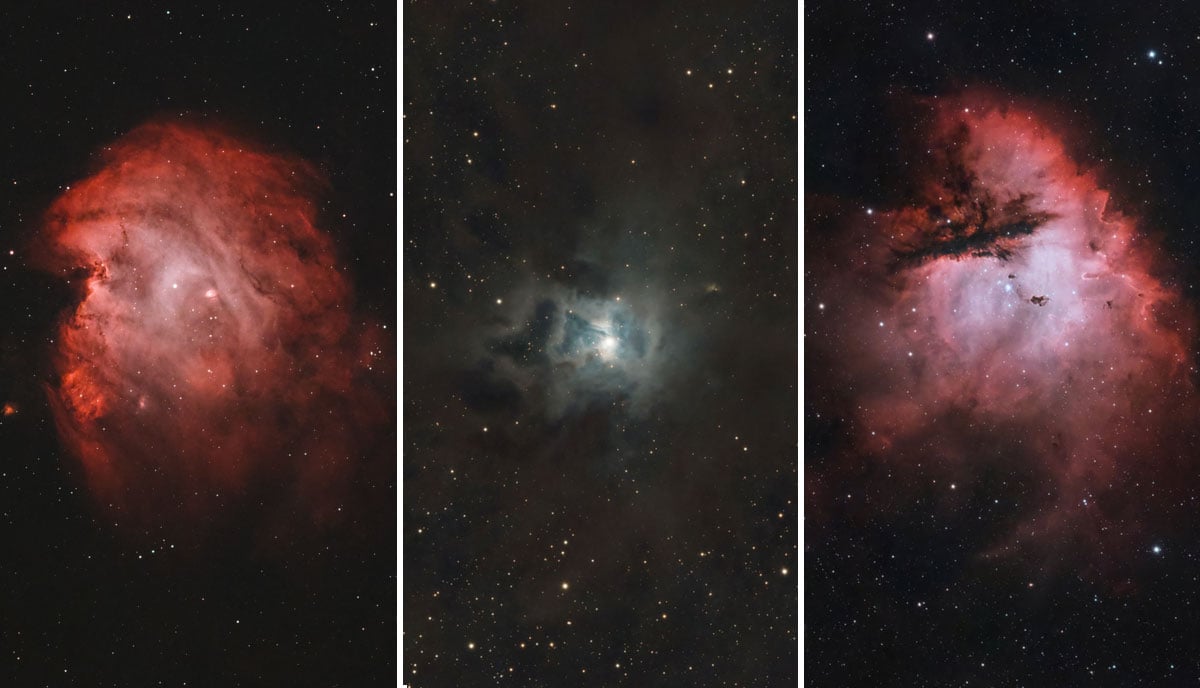
Example images I have taken using the 80mm SV550 Triplet APO with a dedicated astronomy camera.
Design and Build Quality
The SV550 is built solid. It’s a stocky, compact refractor weighing in at 7 pounds. The CNC-machined tube and retractable dew shield give it a premium feel, and the extra-long dovetail bar makes balancing straightforward on most mounts.
At the heart of the scope is a triplet apochromatic objective with FPL-51 ED glass, which dramatically reduces chromatic aberration and keeps stars sharp across the field (though FPL-53 would have been better).
One of the standout features is the 2.5-inch dual-speed rack and pinion focuser. It’s smooth, lockable, and precise. A quality focuser is essential on an astrophotography telescope, and this one is up to the task.
On my medium-capacity mount (Sky-Watcher EQ-AL55i), it balanced fine, but you’ll want proper counterweights for stability.

With the telescope weighing roughly 8 pounds, this entire deep-sky setup is well within the maximum payload capacity of the humble Sky-Watcher EQ-AL55i equatorial telescope mount.
Specifications
| Spec | Details |
|---|---|
| Model | SVBONY SV550 |
| Optical Design | Triplet apochromatic refractor with FPL-51 ED glass |
| Aperture | 80mm |
| Focal Length | 480mm |
| Focal Ratio | f/6 |
| Resolution (theoretical) | ~1.45 arc-seconds |
| Limiting Stellar Magnitude (Visual) | ~11.6 |
| Coatings | Fully multi-coated (FMC) |
| Focuser | 2.5-inch rack-and-pinion, dual-speed (10:1 fine focus) |
| Dovetail Plate / Mounting | Vixen-style split tube rings with dovetail plate (~150–175 mm) |
| Accessory Threads | M63 × 1 female thread, 2-inch adapter, retractable dew shield |
| Tube Dimensions | Outer diameter ~103 mm |
| Weight | 7 pounds (OTA only) |
| Ideal Use | Wide-field astrophotography (nebulae, star clusters), portable visual observing |
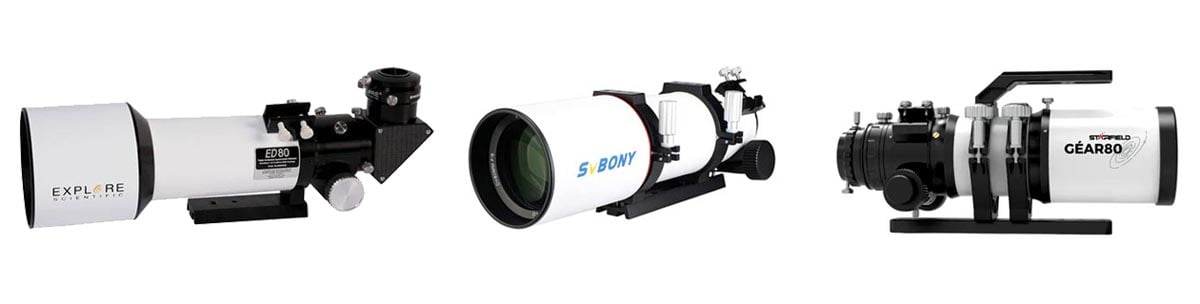
The specs of the SVBONY SV550 80mm triplet mirror those of some of the most popular astrophotography telescopes on the market. The closest competitors to this telescope in terms of comparable specs are the Explore Scientific Essential 80mm Triplet and the Starfield Optics GEAR Series 80mm Triplet APO.
Optical Performance
This is where the SV550 earns its reputation as a surprisingly capable astrophotography telescope. The optics are crisp, with minimal to no visible color fringing on bright stars or the lunar limb.
With the dedicated field flattener (sold separately), stars remain pinpoint right to the corners of a smaller-sensor camera. Without one, you’ll notice some elongation at the edges, which is typical for refractors in this price range.
For those moving up from a doublet, the difference in clarity and control of aberrations is immediately noticeable.
Pay attention to the star shape in the same image below. I would consider these to be more than acceptable and reminiscent of a much more expensive telescope.
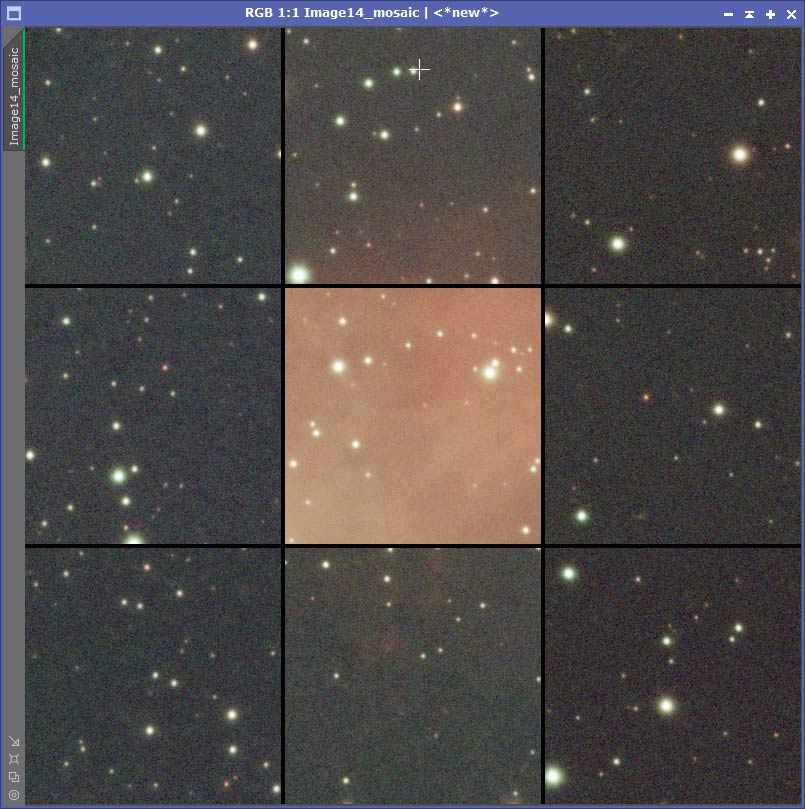

I highly recommend purchasing the optional field flattener for optimum performance of the SV550 when used for astrophotography.
Astrophotography Performance
The SV550 was clearly designed with deep-sky astrophotography in mind. All of the images I captured using the SV550 were taken using the 1X field flattener from my Bortle Scale class 6 backyard.
Compared to the popular SV503 doublet, the SV550 represents a significant advancement. Images show more detail, cleaner stars, and less need for corrective processing.
I have captured several images with the SV550 paired with a color camera. The images shot using a dual-narrowband filter serve as a practical use case for amateur astrophotographers who take images from urban areas.

The Monkey Head Nebula. 60 x 4 minutes (4 hours total exposure). SVBONY 550 + ZWO ASI585MC Pro + Optolong L-eXtreme.
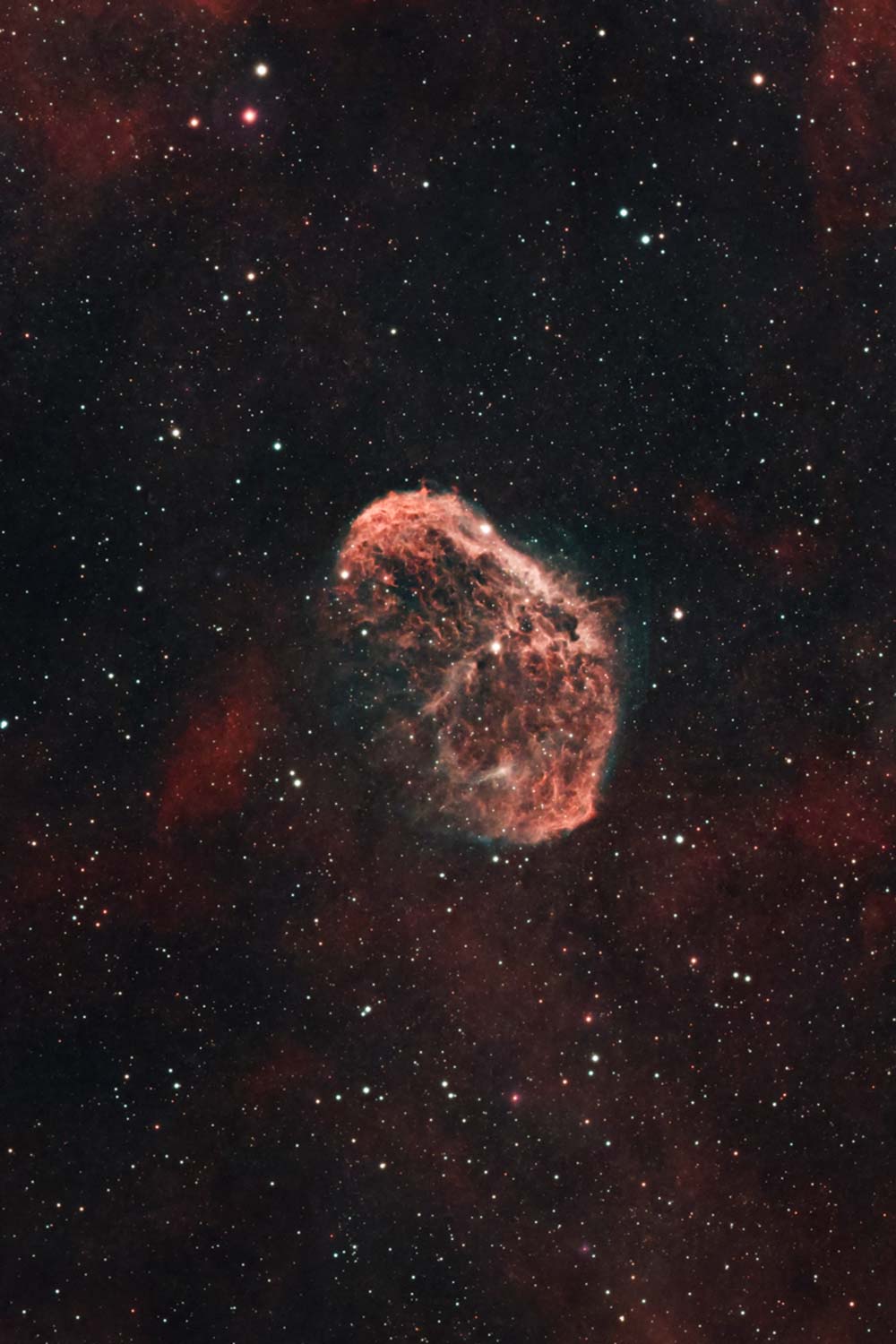
The Crescent Nebula. 48 x 5 minutes (4 hours total exposure). SVBONY 550 + ZWO ASI585MC Pro + Optolong L-eNhance.
While dual-band filters are a practical choice for astrophotographers in the city, they often mask optical imperfections such as star shape and quality. The following test image should clarify the performance of the SV550 Triplet APO for broad-spectrum astrophotography.
Broadband RGB Image Test
A true test of a telescope’s optics is an image taken in broad-spectrum, true color light without the use of a strong filter. For the following image of the Iris Nebula, I used an Optolong L-Pro light pollution filter, which allows most of the natural starlight to pass through to the sensor.
This image includes 5 hours of total exposure time using the SVBONY SV550 telescope with the 1X dedicated field flattener attached. Very little processing was done to the image to provide an accurate representation of the broadband performance of this telescope.
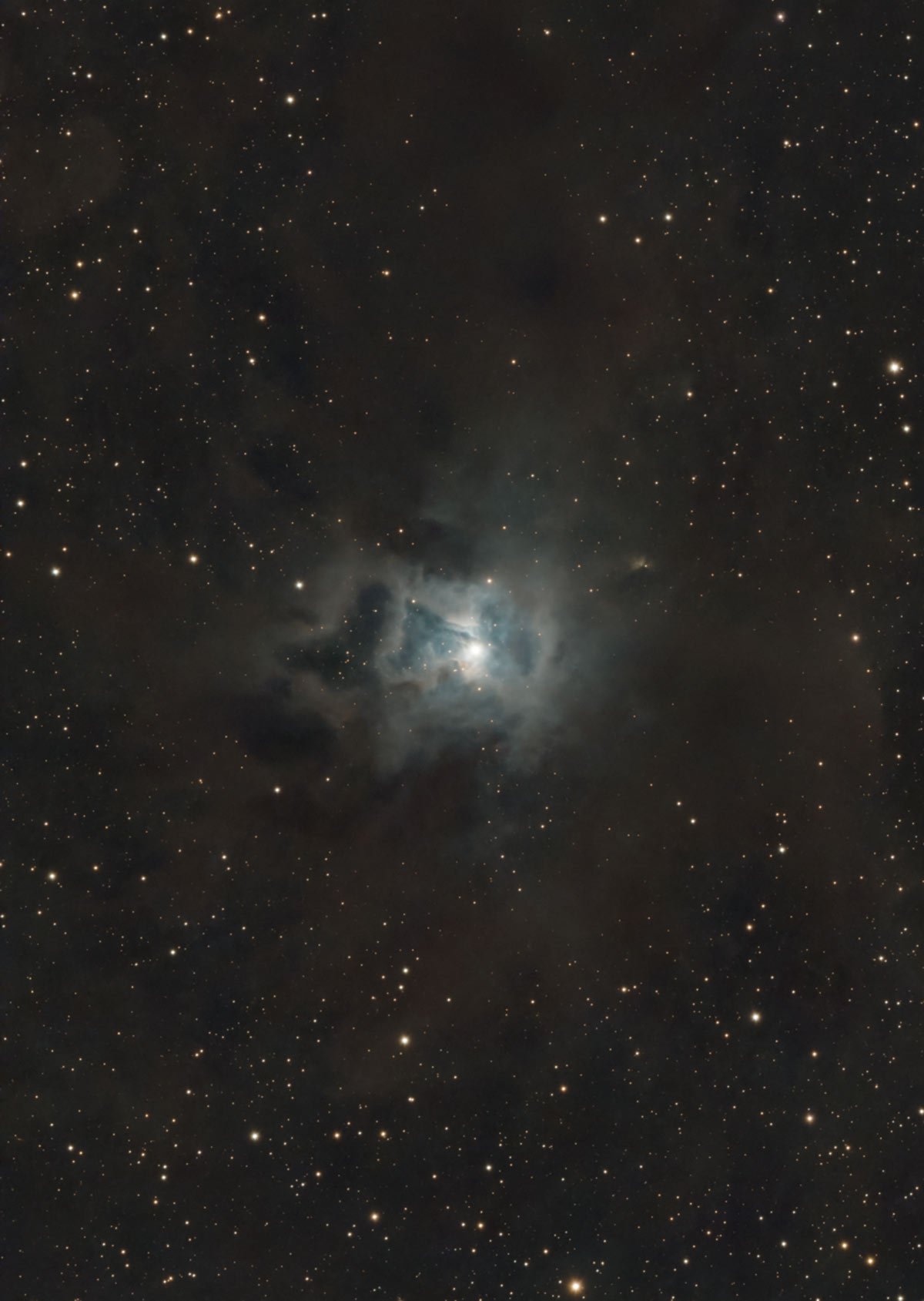
The Iris Nebula in Cepheus (5 hours total exposure). SVBONY SV550 80mm Triplet APO, ZWO ASI585MC Pro.
I was impressed with the star quality and color correction observed in the image. I think the SV550 is a worthy choice for broadband imaging with a color astronomy camera or a DSLR.
Which Camera to Pair it With
A DSLR or mirrorless camera would be an excellent fit for this telescope, but expect to see the optical performance dip near the edges of the frame if using a full-frame model. An APS-C-sized sensor is a better fit.
In terms of image scale, a 480mm focal length is a versatile magnification that pairs well with many of the most popular astrophotography cameras on the market.
I suggest using a camera with a pixel size in the 3 micron range, as this will capture pictures in the highly desirable 1-2.0 arcseconds per pixel range. I used a camera with 2.9 µm pixels.

The ZWO ASI585MC Pro camera I used with the 80mm SV550 Triplet APO resulted in an image scale of 1.2 arcseconds/pixel.
On top of being in ‘the sweet spot’ in terms of resolution and image scale, its smaller sensor size is more forgiving in terms of edge-to-edge performance of the optical plane.
Ease of Use and Versatility
Despite its serious optics, the SV550 is still approachable for beginners. Setup is straightforward, the focuser feels reliable even with heavier imaging trains, and the build quality inspires confidence.
For visual observers, it’s a versatile refractor that transitions easily between backyard stargazing and dedicated imaging sessions. While I must admit I have never looked through the SV550 visually, I expect no surprises in terms of the views this little refractor delivers.
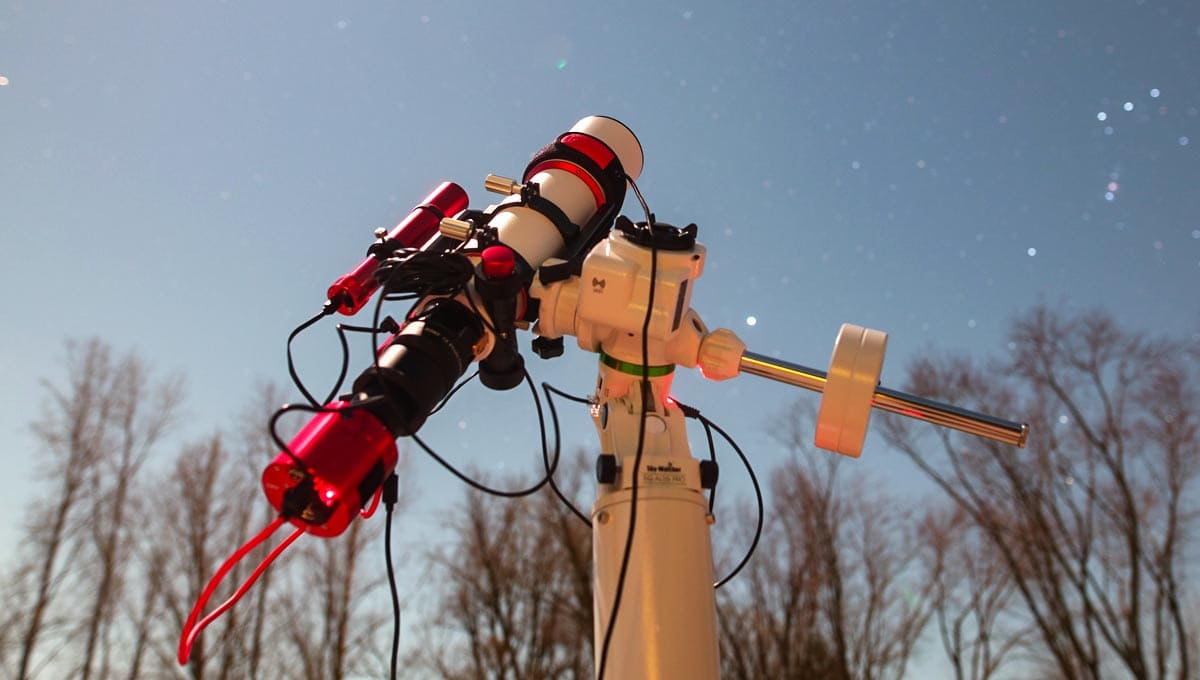
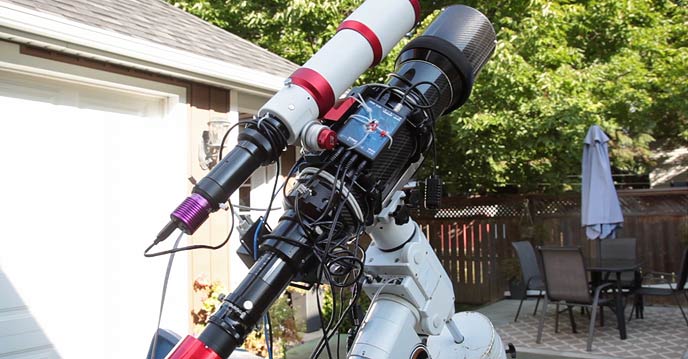
Important Note: The telescope is quite front-heavy, making it more challenging to balance in the declination axis. In my photos of the telescope setup in the backyard, you may have noticed how far up the dovetail is on the mount saddle.
Note about installing the field flattener:
One thing that did take some time to figure out was the installation of the optional field flattener. It threads directly to the focuser drawtube, and removing the standard adapter was a pain.
You need to unscrew the grub screws to loosen the default adapter so you can remove it and install the threaded field flattener. I hope this information saves you some time and frustration.
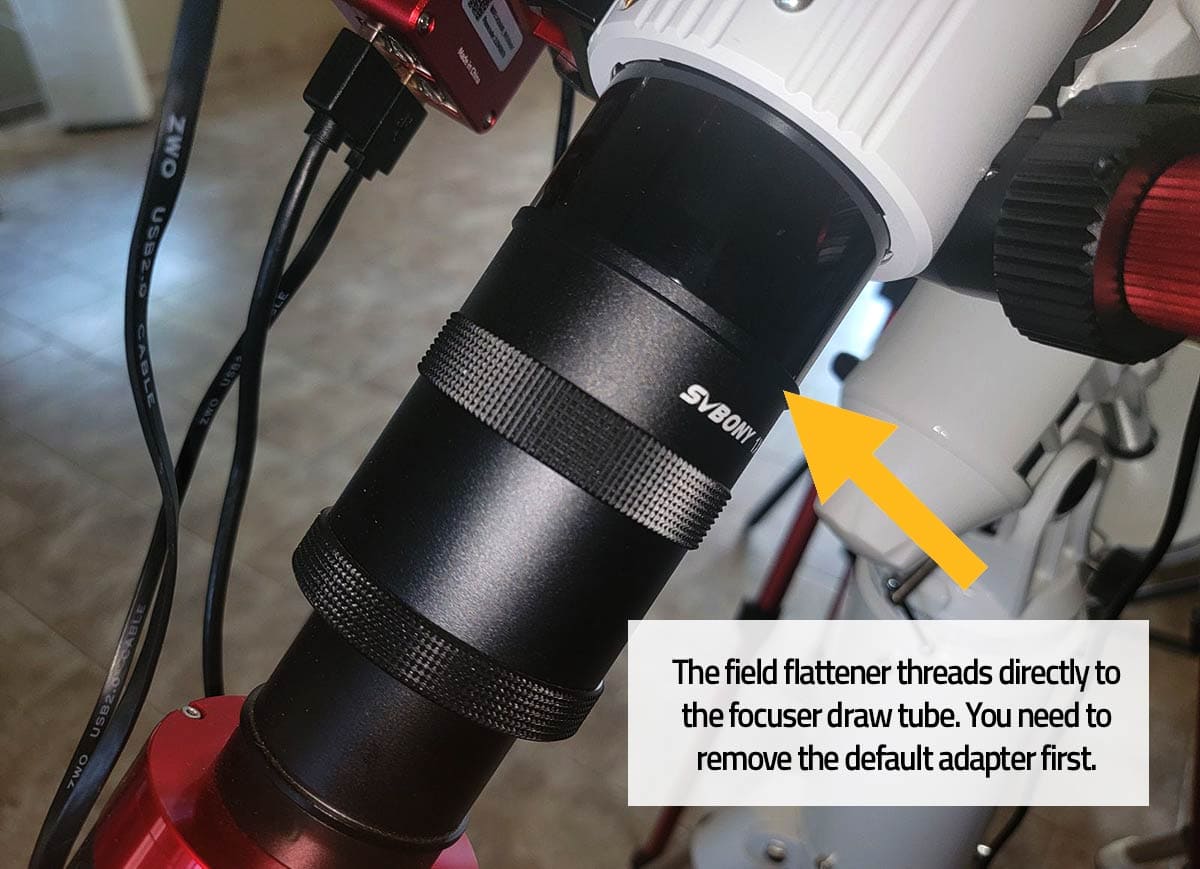
You must remove the standard 2″ visual adapter to thread the SVBONY SV209 1X field flattener.
Pros and Cons
Pros
- Excellent triplet optics with very little chromatic aberration
- Smooth, precise dual-speed focuser
- Solid CNC construction with retractable dew shield
- Great value compared to premium triplets
Cons
- Field flattener and rotator sold separately
- Front-heavy design requires a sturdy mount
- Focus shift with temperature changes (common with triplets)
Example Astrophotography Kit featuring the SVBONY SV550
This is a full-featured setup for deep-sky astrophotography using a one-shot-color camera. You can further upgrade this system by adding an autofocuser and electronic filter wheel for complete automation.
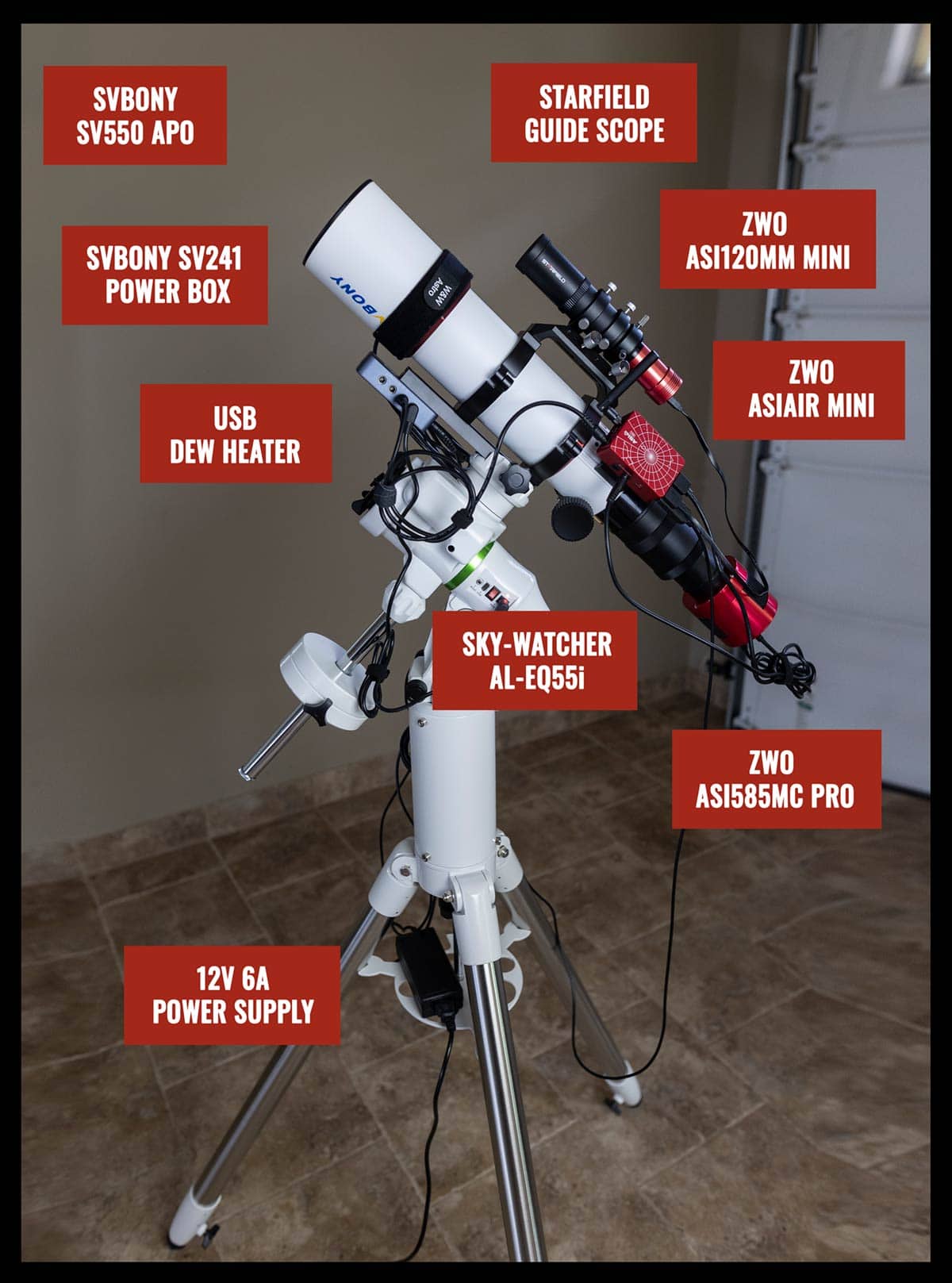
- Camera: ZWO ASI585MC Pro
- Telescope: SVBONY SV550 Triplet APO
- Power Box: SVBONY SV241 Power Box
- Telescope Mount: Sky-Watcher EQ-AL55i
- Controller: ZWO ASIAIR Mini
- Guide Scope: Starfield 32mm Guide Scope
- Guide Camera: ZWO ASI120MM Mini

This is the cable you need to connect the Sky-Watcher mount to the ASIAIR for telescope control.
SVBONY SV550 vs. SV503: A Comparison
If you’re looking to save some money by purchasing the SVBONY SV503 70mm Doublet, be aware that there are significant changes. If star quality and color correction are important to you, a triplet apochromatic refractor is worth the additional cost.
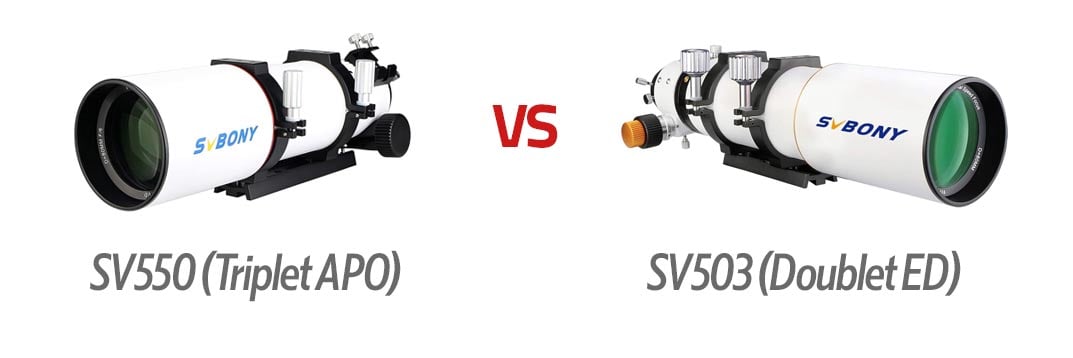
| Feature | SVBONY SV550 Triplet APO ( | SVBONY SV503 Doublet ED ($399 USD) |
|---|---|---|
| Optics Design | Triplet APO with FPL-51 ED glass — excellent color correction and sharpness. | ED Doublet — good correction, but more fringing and less crisp edges. |
| Field of View | Wider field — ideal for large nebulae and star clusters. | Longer focal length — better for planets and small galaxies. |
| Build & Accessories | 2.5″ dual-speed focuser, long dovetail (300 mm), retractable dew shield. | Compact and lightweight; shorter dovetail may need extra balancing. |
| Imaging Performance | Sharper, professional-looking images with clean star fields. | Good beginner scope; some edge aberration on larger sensors. |
| User Feedback | Praised as a big upgrade over the SV503; excellent value. | Well-liked for affordability and portability. |
| Cost and Value | Higher price, but strong performance and imaging potential. | Budget-friendly, great starter or travel OTA. |
What about the SV555?
The SVBONY SV555 is another attractive astrophotography option to consider, but it is in a different category than the SV550. Its ultra-wide focal length (243mm) puts it up against the mighty William Optics RedCat 51, and the equally impressive Askar SQA55.
This one has a 5-element Petzval design offering a fast focal ratio (F/4.5) and an impressive 44mm image circle. By comparison, the SV550 is a ‘slower’ telescope with a more traditional focuser, and nearly double the focal length.

With its helical focuser and variable aperture, the SVBONY SV555 is closer to a camera lens than a telescope.
Final Verdict
The SVBONY SV550 APO Triplet Refractor hits a sweet spot: it delivers premium optical performance at a price that’s still accessible.
While it isn’t perfect (you’ll need to budget for a flattener and a capable mount), it’s hard to ignore the results it produces. If you own an entry-level DSLR or a dedicated astronomy camera, the SV550 should be a useful companion for many nights of deep-sky imaging.
With a bundle price under $800 USD that includes the dedicated field flattener, this telescope stands out as a worthy contender in a sea of astrophotography refractors competing for your hard-earned dollar.
If you’re serious about astrophotography but aren’t ready to commit to the cost of higher-end brands, the SV550 is one of the best options available right now. I’ll continue to update this article with the latest images taken using the SV550 in the backyard.

Trevor Jones is an astrophotographer and a valued member of the RASC. His passion is inspiring others to start their astrophotography journey on YouTube so they can appreciate the night sky as much as he does. His images have been featured in astronomy books & online publications, including the NASA Astronomy Picture of the Day (APOD).