
William Optics RedCat 51 Review

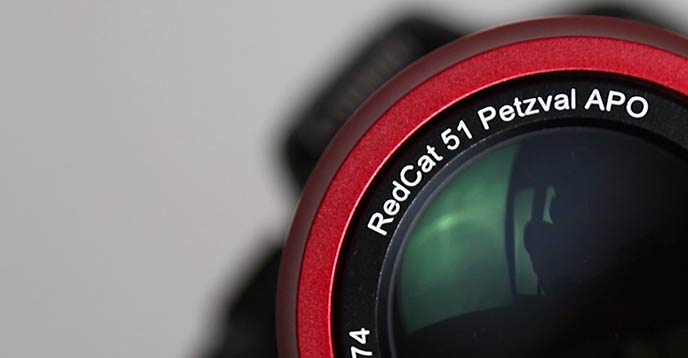
William Optics is a company known for creating high-performance apochromatic refractors and constantly updating and refining its designs.
The RedCat 51 Petzval APO is one of the most recognizable wide-field astrophotography telescopes ever released, and this review has evolved along with it. This article began as my early-access review of the original William Optics RedCat 51 in 2019.
That first version used a unique helical focuser and quickly became one of the most popular portable astrophotography telescopes on the market. Since then, William Optics has refined the design several times, and the current model is the William Optics RedCat 51 Gen 3 WIFD, sometimes listed as the Cat 51 WIFD.
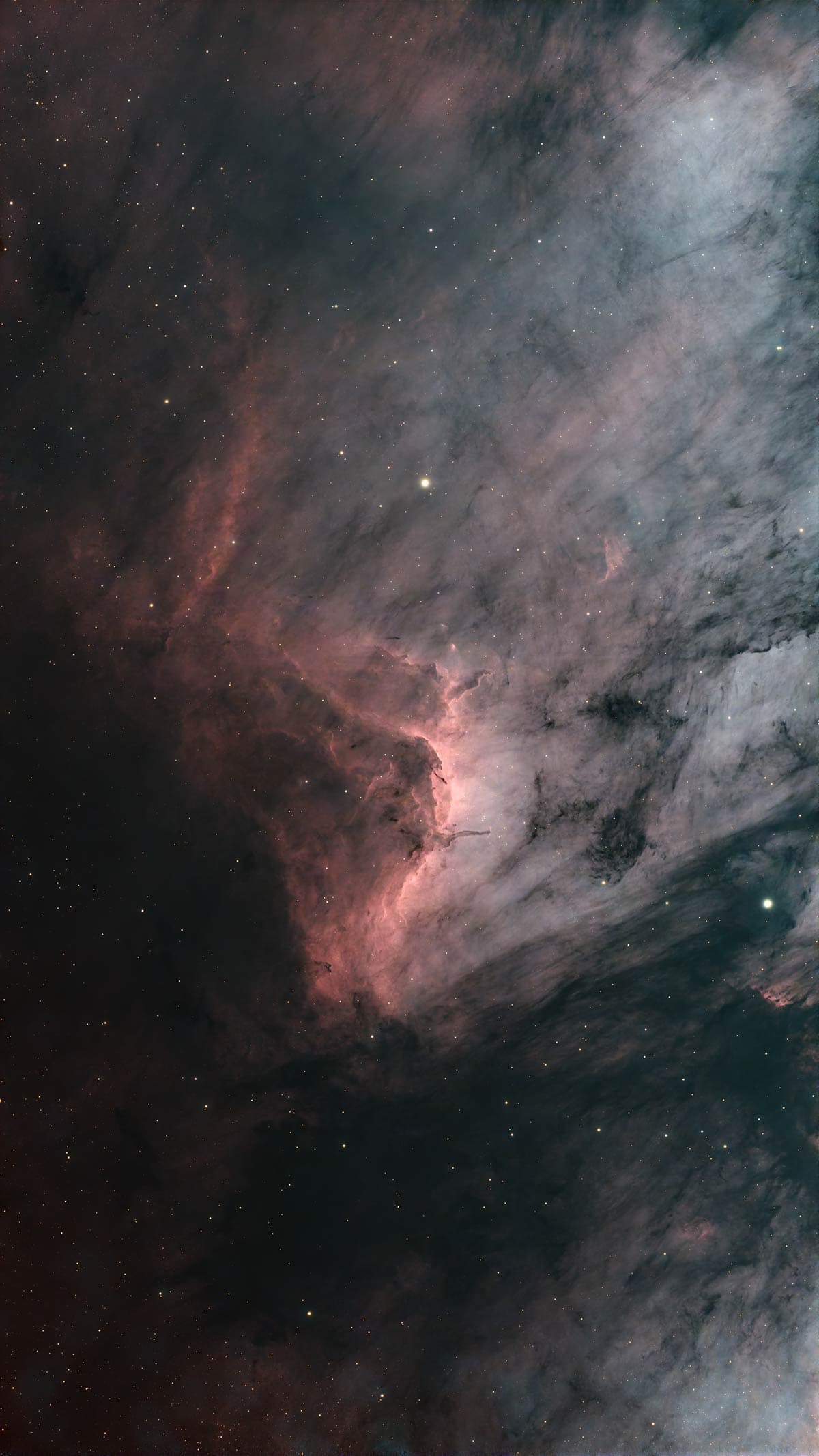
The Pelican Nebula captured using the RedCat 51 and ZWO ASI585MC Air camera.
The latest version keeps the same core appeal that made the original so popular: a 51mm aperture, 250mm focal length, fast f/4.9 focal ratio, and a Petzval optical design that does not require a separate field flattener. The major difference is the focusing system.
The original RedCat 51 used a helical focuser, while the current Gen 3 WIFD model uses William Optics’ internal rack-and-pinion focusing design, making it much easier to use with modern electronic autofocus systems like the ZWO EAF.
Update: This review includes my original experience with the 2019 RedCat 51, along with updated notes for the current RedCat 51 Gen 3 WIFD model. If you are shopping for a new RedCat 51 today, the Gen 3 WIFD version is the model you are most likely comparing.
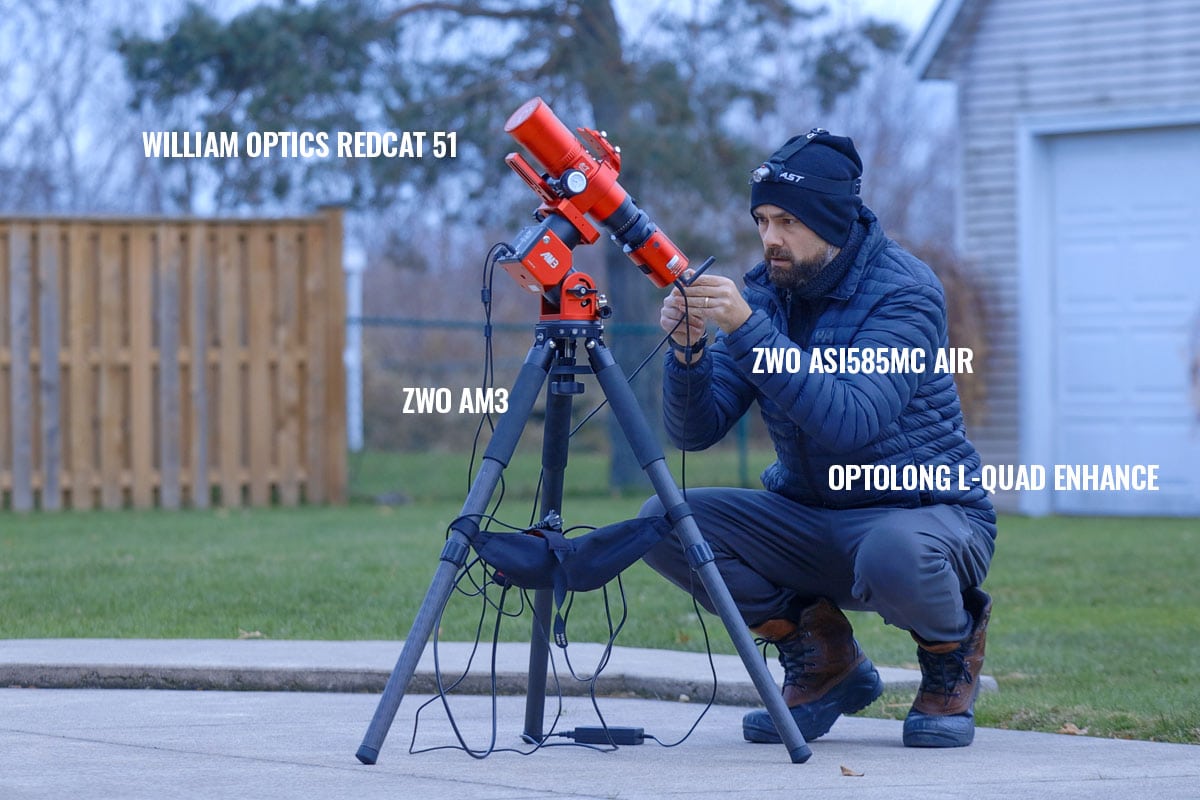
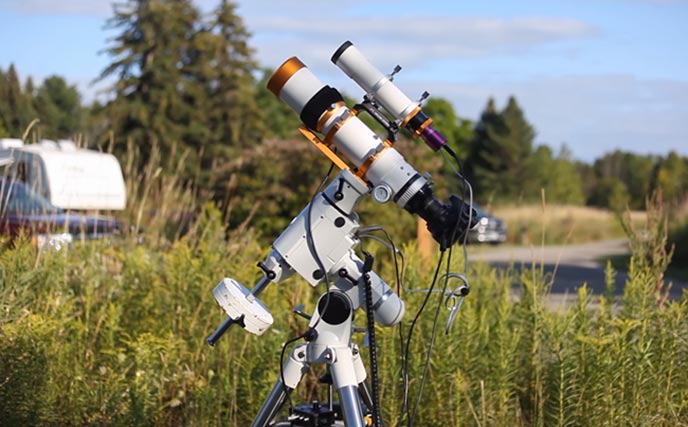
My deep-sky astrophotography setup during my 60-second sub-exposure test of the Orion Nebula.
William Optics RedCat 51 Gen 3 WIFD Specifications
The original RedCat 51 and the current Gen 3 WIFD version share the same general wide-field imaging personality, but the latest model has several important mechanical updates. Here are the current specifications for the RedCat 51 Gen 3 WIFD:
| Feature | RedCat 51 Gen 3 WIFD |
|---|---|
| Optical Design | 4-element Petzval apochromatic refractor |
| Aperture | 51mm |
| Focal Length | 250mm |
| Focal Ratio | f/4.9 |
| Image Circle | 48mm |
| Focuser | William Optics WIFD internal rack-and-pinion focuser |
| Autofocus Compatibility | Compatible with electronic focusers such as the ZWO EAF |
| Focus Travel | 0 to 23mm |
| Adapter Included | Tilt adjuster, rotator, and M54 to M48 adapter |
| Field Flattener | Not required |
| Camera Format | Full-frame, APS-C, and Micro Four Thirds |
| Dovetail | Vixen and Arca-Swiss compatible |
| OTA Weight | 3.9 lbs / 1.77 kg |
| Total Weight | 5.25 lbs / 2.38 kg with rings, dovetail, and saddle |
For context, the original RedCat 51 I reviewed in 2019 used a calibrated helical focuser and weighed about 3.2 pounds. That design was one of the things that made the telescope feel more like a high-end telephoto camera lens than a traditional small refractor.
The current Gen 3 WIFD version feels more purpose-built for the way many astrophotographers image today: with a dedicated astronomy camera, filter drawer or filter wheel, ASIAIR, guide scope, and autofocus routine.
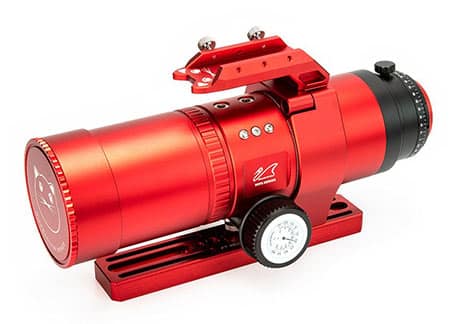
The latest William Optics RedCat 51 (Gen 3 WIFD) is available at High Point Scientific.
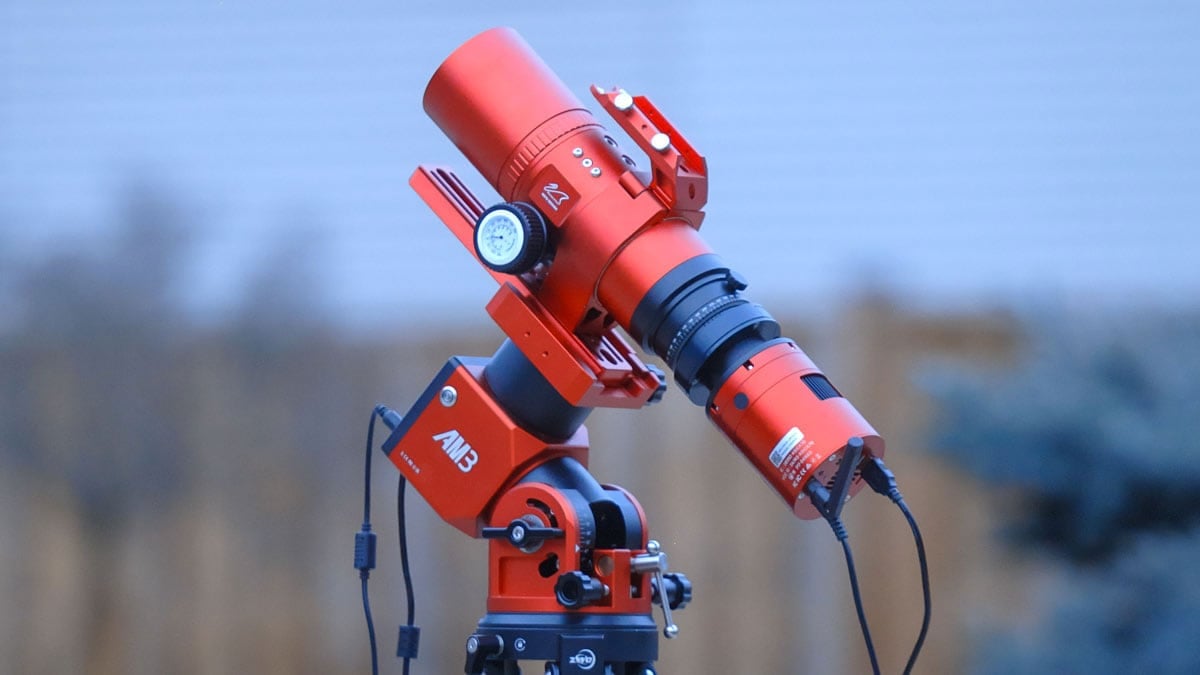
What makes the William Optics Redcat 51 so special? The 4-element Petzval design, unique focal length, and helical focuser. The sleek red finish of the RedCat 51 signals its individuality and charm. It is unlike any other astrophotography telescope on the market and one that I have been waiting to get my hands on since reviewing the early concept designs last year.
While shooting the unboxing video for the RedCat, I concluded that this is, hands down, the most beautiful-looking telescope I have ever seen in terms of style and design. This is a signature quality of the William Optics brand, and they continue to push the envelope with new and dramatic concepts.
Anyone who’s ever purchased a telescope from William Optics will know firsthand that this is a company that cares about the overall user experience and adds extra touches to each telescope package. For example, a stitched ‘cat’ padded carrying case is included with every RedCat, along with a certificate of inspection and manufacturer’s warranty signed by William himself.

Looking for a larger ‘Cat? The William Optics RedCat 61 was introduced in May 2023 and now features a patented WIFD internal focuser.
The William Optics RedCat 51
The design goals for the RedCat included creating an affordable refractor that uses the highest quality glass and delivers a flat imaging field with unmatched color correction. In this post, I’ll break down the specifications of the RedCat and explain why I think this little quadruplet will be one of the best astrophotography telescopes of all-time.
The RedCat bridges the gap between an astrophotography telescope and a telephoto lens.
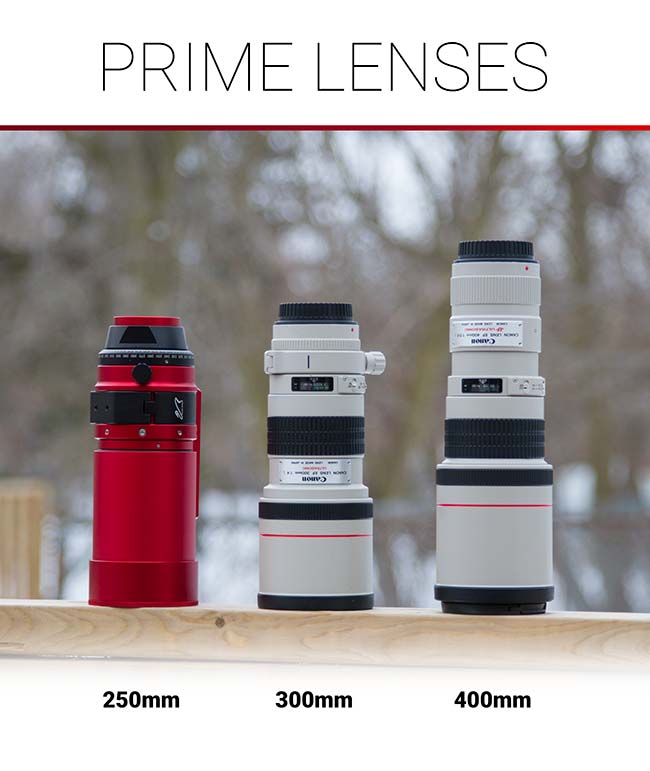
The 250mm focal length and F/4.9 focal ratio mean that the RedCat can be enjoyed as much by wildlife photographers as it is by amateur astrophotographers. The helical focuser makes focusing fast-moving targets such as birds much easier than ever before.
For those of you who don’t know, I am also an avid bird photographer. Once I discovered the clarity and sharpness provided by an apochromatic refractor telescope, I began using my astrophotography telescopes for bird photography. These telescopes were too heavy to use handheld and were challenging to focus on moving subjects.
Roughly 8 years later, William Optics released a high-end apochromatic refractor that targets the wildlife photography market. The RedCat encapsulates two of my greatest passions (astrophotography and bird photography) in a single product.
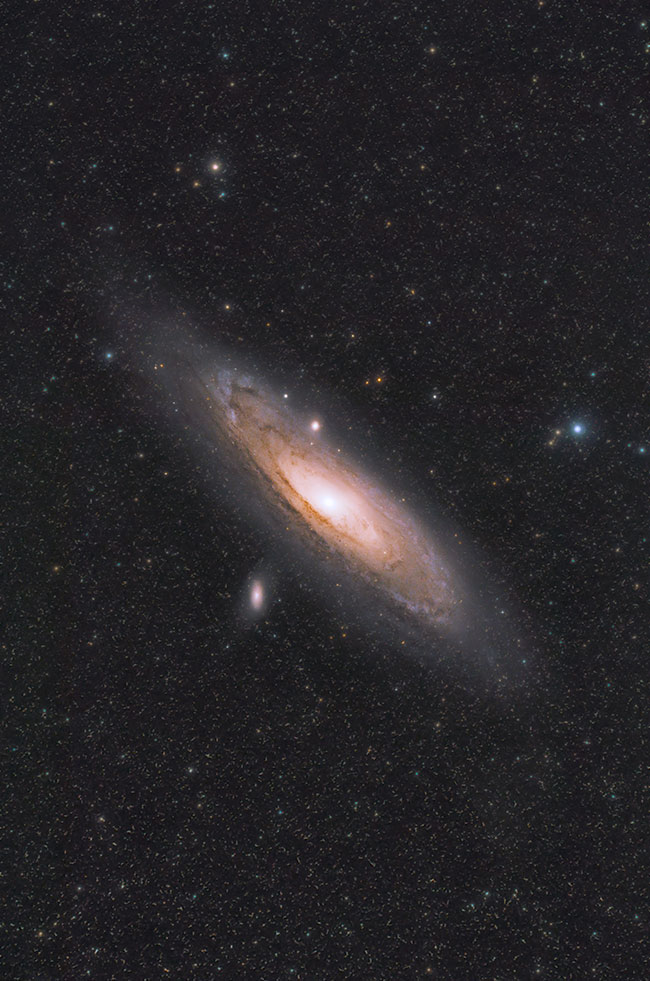
The Andromeda Galaxy captured using the RedCat 51 and a DSLR camera.
The RedCat 51 is small, beautifully designed, and versatile. The early astrophotography image examples shared by William Optics are breathtaking. Aside from looking good and some promising-looking results in terms of performance, the RedCat 51 has some handy features to improve the user experience.
Before I cover items such as the filter slot and modular mounting options, let’s dive into the core specifications of the RedCat 51.
RedCat 51 Specifications:
- Optical Design: Petzval Apochromatic Refractor (4 elements in 3 groups)
- Lens Type: Prime
- Diameter: 51mm
- Focal Length: 250mm
- F-Ratio: F/4.9
- Weight: 3.2 lbs
- Focuser: Calibrated Helical
- Mounting Style: Vixen/Arca-Swiss
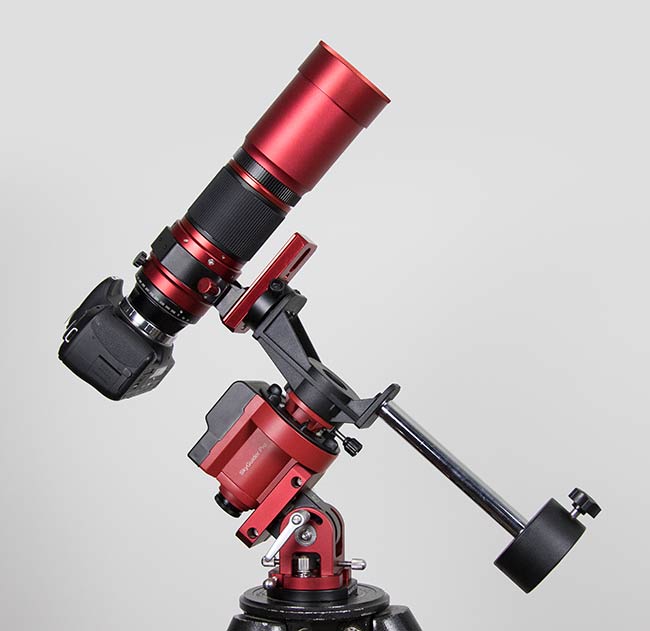
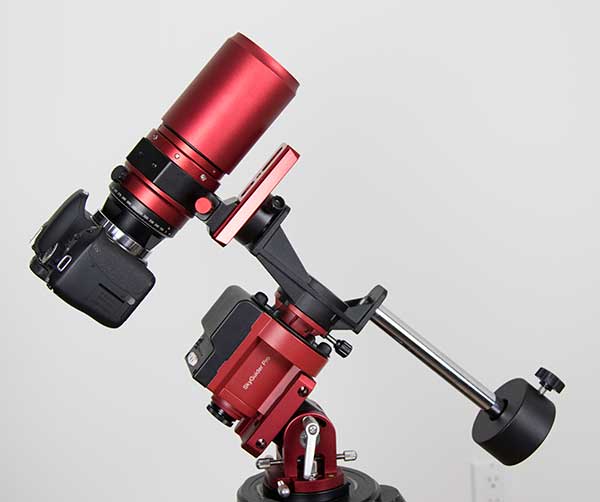
The RedCat 51 mounted to an iOptron SkyGuider Pro.
Focal Length: 250mm
First off, the RedCat 51 has a focal length of 250mm. What does this mean for astrophotography? It means extremely wide-field deep sky images. If you consider a 480mm refractor to be a wide-field ‘scope, the RedCat is nearly twice as wide!
Massive deep-sky objects such as the Carina Nebula will fit within the image frame in their entirety. Large nebulae that traditionally fill the frame in a typical wide-field setup are captured with plenty of surrounding space and additional star clusters and nebulae in the frame.
Until the RedCat came along, 250mm was a focal length reserved for those who employ a prime camera lens for astrophotography. Now amateur astrophotographers have the option to use a flat-field APO that easily mounts on their existing equatorial mount for deep-sky imaging at this magnification range.
For wildlife photography, this focal length is also quite useful, especially given the all-important f-ratio of this lens. 250mm is enough reach for many larger birds such as hawks and owls, but it will require a steady hand and gimbal head for the best chance of a sharp shot.
For nature and wildlife photography, the RedCat 51 has a minimum focus distance of 3.7 meters. This can be improved to under 3 meters with the use of the 2″ extension nose piece from the diagonal. By adding additional extension tubes, the RedCat can be used for macro photography of small insects.
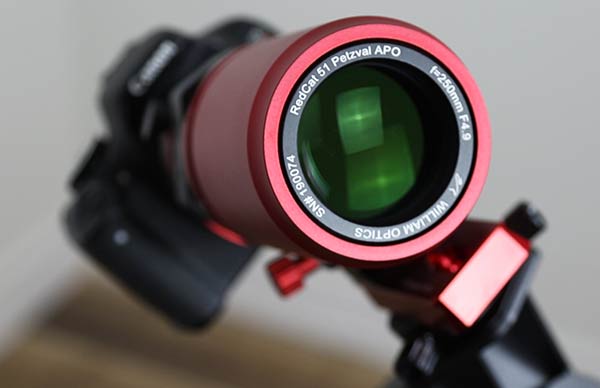
The FPL-53 Objective lens of the RedCat 51 Petzval APO.
Focal Ratio: F/4.9
When it comes to photographing (or filming) birds, it’s all about light. Fast shutter speeds are required to capture a bird in motion, and this demands a fast lens to adequately expose the shot. F/4.9 isn’t incredibly fast in the world of camera lenses, but when you consider that this is essentially a refractor telescope, it’s about as much light-gathering power as you’ll find on the market.
For comparison, the RedCat is almost a stop faster than the extremely popular Canon EF 400mm F/5.6L lens. William Optics has released some incredible wildlife footage shot using the RedCat, a testament to this quality. Low-light situations, such as a cloudy day, made wildlife photography tough with my old F/6 William Optics Z72. The speedy RedCat is a completely different animal.
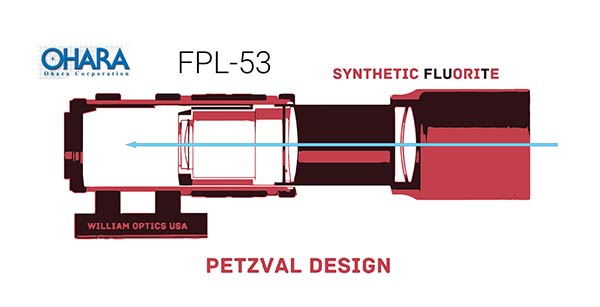
51mm Lens Diameter
As the name suggests, the RedCat has a 51mm objective lens. In the world of astrophotography telescopes, this is absolutely tiny! If you thought the adorable little Zenithstar 61 was cute, wait until you see the RedCat. But this kitten has claws (I couldn’t resist).
The 51mm objective lens on the RedCat is made from top-quality FPL-53 and FPL-51 glass (synthetic fluorite), which produces a flat-field image from corner to corner, even when using the full image circle with a full-frame camera.
The small size of the RedCat means keeping the overall weight to a minimum, despite the extra glass. The RedCat 51 weighs only 3.2 pounds, despite requiring 4 elements across 3 groups. For owners seeking a high-end telescope to mount on a star tracker, the RedCat is an ideal choice.
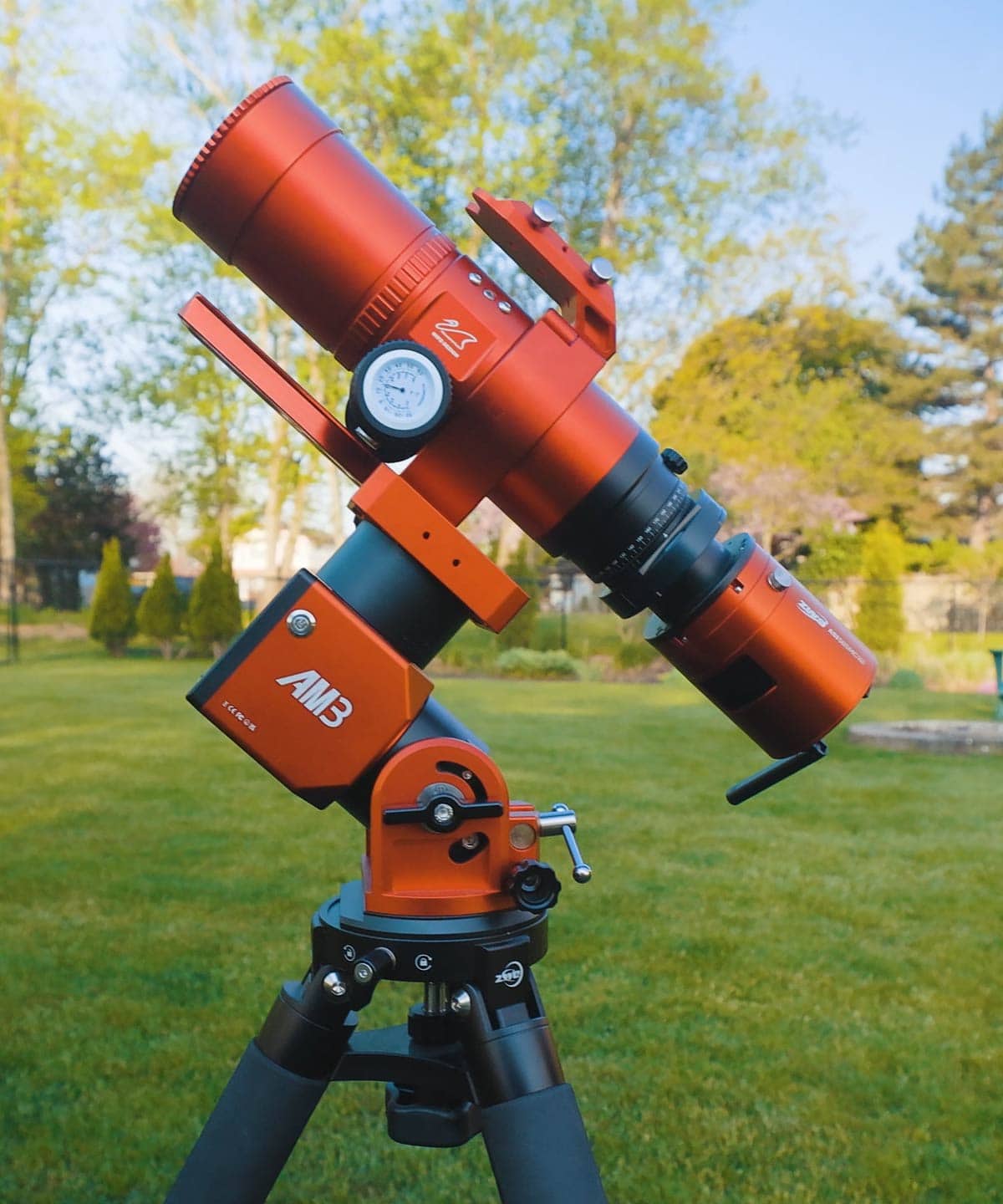
The ZWO AM3 Mount, William Optics RedCat 51, and a ZWO ASI585MC Air camera.
Lens Structure: Petzval
A Petzval lens design involves a low-dispersion doublet, combined with two elements farther down the optical path, to both reduce the telescope’s f-ratio and flatten the image field. There is no need to use a field flattener with the RedCat, adding to its simplicity and practicality in the field.
The Petzval quadruplet lens design is well-corrected and incredibly sharp. You can expect pinpoint stars to the edges of your image. If you don’t believe me, have a look at this image of the Witch Head Nebula taken using the RedCat 51 by Mehmet Ergün.
These traits will surely make the RedCat a popular choice for high-resolution deep-sky astrophotography imaging. Portability and design aside, the RedCat is an affordable option for those looking to own a top-of-the-line astrophotography telescope. A comparable refractor on a much larger scale is the Takahashi FSQ106.
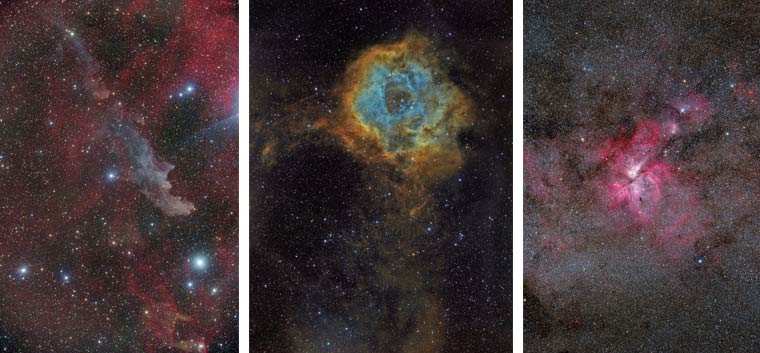
Example images taken using the William Optics RedCat 51 on Flickr.
In mid-February 2019, Wei-Hao Wang shared an incredible image of the Running Chicken Nebula using the RedCat 51 with a modified Nikon D800 on Astrobin. The full-size image really showcases the color correction and flat-field qualities of the optics.
I have used this telescope for a number of amazing astrophotography projects from my backyard. Some of my favorite images ever taken include the Lion Nebula in the constellation Cepheus and the Flaming Star Nebula in Auriga.
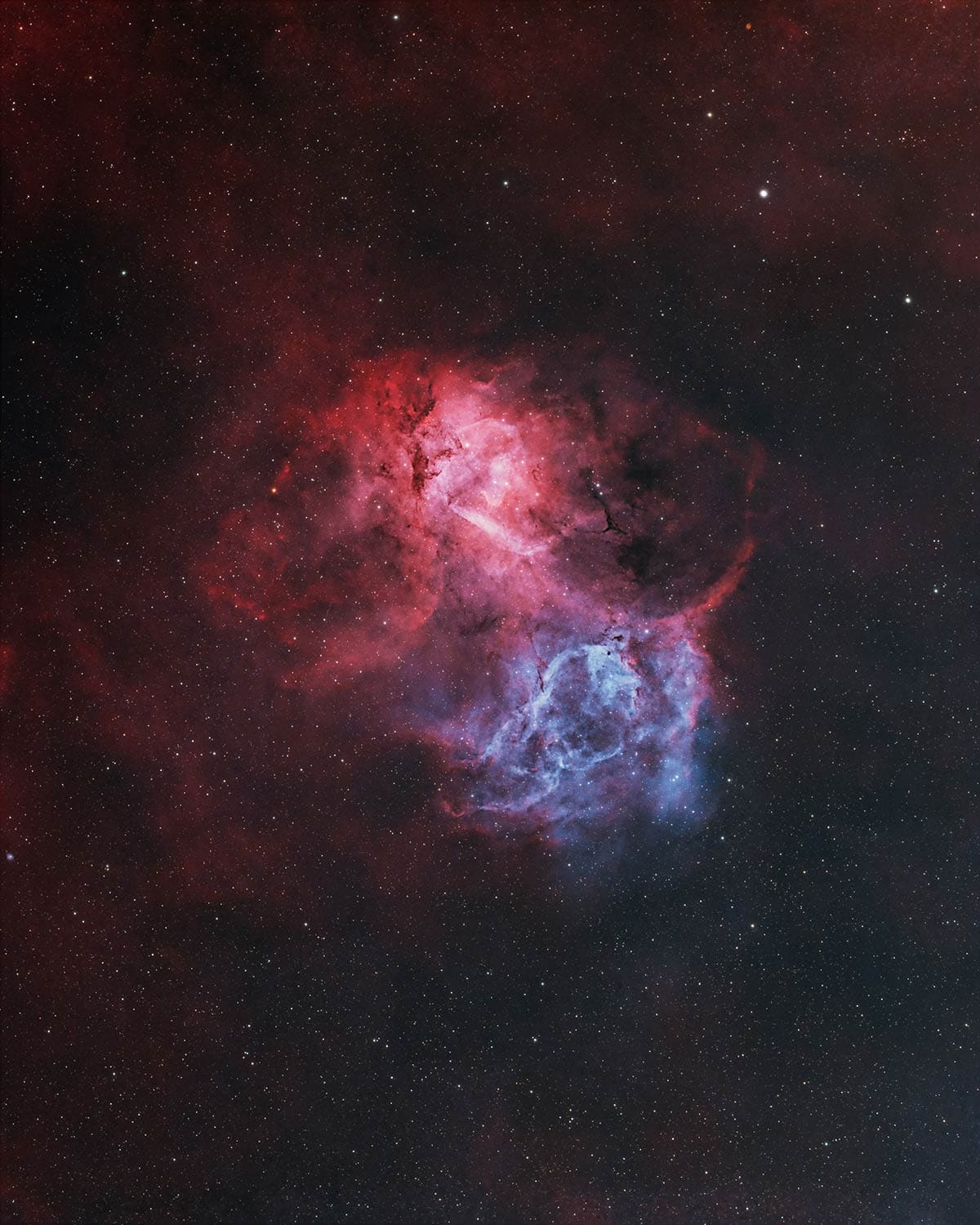
The Lion Nebula (RedCat 51 + ZWO ASI2600MC Air)
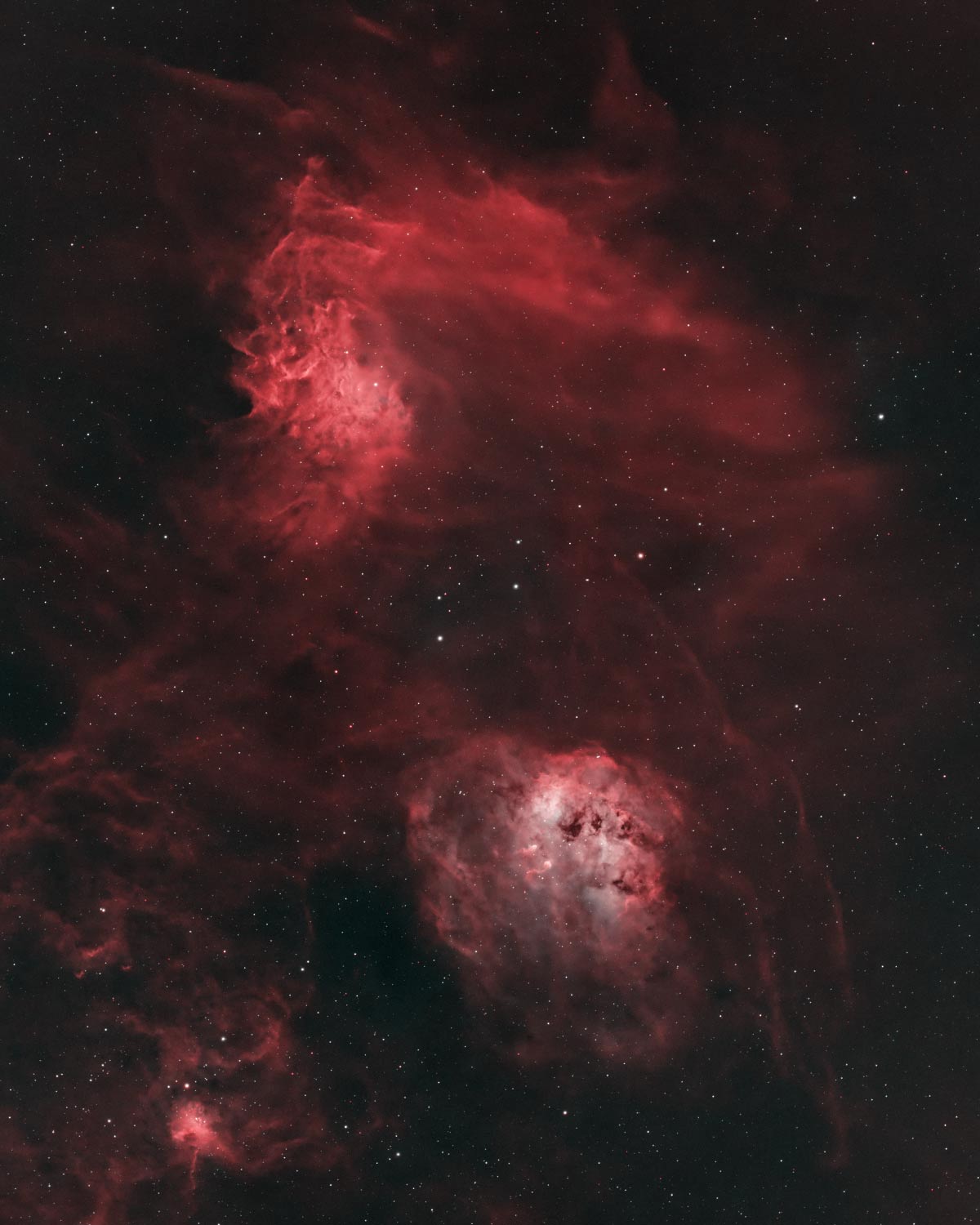
The Flaming Star Nebula and Tadpoles Nebula in Auriga.
Original RedCat 51 vs Gen 3 WIFD Focuser
One of the defining features of the original RedCat 51 was its helical focuser. At the time, this was a major part of the telescope’s charm. It made the RedCat feel more like a premium camera lens than a typical imaging refractor, and it worked beautifully for manual focusing during both astrophotography and daytime wildlife photography.
For DSLR astrophotography, the helical focuser was simple, precise, and fun to use. You could quickly use the built-in Bahtinov mask, adjust focus by hand, lock it down, and start imaging. For daytime use, especially for birds and wildlife, the helical focuser made the RedCat feel far more natural than the rack-and-pinion focusers found on most small refractors.
The trade-off was autofocus. The original RedCat 51 was not as straightforward to automate because the helical focuser did not accept a standard electronic focuser as a traditional rack-and-pinion focuser would. Many owners used custom brackets, belt-driven adapters, or third-party autofocus solutions to connect a motorized focuser.
The current RedCat 51 Gen 3 WIFD version is a different story. William Optics replaced the original helical focusing system with its internal WIFD rack-and-pinion focuser. This design is better suited to modern deep-sky imaging setups because it keeps the telescope compact and rigid while making electronic focusing much easier.
What changed? The original RedCat 51 was excellent for manual focusing and had a unique camera-lens feel. The current Gen 3 WIFD model is better for automated astrophotography because it works more naturally with autofocus systems like the ZWO EAF.
Autofocus with the RedCat 51
If you are building a modern automated imaging rig, the Gen 3 WIFD focuser is one of the most important upgrades to the RedCat 51. Electronic autofocus is extremely useful during long imaging sessions because temperature changes can slowly shift focus throughout the night. With software-controlled autofocus, your system can refocus between filter changes, after a temperature drop, or at regular intervals while you sleep.
On the original RedCat 51, autofocus usually meant finding or building a custom solution for the helical focuser. On the current RedCat 51 WIFD, the process is much more straightforward. The focuser is designed with electronic motor compatibility in mind, which makes it a much better match for popular autofocus systems like the ZWO EAF.
This does not change what made the RedCat 51 special in the first place. It is still a compact, fast, flat-field wide-field refractor with a 250mm focal length. The difference is that the latest version is much easier to integrate into a fully automated astrophotography setup.

Some of the deep sky images I have captured using the William Optics RedCat 51 and a DSLR camera.
Field Rotator
The field rotator resembles the face of a luxury-brand watch, which is exactly the inspiration William Optics drew on when designing the rotator markings on the RedCat. Each degree of the field rotator is marked to aid in creating a mosaic. There is a small white arrow on the M48 adapter to use as a reference point when setting your camera orientation.
This level of attention to detail is noteworthy, as this subtle feature indicates input from actual amateur astrophotographers’ needs.
You’ll find that many of the hidden “extras” on the RedCat 51 follow this mindset as well, including the small white Teflon rings inside of the mounting ring. This small, yet thoughtful detail allows the user to smoothly rotate the imaging train.
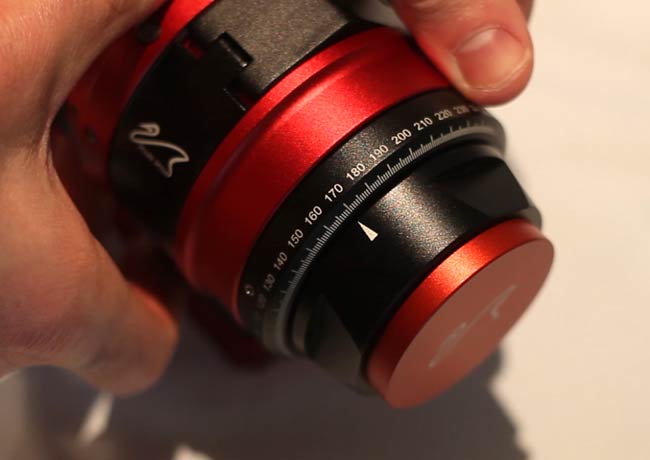
The field rotator includes markings for each degree of rotation.
M48 Thread
The M48 thread adapter allows you to fasten your DSLR or dedicated astronomy camera to the RedCat for astrophotography or daytime photography. The imaging circle completely covers a full-frame camera sensor for edge-to-edge illumination with a flat field.
Speaking of covering your camera sensor, the M48 adapter includes an internal thread for 48mm (2-inch) threaded filters. This is a convenient location for your favorite light-pollution or narrowband astrophotography filter.
Owners of Canon, Nikon, Sony or Pentax cameras will be happy to know that their camera bodies are a perfect fit for the RedCat with the necessary t-mount and adapter hardware. The M48 end adapter must be removed to apply the matching red William Optics erecting diagonal.
Mounting Base and Lens Collar
The base of the RedCat 51 was specially designed to avoid adding extra weight to the telescope, yet provides a reliable platform for the demanding positions of astronomical imaging. The matching red low-profile dovetail bar can be used with either a standard Vixen mount saddle or the photography-based Arca-Swiss style mounting bracket.
The dovetail plate includes standard ¼ inch threads and simply needs to be flipped over to accommodate your desired mounting configuration. Deciding on the configuration of this aspect of the telescope will depend on your primary use of the RedCat.
The optical tube itself can also rotate easily thanks to the lens collar and release knob. This is similar to the design you’ll find on high-end telephoto camera lenses but with 2 extras. There are modular mounting options on the lens collar. Here, you can fasten accessories such as a shotgun microphone or red dot finder scope.
Integrated Bahtinov Focusing Mask
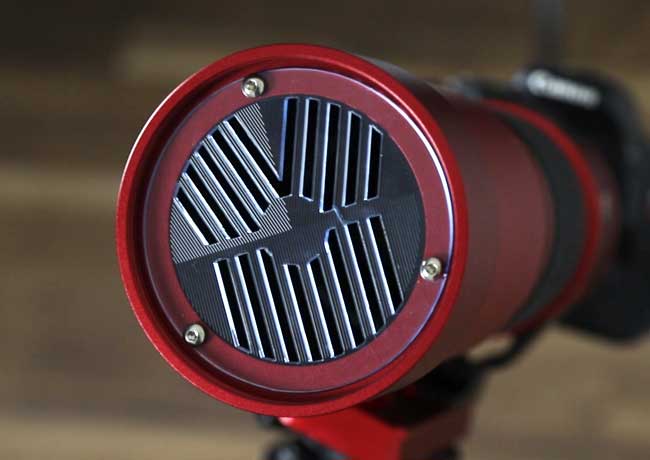
To top things off, William Optics has included their signature diffraction spikes Bahtinov mask in the lens cap. This feature is handy for DSLR astrophotography imaging sessions when you need to quickly and accurately confirm the focus of your target. You simply need to aim the telescope towards a bright star to create the diffraction spike pattern.
The elongated star patterns displayed when pointed at a bright star create an obvious and distinct guideline to reference when using adjusting the helical focuser. The clear acrylic design of these masks makes them much easier to use than the traditional opaque black Bahtinov masks.
You may have also noticed the color-matched steel William Optics Vixen-style base attached to the iOptron SkyGuider Pro. This base mount also fits the Sky-Watcher Star Adventurer Pro and adds some serious stability to and improved aesthetics over the original base. The package also includes a 4.5″ red extension bar for the counterweight, which I regretfully forgot to install before filming the video.
Comparable Telescopes
You may be asking yourself whether there are alternatives to the RedCat to consider that offer a comparable optical design and size. Although the Vixen FL55 does not share a Petzval design, it is an ultra-wide-field fluorite refractor with a 55mm lens diameter.
The focal length of the Vixen FL55 is 239mm, with a focal ratio of F/4.3 (when used with the optional reducer). The Vixen model does not include a carry case or Bahtinov mask in the price, and requires an additional reducer for maximum usefulness.
The Takahashi FS-60 CB is also a direct competitor of the RedCat, although its design mirrors the WO Z61 more so than the RedCat 51. This is another compact fluorite refractor, featuring a focal length of 335mm at F/5.9.
The Takahashi name carries a premium price. The optical performance of this 60mm refractor is indeed impressive, yet it lacks the unique features of the RedCat’s design in a complete package.
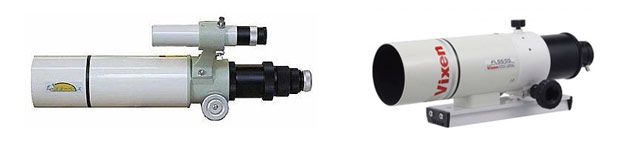
RedCat 51 Alternatives, the Vixen FL55 and Takahashi FS-60CB.
Autofocus
One of the quirks of the original William Optics RedCat 51 was its helical focuser, which made autofocus less straightforward and often required a custom bracket, belt-driven adapter, or third-party solution to connect an electronic focuser.
With the latest RedCat 51 WIFD version, that process is much simpler thanks to its updated internal focusing design, which is far better suited to standard electronic autofocus setups like the ZWO EAF. For imagers who rely on automated focusing throughout the night, this is a meaningful quality-of-life improvement over the original design.
Accessories
The package William Optics sent to me included a number of extras, including the Canon EOS T-Mount adapter, and the dedicated erect image diagonal. The diagonal will hold a 1.25″ eyepiece for visual observing or spotting scope purposes. The Canon EOS T-ring included with the RedCat is the most stylish-looking camera adapter I have experienced to date.
The diagonal is of little importance to those who will use the RedCat 51 exclusively for deep sky astrophotography, but it is a nice option for those who like the choice of using this telescope for visual use. This is of particular interest to anyone who purchases the RedCat with plans on using the telescope as a spotting scope for wildlife photography.
The RedCat can be mounted to a traditional photography tripod for crisp views at 250mm.
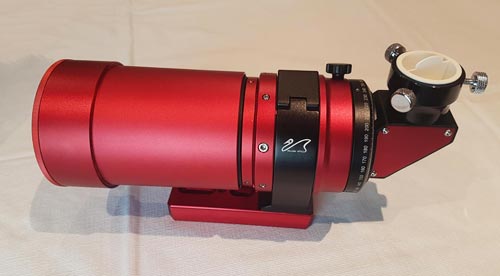
The dedicated RedCat erect image diagonal fastened to the telescope.
Removing the M48 Adapter
To install the dedicated erect image diagonal on the RedCat 51, remove the 48mm adapter. Use a small Allan key (0.7mm) to unscrew the three grub screws just enough so that you can turn the M48 adapter counter-clockwise with the field rotator locked. You should eventually feel the thread release so you can unscrew the adapter.
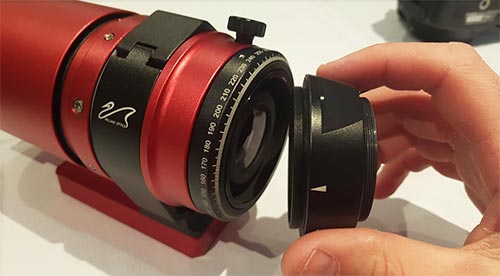
Remove the M48 Adapter on the RedCat to fasten the diagonal or install a 2-inch filter.
The diagonal can then be threaded directly to the base of the field rotator for visual observation or spotting-scope use.
The 48mm filter threads are also located between the M48 adapter and the field rotator. This is a discreet location in the imaging train to thread a light pollution filter inside the RedCat 51.
Who Is the RedCat 51 Best For?
The William Optics RedCat 51 is best suited for wide-field deep-sky astrophotography. At 250mm, it is ideal for large nebulae, wide star fields, and large targets that are difficult to frame with longer-focal-length telescopes. Targets like the Andromeda Galaxy, North America Nebula, Rosette Nebula, California Nebula, Heart and Soul Nebulae, and large Milky Way regions are exactly where this telescope shines.
It is also a great match for portable mounts and star trackers. The short focal length is forgiving, the optical tube is compact, and the Petzval design removes the need to calculate a precise flattener spacing distance. For beginners, that simplicity is a big deal. For experienced imagers, it means a reliable wide-field setup that can be packed, balanced, and imaged quickly.
The RedCat 51 is not the telescope I would choose for small galaxies, tiny planetary nebulae, or high-resolution lunar and planetary imaging. It is simply too wide for those targets. But for large emission nebulae and clean, wide-field deep-sky images, it remains one of the most practical and enjoyable small refractors available.
The Bottom Line
When I first reviewed the William Optics RedCat 51 in 2019, it felt like something completely different. It was small, beautifully designed, sharp across the field, and had a personality that made it stand out in a sea of compact refractors.
Years later, the RedCat 51 is no longer just a clever new idea. It has become one of the most recognizable wide-field astrophotography telescopes available, and the current Gen 3 WIFD version shows how much the design has matured.
The original helical focuser gave the RedCat 51 its camera-lens feel and made it a joy to use manually. The latest WIFD model is better suited to the way many astrophotographers image today, with dedicated astronomy cameras, filter drawers or filter wheels, autofocus routines, and automated imaging sessions controlled by devices like the ASIAIR.
If you want a compact, premium wide-field refractor for large nebulae, star fields, and travel-friendly astrophotography, the RedCat 51 remains one of the easiest telescopes to recommend. It is not the right tool for small galaxies or high-resolution planetary imaging, but for wide-field deep-sky work, this little APO still stands in a category of its own.
Related Posts:
- William Optics RedCat 51 Official Product Page
- William Optics RedCat 91 Review: The Big Cat
- William Optics Pleiades 68 Review
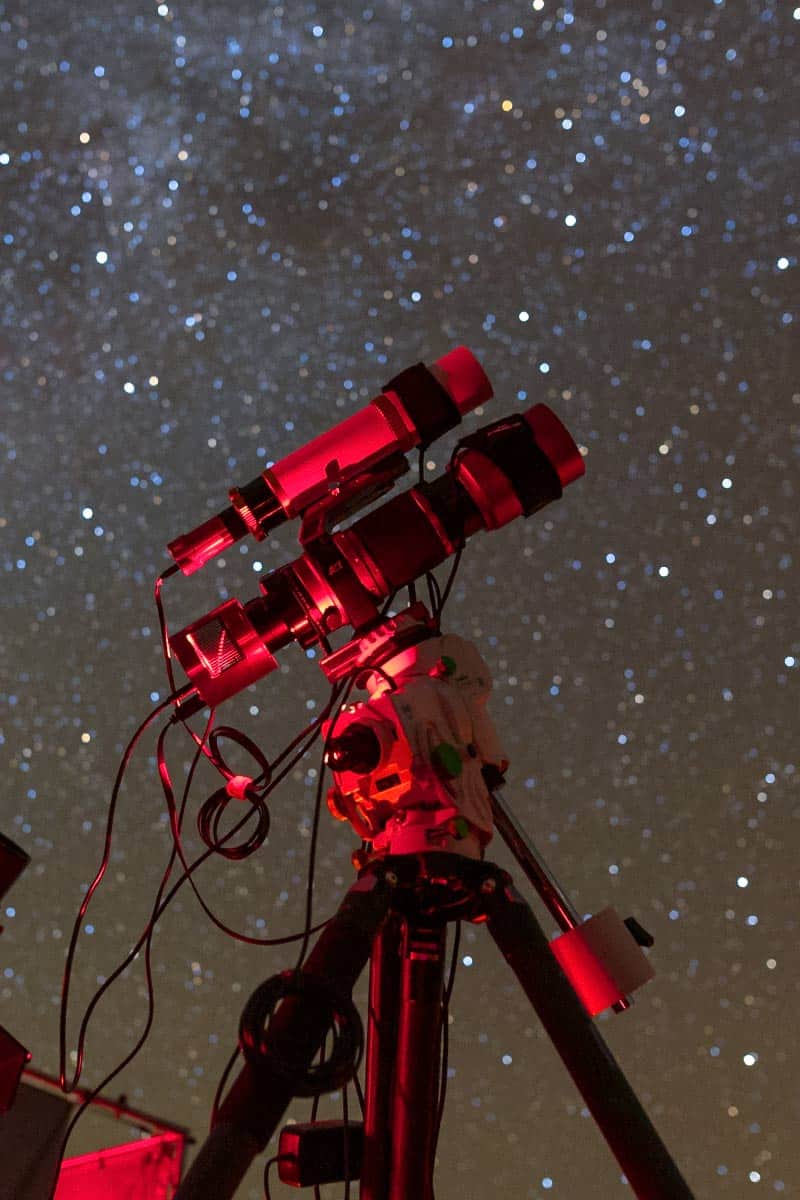
The RedCat 51 under a Bortle Scale Class 1 Sky.
Hi Trevor, thanks for the introduction. I just start astrophotography, and prepare to buy my first telescope. I was looking at WO Z61. But after saw RedCat 51 from you open box video, I cannot make my decision now. I will definitively buy a lager telescope in future, and then the smaller one may be used as guide scope. Z61 and RedCat 51 have similar size and weight, I don ‘t know if only for astrophotography, what is your suggestion?
Hi Yuntao – The Z61 and RedCat 51 are definitely some fantastic first astrophotography telescopes to consider. They both have very wide FOV’s and take impressive, flat field images with excellent color correction. Both use FPL-53 glass in the objective lens as well – which is top of the line. They even weigh the same – so perfect for a smaller mount like the SkyGuider Pro. You will need to remember to get the Flat61 field flattener for the Z61 for flat-field images with a full frame DSLR. I think the final decision comes down to the types of targets you want to capture. The Z61 will pull objects in a little closer! Glad to hear you are getting into this amazing hobby – clear skies!
Thank you. I decide to buy a Z61, seems with a removable FF, it is easier to add an eyepiece for visual observation.
Hello Trevor, I have been looking for something like this I can travel with. What is required to connect an eyepiece to it and use it for visual astronomy?
Thanks, awesome videos.
Thank you for your continuing journey. It helps us on the entry to this journey. I look at your pages often as I meander from landscape photography… to my daughter’s sports photography… to now needing a new passion with an Edge 11 HD sitting in my garage for a few years. Love it. Keep it up, bro.
I like what I see in the Red Cat 51 except for one major issue, lack of a solution for using an auto-focuser, a must have for me as I explore imaging more. How can you fashion an auto-focuser on a helical set-up, can it be done?
I believe there is a third-party adapter available for SONY DSLR’s to autofocus with the RedCat. I will gather more information on this ASAP and add it to the post. I agree, autofocus is extremely useful for wildlife photography!
Thank you Todd! I really appreciate that. I am the same way – love landscape, wildlife, and even sports photography. Ashley plays baseball and it is a ton of fun capturing the action. Clear skies man.
You will love that telescope!! Congrats 🙂
Have you seen any diffraction effects similar to those seen with the bright stars on the Witch’s Head Nebula image you linked to? This is a very intriguing option for me, but seeing the artifacts in that image gives me some pause. Thanks!
Your review of the Z 61 convinced me that I had to have it. Now you’ve convinced me that I have to have this. I’ll figure out which one I need, but my wife would appreciate if you would stop making equipment videos!
Seriously – this is a beautifully-made scope, and it looks like a steal when you compare the price of similar scopes or just about any decent telephoto lens.
Love your review on the Red Cat 51 and was wondering if this would be good for taking pics of the Milky Way.
Hello Trevor-
Great video. I’m almost convinced this is the perfect starter scope but have a question about its applicability for nature photography. Do you have any information on minimum focus? Thanks.
Hi Ted, thank you! The minimum focus distance of the RedCat 51 is 3.7 meters. If you add the 2″ extension tube (nose piece) from the diagonal you can focus less than 3 meters. Cheers!
So, if my calculation is correct, a bit more than 12 feet without the extension tube. That’s very comfortable. Thanks for the info!
Hi i am from italy so first of all sorry for my english.
I d like to ask you if you know when the red cat will be available in italy thanks
Trevor, I finally got serious about astronomy after getting the last kid off to grad school last year, and I’ve been having a blast imaging anything that twinkles, orbits, or glows with my 8” SCT and my DSLR with a basic telephoto zoom lens. I’m about to buy a really small, lightweight refractor that I can use with the DSLR on my skytracker. Assuming I make the choice based solely on use for astro imaging, and I don’t need the wider field of view, is there any reason to favor the Redcat over the Z61? I’m not asking you to make the choice for me, but I want to make sure I’m not missing anything since I have the Z61 ahead in pretty much every category for astro (except looks, and the Z61 is no slouch there, either).
Thanks
Hi Trevor, Thanx a lot for yours web site ,I have been reading it for the last 10 days to understand the subject of deep sky imaging. I can afford alll the setup suggested by for deep sky imaging, but your video on red cat has caused confusion .in my decision making. I am just a beginner. I have a sky tracker pro mount . can i use red cat on this mount for deep sky or i will have to buy star guider pro mount. secondly should i go for complete set up as suggested by you. It will be so kind of you, if you can spare time to respond.
Thanking you,
Hi Trevor!
Do you think, It’s a good idea to repleace my canon ef 70-200mm f/2.8L with this redcat 51?
I’ll use it only for astrophotography.
Thank you.
Hi David! That’s a great lens for astrophotography – I personally wouldn’t trade it in for the RedCat unless you feel that you want a little more reach from 200mm. There are a LOT of great photo opportunities available to you with the 70-200mm – and you can use the lens correction functions of Adobe Camera Raw to correct any vingetting/abberation/distorted field issues.
Trevor, when using the RedCat 51 on your iOptron SkyGuider Pro, after polar alignment is complete how do you align the scope on your target object? I’ve noticed no finder scope in your videos and with only the RA axis movement I’m curious how you get it into the field of view?
Hi,
do you know what the thread is in the two small holes on the the lens collar? I want to attach a red dot finder scope.
Thanks
Hi,
Between “Red Cat51” and “William Optics Zenithstar 73 APO”, which one I would have the best performance? Thanks and congratulations for your channel!
hello, how do you attach a canon eos m50 to the williams redcat?
The review directions for mounting the image erecting diagonal are not correct for the new modified design RedCats with the tilt adjuster. It’s possible to damage the scope attempting to follow them with the new design. I was stupid enough to do that.
Please direct people to the Williams optics page for the erecting diagonal under the More Information tab at:
https://williamoptics.com/products/diagonals-erecting-prisms/1-25-inch-redcat-erecting-prism-for-redcat-51-only-1
Hey Trevor,
I really enjoy and appreciate the information you provide on your website and YouTube channel. I’m pretty new to astrophotography and have learned a great deal from you. Thanks!
Question, I own a RedCat 51 and just purchased the ZWO ASI294MC-PRO for it. I also own the 2″ Optolong L-eNhance and Optolong L-Pro. I was wondering if you know of and can recommend a 2″ slide in filter holder that would work with that combination. Maybe the one made by ZWO or another brand.
Thanks,
Jay
Trevor
just going to add to the words of thanks for not only helping me finally make the jump and do it right (Spacecat, connected to an unmodified Eos80D, and will be mounted on a Skyguider Pro once the new tripod arrives!!)
Taking the kids out, showing them the moon, capturing Venus and the Pleiades has been amazing, and once my filters arrive, am looking forward to clear skies and late late nights!
I’m now going to go and grab your book so I am properly prepared for those long Deep Sky shots in the coming months of Shelter at Home – hopefully my wife will continue to be gobsmacked and agree to the many years of kit upgrades that will follow 😀
Thank you again
James
Thank you very much for the kind words James! I really appreciate the support. Sounds like you are well on your way 🙂
I’ve been wanting to get into this for a long time and I finally went in on a SpaceCat and Star Adventurer after watching a lot of your videos. Gonna hook my stock 80D up to it and see what I can manage.
Thanks for making great videos and sharing amazing results!
Just wanted to continue the kudos here. Your blog is amazing and its been the most helpful thing out there on the web.
I pulled the trigger on a Redcat yesterday and getting it shipped today! I also am going with the Sky-Watcher Star Adventurer that I’m going to try and put on my Manfrotto base.
A few questions for you:
– What is the best “all purpose” light pollution filter that will work with the Redcat?
– Do I need any adapters or accessories if I am trying to use the Redcat with my Nikon z7?
Hi Trevor,
first of all a big compliment on your great posts and videos and for sharing your experience. Your photo editing guide great as well! You convinced me to get into astrophotography with your videos. I’ve only been in it for a few months, but it’s fun! I find the RedCat extremely interesting, because it is very light and delivers a super quality. What is your opinion about the combination with a ZWO 183 MC Pro? The small pixels in combination with the focal length lead to a better imaging performance and the high crop factor makes the field of view very interesting… I have a few telephoto lenses up to 400mm and the first scope is an Edge HD 800 with 0.7 reducer. With a Modified EOS7D, the ZWO183 (my first CCD) and persepectively the Eos Ra i would get a very large focal length range without having to buy several telescopes. I would be grateful for an estimation from your side. Clear skies and stay active!
Martin
Hi Trevor, I have always been a fan and an avid subscriber! Just a quick question, you mentioned that one must need a Field Flattener for the Z61, “for full frame sensor”, but if you are using a crop sensor DSLR, will the field flattener still be required? Hope to get your thoughts on that. Thank you and more power
Long time terrestrial photographer but now wanting to photograph the night sky.
What do you think of using a Nikon 300mm 2.8 VR lens with a D850? The weight totals 8.5 lbs so that should work with my new Star Adventurer.
The other lens I have is the Nikon 70-200 2.8 which is lighter.
Thank you
Hi Trevor
Thanks for the review. I am planning to buy a Redcat 51 for my Pentax K-500. I believe a T ring adapter of 48 mm is also necessary. I d like to know if the scope fits on Sky watcher star adventurer easily or does it have to have another adapter for it?
Regards
Hi trevor, ive been watching your tutorials for sometime and in one of your videos on the ioptron skytracker pro you mentioned that a small telescope can be used on this mount with a counter weight.
I’m currently using the skytracker pro for tracking the sky and I’m really wanting to add the redcat 51 telescope to my set up for close ups of the horse head nebula and the andromeda galaxy.
Will I be able to use the redcat 51 telescope with my canon 200d camera mounted on to the skytracker pro with a counter weight without much issues as weight is a little concern as don’t want to damage the motor inside my sky tracker.
Thanks for the fantastic review Trevor! It was your review (and further research) that made me decide to pull the trigger and get a RedCat 51 last Fall; peak pandemic time so perfect for an outdoor, mainly solo hobby. Since I was a teenager, I’ve wanted to get into astrophotography and am finally in a position (and location!) where I can. Thank you for helping me decide on this phenomenal telescope, and for the plethora of reviews and how-to’s that you post. In fact, I needed to reference this review recently after getting a light pollution filter (to figure out how to install it).
Hey Trevor! I really love your channel so much. It’s been super helpful in the research I’ve been doing to hopefully begin doing astrophotography someday. My question is, when connecting a camera to the RedCat 51 ( or any telescope in general ) how do you calculate the magnification your getting?
Hi Trevor, pretty good review!
Do you know the exact name of the required TechArt adapter for Sony?
Is it the LM-EA7 for Leica M Lenses on Sony Cameras?
Regards from Germany!