
What is a Reflection Nebula?

People often recognize nebulae as the bright, colorful clouds seen in astrophotography images. While some nebulae produce their own light, others become visible because nearby stars illuminate the dust around them.
These are reflection nebulae. They often appear as soft blue clouds surrounding bright stars, with delicate wisps of dust that become more noticeable in long-exposure photographs.
Some familiar examples include the Pleiades star cluster, the Iris Nebula, and Messier 78 in Orion.
In this article, we’ll explore what reflection nebulae are, why they often appear blue, and share some examples and tips for observing and photographing them.
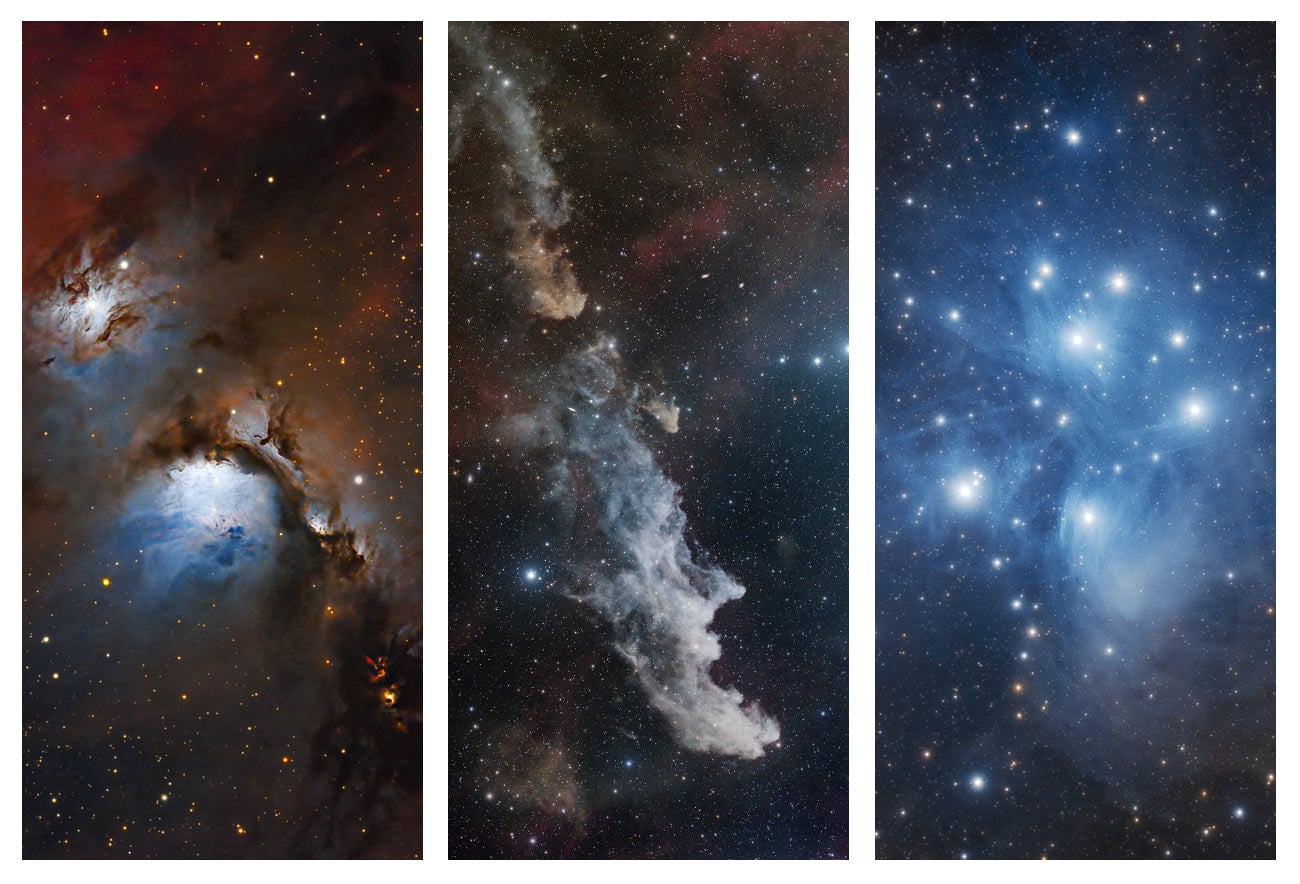
Examples of reflection nebulae captured by Trevor Jones using a camera and telescope.
What Is a Reflection Nebula?
A reflection nebula is a cloud of interstellar gas and dust that becomes visible when nearby stars shine light on it.
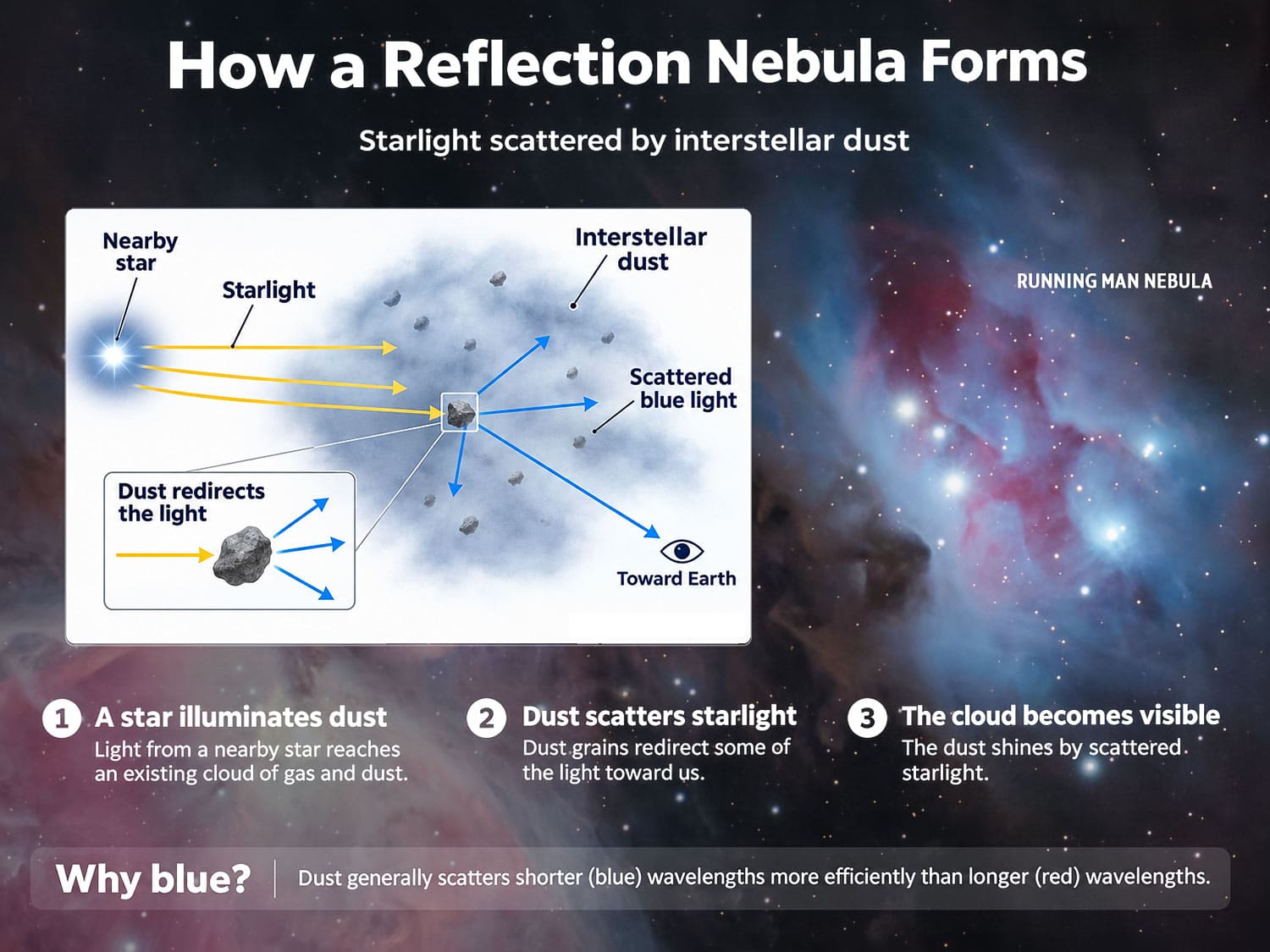
Unlike emission nebulae, which produce their own visible light, reflection nebulae are illuminated mainly by starlight. Tiny dust particles within the cloud scatter that light in different directions, including toward Earth, allowing us to see the nebula.
A helpful example is thinking of a flashlight shining through fog. The fog doesn’t produce its own light, but the beam makes the tiny water droplets visible. In space, starlight illuminates clouds of dust in a similar way.
This process is called light scattering, which gives reflection nebulae their appearance. NASA explains that these clouds become visible because dust scatters light from stars within or near them.
Many reflection nebulae are found near young stars and regions where stars are forming. However, they can also appear when an existing star or star cluster passes through a cloud of interstellar dust. Pleiades star cluster is a well-known example of this.
Reflection Nebula Fast Facts
- Definition: A cloud of gas and dust that becomes visible by scattering light from nearby stars.
- Appearance: Often blue, with wispy clouds and surrounding dark dust.
- Composition: Interstellar gas and tiny dust particles, including carbon-rich and silicate material.
- Source of light: Nearby stars that illuminate the dust.
- Location: Often found near young stars, star clusters, and regions of star formation.
- Famous examples: Iris Nebula (NGC 7023), Pleiades (M45), Messier 78, and Running Man Nebula (NGC 1977).
Why Are Reflection Nebulae Blue?
One of the most recognizable features of reflection nebulae is their blue color. This happens because the tiny dust particles in these clouds scatter blue light more effectively than red light.
Starlight contains different colors, but when it travels through a cloud of interstellar dust, more of the shorter, blue wavelengths are scattered toward us. This is why many reflection nebulae appear blue in photographs.
The European Southern Observatory (ESO) explains this process using observations of Messier 78, one of the brightest reflection nebulae in the night sky.

Not every reflection nebula appears entirely blue. The color we see also depends on the light from nearby stars, the dust within the cloud, and how the image is captured and processed.
In long-exposure astrophotography, reflection nebulae can be surrounded by brown, grey, or darker areas of interstellar dust. These regions are often just as interesting as the bright blue clouds themselves.
What Do Reflection Nebulae Look Like?
Reflection nebulae often appear as faint, wispy clouds surrounding a bright star or group of stars.
Some have a concentrated blue glow, while others spread across a much larger area of the sky. Their appearance depends on the amount of dust present, the stars illuminating it, and the direction from which we’re viewing the cloud.
In astrophotography, long exposures reveal structures that are usually too faint to see through a telescope. These can include soft clouds, thin filaments, and areas where darker dust blocks the light from stars behind it.
Observations of Messier 78 by the European Southern Observatory show how dense clouds of dust can block light from stars and nebulae behind them, creating the dark areas visible in photographs.
The Iris Nebula is an excellent example. Its bright blue center stands out against the surrounding dark dust, which becomes increasingly visible with longer exposure times. The Pleiades, on the other hand, has a much wider area of reflection nebulosity surrounding several bright stars.
Through a telescope, most reflection nebulae appear as faint grey patches rather than the colorful clouds seen in photographs. Some are difficult to observe visually, even under dark skies.
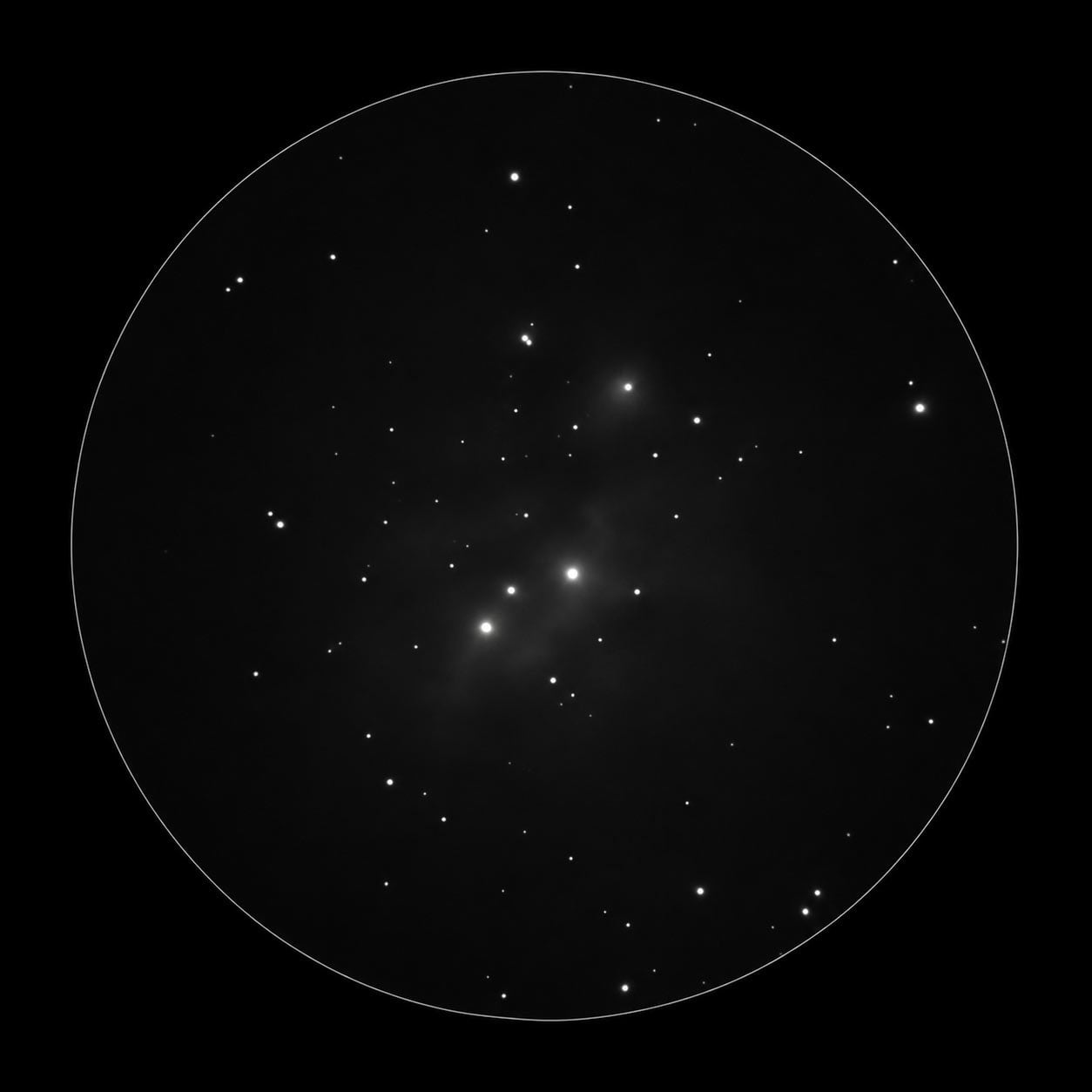
An example of what a reflection nebula (the Running Man Nebula) looks like visually through a telescope eyepiece.
Where Are Reflection Nebulae Found?
Reflection nebulae are found wherever stars illuminate nearby clouds of interstellar dust. They are commonly associated with young stars and star-forming regions, but can also appear when a star cluster passes through an unrelated dust cloud.
These aren’t formal categories of reflection nebulae, but examples of the different environments where they can be found.
Around Individual Stars
Some reflection nebulae occur around individual stars, particularly young stars surrounded by gas and dust left over from their formation. As starlight reaches this surrounding material, the dust scatters the light and makes the cloud visible.
Within Star-forming Regions
Reflection nebulae can also be found within large clouds of gas and dust where new stars are forming. Light from young stars illuminates portions of these clouds, while other areas remain dark and dense. These regions can contain both reflection nebulae and areas where new stars are still developing.
Around Star Clusters
Groups of stars can illuminate larger areas of surrounding interstellar dust. Sometimes this material remains from the stars’ formation. In other cases, the star cluster is passing through an unrelated cloud of dust, which becomes visible as the stars illuminate it.
Best Reflection Nebulae to Observe and Photograph
There are several beautiful reflection nebulae that make excellent astrophotography targets.
Many are faint and require dark skies and longer exposures to capture their full structure. However, some brighter examples can also be observed through amateur telescopes.
Here are a few popular reflection nebulae to consider.
| Catalog / Name | Common Name | Constellation | Best Viewing Months |
|---|---|---|---|
| M45 | Pleiades | Taurus | October–March |
| NGC 7023 | Iris Nebula | Cepheus | May–October |
| M78 | Messier 78 | Orion | December–March |
| NGC 1977 | Running Man Nebula | Orion | December–March |
| IC 2118 | Witch Head Nebula | Eridanus | November–February |
| NGC 1999 | NGC 1999 | Orion | December–March |
*These months are approximate for observers at mid-northern latitudes. Actual visibility depends on your location, sky conditions, and the time of night.
A Closer Look at Famous Reflection Nebulae
Some of the best-known reflection nebulae are popular astrophotography targets because of their colors, surrounding dust, and interesting structures.
Iris Nebula (NGC 7023)
The Iris Nebula is a reflection nebula located in the constellation Cepheus, approximately 1,400 light-years from Earth.
Its bright blue center is surrounded by large areas of interstellar dust, making it one of the most recognizable examples of this type of nebula.
While the illuminated center is relatively bright, the surrounding dust is much fainter and requires longer exposures to reveal its structure.
The Iris Nebula is a great target for a small refractor telescope, especially when you use a field of view wide enough to include the darker clouds surrounding it.
Trevor has photographed the Iris Nebula several times using different cameras and telescopes, including a stock DSLR. You can see those images, along with his equipment and processing tips here.

Pleiades (Messier 45)
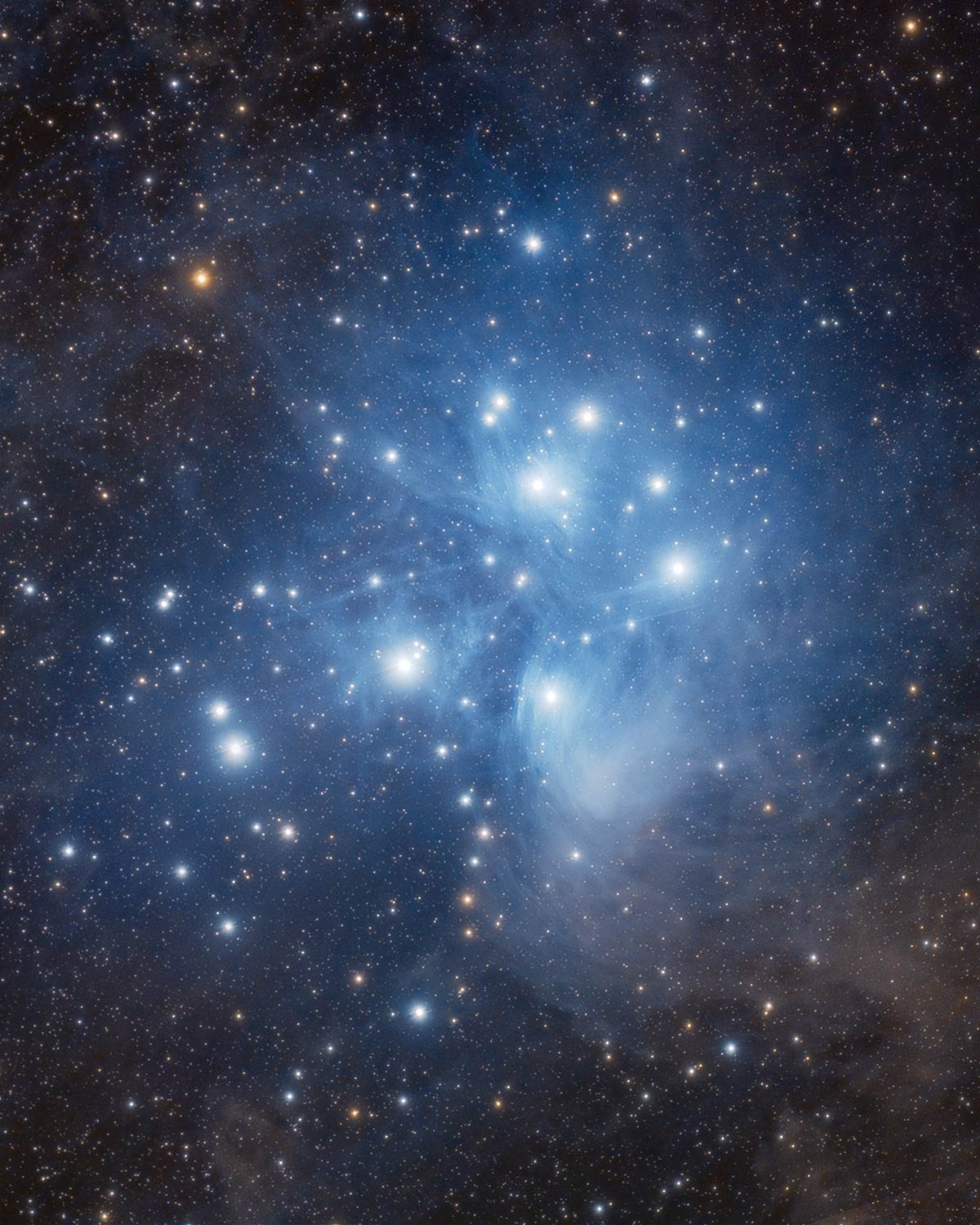
The Pleiades, also known as the Seven Sisters, is a bright star cluster in the constellation Taurus.
The stars themselves are easily visible without a telescope, but the faint blue clouds surrounding them are much harder to see. These clouds are reflection nebulae, created as the bright stars illuminate nearby interstellar dust.
The Pleiades is an excellent astrophotography target for a DSLR or mirrorless camera with a telephoto lens. Its large size makes it especially suitable for wide-field photography, although capturing the faint nebulosity can be challenging.
Messier 78 (M78)
Messier 78 is a reflection nebula located in the constellation Orion, approximately 1,600 light-years from Earth. It is part of the larger Orion molecular cloud complex, a region containing gas and dust where stars are forming.
The nebula is illuminated by young stars within the surrounding cloud, giving it a soft blue appearance. For astrophotographers, M78 is an interesting target because of the darker dust surrounding its illuminated center.

Running Man Nebula (NGC 1977)
The Running Man Nebula is located in the constellation Orion, just north of the much brighter Orion Nebula (M42). Its name comes from the pattern of dark dust that resembles a running figure against the brighter surrounding clouds.
The Running Man is often photographed alongside the Orion Nebula because the two objects appear close together in the night sky. The region contains several reflection nebulae, including NGC 1973, NGC 1975, and NGC 1977.
For beginners, this makes it a useful target for capturing different types of nebulosity in one image.

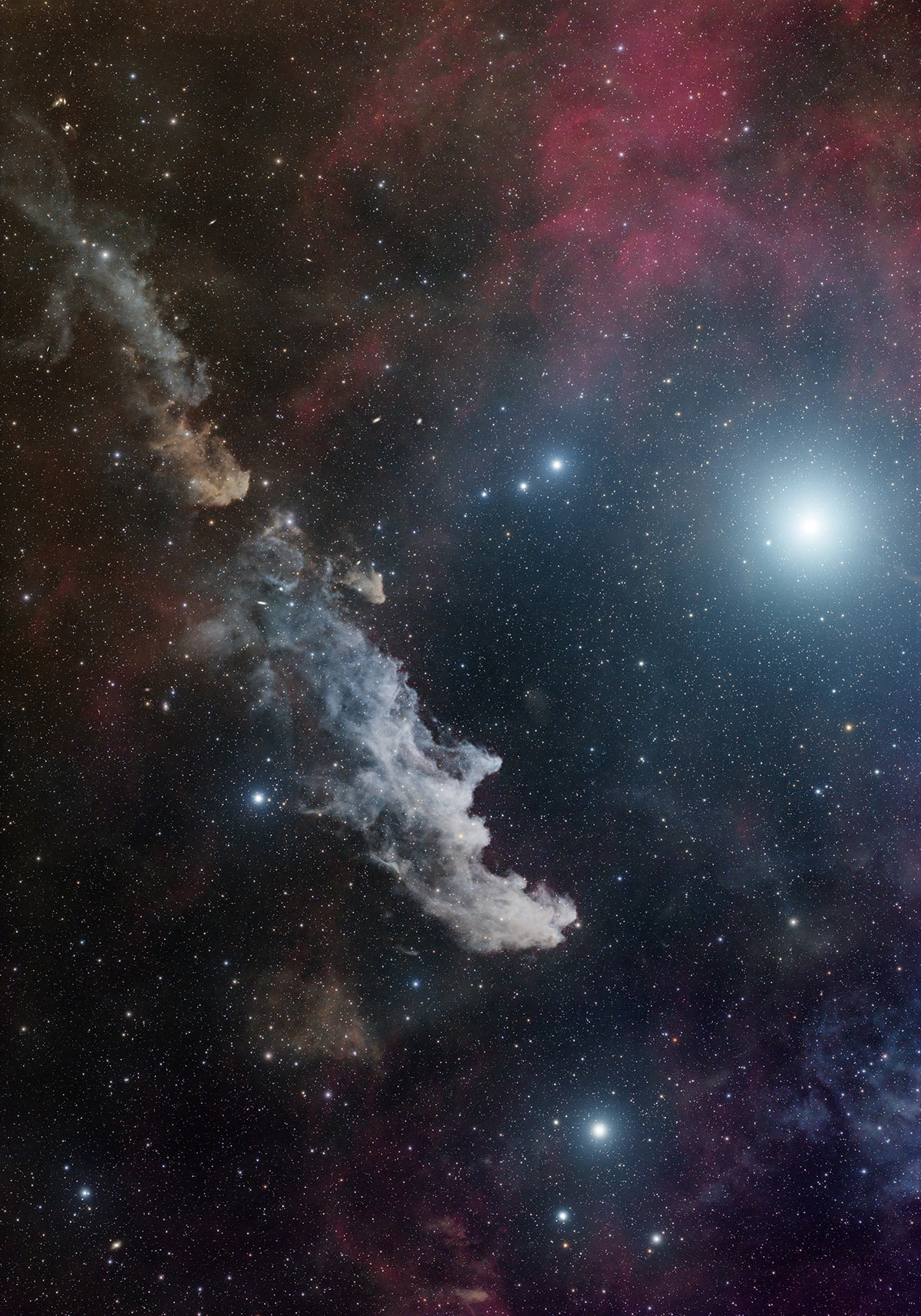
Witch Head Nebula (IC 2118)
The Witch Head Nebula is a large, faint reflection nebula located in the constellation Eridanus, near Orion. Located approximately 900 light-years from Earth, its blue glow comes from interstellar dust scattering light from the nearby star Rigel.
The Witch Head Nebula is a challenging astrophotography target because of its faint appearance and large size. A camera lens or short-focal-length telescope is ideal for capturing the entire nebula, while dark skies are especially important for revealing its delicate structure.
Trevor has photographed this target using several different setups, including a William Optics Pleiades 68 telescope and a dedicated astronomy camera.
Photographing Reflection Nebulae
Reflection nebulae are often difficult to observe through a telescope because they are faint. While some appear as dim grey clouds, long-exposure astrophotography reveals their blue colors and delicate dust structures.
But capturing their faint details can require patience. Unlike bright emission nebulae, which can often be photographed using narrowband filters, reflection nebulae are generally best captured using broadband imaging.
This means collecting light across a wide range of visible colors rather than isolating just a few specific wavelengths.
A DSLR, mirrorless camera, or dedicated astronomy camera (or even a smart telescope) is suitable for photographing reflection nebulae. A tracking mount is also important for collecting the longer exposures needed to reveal their faint details.
Astrophotography Tips
- Collect plenty of exposure time: Reflection nebulae are often faint, and several hours of total exposure time can help reveal more of the surrounding dust.
- Choose darker skies: Because reflection nebulae emit light across a broad range of wavelengths, light pollution can be particularly challenging.
- Pay attention to star brightness: The stars illuminating these objects can be much brighter than the surrounding dust. Avoid overexposing them so their color and detail are preserved.
- Stack your images: Combining multiple exposures reduces noise and helps bring out the faint nebulosity.
- Process carefully: Avoid making the background sky too dark during image processing, as this can hide the faint dust surrounding the nebula.
One of the most interesting challenges when photographing a reflection nebula is capturing more than just the bright blue center.
For example, Trevor’s images of the Iris Nebula show how longer exposures can reveal the surrounding brown and grey dust. These darker areas add depth and structure to the photograph and help show the full extent of the nebula.
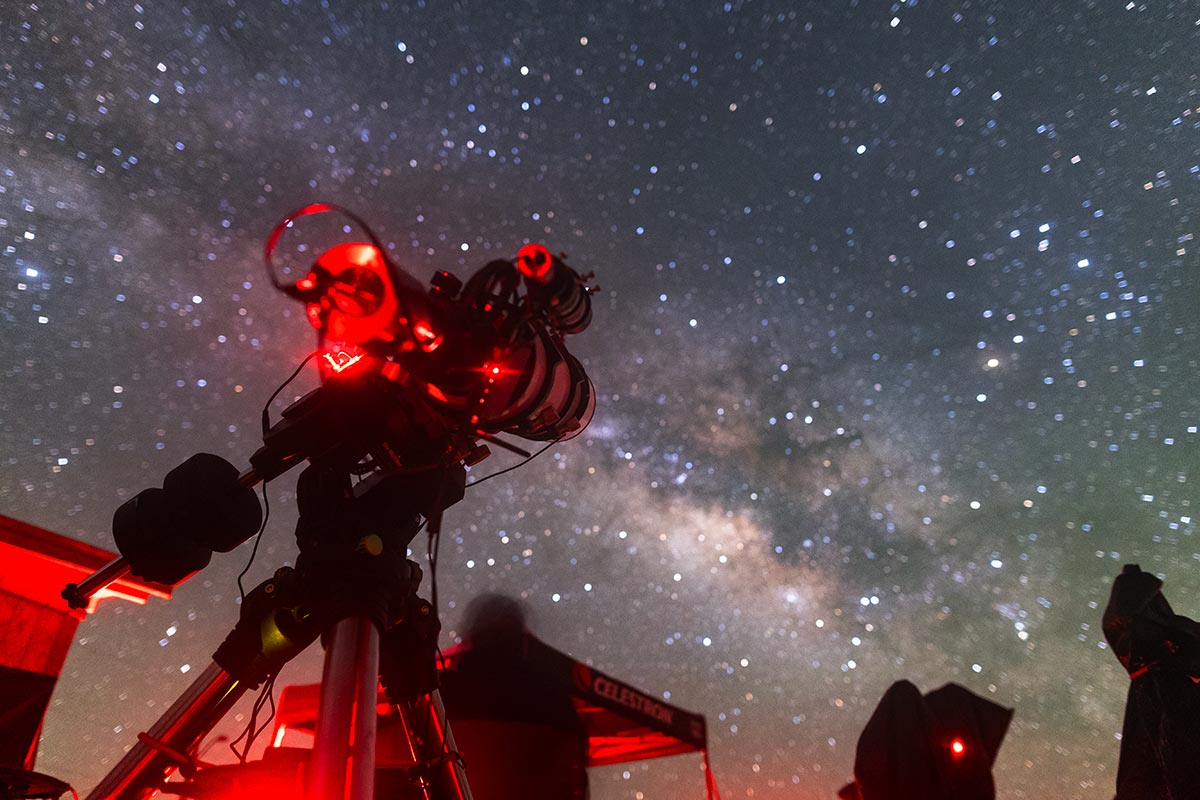
Because reflection nebulae emit broadband light, they photograph best under dark skies (Bortle 4 and below), without a filter.
Reflection Nebulae and Dark-Sky Conservation
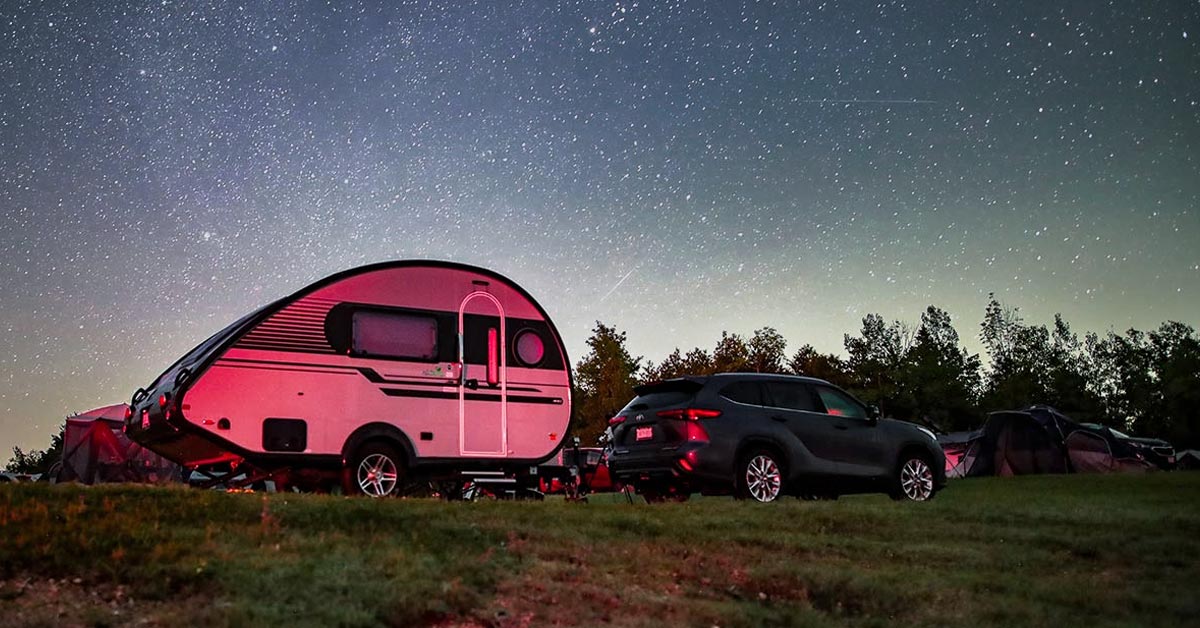
Reflection nebulae are often difficult to see because they are faint and have relatively little contrast against the surrounding sky. Light pollution makes them even harder to observe and photograph by brightening the night sky.
Under darker conditions, faint clouds of interstellar dust become easier to capture, revealing structures that may be lost against the bright background of an urban sky. For astrophotographers, this can significantly reduce the exposure time needed to reveal faint details.
Protecting dark skies helps preserve our ability to observe these objects. Using fully shielded outdoor lighting, choosing warmer light colors, and turning lights off when they aren’t needed can all help reduce unnecessary skyglow.
Conclusion
Reflection nebulae can be challenging astrophotography targets, but the results are well worth the effort.
Capturing their faint blue glow and surrounding dust often requires patience, longer exposures, and dark skies.
If you’re looking to photograph your first reflection nebula, the Pleiades is an excellent starting point with a camera and telephoto lens.
For those using a small refractor telescope, the Iris Nebula and M78 offer rewarding opportunities to capture fainter details hidden in these clouds of interstellar dust.
Happy shooting!

Ashley is an environmental educator, communication professional, and astrophotographer. She has extensive experience writing for diverse audiences to increase public awareness and engagement. Ashley is an active Advocate/Delegate with DarkSky International, helping to protect the nighttime environment from the harmful effects of light pollution through advocacy and outreach.
Helpful Resources:
- The Dark Shark Nebula: A Beautiful Reflection Nebula
- The Best Astrophotography Telescopes Available Today (Tested)
- How to Find Dark Sky Spots for Astrophotography