
The Dark Shark Nebula

The Dark Shark Nebula is one of those deep-sky objects that does not immediately reveal itself. There is no bright wall of hydrogen gas or dramatic core to anchor the image.
Instead, LDN 1235 appears as a dim, dusty silhouette swimming through a rich field of stars in the constellation Cepheus. I photographed the Dark Shark Nebula from a Bortle Class 3 location in New Brunswick, Canada, during my trip to photograph the total solar eclipse in April 2024.
I brought a compact astrophotography setup with me on the airplane from Toronto, packed in my carry-on luggage. My final image includes 4.5 hours of exposure time captured through a William Optics RedCat 61 and ZWO ASI2600MC Air camera.
Because dark nebulae are broadband targets, I did not use a filter. This helped the camera record the subtle, natural color of the surrounding dust and the small blue reflection nebulae embedded in the region.
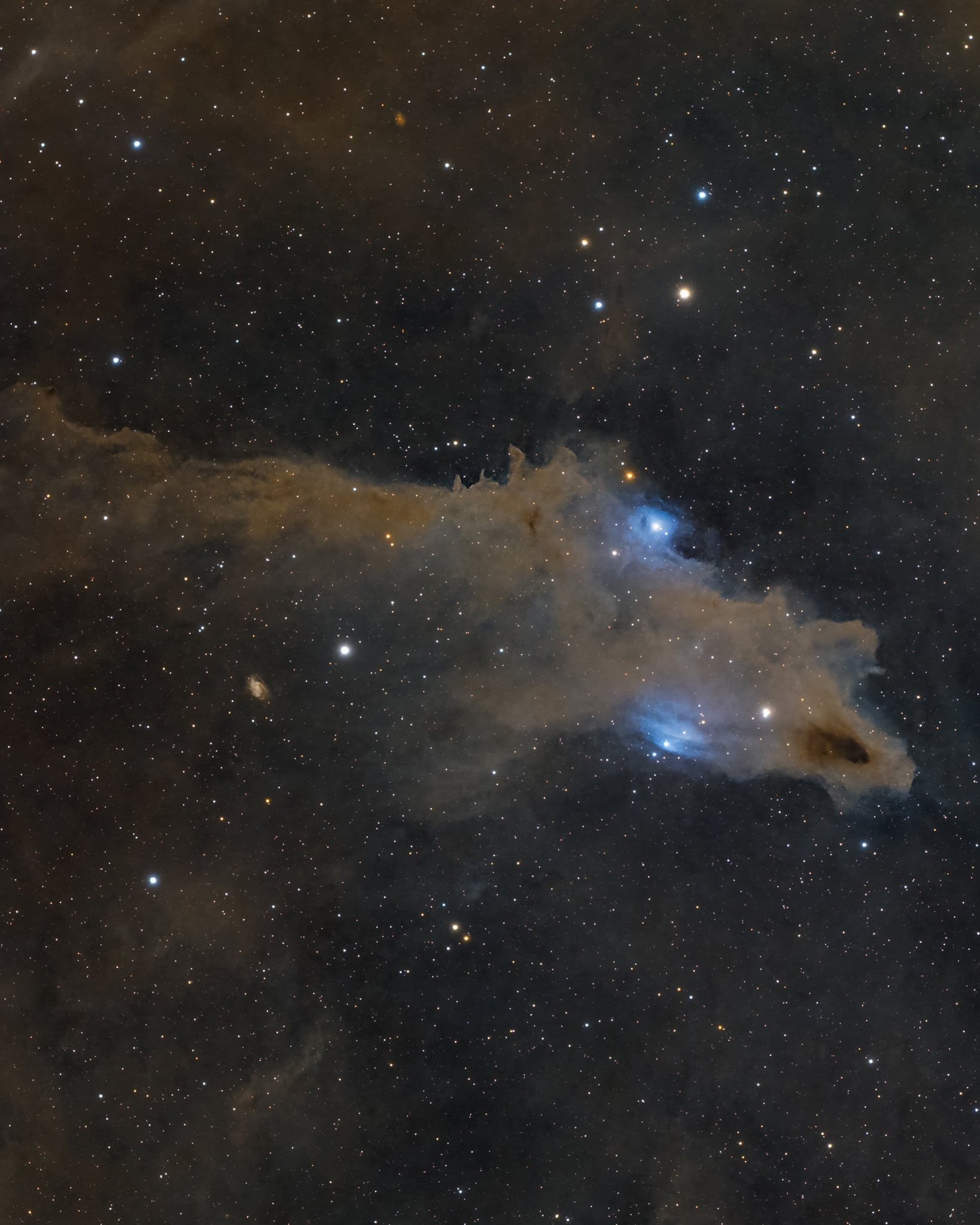
My final image of the Dark Shark Nebula includes 90 x 3-minute exposures (4.5 hours total).
What Is the Dark Shark Nebula?
The Dark Shark Nebula is a large complex of interstellar dust best known by the catalog designation LDN 1235. Its nickname comes from the shape visible in long-exposure images: a pointed head, dark eye, curved body, and fins that resemble a shark moving through space.
LDN stands for Lynds Dark Nebula. American astronomer Beverly Turner Lynds compiled the original catalog in 1962 by examining red and blue photographic plates from the National Geographic–Palomar Observatory Sky Atlas. The NASA HEASARC catalog description explains that these clouds were identified by the way they reduced the brightness and density of background stars.
The region is not dark because it is empty. Dense concentrations of dust block visible light from stars behind them, so the cloud is defined partly by what we cannot see.
| Dark Shark Nebula facts | Details |
|---|---|
| Catalog designation | LDN 1235 |
| Object type | Dark nebula and reflection-nebula complex |
| Constellation | Cepheus |
| Distance | About 650 light-years |
| Approximate span | About 15 light-years |
| Associated objects | vdB 149 and vdB 150 |
The often-cited distance and size estimates come from NASA’s Astronomy Picture of the Day, which places the complex about 650 light-years away and roughly 15 light-years from end to end.
A Dusty Region in Cepheus
The Dark Shark lies in Cepheus, a northern constellation filled with faint molecular clouds. It belongs to the broader Cepheus Flare, an area of gas, dust, and ongoing star formation. Gaia research has also identified young stars associated with LDN 1235.
Two small reflection nebulae, vdB 149 and vdB 150, add blue highlights near the shark’s head and neck. Unlike the dark dust, these areas are visible because nearby stars illuminate the material. Their cool blue color provides a beautiful contrast against the warmer brown dust and crowded star field.
For observers at mid-northern latitudes, Cepheus is well placed for much of the year. However, this is primarily an astrophotography target. You should not expect a recognizable shark shape through an eyepiece. Long exposures and careful processing bring its structure forward.
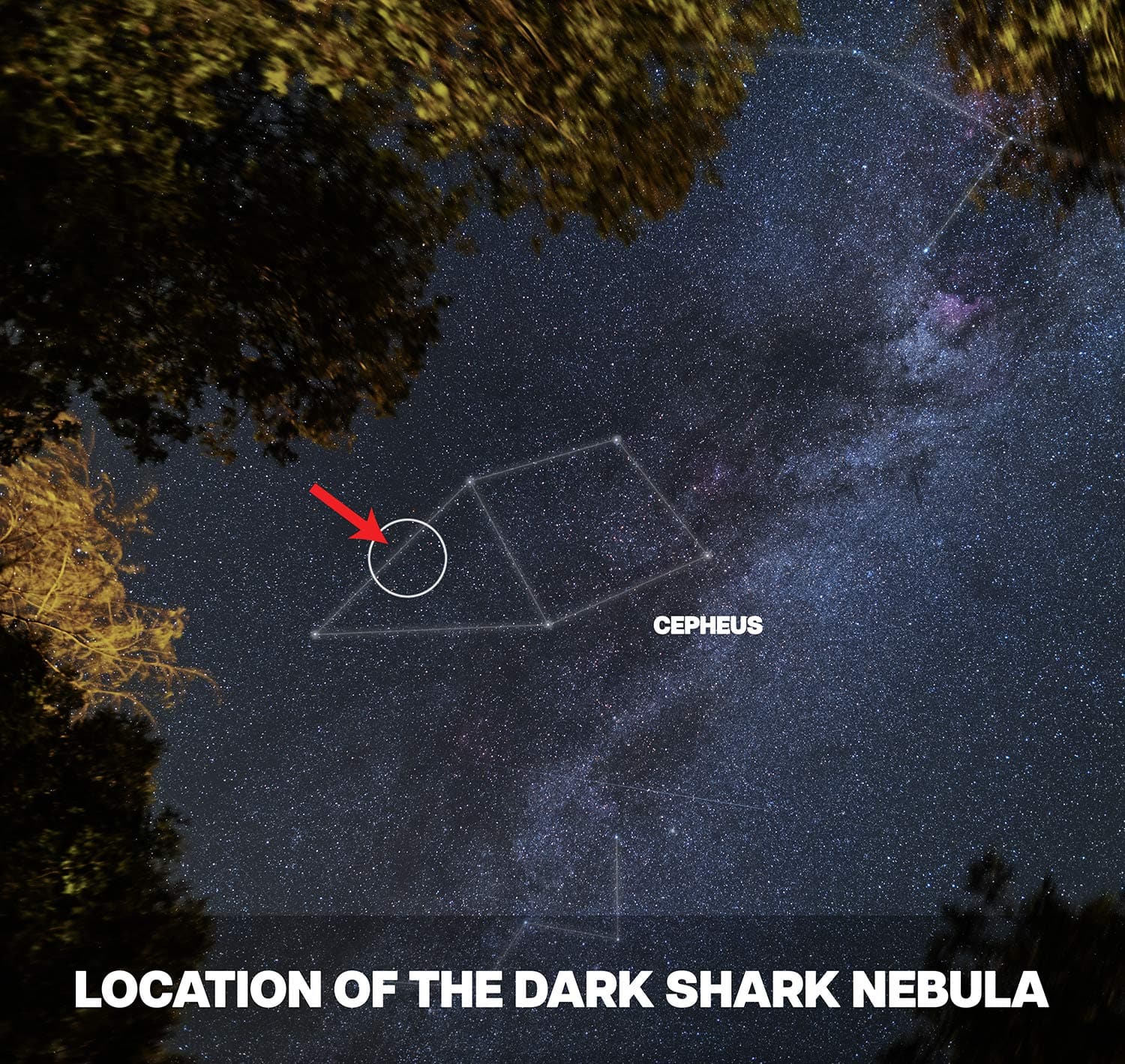
The Dark Shark Nebula’s location in the constellation Cepheus.
Photographing the Dark Shark Nebula from New Brunswick
I captured this image while visiting New Brunswick for the April 2024 total solar eclipse. Since I was flying from Toronto, every part of my deep-sky setup needed to be compact enough for air travel. The telescope, camera, and mount traveled with me in a carry-on bag.
The mount was a Sky-Watcher Star Adventurer GTi. Although commonly described as a star tracker, it behaves more like a miniature GoTo equatorial telescope mount. It can locate and track a target while remaining genuinely portable.
I paired it with the William Optics RedCat 61, a wide-field astrograph, and the ZWO ASI2400MC Pro one-shot color camera. This combination kept the system manageable for travel.
The Bortle Class 3 sky was a major advantage. Light pollution and gradients compete directly with the faint variations in the dust. A narrowband filter is not the answer here because the Dark Shark is not dominated by a few strong emission lines. A dark location and unfiltered broadband data are far more useful.
Image Acquisition Details
My finished image contains 90 individual exposures, each three minutes long, for a total integration time of 4.5 hours.
| Equipment and settings | Details |
|---|---|
| Telescope | William Optics RedCat 61 |
| Camera | ZWO ASI2400MC Pro |
| Mount | Sky-Watcher Star Adventurer GTi |
| Filter | None |
| Exposure length | 180 seconds |
| Number of exposures | 90 |
| Total exposure | 4.5 hours |
| Sky quality | Bortle Class 3 |
| Location | New Brunswick, Canada |
Four and a half hours produced a satisfying image from a dark sky, but this object will reward additional integration. More exposure time makes it easier to stretch the faint dust without creating a rough background.
I cropped my final image substantially from the original field of view. The wider data captured the surrounding star field, but the tighter composition gave the shark a stronger presence and made its recognizable outline easier to appreciate.
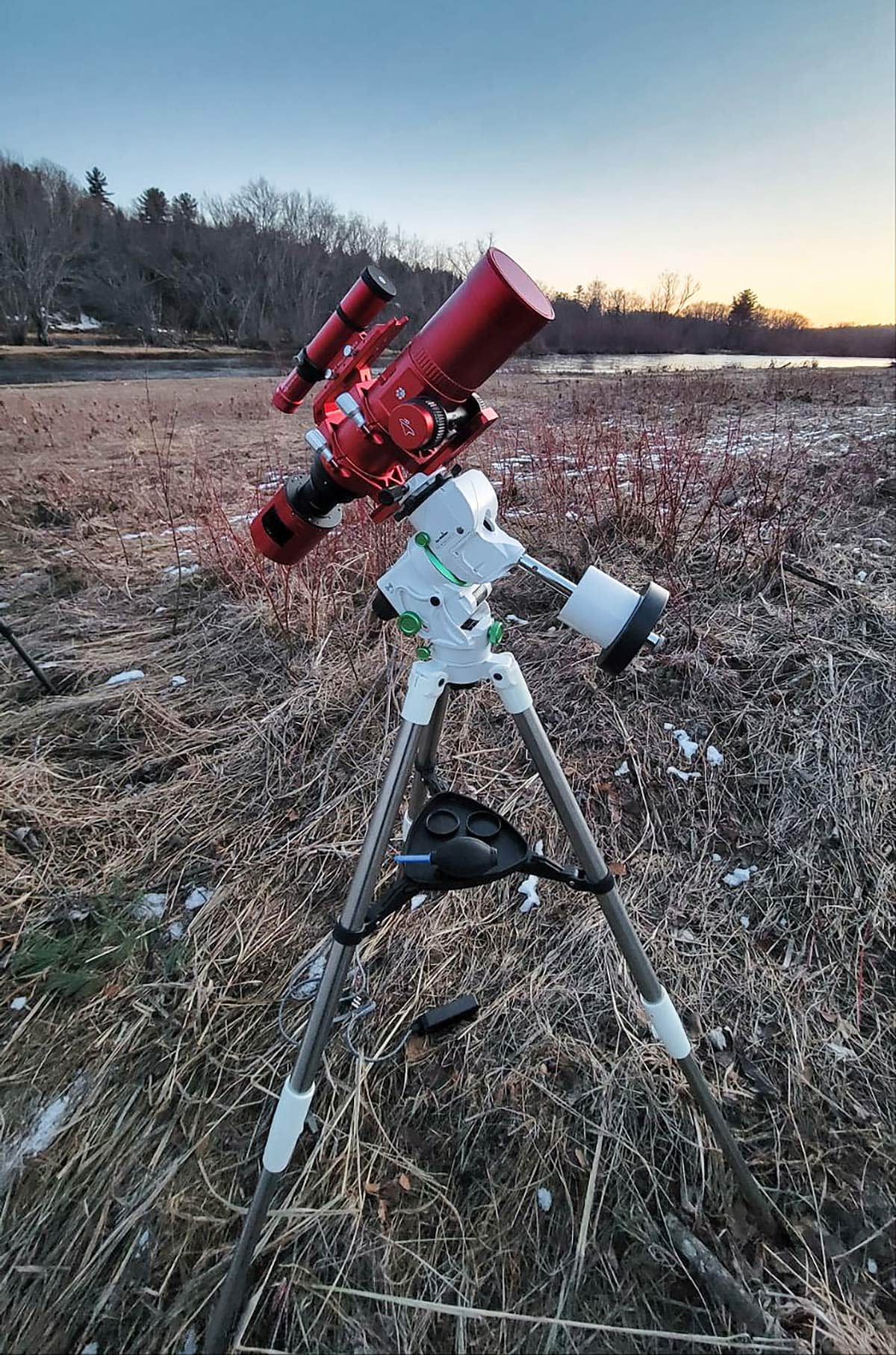
The equipment used for my image of the Wolf’s Cave Nebula. (William Optics RedCat 61, ZWO ASI2400MC Pro, Sky-Watcher Star Adventurer GTi.
Processing LDN 1235 in PixInsight and Photoshop
Processing the Dark Shark Nebula was every bit as important as collecting the data. I used my latest PixInsight and Photoshop workflow to calibrate the color, control gradients, reduce noise, and carefully stretch the faint dust.
Creating a starless version of the image was critical. Cepheus contains so many stars that they can overpower the subject during a strong stretch. Working on the nebula separately allowed me to increase local contrast and bring out the dusty body without making every star larger and brighter.
Star reduction was equally important when I recombined the image. The goal was not to remove the star field, but to keep it from hiding the nebula. Smaller stars create more separation between the foreground dust and background sky.
The hardest step was lifting the dark regions without crushing the black point or creating a blotchy texture. A controlled stretch, restrained noise reduction, and repeated checks of the starless image helped preserve the layered brown dust.

Related Article: Choosing an Image Processing Software for Astrophotography
Tips for Photographing the Dark Shark Nebula
Choose the darkest site available and avoid a bright Moon. Use a broadband camera without a dual-narrowband filter, frame the entire dust complex, and collect several hours of exposure time. Three- to five-minute sub-exposures are a practical starting point when tracking and sky brightness allow it.
Most importantly, do not judge the project by a single sub-exposure. The Dark Shark may barely register in one frame. Its form emerges through stacking and careful processing, which is exactly what makes the final reveal so rewarding.
The Dark Shark Nebula is a challenging target, but it is also an ideal example of what modern amateur astrophotography can uncover. My image was captured with a travel-friendly rig that fit in carry-on luggage, yet it recorded a 15-light-year cloud of dust hundreds of light-years away. For me, that combination of portability, dark skies, and subtle cosmic detail is what made this project special.
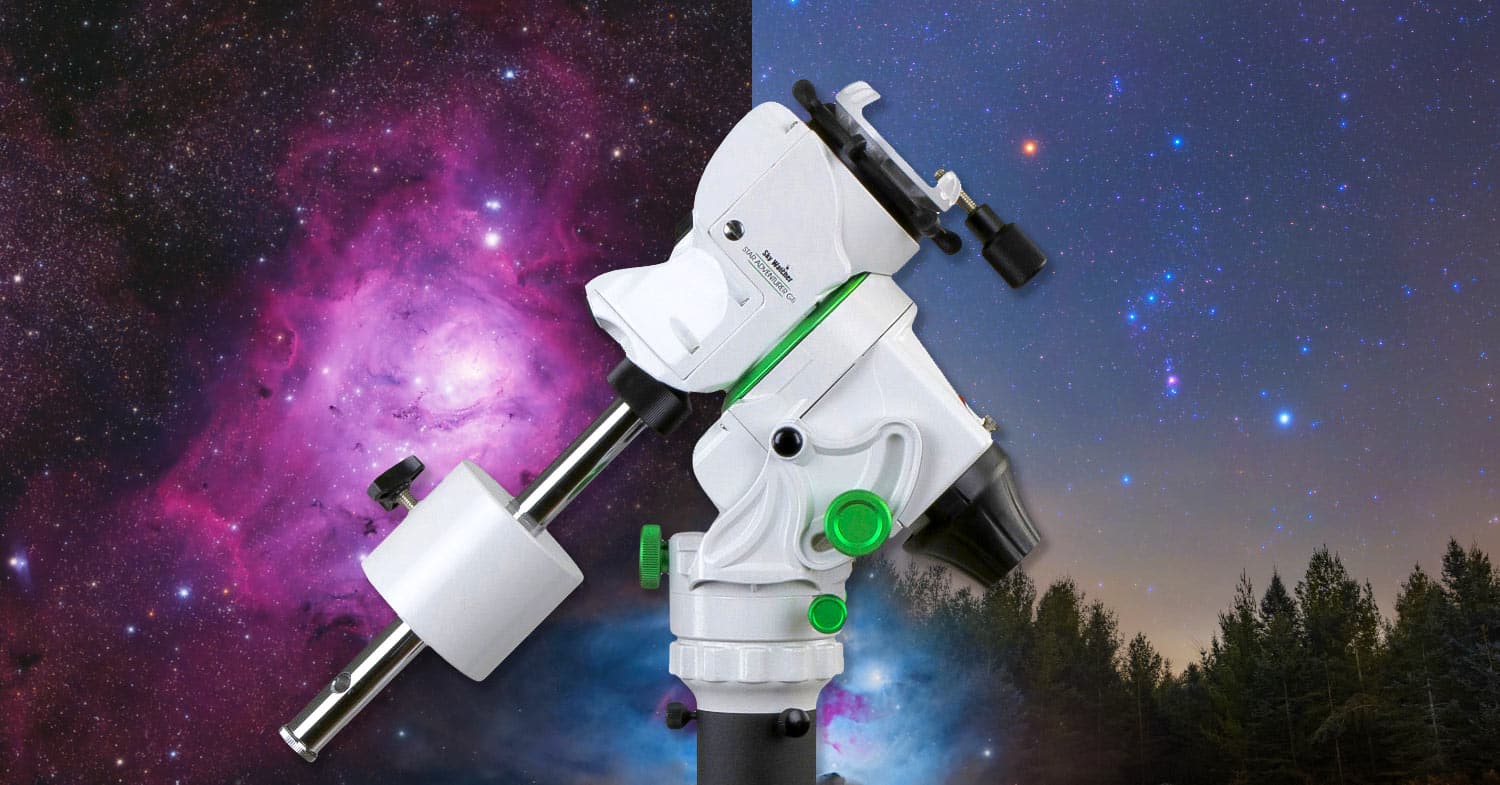
Related Article: Choosing a Star Tracker for Astrophotography (My Top Choices)