Search Results for: light pollution

  • About AstroBackyard

    Chances are, you found this website because you’re keen on getting started in astrophotography. If you have ever witnessed an incredible image of space taken using an ordinary camera through a telescope and thought “I want to do that”, you’re not alone. You are now among the thousands of deep-sky astrophotography enthusiasts that have started…

  • The Pleiades Star Cluster

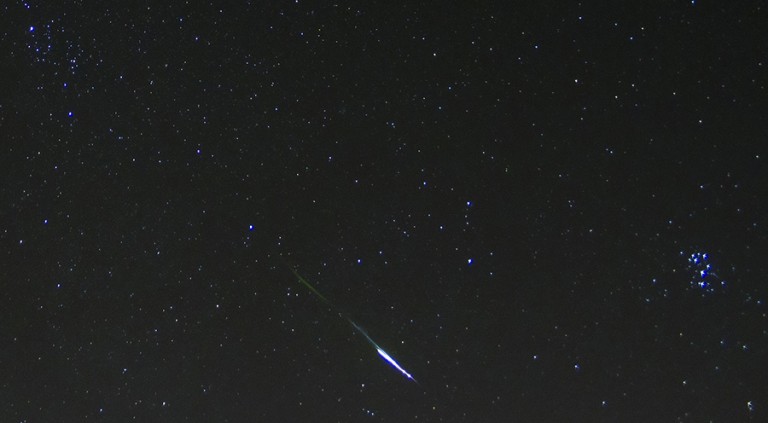
    The Pleiades is an open star cluster in the constellation Taurus. It lies about 400 light-years from Earth and is about 100 million years old. In the northern hemisphere, the fall and winter seasons are the best times to observe and photograph the Pleiades. Although the cluster consists of over 1000 stars,  the “Seven Sisters”…

  • The California Nebula

    The California Nebula (NGC 1499) is an intense hydrogen emission nebula located in the constellation Perseus. It lies 1,500 light years away from Earth and gets its nickname due to its striking resemblance in shape to the US state of California. With an apparent magnitude of 6, this deep-sky object is challenging to observe visually…

  • The Triangulum Galaxy

    The Triangulum Galaxy (M33). Trevor Jones. The Triangulum Galaxy (M33) is a spiral galaxy in the constellation Triangulum, that is believed to be a satellite of the Andromeda Galaxy. Messier 33 can be seen visually with the naked eye under exceptionally good seeing conditions with no light pollution. The Triangulum Galaxy is a spectacular sight…

  • The Orion Nebula

    Last updated: November 5, 2025. The Orion Nebula is one of the brightest nebulae in the night sky and is visible to the naked eye. This magnitude 4 interstellar cloud of ionized atomic hydrogen contains a young open cluster of four primary stars known as the Trapezium. The M42 nebula is part of a much…

  • The Andromeda Galaxy

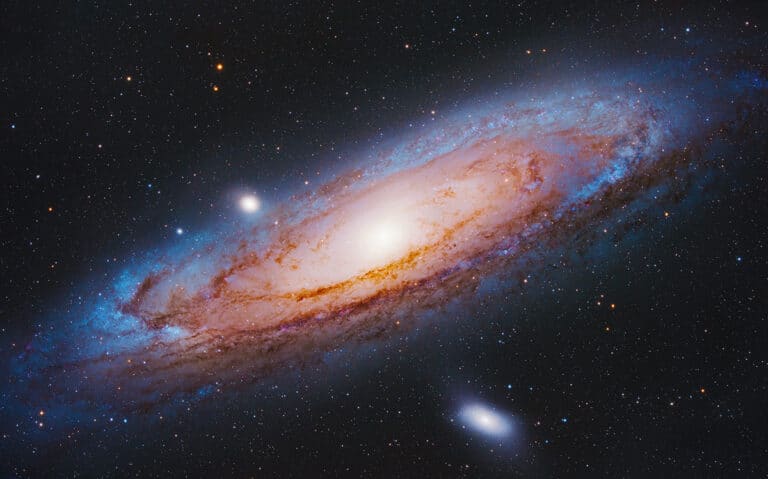
    The Andromeda Galaxy is a large spiral galaxy located about 2.5 million light-years away from Earth. It is the largest galaxy in the local group, which also contains the Triangulum Galaxy. Cataloged as Messier 31 (M31), this deep-sky object is observable for much of the year in the Northern Hemisphere, lying in the constellation Andromeda,…

  • The Horsehead Nebula

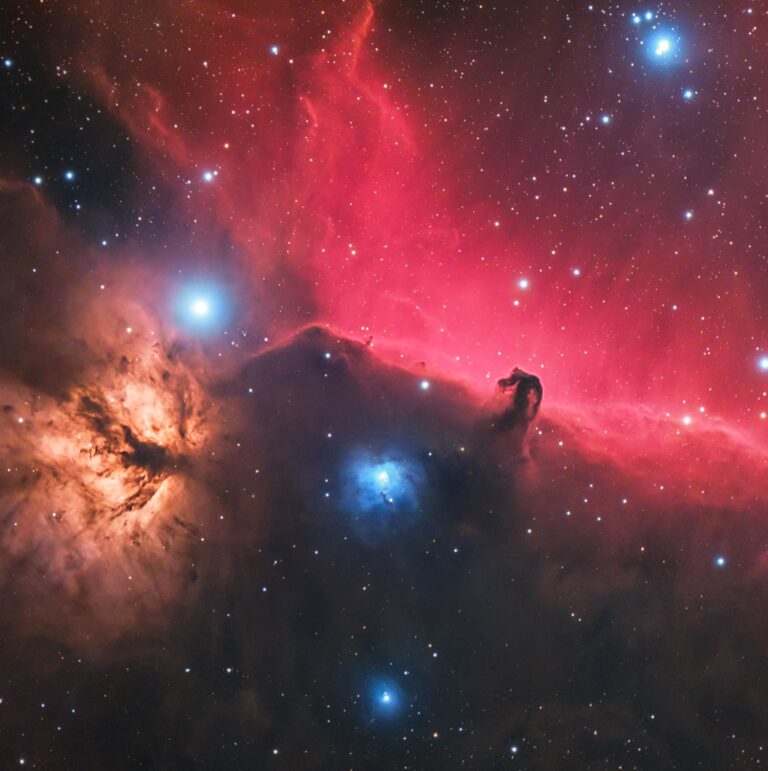
    The Horsehead Nebula (Barnard 33) is an iconic dark nebula in the constellation Orion. Along with the nearby Flame Nebula (NGC 2024), this region is one of my absolute favorite deep-sky targets to shoot with my astrophotography camera and telescope.   Unlike many other dark nebulae in the night sky, this one is very easy to…

  • The Wizard Nebula in Cepheus

    The Wizard Nebula is a collection of interstellar gas surrounding the open star cluster, NGC 7380. It lies approximately 7200 light-years away from Earth and has an apparent magnitude of 7.2 in the constellation Cepheus. Although it is impossible to observe this deep-sky object visually from my backyard, it is well within the reach of…

  • My Equipment

    Deep Sky Astrophotography Equipment Note: This is an old article! Please view my new astrophotography equipment page.  Over the years I have added several new pieces of astronomy equipment in an attempt to improve the quality of my images. Below, you will find a complete list of the gear I have used to capture the…

  • Essential Image Processing Video Tutorial

      This video may change the way your shoot and process astro-images forever. It covers the few simple steps needed to create an ultra high-resolution master frame with a high signal-to-noise ratio. This tutorial covers the capturing, processing and production of gorgeous wide-field astrophotography images using a camera lens or small telescope. If you are…