
Fish Head Nebula (IC 1795): Images, Facts & Astrophotography

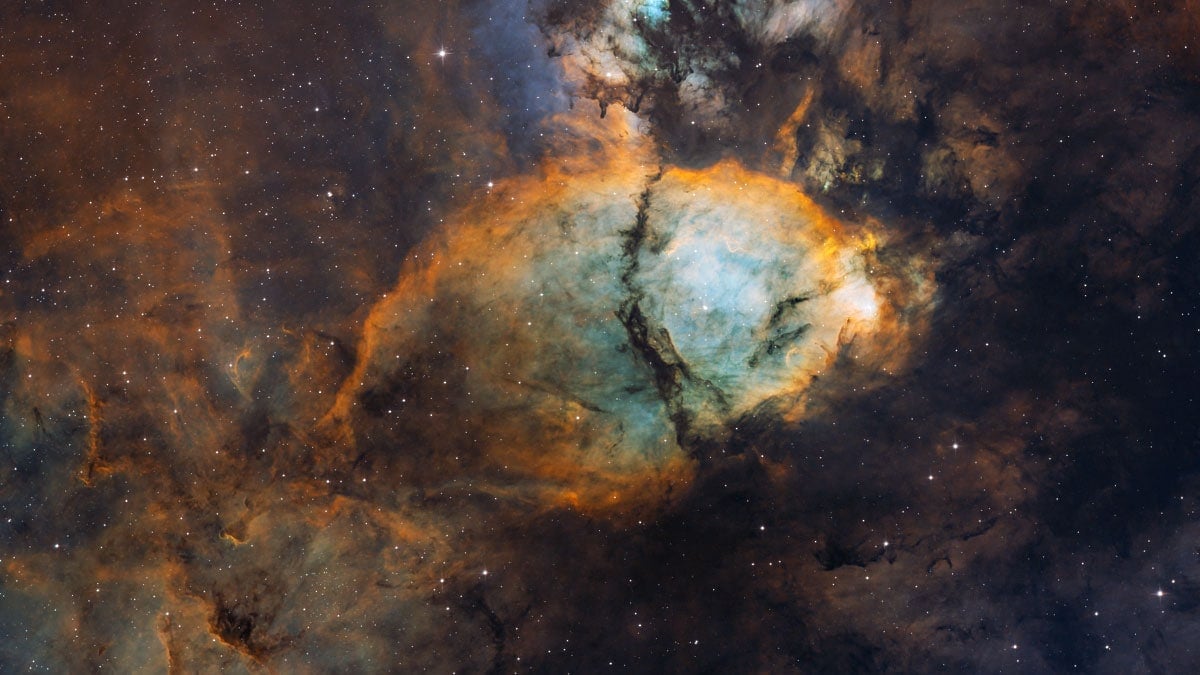
The Fish Head Nebula (IC 1795) is an emission nebula and star-forming region in the constellation Cassiopeia, beside the Heart Nebula. Located roughly 6,000 light-years from Earth, its glowing gas and dark dust create a distinctive fishlike profile. The bright nebulosity associated with NGC 896 makes this a rewarding astrophotography target.
Also written as the Fishhead Nebula, this object offers a closer look at one of the most interesting corners of the northern sky. A wide photograph places it beside the familiar outline of the Heart, while a tighter composition brings its bright ridges and shadowy pockets into focus.
My Latest Fish Head Nebula Image
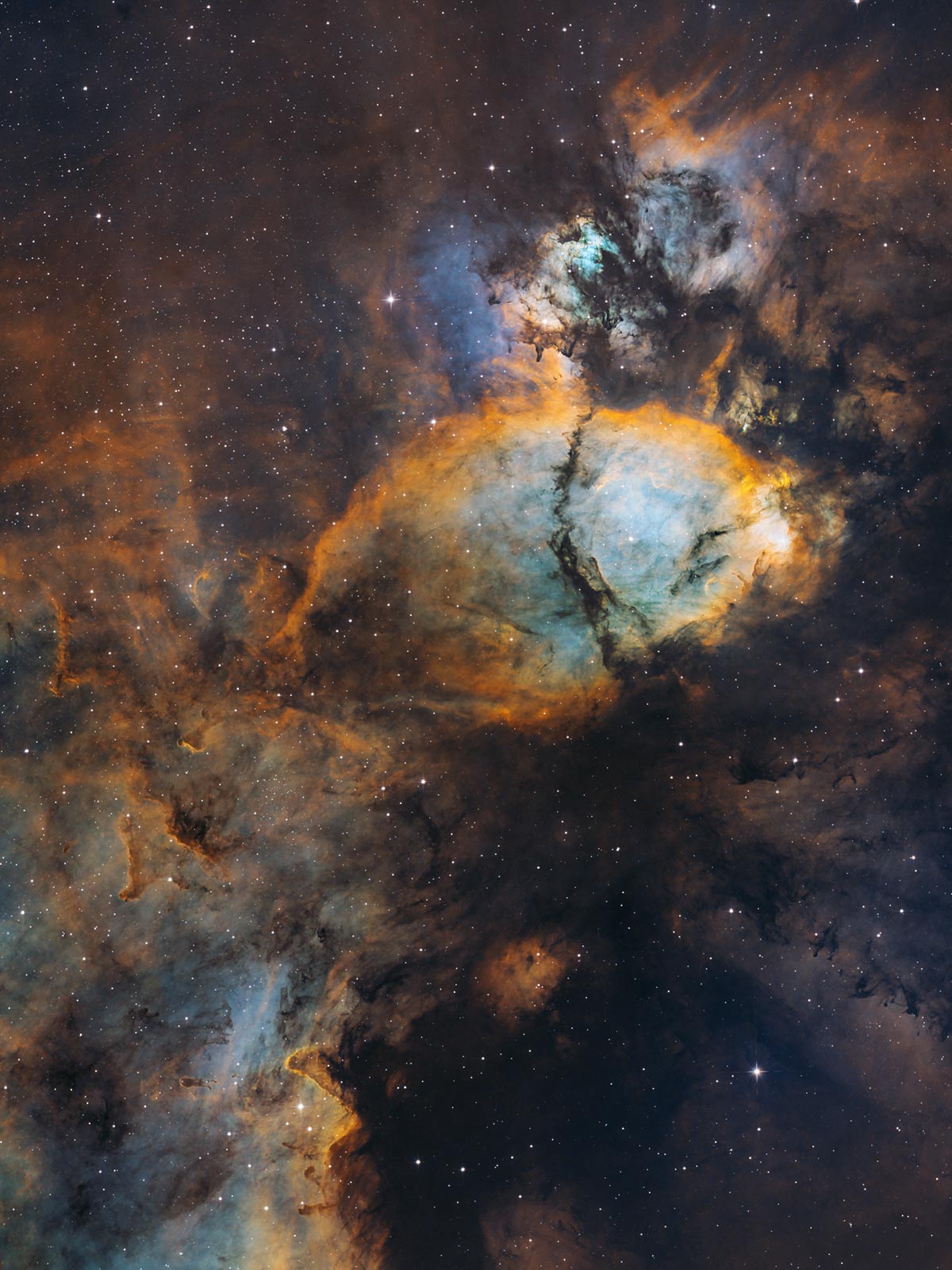
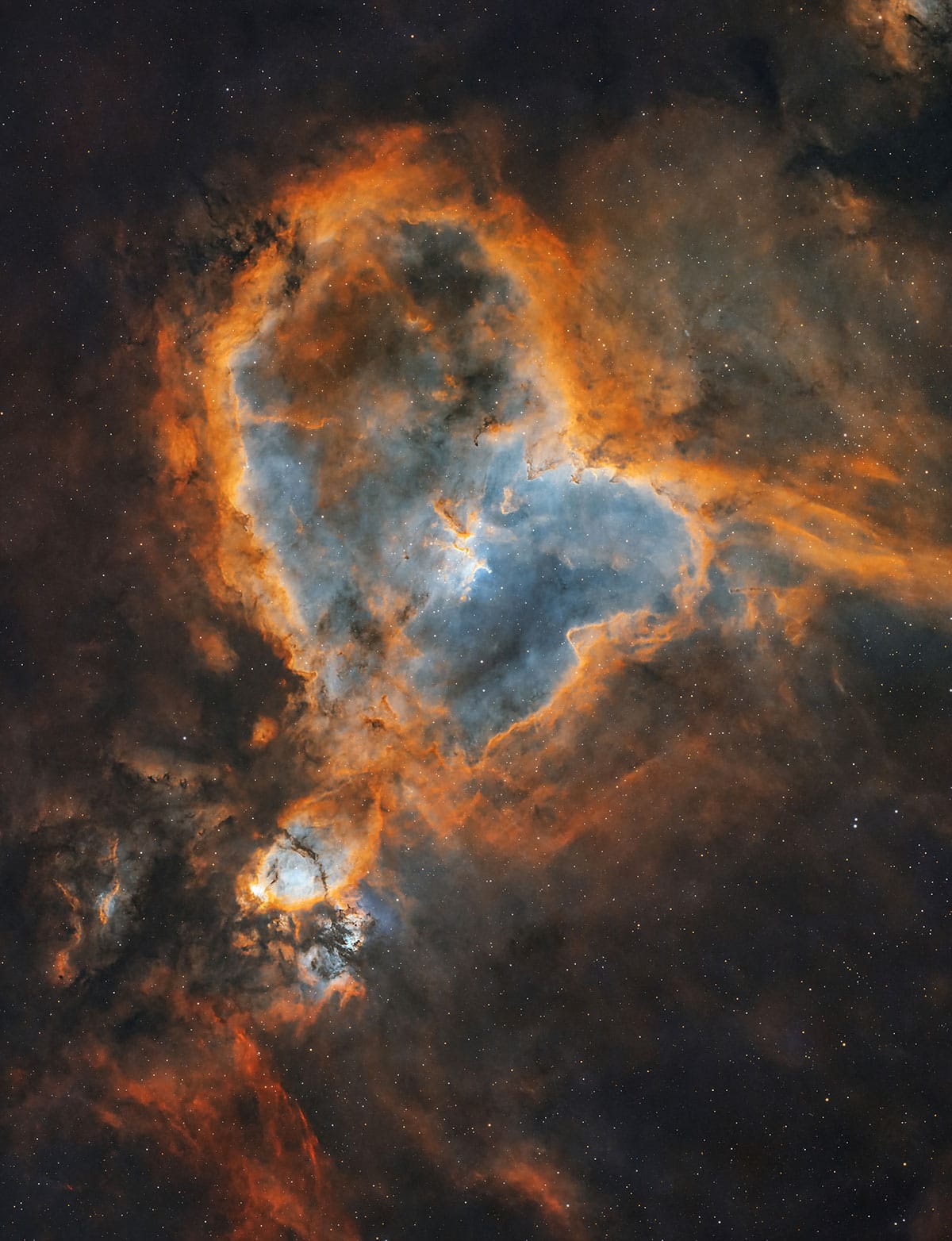
I captured this image of the Fish Head Nebula from my backyard in October 2026 using my reflector telescope. (26 Hours Total Exposure)
This page brings together my latest Fish Head Nebula photograph, the equipment behind it, and a guide to the object itself. When exploring the image, look for the transition between the bright emission and the darker material silhouetted against it. These contrasts give the nebula much of its character.
Fish Head Nebula Facts
| Common names | Fish Head Nebula; Fishhead Nebula |
|---|---|
| Catalog references | IC 1795; associated bright nebulosity NGC 896 |
| Object type | Emission nebula; H II region |
| Constellation | Cassiopeia |
| Approximate distance | Just over 6,000 light-years |
| Galactic location | Perseus spiral arm, Milky Way |
| Nearby nebula | Heart Nebula, IC 1805 |
| Northern imaging season | Autumn through early winter |
IC 1795 and NGC 896: What Is the Fish Head Nebula?
The Fish Head Nebula is a cloud of interstellar gas and dust associated with young stars. It belongs to the family of objects called H II regions, where ultraviolet radiation ionizes hydrogen. As electrons recombine with hydrogen ions, the gas produces light, including the red hydrogen-alpha emission familiar in nebula photographs.
The naming can be confusing. IC 1795 and NGC 896 both appear in descriptions of this area, and their use is not perfectly consistent across observing guides. NASA’s explanation of IC 1795 also identifies the nebula with NGC 896. For framing, check a photographic sky atlas rather than assuming every catalog entry marks exactly the same center.
For more background on the physics, my guide to what an emission nebula is explains why these clouds glow and why they respond so well to specialized filters.
Emission Nebulae are fantastic astrophotography targets from the city. Narrowband filters isolate key wavelengths of light from a washed-out city sky.
Fishhead Nebula Location: Where Is IC 1795?
Look toward the constellation Cassiopeia, recognizable by its bright W-shaped pattern. The Fish Head sits beside the Heart Nebula, in the broader Double Cluster neighborhood in Perseus. Cassiopeia is a good starting point, but a planetarium app makes locating the actual imaging field much easier.
Search your software for IC 1795 or NGC 896, then inspect the surrounding nebulosity. Plate solving helps confirm the pointing and rotation before you commit to a long sequence. Leave some breathing room around the bright structure; an overly tight crop can lose the darker features that define its shape.
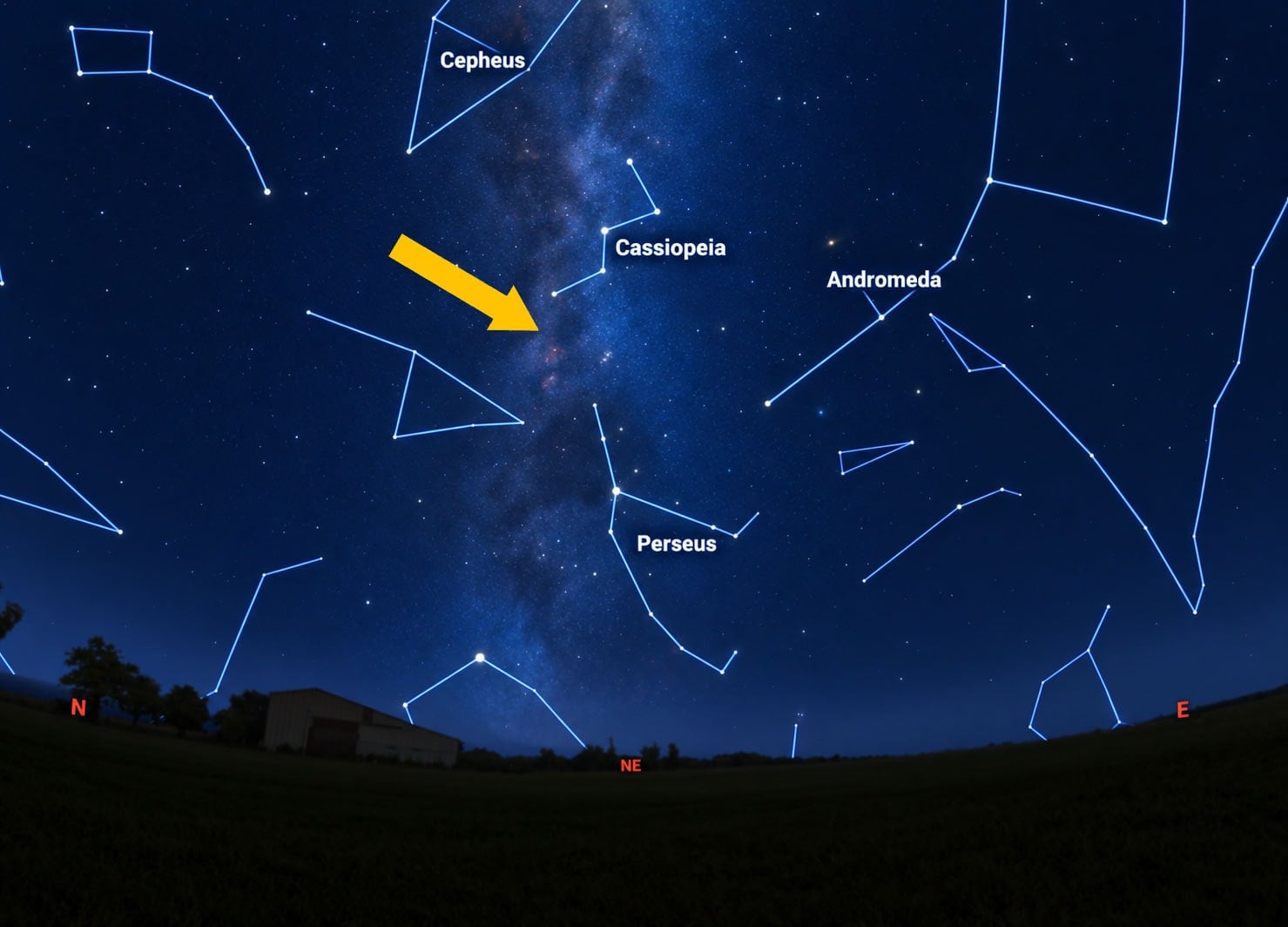
The location of the Fish Head Nebula (and Heart Nebula) in the constellation Cassiopeia. This is the view from mid-northern latitudes at 8 pm in October.
When Is the Best Time to Photograph It?
For observers at mid-northern latitudes, autumn and early winter offer convenient evening opportunities. From southern Ontario, this northern field is circumpolar, but being above the horizon does not always mean ideal imaging conditions. Aim for its highest altitude during darkness, with a clear view away from trees and rooftops.
Fish Head Nebula Distance and Size
NASA’s Fishhead Nebula overview places the region just over 6,000 light-years away and describes a span of about 70 light-years. Treat that size as an approximate extent of the pictured nebulosity, not a sharply defined boundary around every faint wisp.
You may also encounter distances around 7,500 light-years in descriptions of the neighboring Heart Nebula. Published summaries use different estimates for this extensive complex. For planning a photograph, the angular field shown in your framing software matters more than choosing one apparently precise physical diameter.
The Fish Head Nebula and the Heart Nebula
The Fish Head is often included in photographs of the Heart Nebula, but it deserves attention as a composition of its own. In the Heart’s central region, hot stars in Melotte 15 energize the surrounding gas and sculpt dusty structures through radiation and stellar winds.
NASA’s Heart Nebula overview shows the relationship between the two objects. Farther across this busy area, the Soul Nebula adds another major star-forming region. NASA JPL’s infrared view of Heart and Soul reveals warm dust and the larger environment beyond the familiar visible-light outlines.
This is an active stellar nursery, not simply a decorative cloud. Chandra’s study of the neighboring W3 region discusses young stellar populations and possible sequences of triggered star formation involving IC 1795.
If you enjoy photographing this field, the nearby Soul Nebula makes a natural follow-up project. Comparing the two compositions is a useful exercise: decide whether you want an isolated portrait, a wider environmental view, or a mosaic that connects the surrounding clouds. Each approach tells a different visual story about the same crowded neighborhood of our galaxy.
In this wider field view, you can see the Fish Head Nebula at the bottom of the Heart Nebula.
Fish Head Nebula Astrophotography Tips
A short refractor (such as the Askar SQA55 at about 250mm) can show the Fish Head in its surroundings, while a longer telescope can concentrate on the ridges and dust.
Sensor size changes the field substantially, so preview your actual camera and telescope combination rather than relying on focal length alone. For example, a full-frame camera sensor at 250mm will capture the entire Heart and Soul Nebulae region.
This object is bright and large enough to be a practical target for a smart telescope, such as the Seestar S50 Pro. As you can see in my image below, the Heart Nebula is just a little too large to fit within the frame.
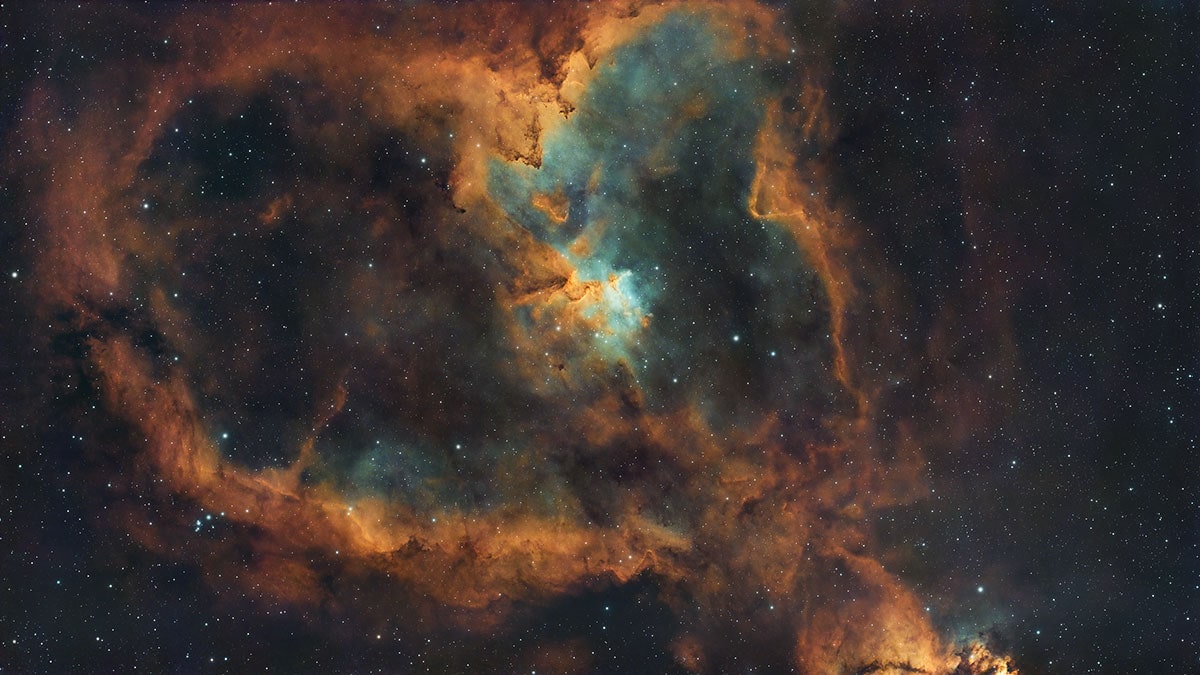
I used a smart telescope to photograph Melotte 15 in the Heart Nebula. The Fish Head Nebula is just out of frame at the bottom right.
Filters and Exposure Time
Hydrogen-alpha is particularly useful for recording the emission structure. A monochrome camera with separate filters offers control over each channel; my narrowband imaging guide explains the approach.
With a compatible color camera, a dual narrowband filter can isolate hydrogen-alpha and oxygen emission while suppressing much of the unwanted sky background. The Fish Head Nebula looks very dramatic using a filter like this.
Like all dynamic nebular regions, plenty of total exposure time and calibration frames will help you build a solid data stack to process. For my latest version of this nebula, I chose 4-minute exposures using a monochrome camera.
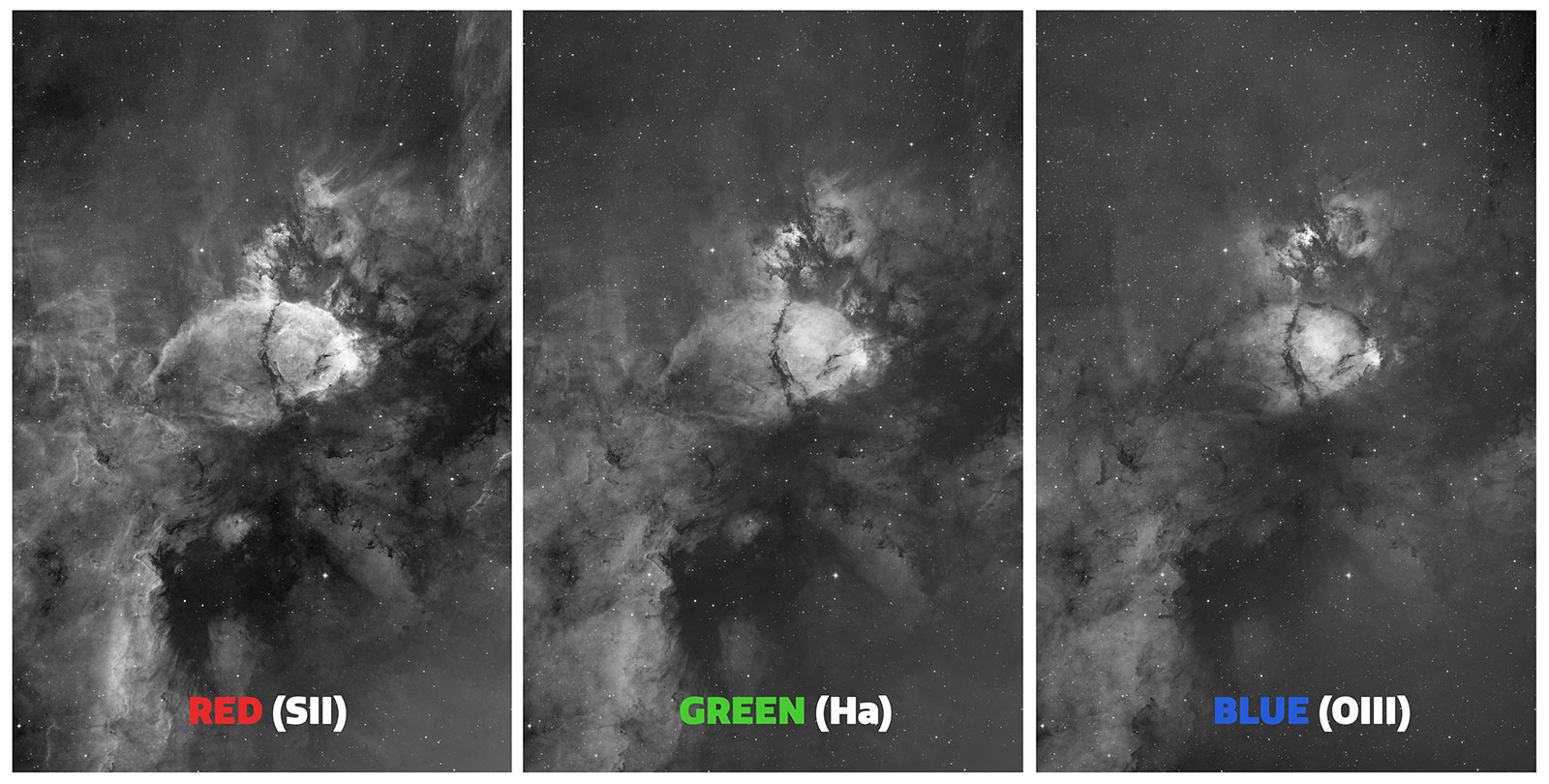
I processed my image of the Fish Head Nebula in the Hubble Palette. This maps SII to red, Ha to green, and OIII to blue.
Processing the Nebula’s Color and Detail
Stretch the image gradually to protect bright areas while revealing faint emission. Avoid forcing every channel to show equal strength. Broadband, HOO, and SHO presentations can look very different; identify your actual filter combination and palette so readers understand what the colors represent.
Inspect the full-resolution image and the version sized for the website. Strong noise reduction can erase small structures, while aggressive sharpening can create harsh outlines around stars.
A restrained stretch often makes the transition between bright gas and dark dust easier to appreciate. Keep a little surrounding sky in the final crop, and compare the processed result with your original stacked data before deciding that the faintest features need more contrast. Preserve detail wherever the data supports it.
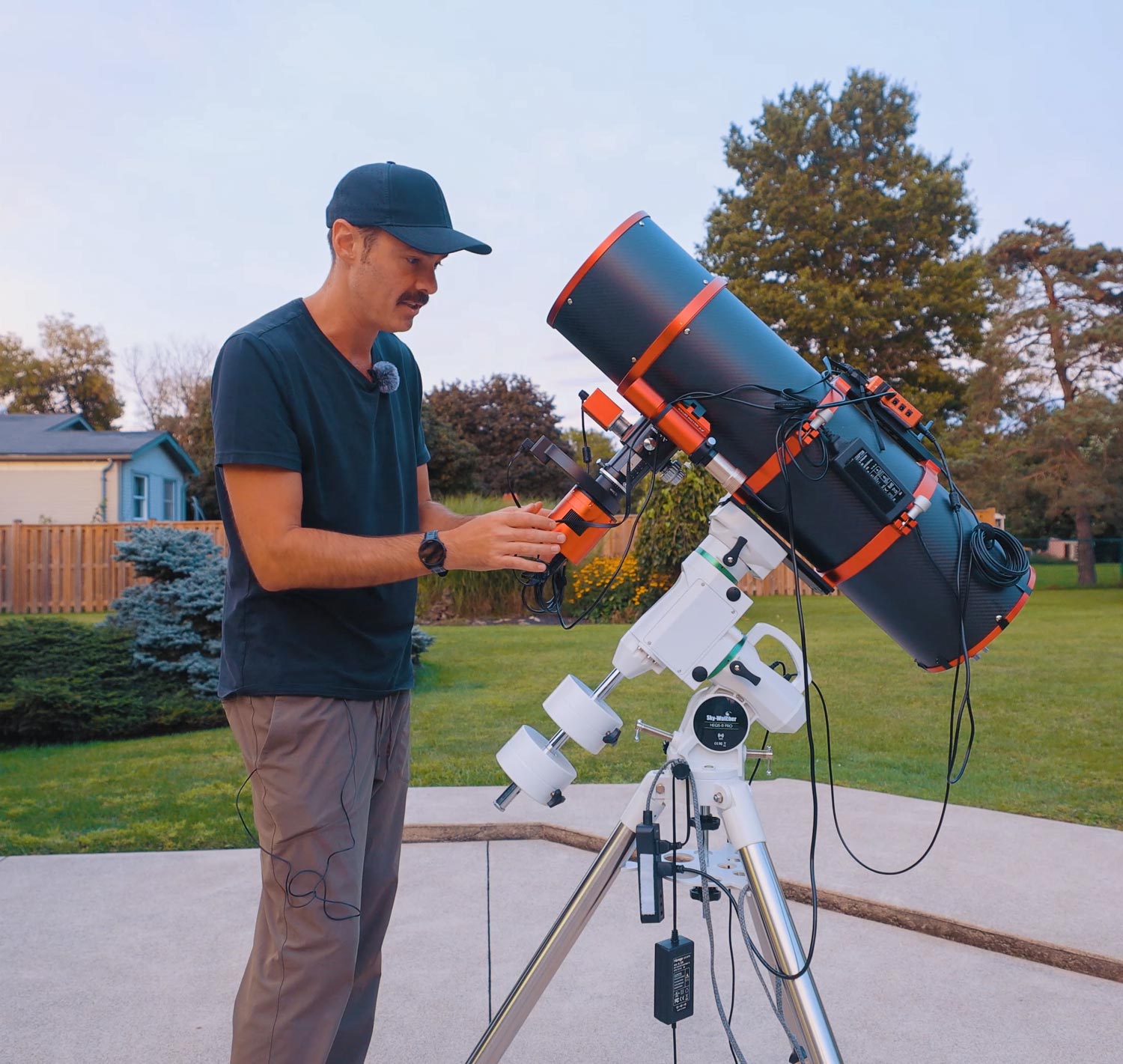
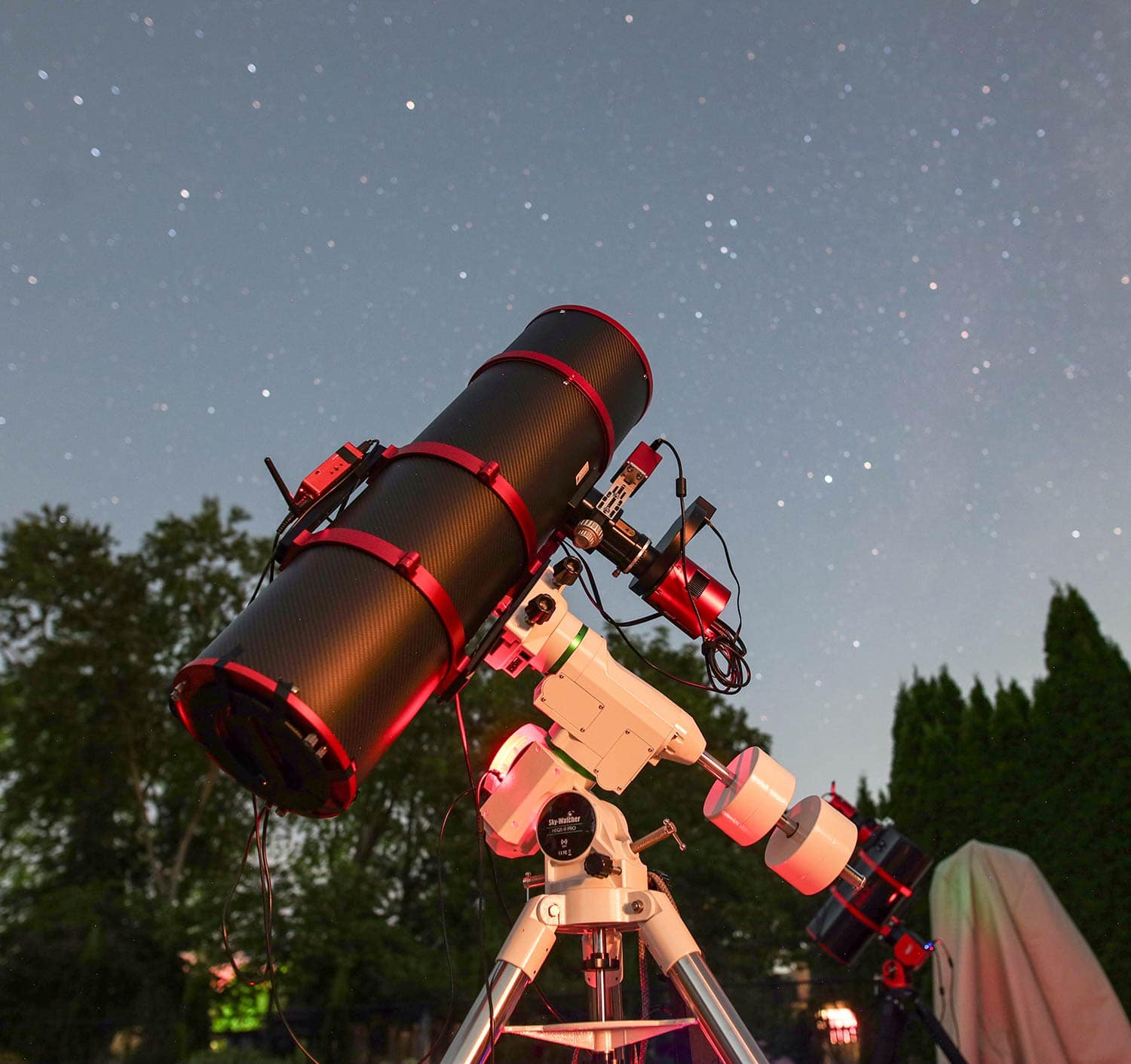
I used an 8-inch reflector telescope and monochrome camera to capture the Fish Head Nebula.
My Fish Head Nebula Capture Gear and Settings
The equipment and acquisition details below document the image featured on this page for fellow backyard astrophotographers. I really enjoy capturing projects with this system because it balances light-gathering power with practicality (setup time, collimation, etc.).
- Telescope: Apertura Carbonstar 200
- Camera: ZWO ASI2600MM Pro
- Tracking Mount: Sky-Watcher HEQ5-R Pro
- Filters: Chroma 3nm SHO filters (36mm)
- Exposure: 4 minutes each (26 hours total)
- Location and dates: Niagara, Ontario (October 19, 20, 21)
- Processing: PixInsight and Photoshop
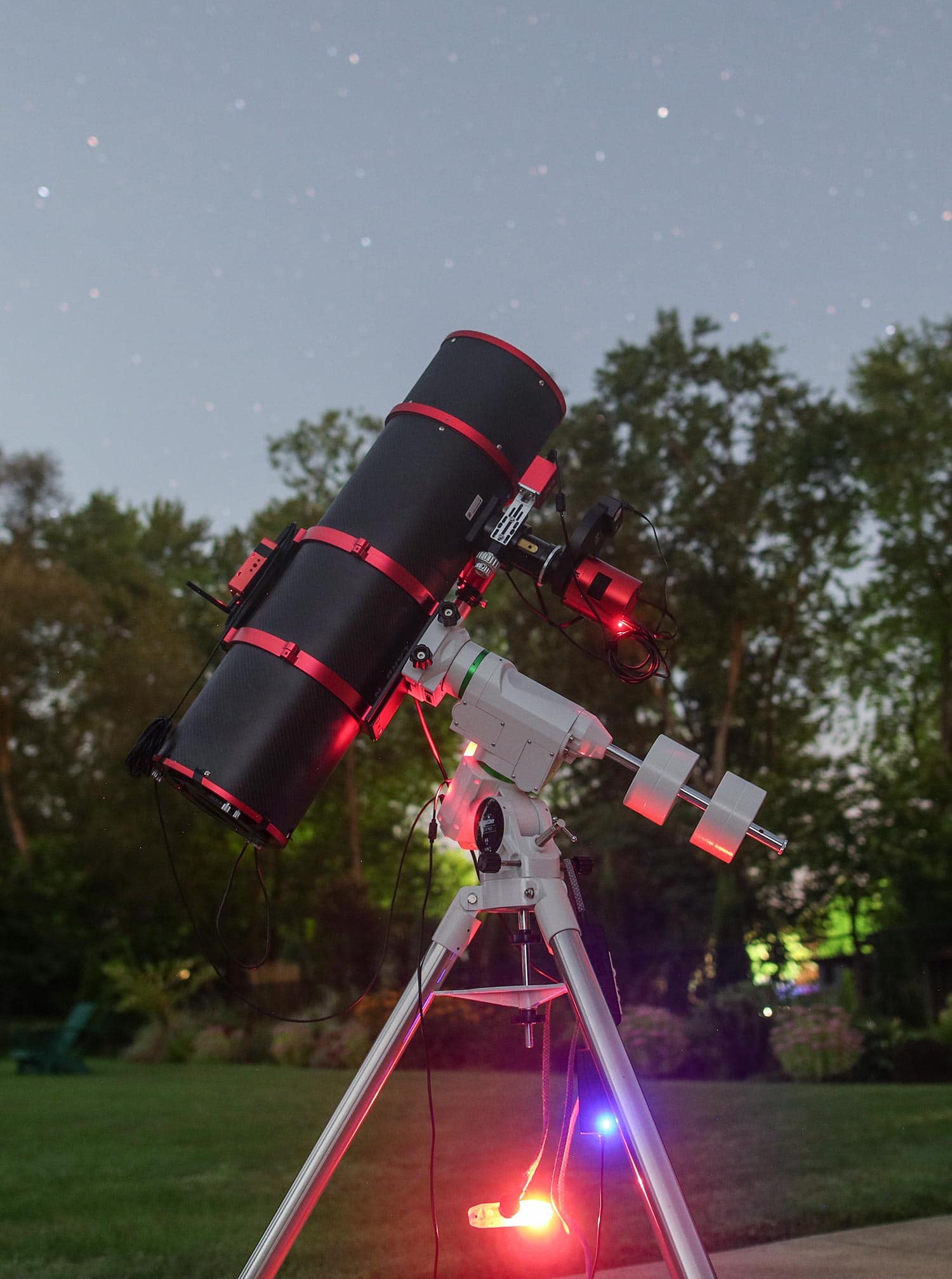
The setup I used to capture the Fish Head Nebula. Apertura CarbonStar 200 and Sky-Watcher HEQ-R Pro Mount.
Other Deep-Sky Objects Nearby