
DSLR vs Dedicated Astronomy Camera for Astrophotography

One of the most common questions beginners ask is whether they should start with a DSLR or jump straight into a dedicated astronomy camera.
Spend a little time on Cloudy Nights or Reddit’s astrophotography communities, and you will see the same concerns come up again and again: Is my DSLR good enough? Will a cooled astro camera make a huge difference? What if I also want to shoot the Milky Way or use my camera for travel?
Those recurring questions all point to the same answer: the best choice depends less on hype and more on what type of astrophotography you want to do.
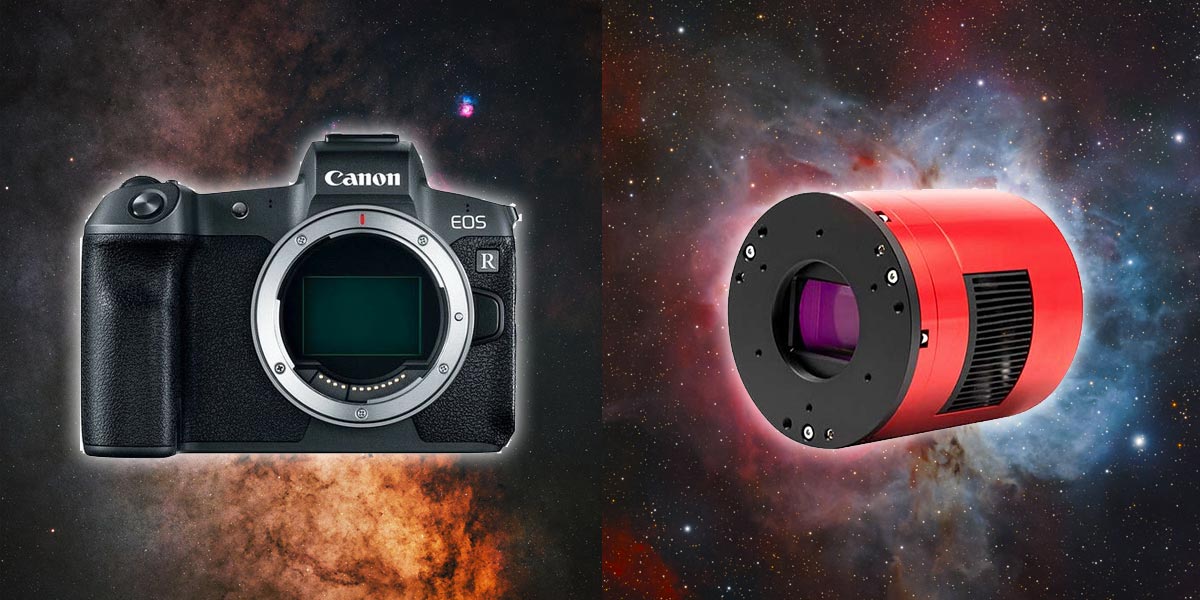
If you’re leaning toward a cooled CMOS camera for deep-sky imaging, my full astrophotography cameras guide compares the best dedicated options for beginners and advanced imagers.
The Key Differences
- A DSLR or mirrorless camera is often the easiest and most flexible way to begin astrophotography, especially if you already own one.
- A dedicated astronomy camera is purpose-built for long-exposure deep-sky imaging through a telescope, and usually becomes the better tool once you are serious about imaging nebulae and galaxies.
- DSLRs and mirrorless cameras are better choices for wide-field astrophotography, including Milky Way, travel, and nightscapes.
- Dedicated astronomy cameras are cooled, feature an astro-optimized sensor, and are better suited for long-exposure deep-sky imaging.
- The ASIAIR makes using a dedicated astro camera very easy and enjoyable, although many DSLRs can also be controlled with it.
- For close-up images of planets, the Moon, and the Sun, a planetary camera is usually the best tool.
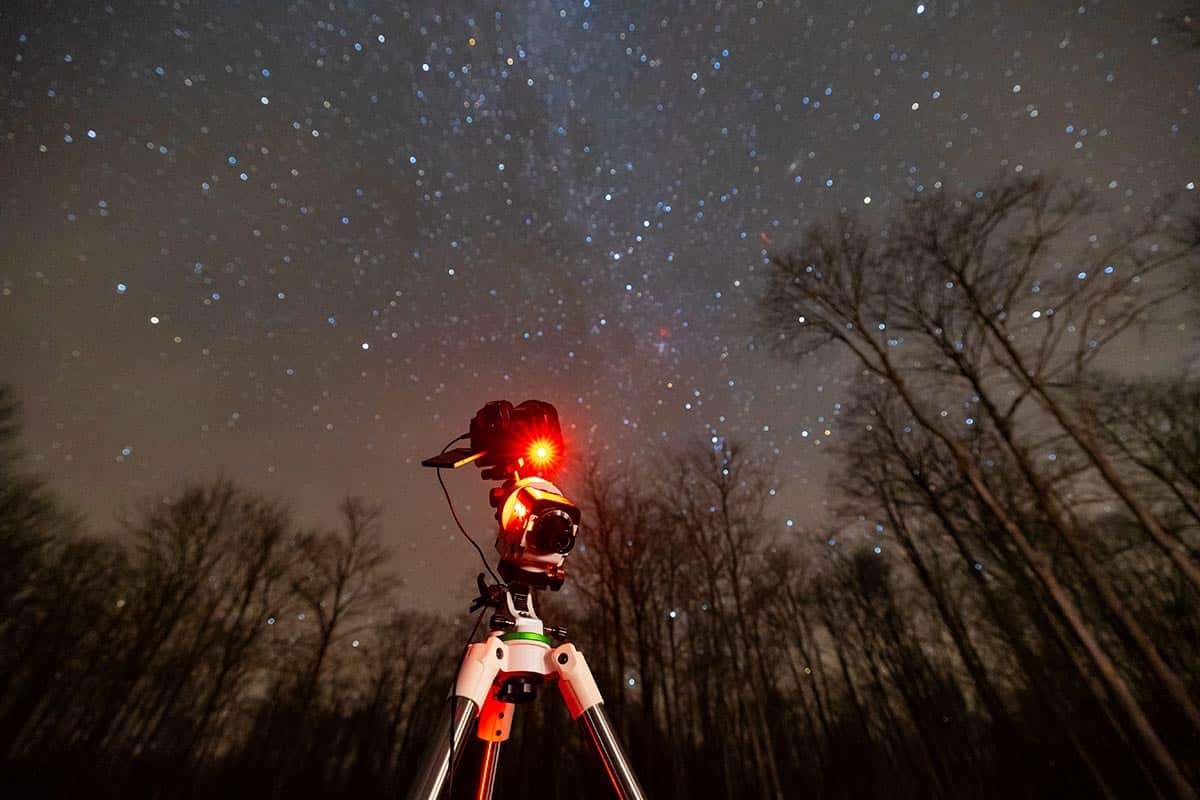
The good news is that both options can produce excellent results. A DSLR is a perfectly valid starting point, but a cooled astro camera is the more specialized long-term deep-sky tool.
A DSLR or mirrorless camera is often the easiest and most flexible way to begin, especially if you already own one. A dedicated astronomy camera, on the other hand, is purpose-built for long-exposure deep-sky imaging and usually becomes the better tool once you are serious about imaging nebulae and galaxies through a telescope.
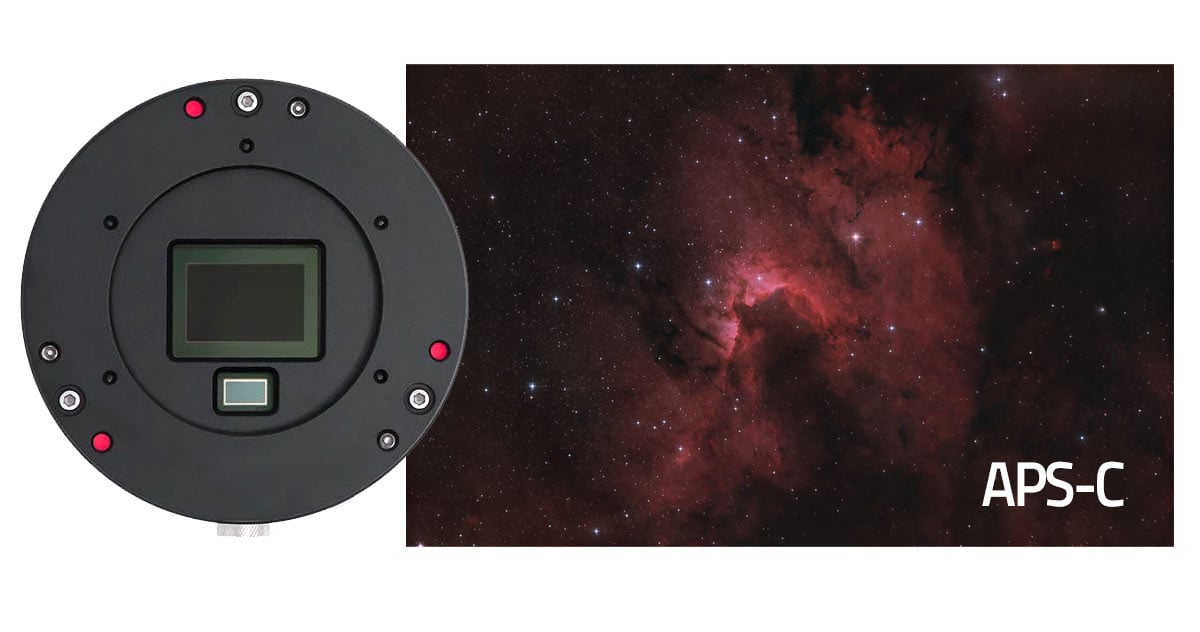
The ZWO ASI2600MC Air is my current favorite one-shot-color dedicated astronomy camera.
Can I Start with the DSLR or Mirrorless Camera I Already Own?
Yes, absolutely.
This is probably the most repeated beginner question on both Reddit and Cloudy Nights, and the consensus is reassuring: if you already own a DSLR or mirrorless camera, it usually makes sense to start there.
Many experienced imagers recommend learning the fundamentals first rather than assuming a dedicated camera is the missing ingredient. Beginners are often reminded that problems with short exposures, weak tracking, poor focus, or limited total integration time will not suddenly disappear just because you swapped cameras.
That is important because astrophotography has a steep learning curve, no matter what camera you use. You still need to learn polar alignment, tracking, focusing, calibration frames, stacking, and image processing.
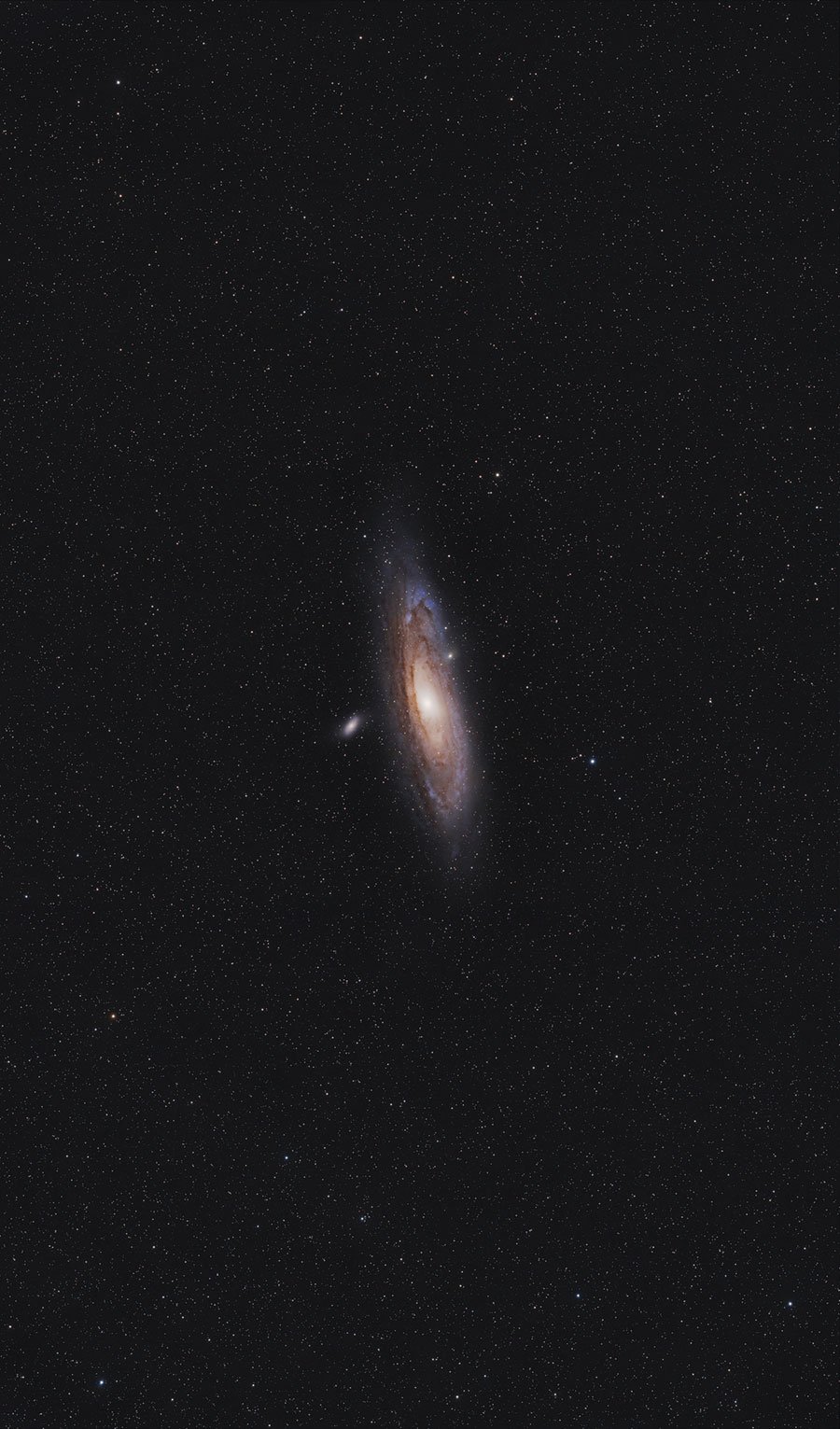
I took this image of the Andromeda Galaxy using my Canon EOS Ra with a Rokinon 135mm F/2 lens attached.
A DSLR gives you a simpler on-ramp. It has its own screen, battery, storage, and controls built in. You can attach it to a star tracker or small equatorial mount and start imaging right away without adding nearly as much complexity.
There is also the value question. A DSLR or mirrorless body can serve double duty for daytime photography, family trips, landscape work, and astrophotography. That flexibility matters when you are just getting started and trying to stretch a budget.
Recommendation for Beginners
If you already own a DSLR or mirrorless camera, use it first. Put your money toward a star tracker, equatorial mount, or a better lens before rushing into a dedicated astronomy camera.
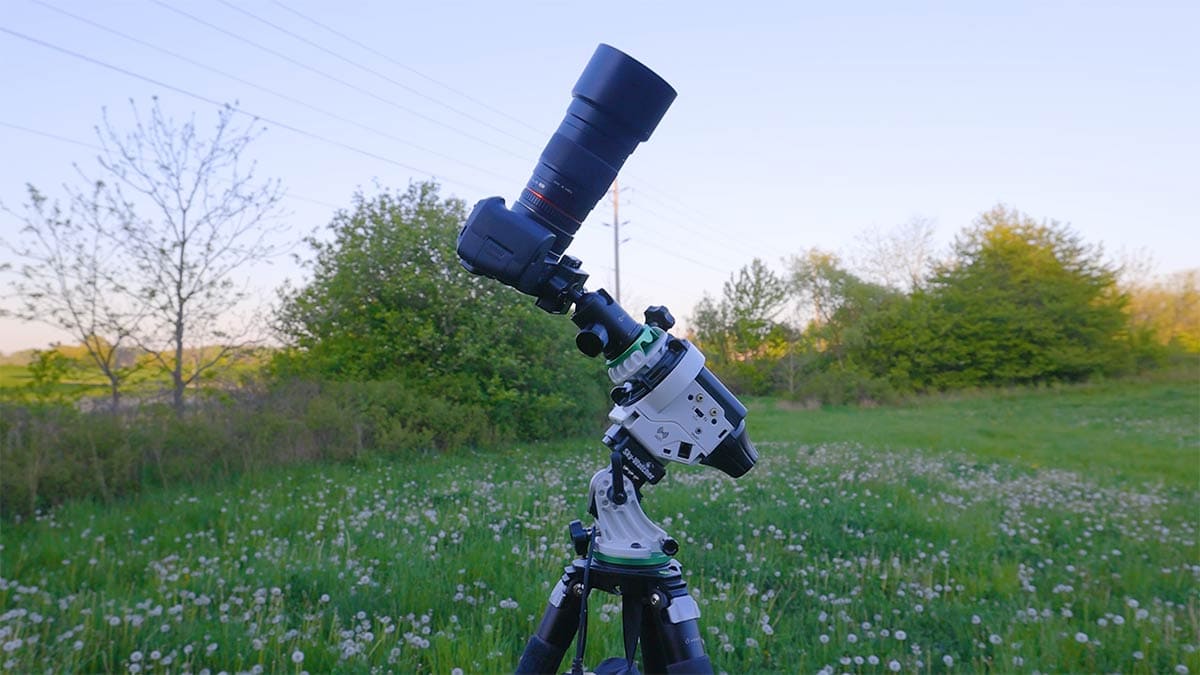
I use my Canon EOS R mirrorless camera for wide-field astrophotography with my Rokinon 135mm F/2 lens.
Will a Dedicated Astronomy Camera Actually Give Me Better Deep-Sky Images?
For long-exposure deep-sky imaging through a telescope, yes, usually.
This is where dedicated astronomy cameras pull ahead. Modern deep-sky astro cameras are designed specifically for faint celestial targets. Many are cooled, which reduces thermal noise during long exposures.
That matters most when you are taking long sub-exposures over several hours on targets like emission nebulae, galaxies, or faint dust clouds.
A stock DSLR can absolutely capture those objects, but a cooled astronomy camera gives you more control over sensor temperature and generally makes it easier to build a cleaner data set, especially in warm weather.
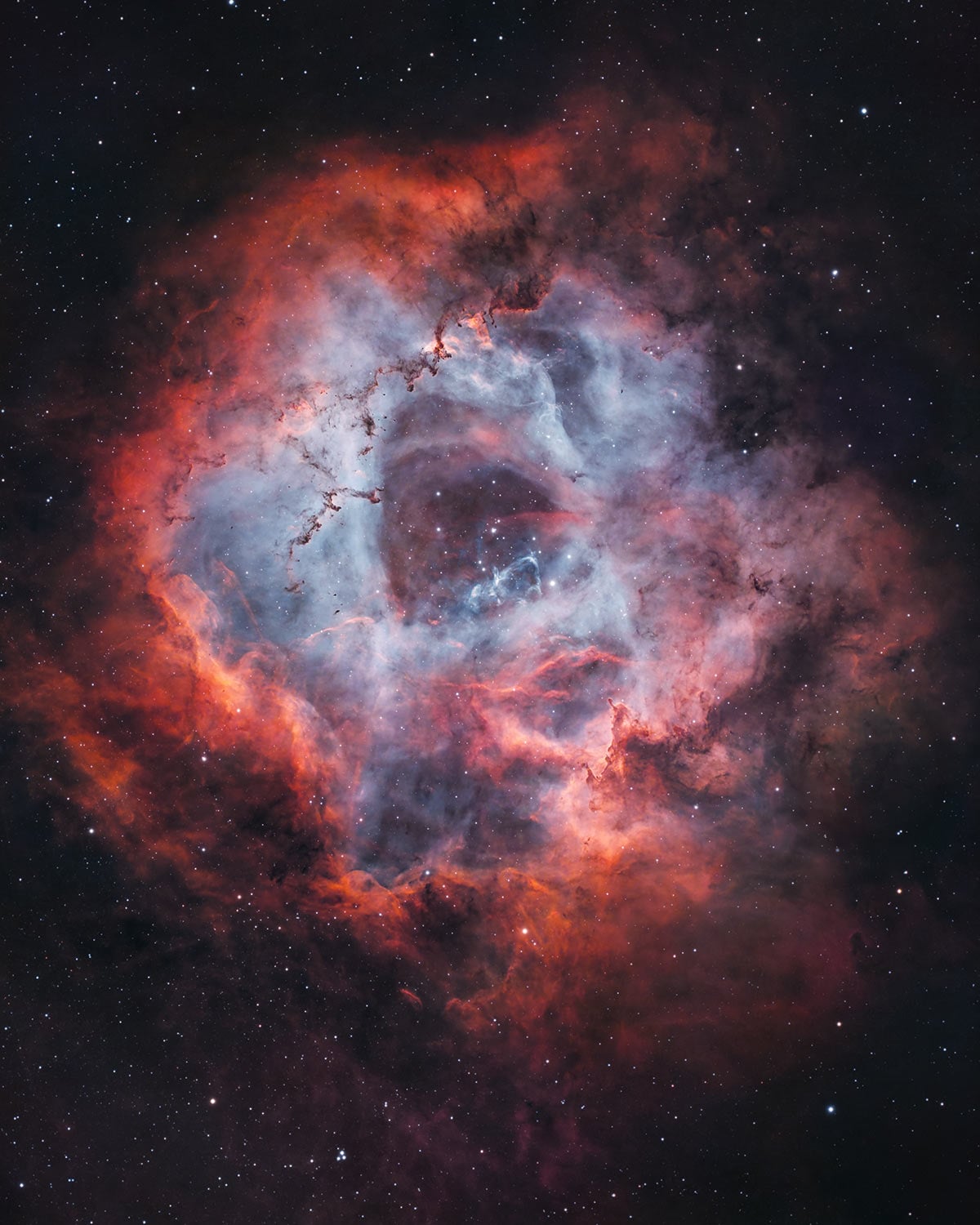
I used a dedicated astronomy camera (ZWO ASI2600MC Air) to capture clean, long-exposure images of the Rosette Nebula.
Dedicated astronomy cameras also typically avoid the strong internal IR-cut filtering found in many stock consumer cameras, which helps with hydrogen-alpha-rich targets such as the North America Nebula, Rosette Nebula, or Heart Nebula.
That is one reason they are considered better for long-exposure deep-sky imaging, even if a DSLR remains a valid starting point.
Best For Deep-Sky Imaging
If your main goal is imaging nebulae and galaxies through a telescope, a cooled dedicated astronomy camera is usually the better long-term investment.

A cooled dedicated astronomy camera offers better noise performance than a DSLR or mirrorless camera for long exposure astrophotography.
Is a Cooled Astronomy Camera Really Worth it?
If deep-sky imaging is your priority, cooling is one of the biggest reasons to upgrade.
This is another question that comes up constantly. Beginners often compare the large sensor and low cost of an older DSLR to the smaller sensor and higher price of an astro camera, and wonder why anyone would pay more for a camera that seems less versatile.
The answer is usually the same: cooling and specialization are the real value, not just raw sensor size.
A cooled astronomy camera is designed to hold the sensor at a controlled temperature throughout the night. That consistency makes calibration easier and helps reduce thermal noise in long exposures.
By contrast, a DSLR sensor warms up as you shoot, and you cannot precisely regulate that temperature.
This does not mean a cooled camera is necessary on day one. Plenty of excellent images have been taken with uncooled DSLRs and mirrorless bodies. But once you start chasing faint deep-sky targets with long exposures, especially in warmer conditions, cooling becomes a very meaningful advantage.
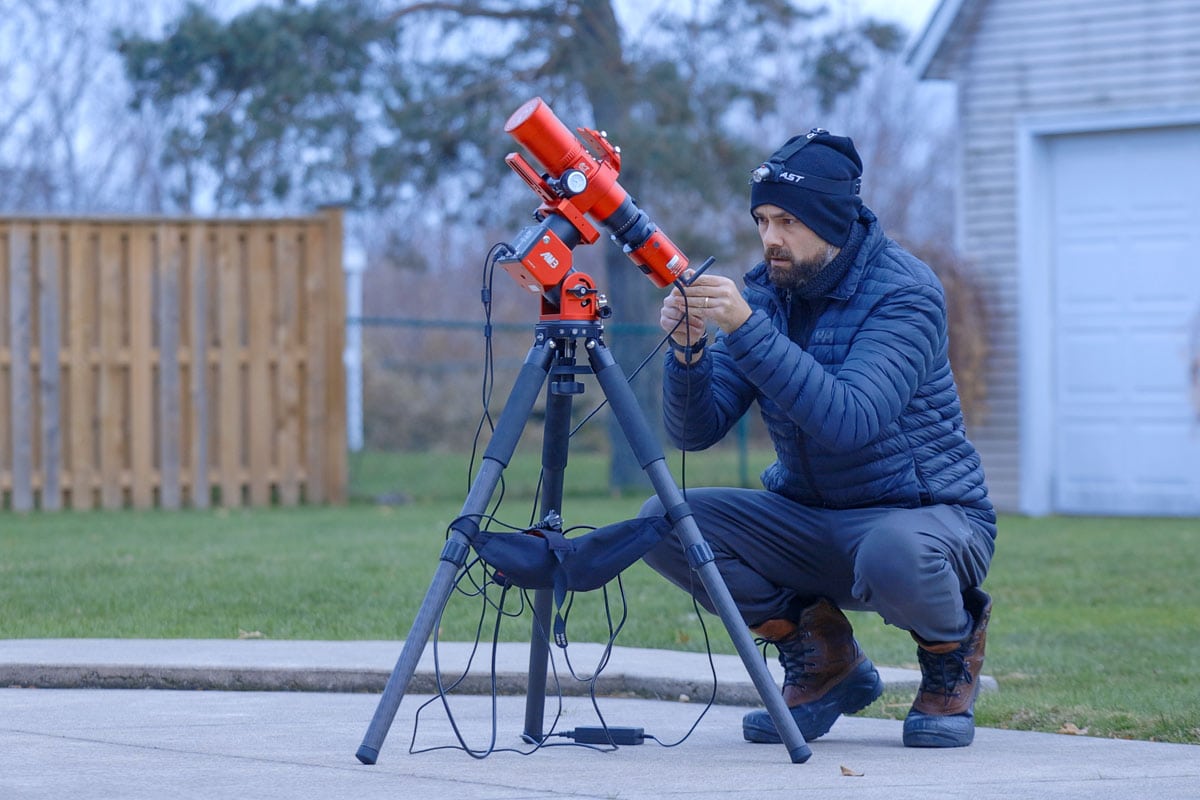
While a dedicated astronomy camera can offer improved performance, it requires a more advanced setup and capture process.
Does a Dedicated Astronomy Camera make the Setup Harder?
Traditionally, yes. Today, much less so.
One reason beginners used to avoid dedicated astronomy cameras was complexity. They often require external power, a mini computer or laptop, capture software, and a more telescope-specific workflow.
A DSLR feels more familiar because it is a self-contained camera. You can frame a target on the rear screen, take a test shot, and get instant feedback without building a whole electronic imaging system around it.
But this has changed dramatically thanks to tools like the ASIAIR.

The ASIAIR mobile app makes controlling a dedicated astronomy camera much easier thanks to the Sky Atlas feature.
Using an ASIAIR to control a dedicated astronomy camera is very easy and enjoyable. Once your mount, main camera, guide camera, and accessories are connected, the experience can feel surprisingly streamlined. Polar alignment, plate solving, guiding, image preview, and imaging sequences all happen within a single app-driven ecosystem.
You can use the ASIAIR to control many DSLRs as well, but it is better utilized with an astro camera. The overall experience feels more complete and friction-free when paired with a dedicated astronomy camera.
ASIAIR Tip
If you want the smoothest ASIAIR experience, a dedicated astro camera is the better fit. DSLR support is useful, but the platform really shines with a purpose-built astronomy imaging setup.
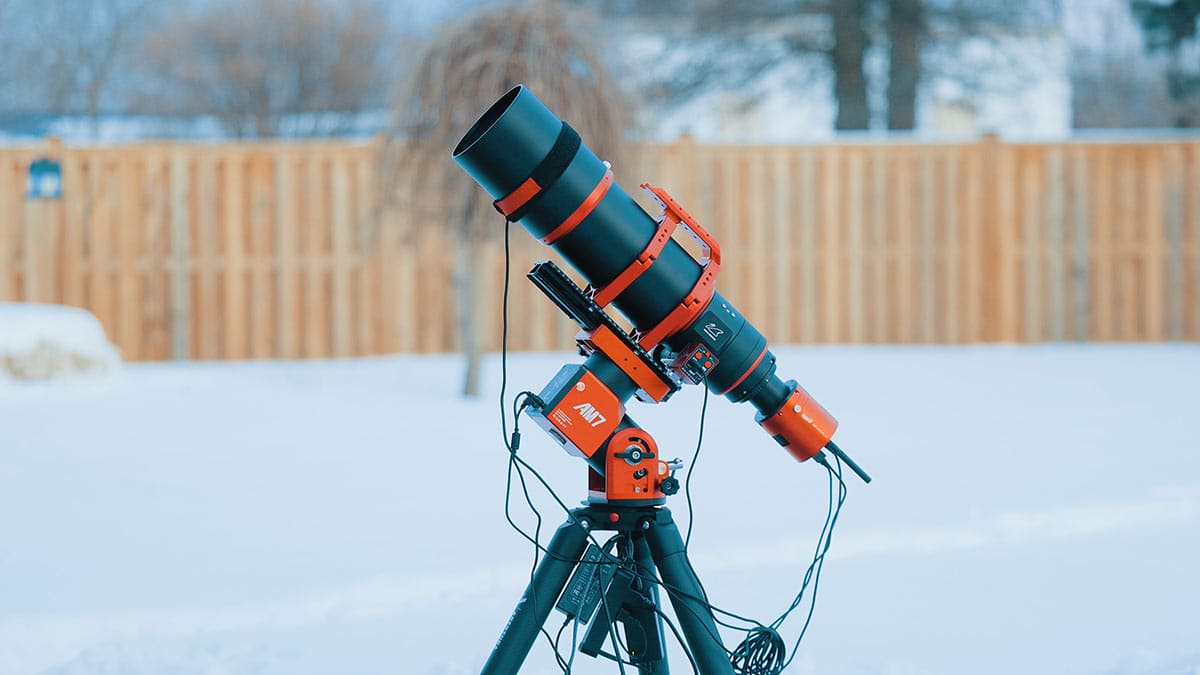
I use the ASIAIR to control my camera, mount, and telescope autofocuser.
What if I Want to Shoot the Milky Way, Nightscapes, or Travel with my Setup?
This is where DSLRs and mirrorless cameras clearly win.
If your astrophotography includes wide-field camera lens work, Milky Way photography, aurora images, constellations, or travel nightscapes, a DSLR or mirrorless camera is the better choice.
It is more portable, more self-contained, and much more enjoyable for quick sessions in the field. You do not need external power bricks, a control box, or a telescope-centered imaging rig just to capture a beautiful nightscape from a dark sky location.
That is why DSLRs and mirrorless cameras continue to make so much sense for travel astrophotography. You can throw one body and a fast lens in your bag, head somewhere dark, set up quickly, and review your images instantly on the back screen.
For Milky Way and nightscape work, that immediacy matters. It is a very different style of imaging than running a fully controlled deep-sky rig in your backyard for four hours on a single nebula.
Best For Travel and Milky Way Photography
Choose a DSLR or mirrorless camera if you want a flexible setup for wide-field astrophotography, camera lens imaging, travel, and nightscapes.

If you’re most interested in Milky Way Photography, a DSLR or mirrorless camera with a lens is the best option.
What about Planets, the Moon, and the Sun?
This is where a third category enters the picture: planetary cameras.
A lot of beginners think they are choosing between a DSLR and a deep-sky astronomy camera for all types of astrophotography. In reality, planetary imaging is a different discipline with different priorities.
For high-magnification images of Jupiter, Saturn, Mars, the Moon, and the Sun, a dedicated planetary camera is usually the best tool.
Planetary imaging relies on capturing many frames at high speed, then stacking the sharpest ones. That is why a planetary camera usually outperforms a DSLR for this job.
Best For Planetary Imaging
If your goal is close-up imaging of planets or the Sun, skip the DSLR versus deep-sky camera debate and look at a dedicated planetary camera instead.
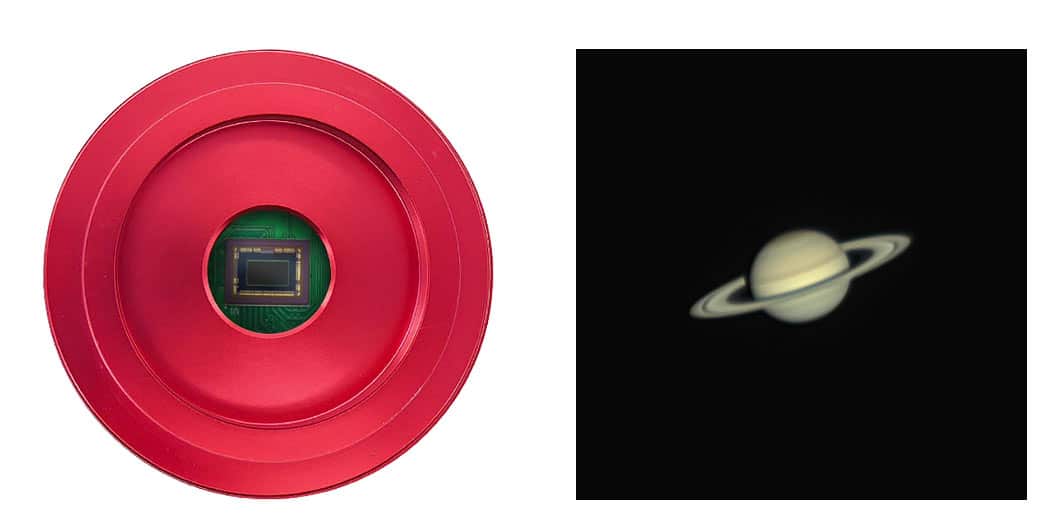
A planetary camera is best for capturing the planets and the moon. I used the ZWO ASI462MC to photograph Saturn.
Which One Should a Beginner Buy First?
If you already own a DSLR or mirrorless camera, start with it.
That is still the most practical advice. Learn the fundamentals. Use the camera you have. Pair it with a tracker or a solid mount. Figure out focusing, exposure length, calibration frames, stacking, and processing.
Beginners often benefit more from improving their mount and technique than from buying a new camera too soon.
Buy a dedicated astronomy camera first if your goal is clearly long-exposure deep-sky imaging through a telescope, and you are ready for a more specialized rig.
In that situation, the benefits are real: cooling, better hydrogen-alpha response, cleaner long-exposure data, and a more integrated control experience when used with a platform like the ASIAIR.
In simple terms:
- A DSLR or mirrorless camera is the better choice for beginners who want flexibility, travel-friendliness, Milky Way photography, nightscapes, and a camera they can use for everything.
- A dedicated astronomy camera is the better choice for people focused on deep-sky imaging through a telescope who want cooling, astro-optimized sensitivity, and a more purpose-built system.
- If your main interest is planets, the Moon, or the Sun, a planetary camera is usually the best answer of all.
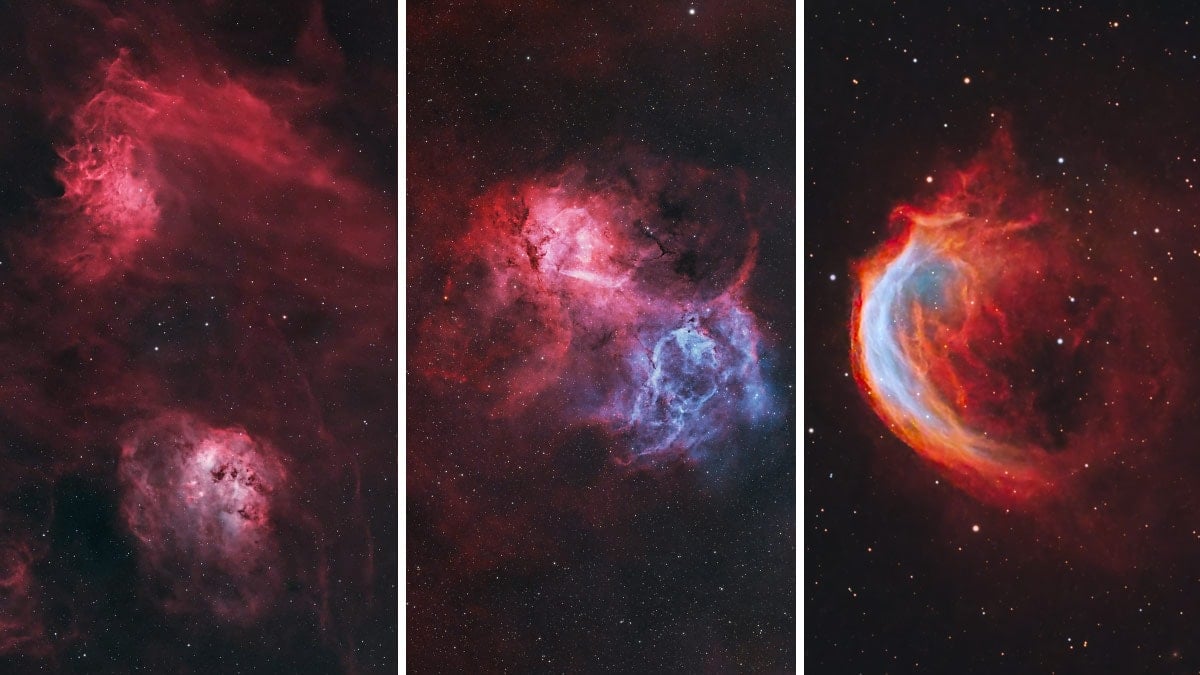
For my main interests (capturing large nebulae), a dedicated astronomy camera makes the most sense.
What About Smart Telescopes?
If you’re also considering an all-in-one imaging solution, take a look at my smart telescope buying guide. Smart telescopes offer a much simpler way to capture deep-sky objects, with the camera, mount, and software built into one compact system, making them a popular alternative for beginners and casual astrophotographers.
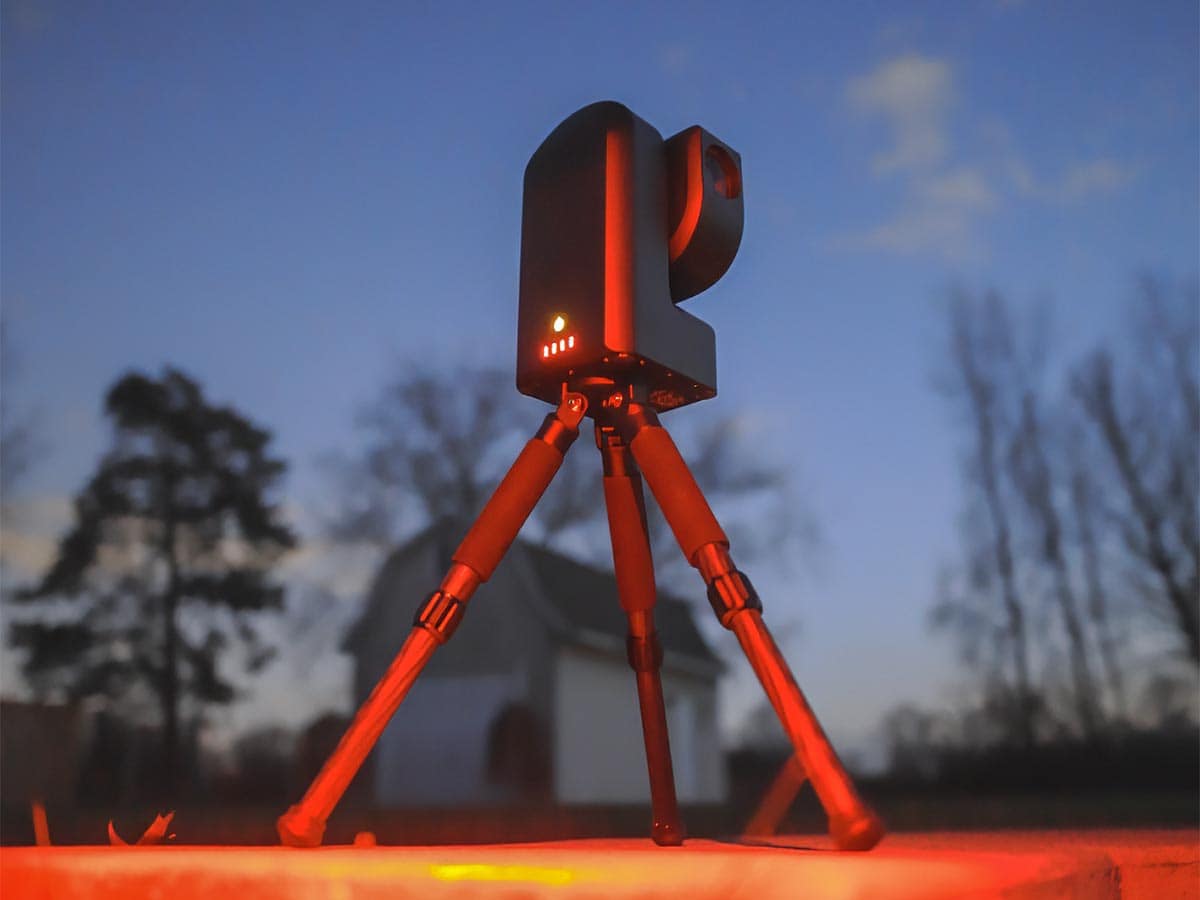
A smart telescope like the ZWO Seestar S50 includes a built-in dedicated astronomy camera for live stacking and short exposure astrophotography.
Frequently Asked Questions
Yes. A DSLR is absolutely good enough to start astrophotography, especially if you already own one. It is one of the easiest ways to learn the basics without adding too much complexity.
Dedicated astronomy cameras are typically cooled and optimized for long exposures on faint targets. That makes them especially useful for imaging nebulae and galaxies through a telescope.
Yes, many DSLRs can be controlled with the ASIAIR. However, the ASIAIR is generally better utilized with a dedicated astro camera, where the overall experience feels more complete and streamlined.
A DSLR or mirrorless camera is usually the best choice for Milky Way photography because it works well with wide-angle lenses, is easy to travel with, and does not require an external imaging setup.
No, you do not need a cooled camera to get started. But if your main goal is long-exposure deep-sky imaging through a telescope, a cooled astronomy camera offers meaningful advantages.
For planets, the Moon, and the Sun, a dedicated planetary camera is usually the best option because it is designed for high-frame-rate capture.
Final Thoughts
Both camera types can produce beautiful astrophotography images, but they are best suited to different jobs.
If you want an affordable, flexible, and travel-friendly way to get started, a DSLR or mirrorless camera is hard to beat. If your goal is serious deep-sky imaging through a telescope, a cooled dedicated astronomy camera is the better specialized tool.
And if your passion is planetary imaging, a dedicated planetary camera is the right path.
The best choice is the one that matches the kind of astrophotography you actually want to do most.
 Trevor Jones is an astrophotographer and a valued member of the RASC. His passion is inspiring others to start their astrophotography journey on YouTube so they can appreciate the night sky as much as he does. His images have been featured in astronomy books & online publications, including the NASA Astronomy Picture of the Day (APOD).