
How Do I Reduce Tracking Errors in Astrophotography?

Accurate tracking is essential for capturing a great astrophotography image using a telescope. An equatorial tracking mount can also significantly improve your wide-field shots.
However, for clean images with sharp, round stars, your tracking platform must be up to the task. Tracking errors can be frustrating to deal with, and I’ve had my fair share of these situations over the last decade.
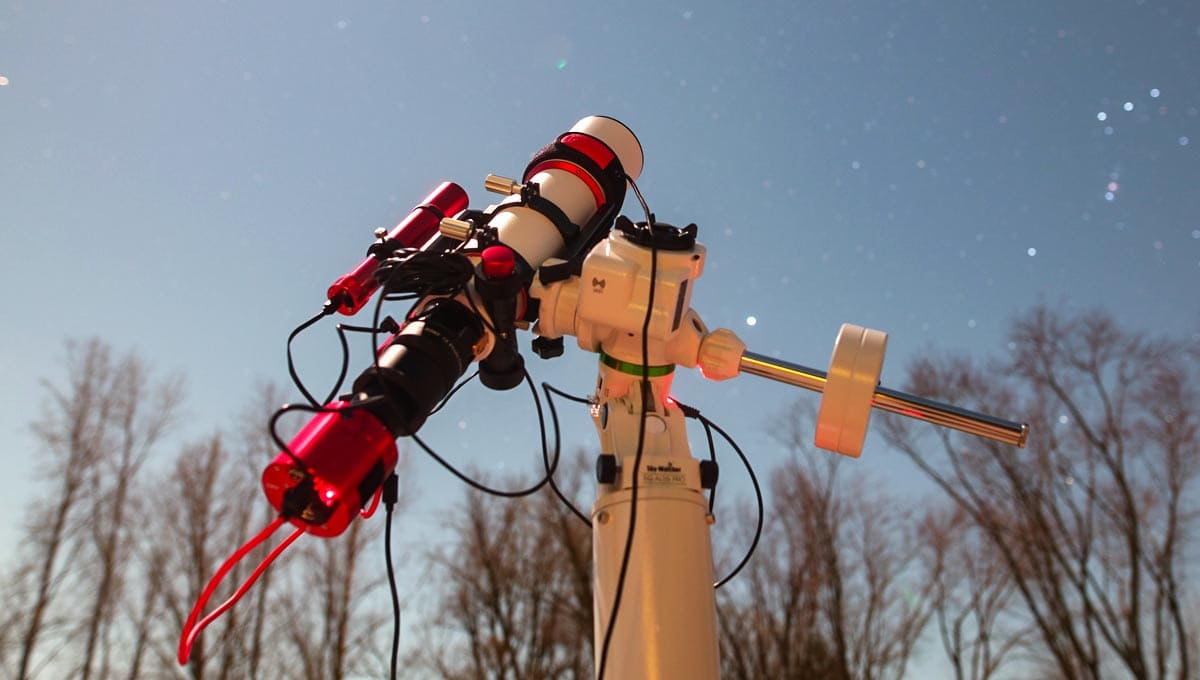
My equatorial tracking mount remains locked on target with accurate and smooth tracking. Balance, Polar Alignment, and Autoguiding are the keys to this process.
Some people confuse tracking and guiding. Tracking refers to the smooth motion of a telescope mount or star tracker, which moves at the sidereal rate of rotation. Guiding adds another layer of precision by making small corrections along the way.
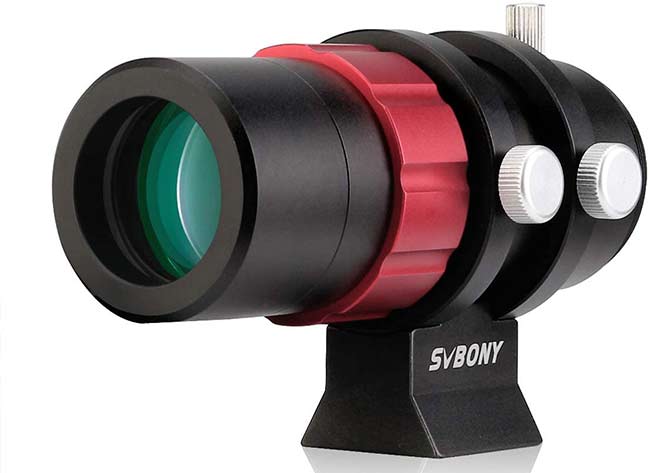
I have found a small autoguiding kit, similar to the one shown above, to be an affordable solution for improved tracking accuracy.
What Are Tracking Errors?
Tracking errors occur when your telescope mount fails to follow the stars smoothly as the Earth rotates. Instead of sharp stars, you’ll see elongated star trails or inconsistent guiding performance.
Even small tracking errors can ruin long exposures, making it one of the biggest challenges for deep-sky astrophotographers. The zoomed-out preview image might look fine, but when you zoom into 100% view, you’ll see stars that are stretched or oblong-shaped.
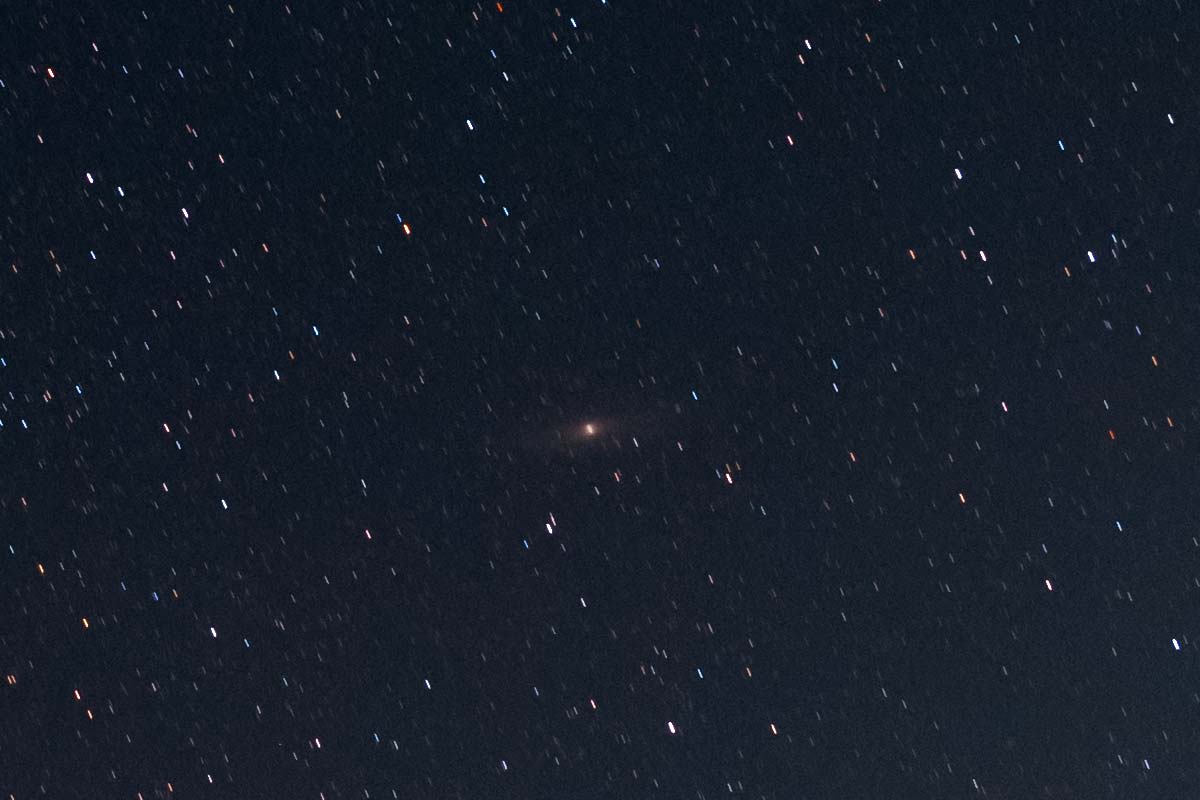
The image above is an example of tracking error in astrophotography. Notice the oblong shape of the stars surrounding the Andromeda Galaxy in the center.
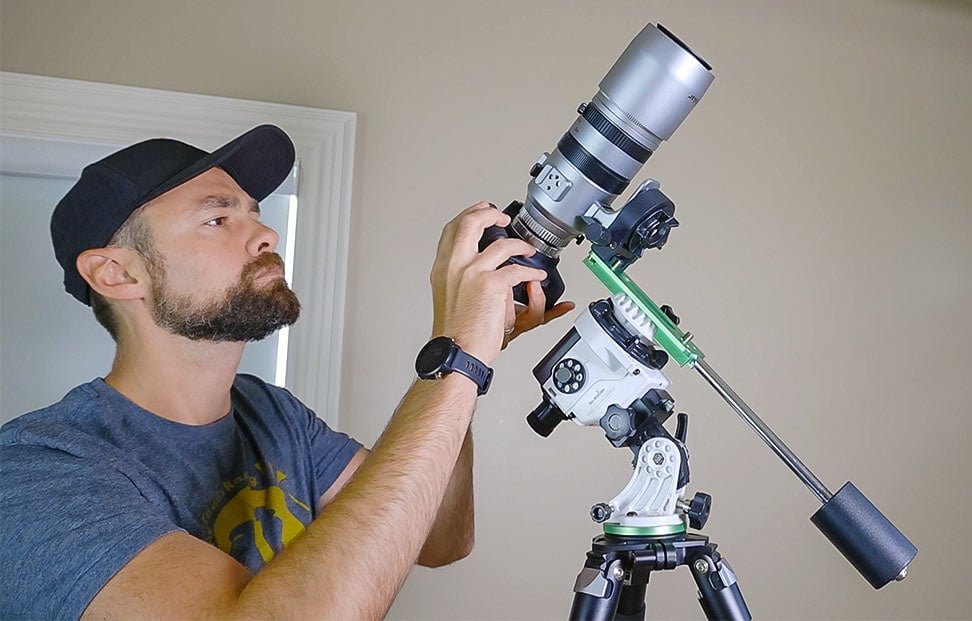
Proper balance and polar alignment are crucial for smooth tracking with a star tracker device. Sky-Watcher Star Adventurer 2i with a counterweight kit for small telescopes pictured.
Common Causes of Tracking Errors
Several factors contribute to poor tracking:
-
Poor polar alignment – even small alignment mistakes show up during long exposures.
-
Mount backlash – looseness in the gears can cause sudden shifts in star position.
-
Periodic error – all mounts have mechanical imperfections in their worm gears that repeat over time.
-
Balance issues – an unbalanced telescope puts stress on the drive motors, leading to uneven tracking.
-
Environmental factors – wind gusts, vibrations, and temperature swings can all introduce error.
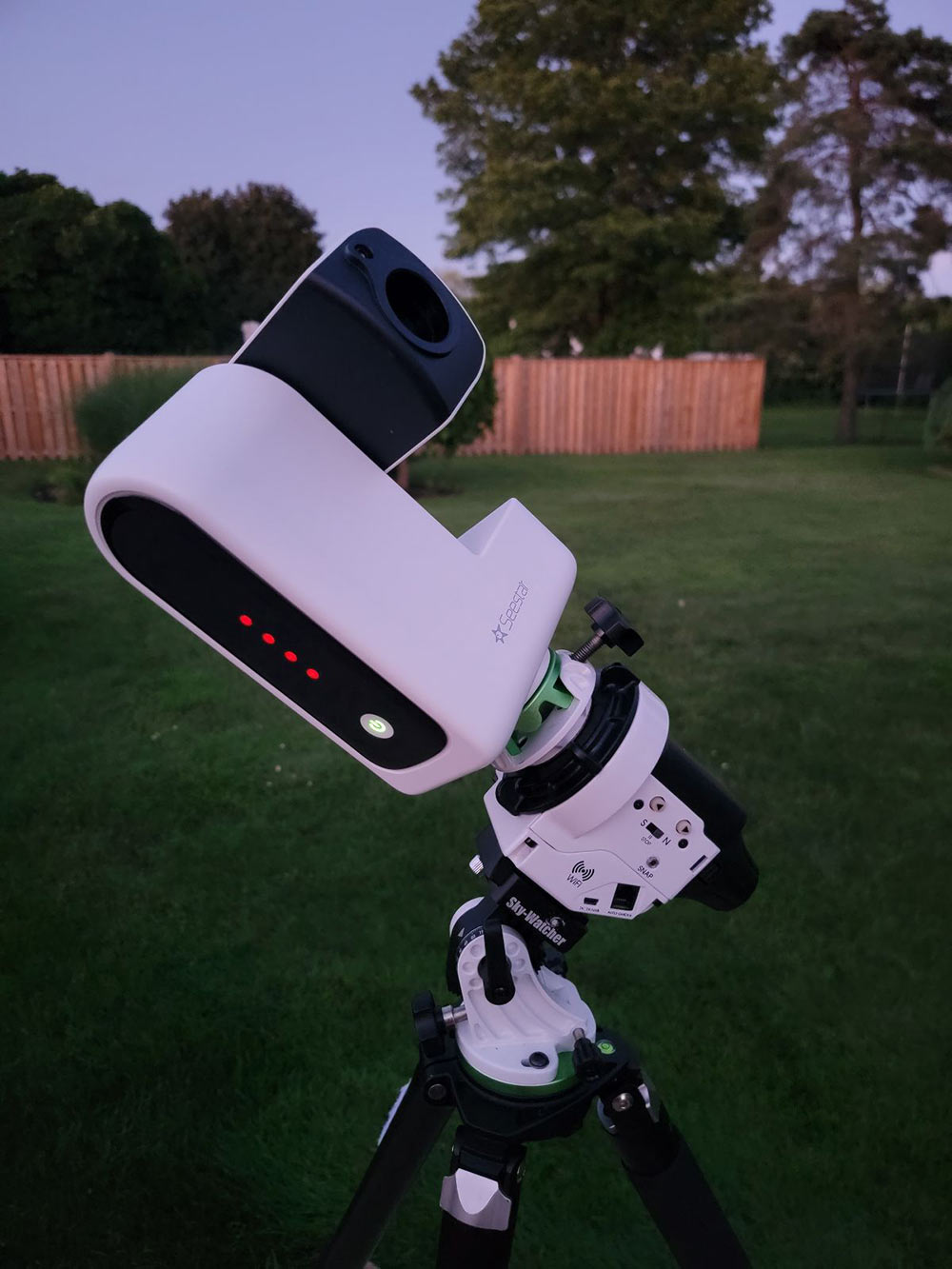
Even smart telescopes with Alt-Az mount designs can utilize a simple polar alignment routine to improve their tracking accuracy.
Tips to Reduce Tracking Errors
1. Master Polar Alignment
Precise polar alignment is the foundation of smooth tracking. Tools like the ZWO ASIAIR ‘s polar alignment feature or QHY PoleMaster make this process quick and accurate.
Even a few arcminutes off can mean star trailing in longer exposures. Take the time to get this right, because without it, your entire imaging plan is ruined.
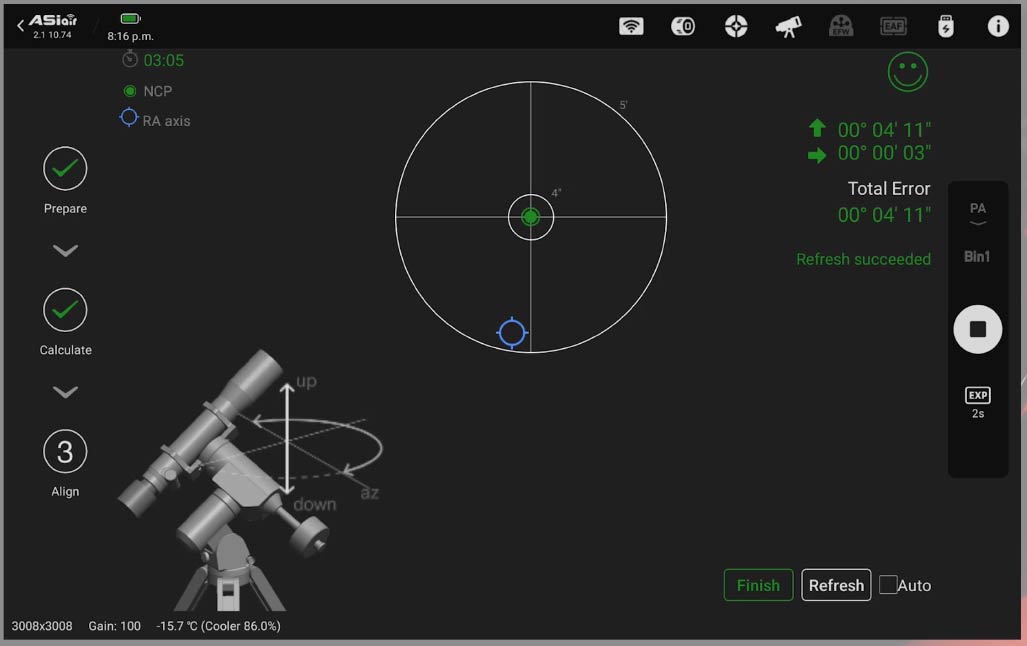
The Polar Alignment Wizard in the ASIAIR guides you through the process of adjusting the Alt-Az bolts on your tracking mount to accurately polar align your setup.
2. Balance Your Mount Correctly
A well-balanced telescope moves smoothly and reduces strain on the mount’s motors. Many astrophotographers recommend a slight “east-heavy” balance, so the gears always push against gravity rather than float.
If you are using a strain wave mount, this can be difficult to achieve, but it’s also less important. Traditional EQ mounts must be carefully balanced in both the RA and DEC axes for top performance.
3. Use Autoguiding
An autoguiding system actively corrects tracking errors in real time. A small guide scope (or OAG) with a dedicated guide camera feeds star position data to the mount through software like PHD2 or the ASIAIR app.
Guiding dramatically improves star sharpness and allows for longer exposures. Autoguiding has never been easier to implement with fantastic image acquisition tools like the ASIAIR or N.I.N.A. with PHD guiding implementation.
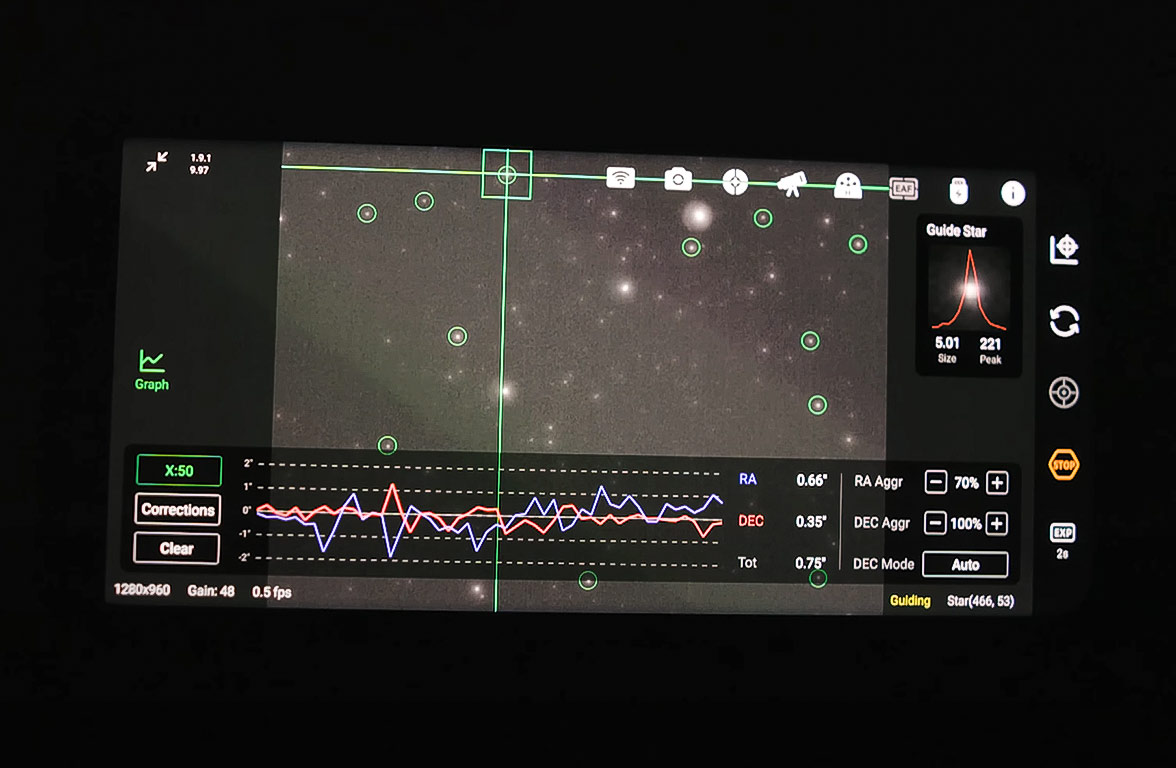
This is what the guiding graph looks like using the ASIAIR. This system uses multi-star guiding to minimize tracking errors.
4. Train Periodic Error Correction (PEC)
Some mounts allow you to record and playback corrections for periodic error. PEC “teaches” the mount to anticipate its gear flaws, reducing the amount of guiding correction required.
Most equatorial telescope mounts have some level of periodic error that can largely be corrected using autoguiding. The longer the focal length you’re using, the more obvious this error will be.
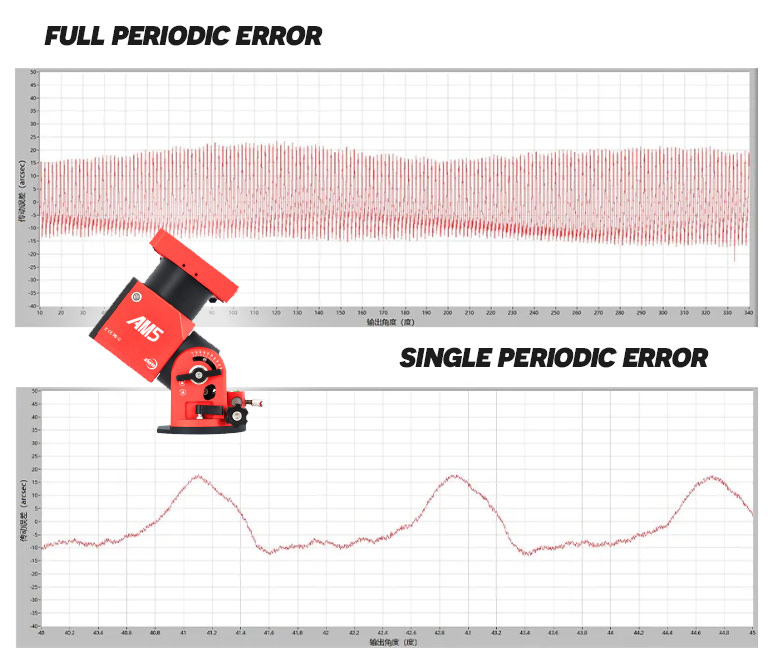
The ZWO AM5 strain wave mount comes with a periodic error report. This amount of error is easily corrected using autoguiding.
5. Upgrade or Maintain Your Gear
-
Use a sturdy tripod or pier to avoid vibrations.
-
Keep your mount firmly leveled and well-maintained.
-
For imaging with longer focal lengths, consider upgrading to a mount with a higher weight capacity and smoother mechanics.

Related Post: The Best Mounts for Astrophotography (in 2025)
Real-World Example from My Backyard
In my own imaging sessions, I often guide my Sky-Watcher EQ6-R Pro with the ASIAIR and a small guide scope. For compact refractor telescopes, the ZWO AM5 is my go-to choice.
With good polar alignment and balance, my guiding error stays around 0.6″ RMS — more than good enough for sharp stars at 500–1000 mm focal lengths.
If I neglect alignment or balance, that number can easily climb above 1.5″, and my stars start to show it.
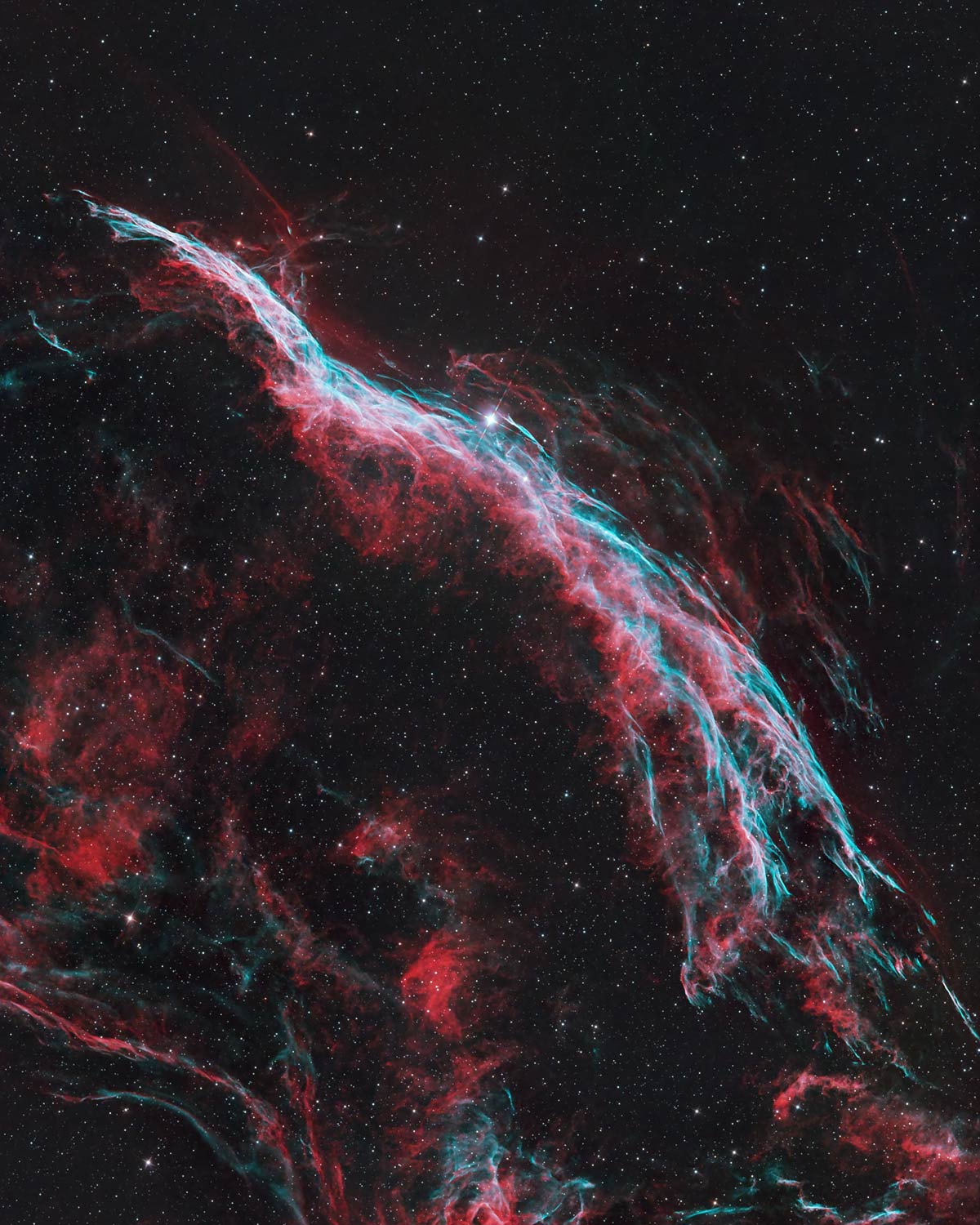
This image of the Veil Nebula demonstrates the accuracy of my tracking using a ZWO AM5 mount with an Apertura CarbonStar 200 telescope mounted on top (800mm focal length).
FAQ
Tracking errors are usually caused by mechanical imperfections in your mount (backlash, periodic error), poor polar alignment, flexure in your setup, or environmental factors like wind and vibrations. Even slight errors show up as elongated stars in long exposures.
The most common sign of tracking error is star trailing or elongated stars in your images. If you zoom into your sub-exposures and the stars consistently look like little ovals or streaks rather than pinpoints, your mount is drifting.
Autoguiding dramatically reduces errors but doesn’t completely eliminate them. It corrects small deviations in real time, but effectiveness depends on calibration, guide scope/camera choice, and overall mount performance.
Poor polar alignment is one of the leading causes of tracking issues. Even a small alignment error will cause drift across the frame during longer exposures. Using a polar alignment tool (e.g., the ZWO ASIAIR’s routine or a PoleMaster) can make a big difference.
Yes. Keep exposures shorter, balance your mount carefully, use a telescope with a lower focal length, and perform precise polar alignment to minimize errors, even without guiding.
Periodic error comes from imperfections in the worm gear. It repeats in cycles and can distort star shapes over long exposures. Many mounts support Periodic Error Correction (PEC) training to reduce its impact, and autoguiding can also counteract it.
Absolutely. Wind, temperature changes, and ground vibrations can cause your mount to nudge and lead to star trailing. Set up on stable ground and use a dew shield or windbreak to minimize these effects.
Final Thoughts
Tracking errors are frustrating, but they’re also preventable. With accurate polar alignment, careful balance, autoguiding, and a bit of mount training, you can drastically reduce star trailing and keep your astrophotos sharp.
Whether you’re running a portable star tracker or a heavy-duty equatorial mount, applying these techniques will give you longer, cleaner exposures and better final images.

Recommended Astrophotography Mount for Precise Tracking: The ZWO AM5N
 Trevor Jones is an astrophotographer and a valued member of the RASC. His passion is inspiring others to start their astrophotography journey on YouTube so they can enjoy the night sky as much as he does. His images can be seen in astronomy books & online publications, including the NASA Astronomy Picture of the Day.