I Tried Telescope Live: Processing Data From a $73,000 Telescope

Disclosure: This article accompanies a video produced in paid collaboration with Telescope Live. If you subscribe through one of them, I may earn a commission at no additional cost to you.
What is Telescope Live? Telescope Live is an online astrophotography platform where members use credits to download professional FITS datasets captured by robotic telescopes under dark skies. Its archive includes broadband and narrowband data from observatories in both hemispheres, allowing you to process deep-sky objects and equipment combinations you may never be able to capture from home.
If you arrived here searching for a Telescope Live review, there is something you should know immediately: I was paid to create the accompanying video. I also approached this experience differently from how someone shopping anonymously for a subscription would. My goal here is to show you exactly what I did, explain what the service actually provides, and help you decide whether working with professionally captured data sounds enjoyable.
This was the first time I had ever processed astrophotography data I did not capture myself. After years of building my images from the ground up (from polar alignment and guiding to calibration and processing), that felt like a surprisingly big step.
If I was finally going to break that streak, though, I wanted the data to be spectacular.
My First Telescope Live Dataset
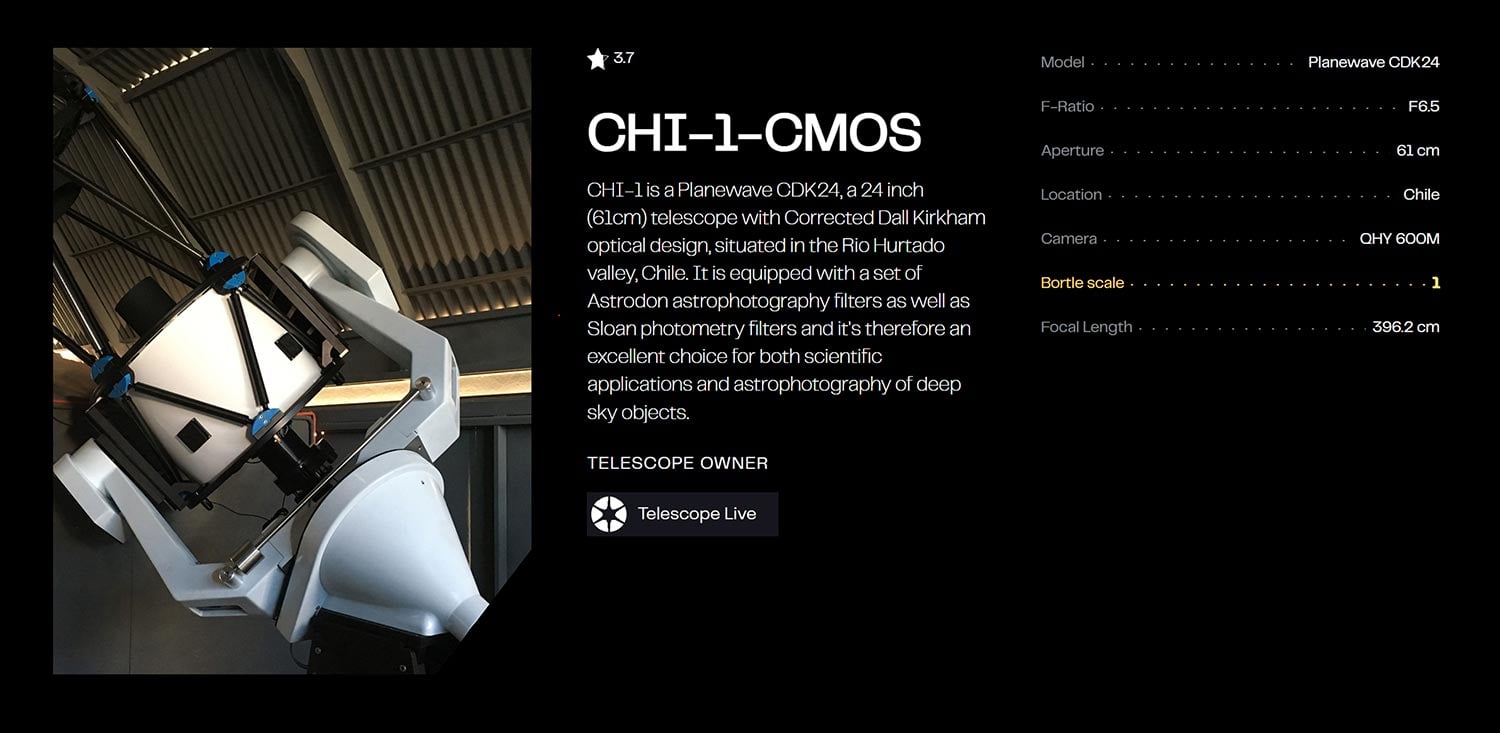
I chose the Sculptor Galaxy (NGC 253), a Southern Hemisphere target that never climbs high enough for me to photograph properly from my backyard in Canada. The data was captured under pristine Chilean skies using CHI-1, a PlaneWave CDK24 with a 24-inch (61-centimeter) aperture and a focal length of nearly 4,000 millimeters.
A CDK24 is the kind of telescope most amateur astrophotographers will never own. The optical tube alone is in the neighborhood of $73,000 USD before adding the mount, camera, filters, observatory, and the trip to Chile. Working with its data is therefore a very different proposition from buying another piece of equipment for the backyard.
I downloaded the files, stacked the luminance exposures in PixInsight, and applied an automatic stretch. The first look stopped me in my tracks. The galaxy filled the frame with crisp dust lanes, compact star-forming regions, and the kind of small-scale detail that a long focal length can reveal under excellent seeing.
The quality was exciting, but it also created a useful challenge: clean data leaves fewer places for processing mistakes to hide. Instead of fighting gradients, clouds, poor tracking, or light pollution, I could concentrate on color, contrast, detail, and the overall presentation of the galaxy.
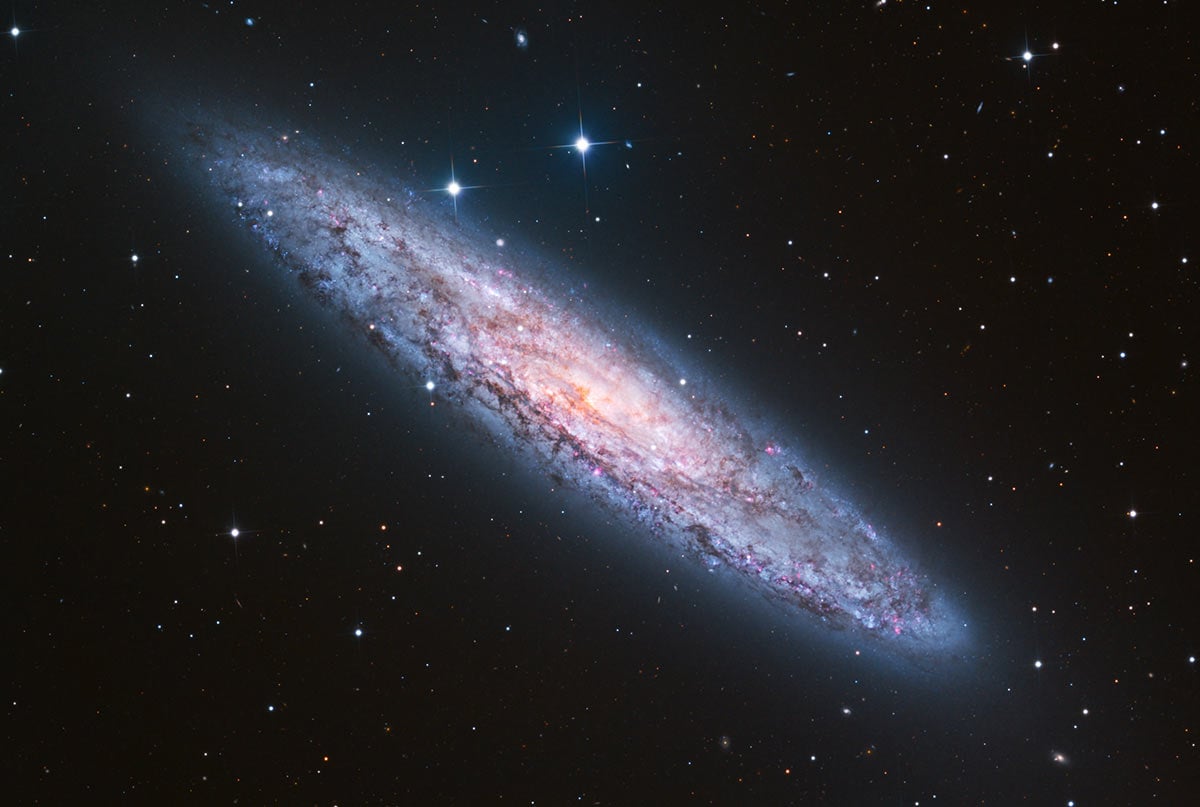
The Sculptor Galaxy. Data: Telescope Live (Planewave CDK24), Processing: Trevor Jones
How Telescope Live Actually Works
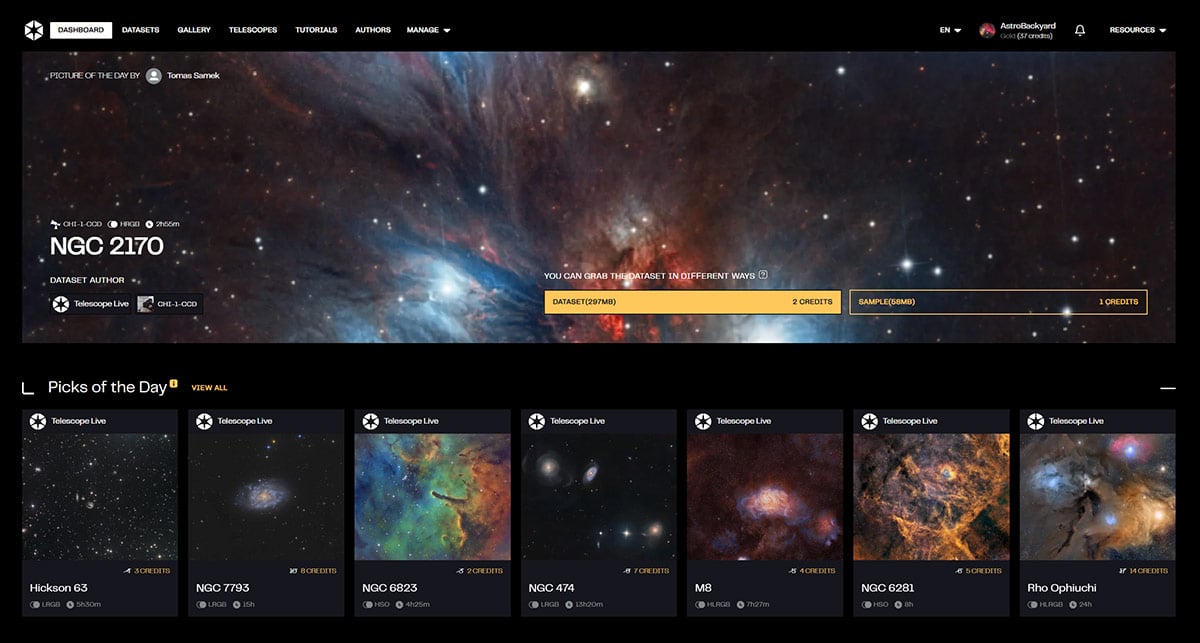
Telescope Live is best understood as a large, searchable library of astronomical image data. You browse projects captured by a network of robotic telescopes, inspect the object, location, telescope, filters, field of view, integration time, and credit cost, and then download the dataset you want to process.
The archive can be filtered by object type, telescope, filter combination, field of view, and total exposure time. That makes it possible to look specifically for a small galaxy captured at long focal length, a wide nebula recorded through narrowband filters, or a Southern Hemisphere object that never rises from your location.
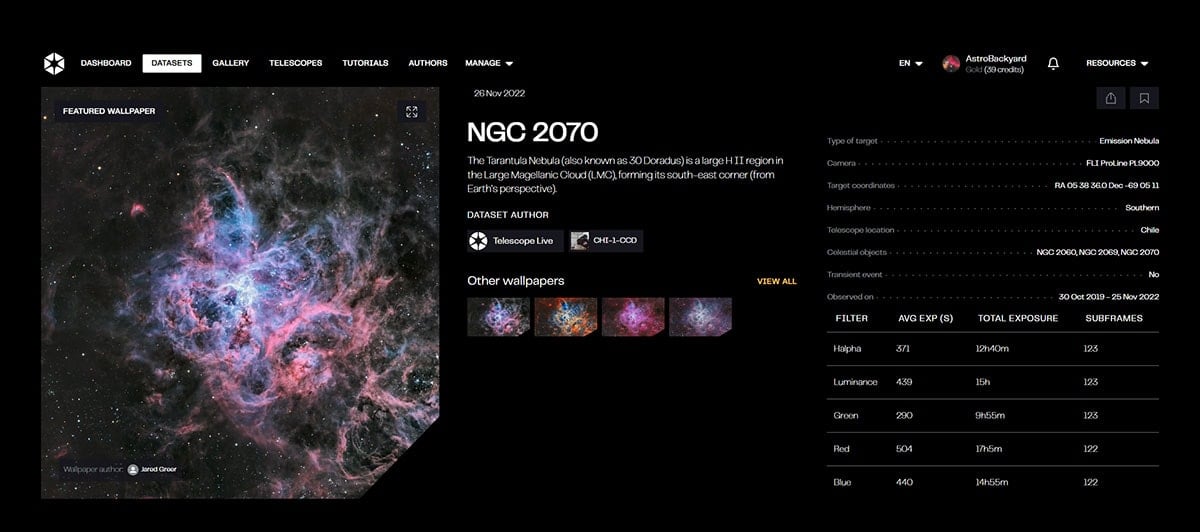
This distinction matters: during my test, I was not sitting at home steering a telescope in Chile or submitting a custom target for capture. I selected existing data that had already been acquired. Telescope Live previously offered custom “Advanced Requests,” but that service is no longer available. You may still see old Help Center articles describing it, so be careful when comparing older coverage of the platform.
For me, the current experience is closer to entering an exceptionally well-stocked processing library than renting an observatory for the night. That may be less romantic than pressing the shutter yourself, but it is also wonderfully straightforward.
The 5 Largest Telescopes on Telescope Live
The network ranges from small, extremely wide-field instruments to enormous reflectors built for tiny galaxies and fine detail. These are the five largest physical telescopes currently represented in the Telescope Live network, ordered by aperture.
| Telescope | Photo | Aperture | Focal Length | Location |
|---|---|---|---|---|
| CHI-3 ASA 1000 Ritchey-Chrétien |
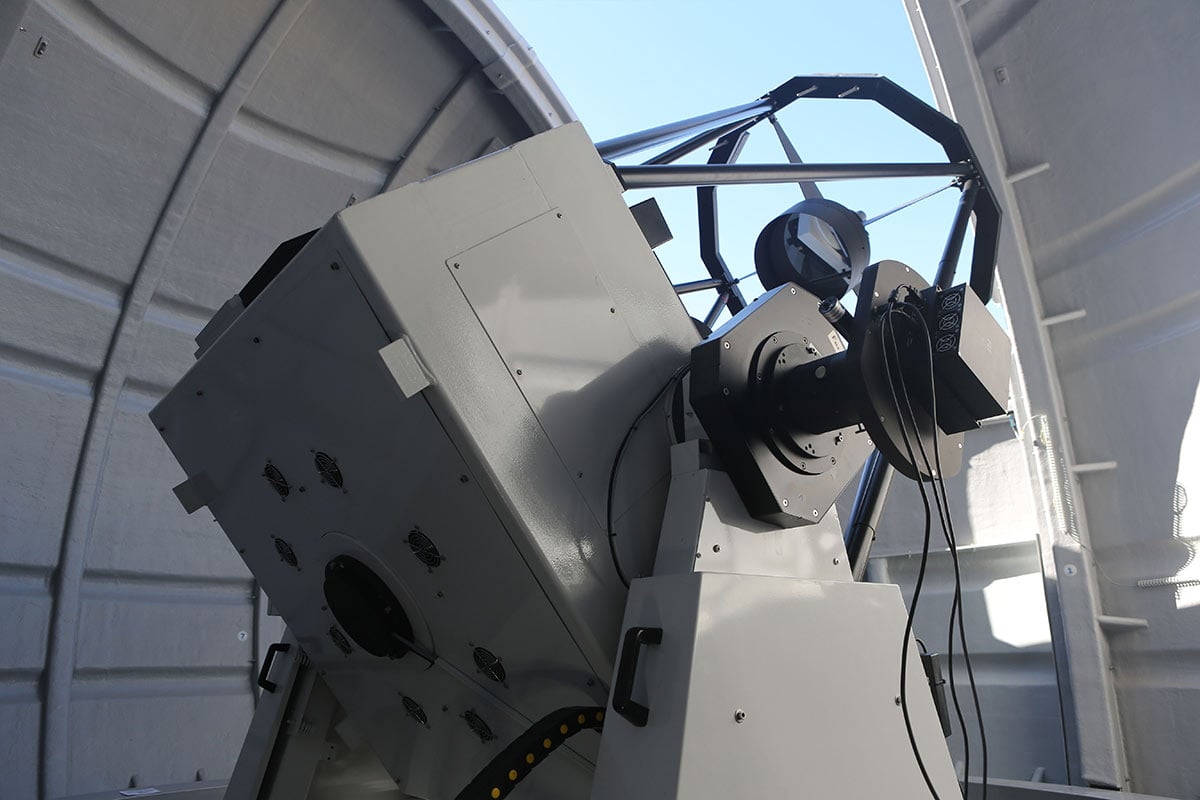 |
100 cm (39 inches) |
6,800 mm | Chile |
| SPA-2 Officina Stellare ProRC 700 |
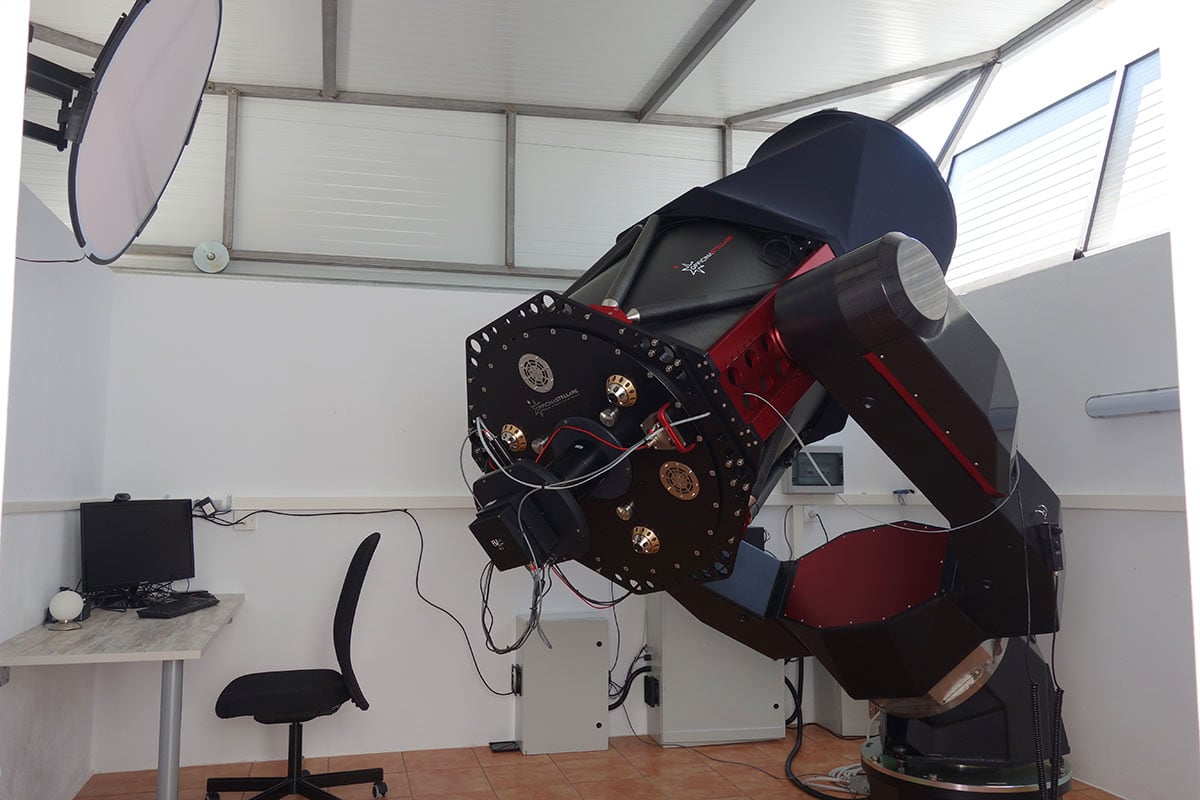 |
71 cm (27.5 inches) |
5,600 mm | Spain |
| CHI-1 PlaneWave CDK24 |
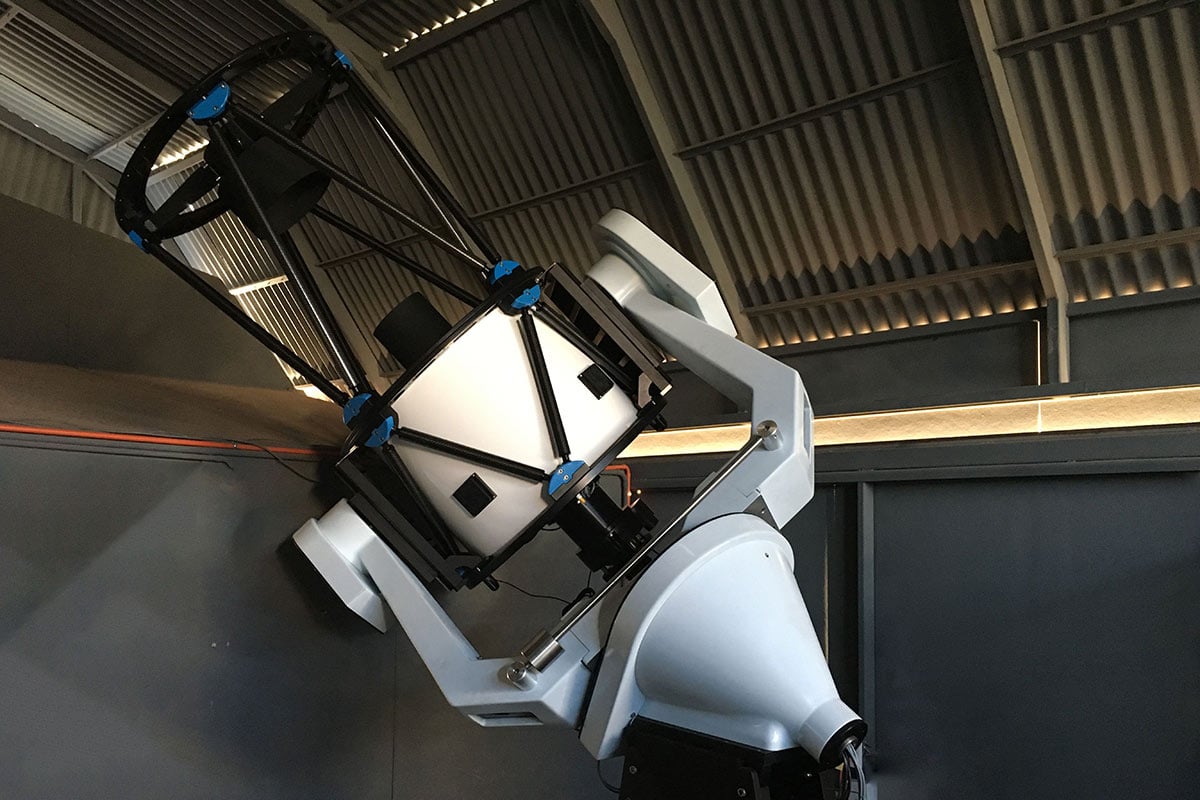 |
61 cm (24 inches) |
3,962 mm | Chile |
| CHI-2 ASA 500N Newtonian |
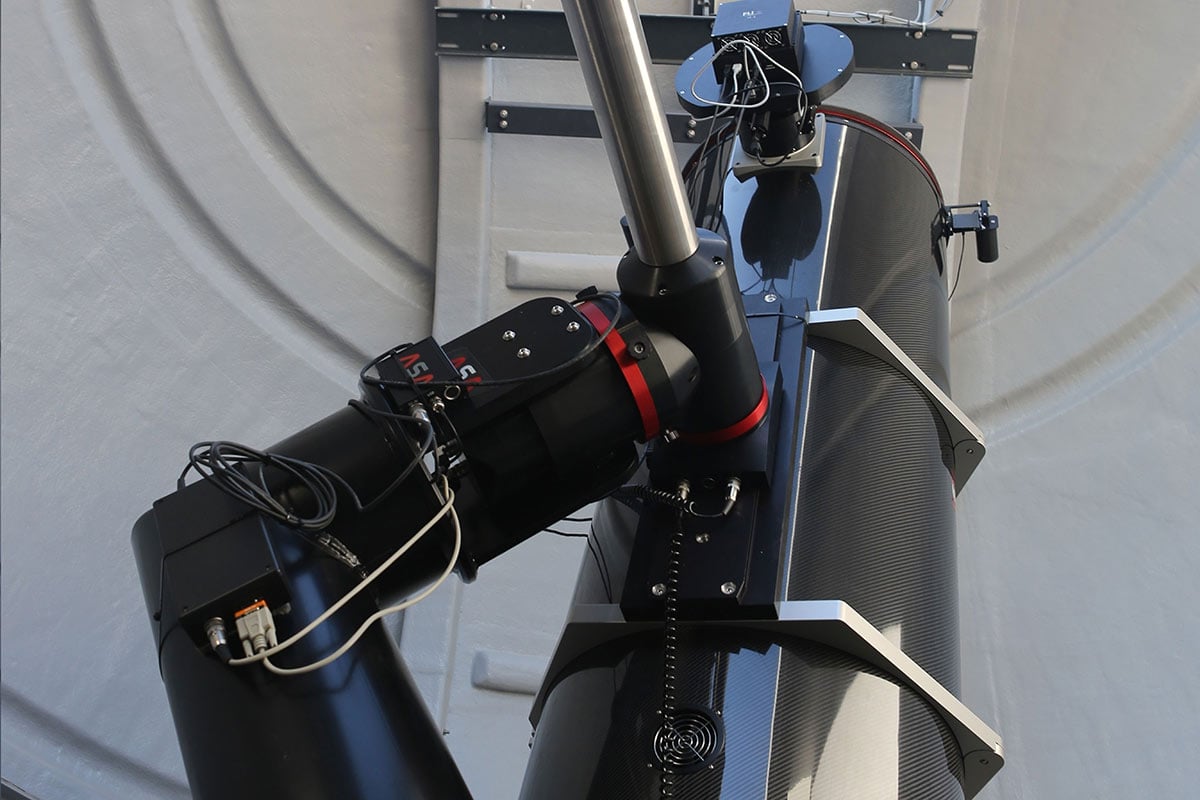 |
50 cm (19.6 inches) |
1,900 mm | Chile |
| CHI-4 ASA 500N Newtonian |
|
50 cm (19.6 inches) |
1,900 mm | Chile |
Do not assume that the largest telescope is automatically best for every target. CHI-3’s one-meter aperture and 6,800-millimeter focal length are ideal for small objects and fine structure, while a compact refractor may frame a sprawling nebula far more effectively. Field of view, filters, camera, and total integration time are often more important than aperture alone.
Telescope Live Plans and Credits
Telescope Live uses credits rather than charging separately for each downloaded file. Your subscription adds a set number of credits every month, and each dataset displays its credit cost before you claim it. Unused credits can roll over while your subscription remains active.
The table below reflects the dataset plans displayed when this article was prepared. Prices were shown to me in British pounds; your currency and final price may differ by location. Always check the live pricing page before subscribing.
| Plan | Monthly Price* | Monthly Credits | Dataset Discount | Best For |
|---|---|---|---|---|
| Bronze | $6 | 5 | — | Trying occasional datasets on a small budget |
| Silver POPULAR |
$24 | 20 | — | Regular processing practice and access to all tutorial levels |
| Gold POPULAR |
$59 | 50 | 20% | Frequent downloads and larger, deeper projects |
| Platinum | $119 | 100 | 25% | High-volume processors |
| Diamond | $299 | 250 | 30% | Very heavy use and maximum archive discounts |
*Prices and features can change. The live checkout will display the applicable price and currency for your location.
Save 50% on Your First Two Months
Use my Telescope Live link to receive 50% off the first two months of any plan. The link supports AstroBackyard at no additional cost to you.
Or enter promo code ASTROBACKYARD at checkout.
Does It Replace Backyard Astrophotography?
Not for me. Setting up the equipment, solving problems, watching the first exposure arrive, and knowing that I personally collected every frame are still central to why I love astrophotography. There is an emotional connection to an image after you have fought the weather and guided a telescope through the night.
Telescope Live offers a different experience. It removes acquisition from the equation and gives you a direct path to the processing stage. That makes it valuable during cloudy weather, for learning unfamiliar filters, and for practicing on data captured with instruments far beyond the reach of a typical backyard setup.
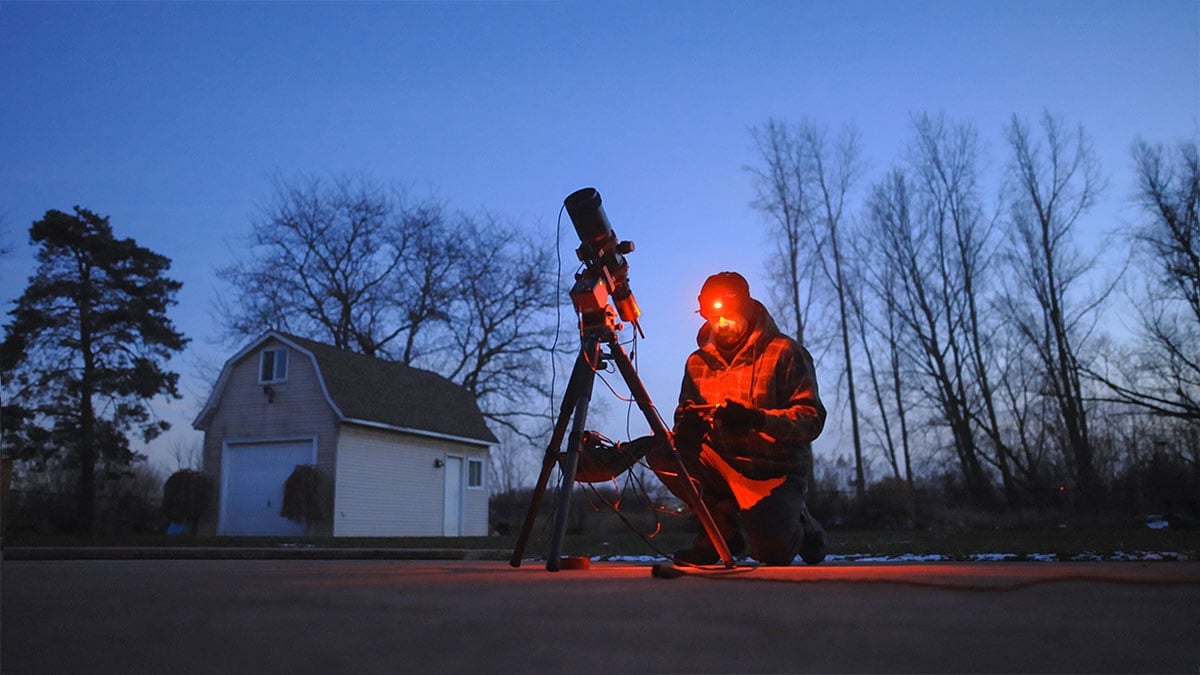
It also opens the other half of the sky. From Canada, targets such as the Sculptor Galaxy, Statue of Liberty Nebula, and many other Southern Hemisphere showpieces are difficult or impossible for me to capture properly. A global dataset archive removes that geographic limitation.
Beginners can use clean data to understand how astronomical channels behave without worrying that equipment problems ruined the results. Experienced processors may benefit even more because they can challenge themselves with tiny galaxies, enormous mosaics, unusual filter combinations, and optical systems they have never used.
What I Liked, and What to Understand Before Joining
The greatest strength of Telescope Live is inspiration. Browsing the archive feels like opening a catalog of potential projects. Instead of asking whether the forecast will cooperate, you ask which object, telescope, and color palette you want to explore next.
The quality and variety of the data are obvious advantages. The website also makes it easy to compare projects before spending credits. On the other hand, this experience will not satisfy someone whose favorite part of astrophotography is planning and capturing every exposure. You are processing somebody else’s telescope data, and that distinction should always be made clear.
When publishing an image, Telescope Live requires attribution to the original data source. A clear credit such as “Image processed by Trevor Jones; original data from Telescope Live” protects transparency and gives the observatory network proper recognition.
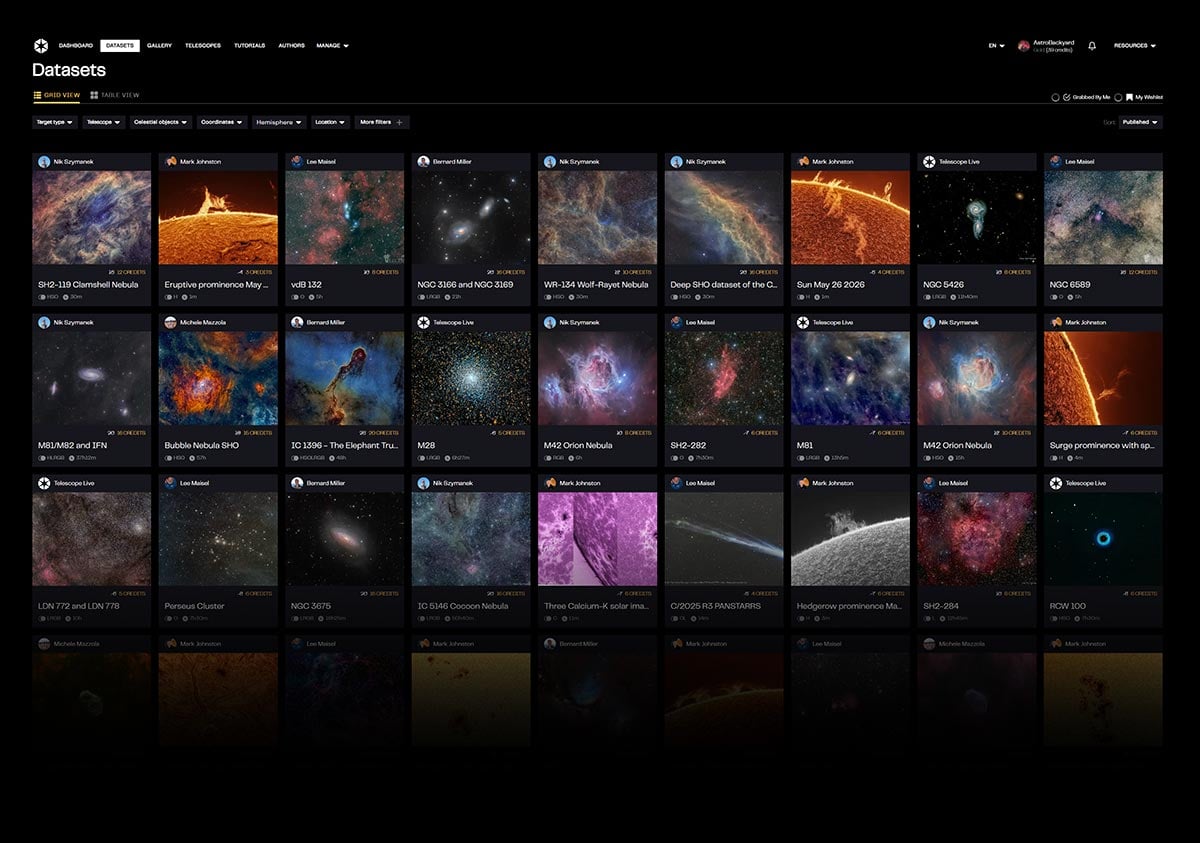
The Telescope Live Community Forum
Your subscription also gives you access to the Telescope Live community forum, which is a valuable resource for improving your image-processing skills. Members share their finished images, processing workflows, technical questions, and different interpretations of the same astronomical data.
Seeing how other astrophotographers process a familiar dataset can be especially helpful. You can compare color palettes, stretching techniques, noise reduction, sharpening, and other creative decisions, and ask the community for feedback on your own result. For anyone still developing a reliable processing workflow, the forum adds a useful educational layer beyond simply downloading the data.
Frequently Asked Questions About Telescope Live
Is Telescope Live really remote astrophotography?
It is remote astrophotography in the broad sense that the data comes from remotely operated observatories, but the current dataset experience is not the same as personally controlling a remote telescope. You select and process existing observations rather than steering the instrument yourself.
Can I choose an object for a Telescope Live telescope to capture?
Not through the retired Advanced Requests system. The current platform focuses on existing datasets, along with future observations that members may be able to reserve or upvote. For my project, I chose the Sculptor Galaxy from data that had already been captured.
Do I need to own a telescope?
No. You need a computer, enough storage for the downloaded files, and software capable of processing astronomical FITS data. Telescope ownership, dark skies, and clear weather are not required.
What software can process Telescope Live data?
I used PixInsight, but other FITS-compatible astrophotography programs can also be used. Depending on your workflow, options include Astro Pixel Processor, Siril, and compatible Adobe Photoshop workflows. The platform also includes processing tutorials, with access determined by your plan.
Are the files raw or already processed?
The archive provides astronomical FITS files rather than finished JPEG images. Calibrated data is available so you can begin integrating and processing, and original or uncalibrated files may also be available when you want more control over the workflow.
Do Telescope Live credits expire?
Unused monthly credits roll over while you remain subscribed. If you cancel, the official policy says your balance is frozen and expires after three months without a subscription. Credits are not refundable, so download the projects you want and understand the cancellation rules before building a large balance.
Who owns images made from Telescope Live data?
You own the final artwork you create through your processing, but Telescope Live owns the original archive FITS files and does not permit their redistribution. Published images should identify Telescope Live as the original data source.
Can I sell an image I processed using Telescope Live data?
Yes. Telescope Live’s published policy allows you to sell the finished artwork you create. Attribution should be included where practical, although the policy describes exceptions for formats such as physical prints where a visible credit may not be reasonable.
Can I cancel Telescope Live easily?
The subscription can be canceled from Account Settings and remains active until the end of the current billing cycle. According to the published policy, previously claimed images remain associated with your account, but downloads require an active subscription.
Is Telescope Live worth it?
It is easiest to justify if you genuinely enjoy image processing. The service can be especially useful during cloudy stretches, under heavy light pollution, or when you want Southern Hemisphere targets and professional equipment. If acquisition is the only part of astrophotography you enjoy, an archive-based service may feel less rewarding.
My Final Impression
Processing the Sculptor Galaxy changed my perspective more than I expected. It did not replace the satisfaction of capturing my own photons, but it reminded me that image processing is a creative discipline in its own right.
There is something exhilarating about opening deep, clean data from a world-class location and discovering what is hidden inside. Telescope Live lets me practice, experiment, and work with targets and equipment that would otherwise be unavailable to me. I am quite certain I will never bring a CDK24 to Chile, but I can still learn what its data feels like.
That is where I see the real value: not as a replacement for a backyard observatory, but as a complementary way to stay creative, sharpen your processing skills, and explore more of the universe.
If that sounds like your kind of cloudy-night project, you can use my Telescope Live link to save 50% on your first two months, or enter ASTROBACKYARD at checkout.
 Trevor Jones is an astrophotographer and a valued member of the RASC. His passion is inspiring others to start their astrophotography journey on YouTube so they can appreciate the night sky as much as he does. His images have been featured in astronomy books & online publications, including the NASA Astronomy Picture of the Day (APOD).