
Citizen Science in Astronomy

Have you ever wondered if you could contribute to exploring the universe? Citizen science in astronomy allows anyone, no matter their experience, to contribute to real scientific research.
From discovering comets to tracking light pollution, amateurs play a vital role in helping scientists study the cosmos. Today, online tools and accessible equipment make it easier than ever to get involved.
A New Era for Amateur Astronomy
There has never been an easier time for amateur astronomers to become involved in scientific research.
The equipment available to amateur astronomers has advanced considerably, while telescopes, astronomical cameras, smart telescopes, and automated imaging systems have become more accessible.
These tools allow amateurs to collect increasingly sophisticated observations from their own backyards.
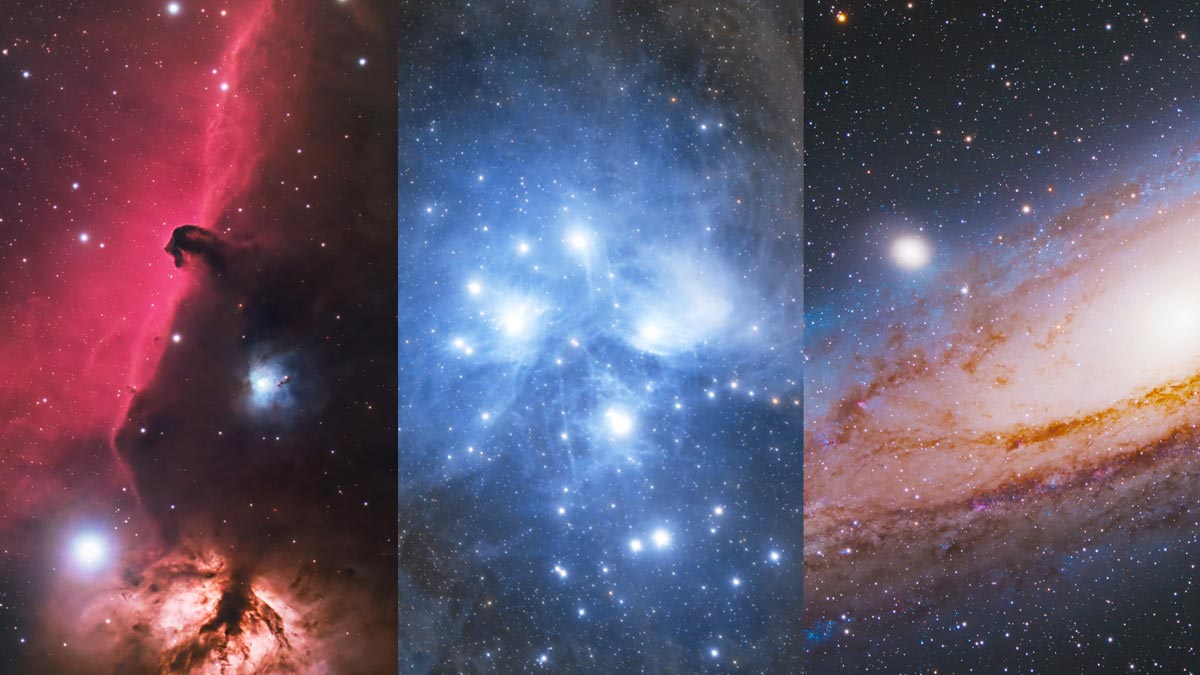
At the same time, learning is more connected. Online communities, astronomy organizations, tutorials, software, and direct collaboration with research teams make it easier to develop observing and data-analysis skills.
Large astronomical surveys are also generating enormous amounts of data, creating new opportunities for members of the public to participate. Some citizen science projects put professional astronomical data directly into the hands of volunteers to classify, analyze, and search for unusual objects.
Amateur Astrophotographer Contributions
Amateurs continue to play an essential role in a variety of observations that support professional research.
- Tracking Variable Stars and Exoplanets: By monitoring brightness changes, amateurs help confirm discoveries made by professional telescopes.
- Discovering Comets and Asteroids: High-quality images can help detect new objects or track their movement.
- Capturing Transient Events: Supernovae, auroras, and meteors can be photographed and reported for research.
- Providing Long-Term Observations: Professionals can’t observe every part of the sky every night; amateur astrophotographers fill these gaps.
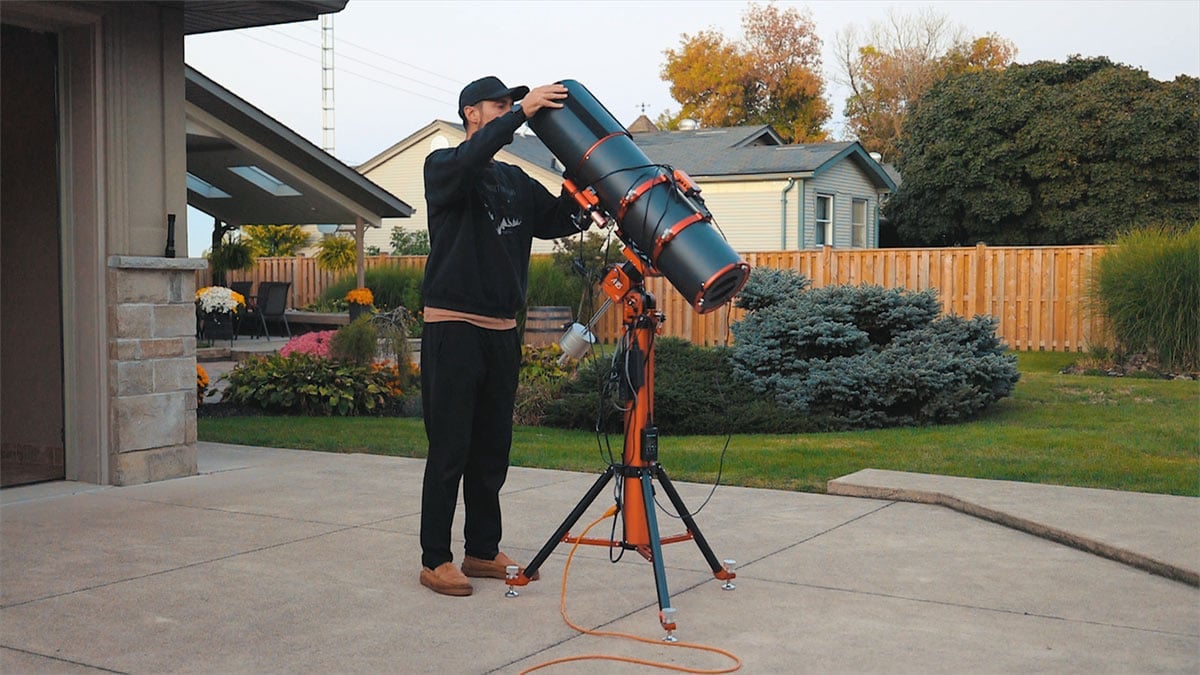
Trevor setting up an 8-inch Newtonian Telescope for astrophotography in our backyard.
Why Citizen Science Matters in Astronomy
Professional observatories are incredibly powerful, but observing time is limited.
They cannot monitor every object, examine every image, or respond to every event happening across the night sky. Citizen scientists can help fill some of those gaps.
Volunteer observations can contribute to long-term datasets, help researchers identify unusual objects in large surveys, provide follow-up observations, and alert astronomers to changes happening in the sky.
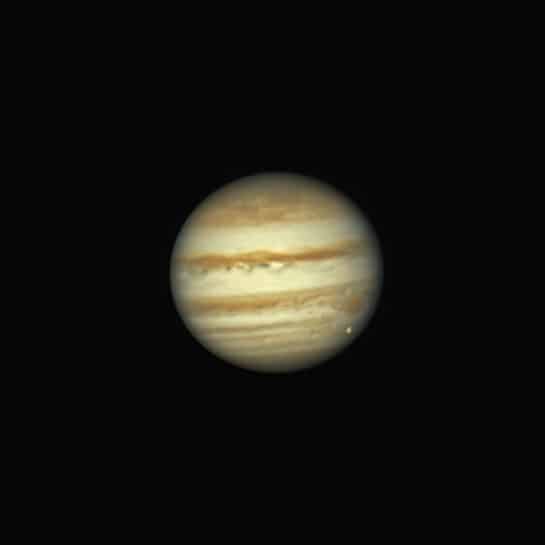
A photo of the planet Jupiter and one of its largest moons through a Dobsonian Telescope. Photo by Trevor Jones.
Amateur astronomers have contributed observations of variable stars, asteroids, comets, exoplanet transits, supernovae, auroras, meteors, and other transient events.
And you don’t necessarily need a telescope to participate. Many modern citizen science projects provide professional astronomical data directly to volunteers, allowing anyone with a computer to contribute.
Even a few minutes spent observing the sky or classifying images can add up to something meaningful when combined with thousands of other volunteers around the world.
Ways to Participate in Citizen Science
There are many citizen science projects available, but most opportunities fall into three general categories:
- Online projects: Analyze or classify astronomical data from your computer.
- Observational projects: Go outside and report something you can see or measure.
- Observational and imaging projects: Use a telescope, camera, or other equipment to collect data for scientific research.
You don’t have to start with the most advanced option. Choose a project that matches your interests, experience, and the equipment you already have.
Online Citizen Science Projects
Online projects are one of the easiest ways to get started with citizen science. Most are beginner-friendly, require no astronomy equipment, and allow you to participate whenever you have time.
Researchers provide the images or data and explain what to look for.
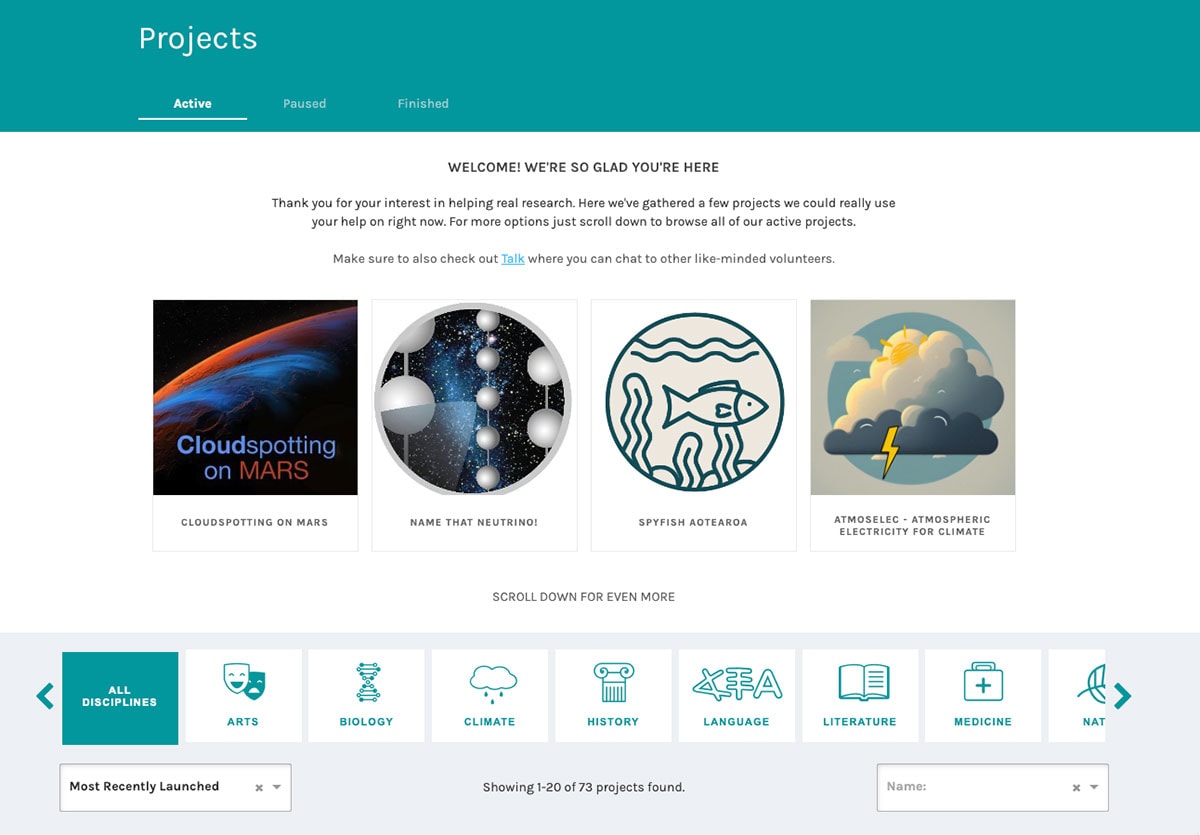
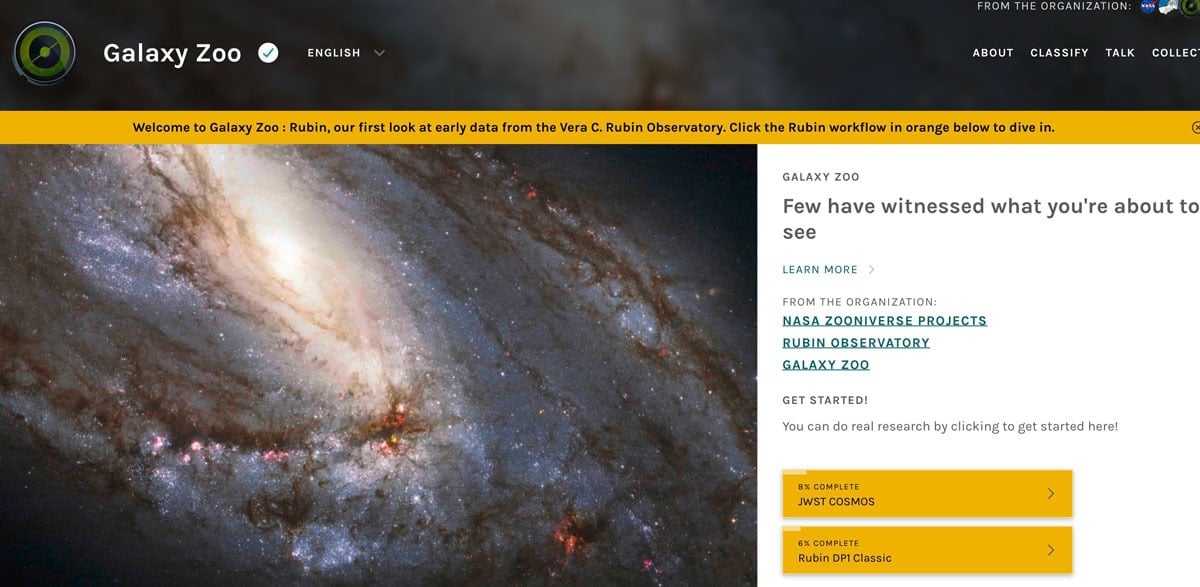
Galaxy Zoo: Rubin Observatory
Galaxy Zoo asks volunteers to classify galaxies based on their shapes and visible features.
The project now includes early data from the Vera C. Rubin Observatory, giving citizen scientists the opportunity to work with observations from one of astronomy’s newest major survey facilities. By examining galaxy structure, volunteers help astronomers study how galaxies form, evolve, and interact.
- What you’ll do: Look at images of galaxies and answer questions about their shapes and structures.
- Why it matters: Galaxy morphology can reveal information about star formation, interactions, mergers, and the evolutionary history of galaxies.
Planet Hunters TESS
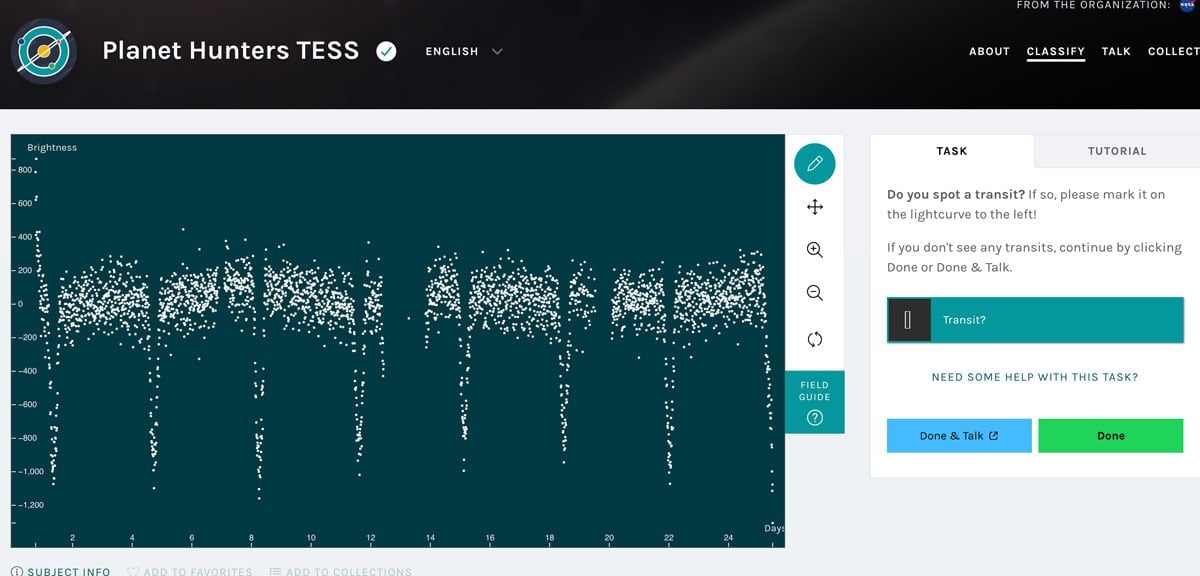
Planet Hunters TESS gives volunteers the opportunity to search for planets around other stars using data from NASA’s Transiting Exoplanet Survey Satellite (TESS).
When an exoplanet passes in front of its star from our perspective, it can cause a small drop in the amount of light we receive from that star. These changes are plotted on a graph called a light curve.
Volunteers inspect these light curves and identify patterns that could represent a planetary transit.
- What you’ll do: Examine real TESS light curves and identify possible dips in a star’s brightness.
- Why it matters: Automated searches are extremely effective at processing large datasets, but unusual systems can still be difficult for algorithms to recognize. Human pattern recognition provides another way to identify interesting candidates.
Space Warps – ESA Euclid
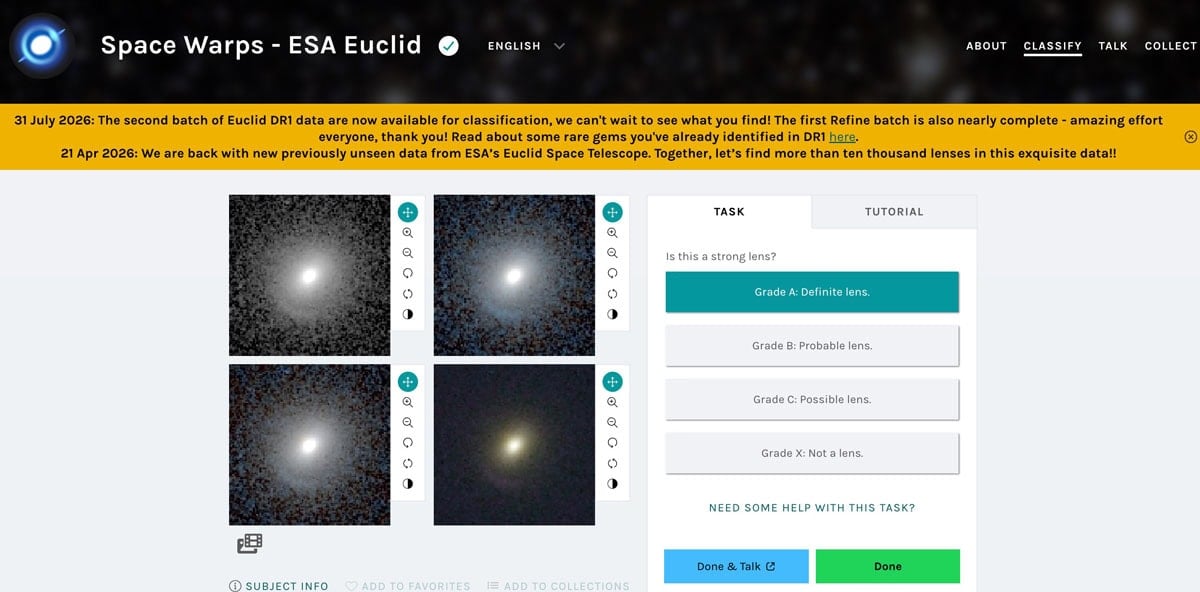
Space Warps invites volunteers to search images from ESA’s Euclid space telescope for gravitational lenses.
Gravitational lensing occurs when the gravity of a massive object, such as a galaxy or galaxy cluster, bends the light coming from something farther behind it. In images, these systems can appear as arcs, rings, or multiple images of the same distant object.
Finding these systems helps astronomers study galaxies, dark matter, and the distant universe.
- What you’ll do: Examine images of galaxies and look for the distinctive features of strong gravitational lenses.
- Why it matters: Euclid is producing enormous datasets containing rare lensing systems. Citizen scientists can help identify promising candidates for further study.
Rubin Comet Catchers
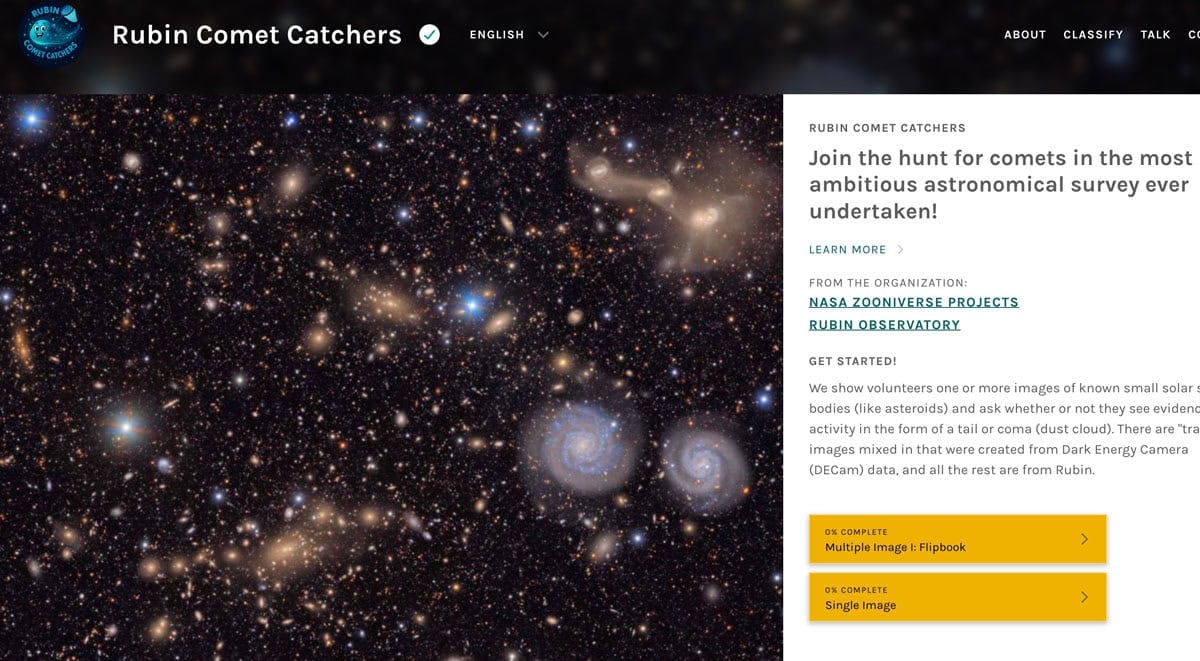
Rubin Comet Catchers gives volunteers the opportunity to examine images from the Vera C. Rubin Observatory for signs of activity around small objects in our solar system.
Participants look for features associated with comets and other active objects, helping researchers identify interesting targets within Rubin’s enormous survey datasets.
- What you’ll do: Examine Rubin images for cometary activity and other unusual features around small solar system bodies.
- Why it matters: Identifying active objects helps researchers learn more about comets, asteroids, and the evolution of our solar system.
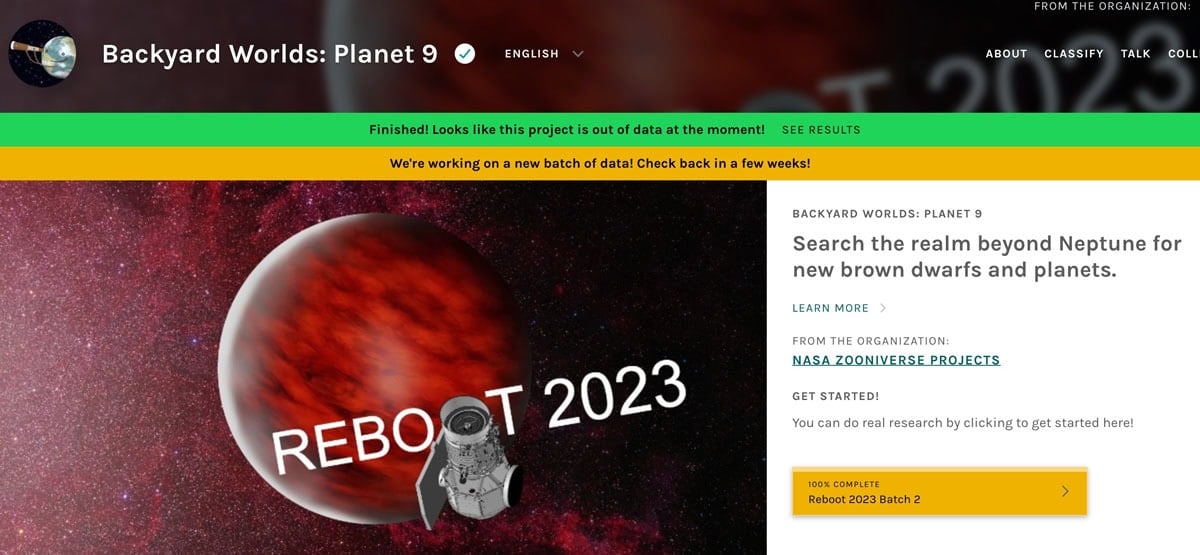
Backyard Worlds: Planet 9
Backyard Worlds: Planet 9 uses infrared observations from NASA’s WISE mission to search for objects moving through our cosmic neighbourhood.
Volunteers inspect sequences of images and look for movement that could reveal previously unidentified brown dwarfs or distant objects in the solar system.
- What you’ll do: Compare astronomical images taken at different times and look for objects that appear to move.
- Why it matters: These observations have helped researchers identify thousands of brown dwarfs and continue the search for previously unknown nearby objects.
By participating in these projects, you’re making a meaningful contribution to real scientific research, all from the comfort of your own home.
International Astronomical Search Collaboration (IASC)
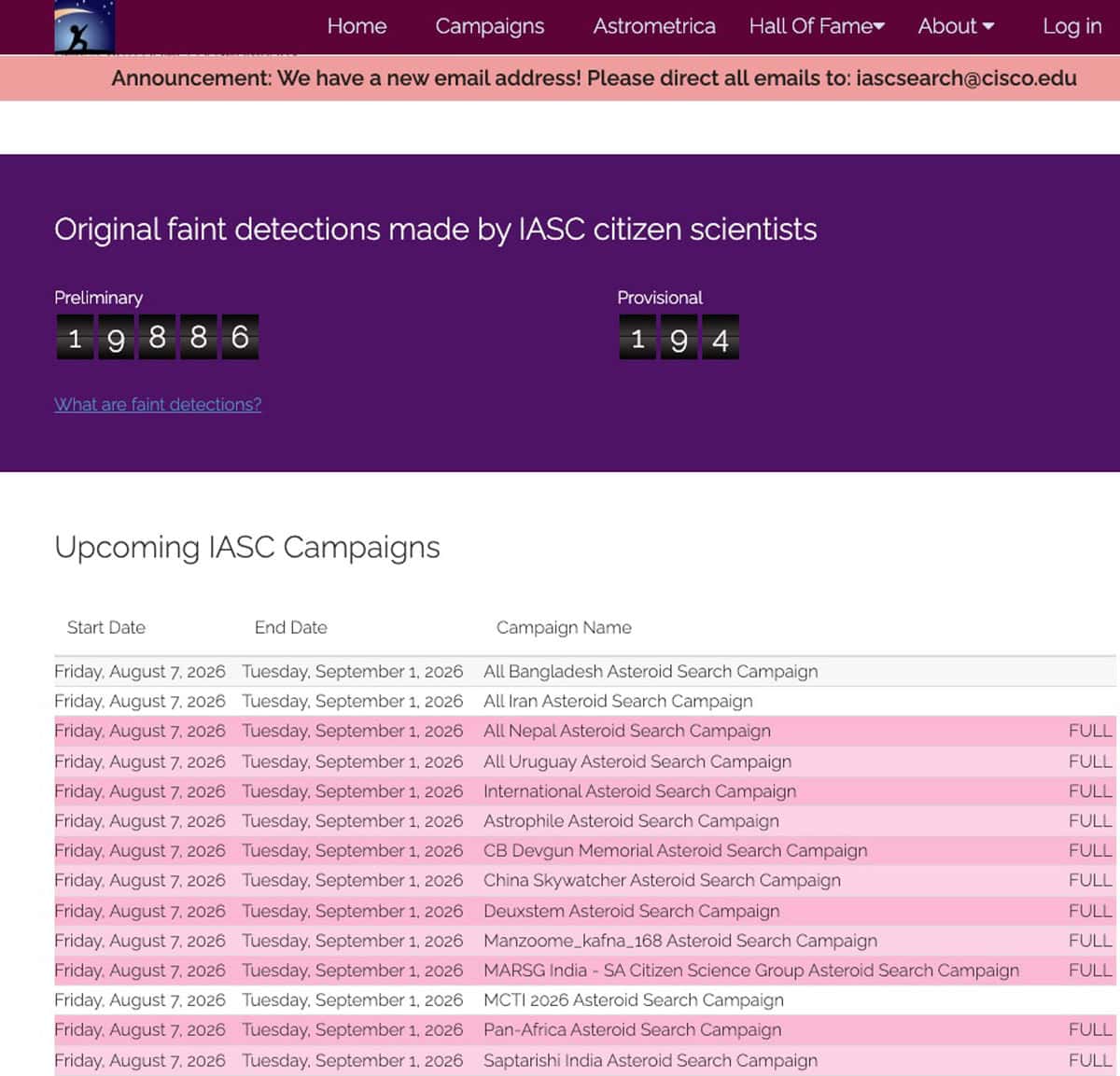
The International Astronomical Search Collaboration takes citizen science a step further by giving participants professional astronomical images to search for asteroids.
Participants join asteroid search campaigns and use astronomical software to compare images, identify moving objects, measure their positions, and submit potential detections for review.
- What you’ll do: Analyze professional telescope images, identify possible moving objects, take measurements, and submit your findings.
- Why it matters: These observations contribute to the identification and tracking of small bodies in our solar system.
Observational Citizen Science Projects
Some citizen science projects don’t require professional telescope data at all. Instead, researchers need observations from many people spread across different locations.
These projects are particularly accessible because your location itself can become useful scientific information.
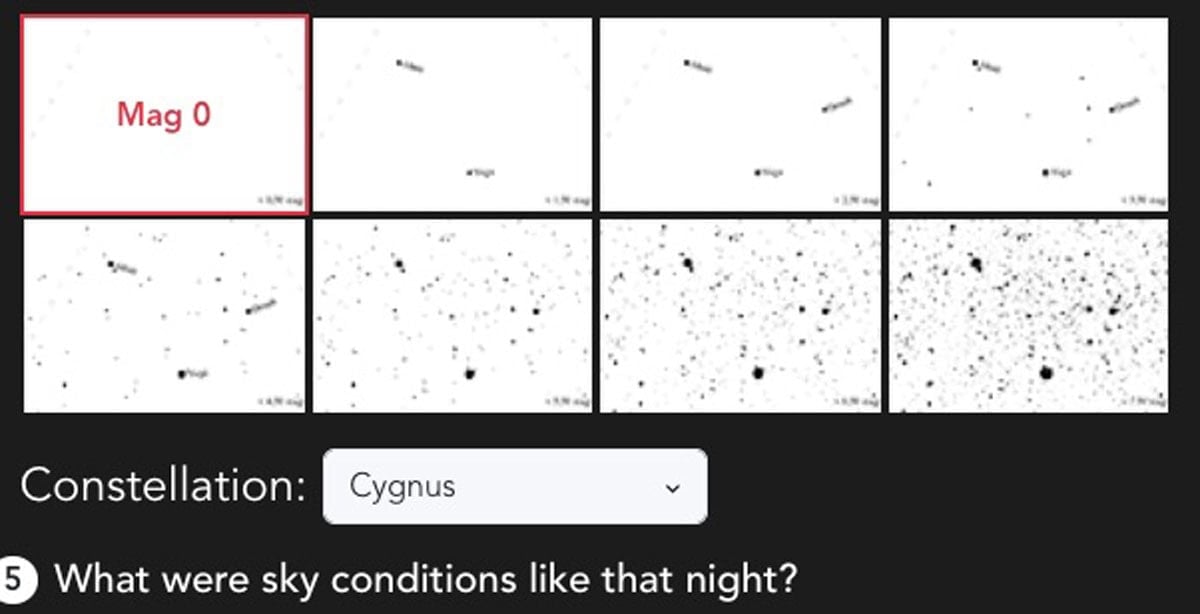
Globe at Night
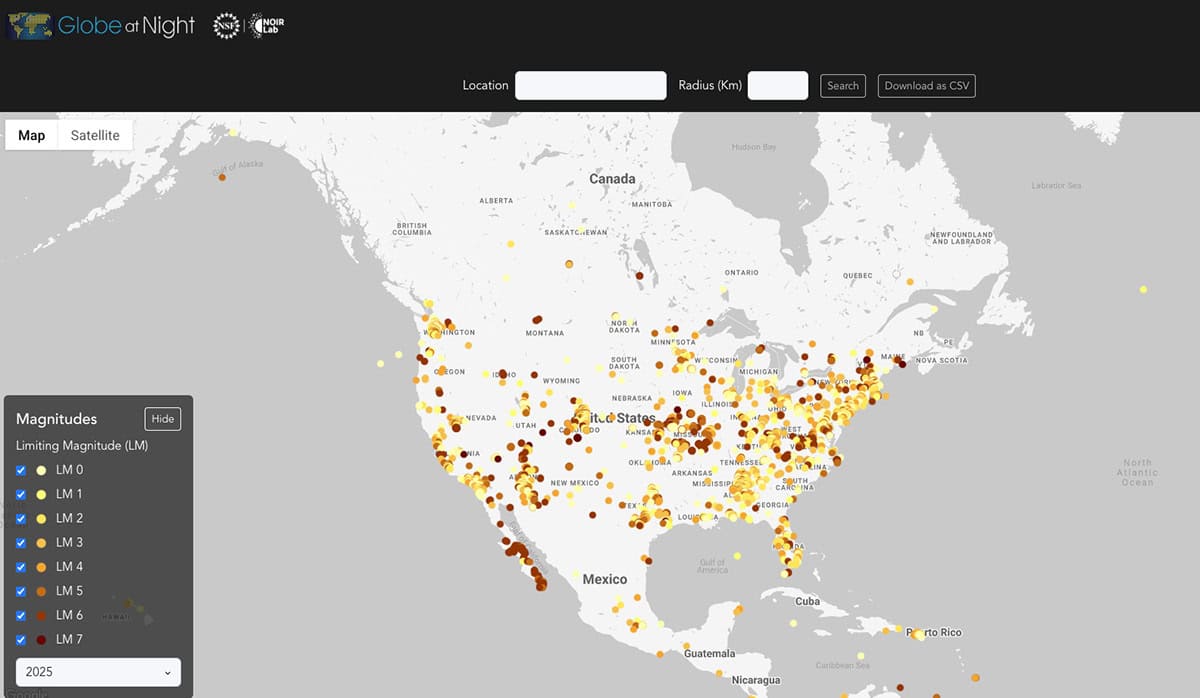
Globe at Night is an international citizen science program that monitors light pollution.
Participants observe a particular constellation and compare what they can see with star charts representing different levels of sky brightness. The observation is then submitted along with information such as the location and date.
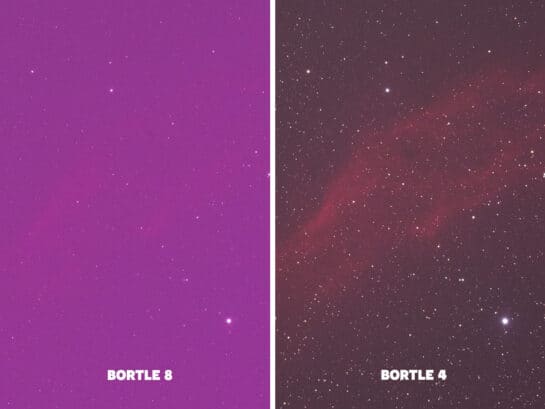
Related Article: Astrophotography from the City vs. a Dark Sky
Over time, observations collected around the world help researchers understand how artificial light at night is changing.
- What you’ll do: Observe the night sky, estimate how many stars are visible, and submit your observation.
- Why it matters: Repeated observations help build long-term datasets showing the extent and changes in light pollution around the world.
This is one of the citizen science projects I personally participate in because of my interest in light pollution and dark sky advocacy. By submitting observations from the same location over time, I can contribute data while also seeing how conditions change in my own backyard.
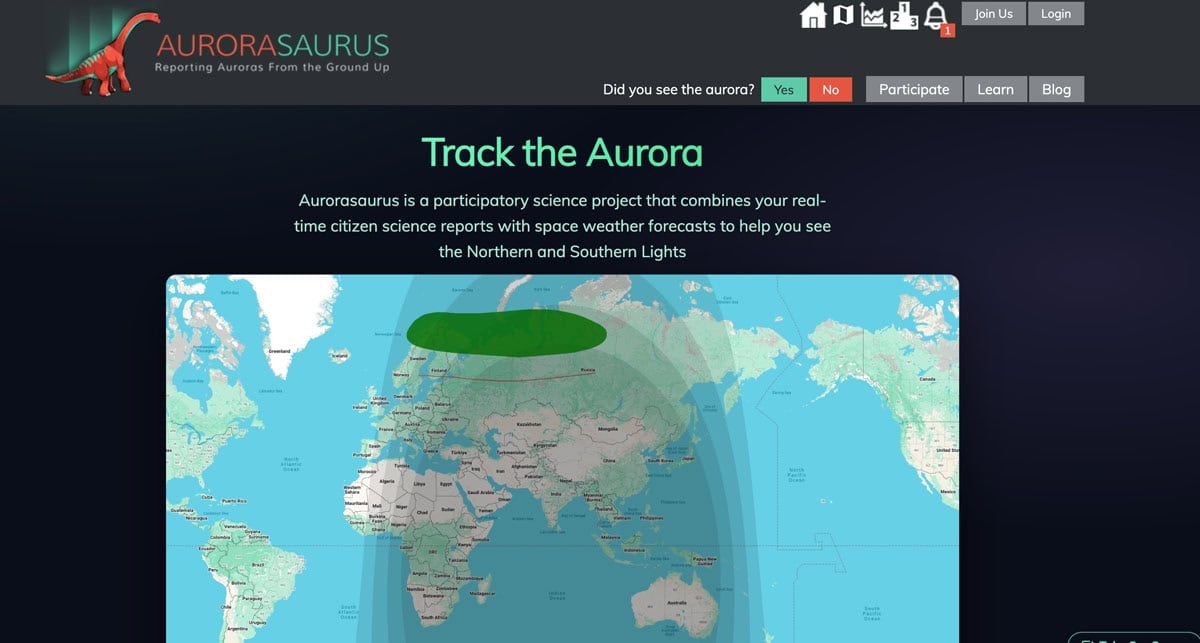
Aurorasaurus
Aurorasaurus uses reports from people on the ground to track the Northern and Southern Lights.

Aurora from our backyard
Participants submit aurora sightings, which can be combined with space-weather information to help map where auroral activity is actually visible.
- What you’ll do: Report whether you can see an aurora and submit information about your observation.
- Why it matters: Ground reports give researchers information about where auroras are being seen and can contribute to our understanding of auroral activity and space weather.
Observational + Imaging Citizen Science Projects
For amateur astronomers and astrophotographers who already own equipment, citizen science provides another way to put that equipment to use.
The goal can be different from producing the best-looking image possible. For scientific observations, consistency, accurate measurements, timing, calibration, and usable data are often more important than the final appearance of an image.
American Association of Variable Star Observers (AAVSO)
The American Association of Variable Star Observers (AAVSO) maintains a worldwide network of observers who collect data used in astronomical research.
Variable stars change in brightness over time. Monitoring those changes can help astronomers study the physical properties and evolution of stars.
Participation can range from visual estimates made with the naked eye or binoculars to photometry and spectroscopy collected with telescopes and cameras.
- What you’ll do: Observe variable stars and submit measurements that can become part of long-term astronomical datasets.
- Why it matters: Professional astronomers cannot continuously monitor every variable star. Observations contributed by volunteers can provide long-term coverage and support professional research and observing campaigns.
Exoplanet Watch
NASA’s Exoplanet Watch allows citizen scientists to observe transiting exoplanets and contribute their measurements to ongoing research.
During a transit, a planet passes between us and its host star and blocks a very small amount of the star’s light. By observing the star throughout the event and measuring how its brightness changes, participants can create a light curve.
You can participate using your own telescope, but the project also provides astronomical data for participants who do not have suitable equipment.
- What you’ll do: Observe or analyze an exoplanet transit, create a light curve, and submit your results.
- Why it matters: Repeated transit measurements can improve our understanding of an exoplanet’s orbit and help astronomers predict future observations more accurately.
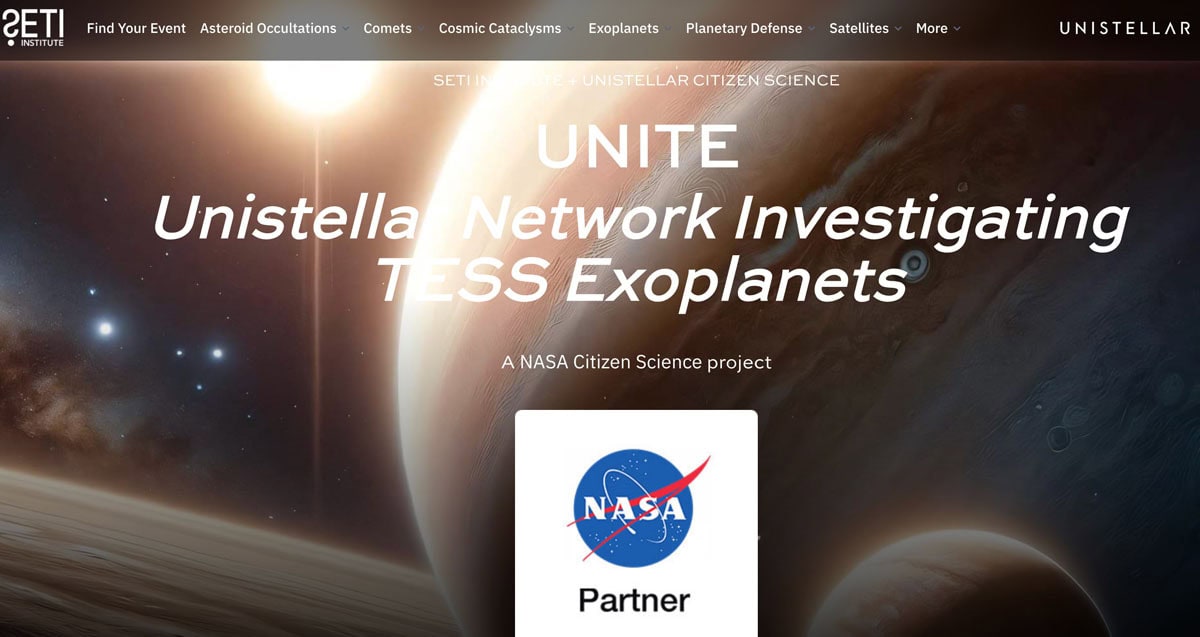
Unistellar Network Investigating TESS Exoplanets (UNITE)
Some planets have orbital periods that make their transits difficult for a single observatory to capture. A network of observers at different locations can provide additional coverage.
- What you’ll do: Observe predicted exoplanet transits and contribute your observations to coordinated campaigns.
- Why it matters: Combining observations from many locations can help researchers better characterize planets and refine measurements of their orbits.
Humans, Citizen Science, and AI
With increasingly powerful artificial intelligence and machine-learning tools analyzing astronomical data, it might seem as though human participation would become less important.
In practice, the two can complement each other.
Computers are extremely good at processing enormous datasets and identifying known patterns.
Humans can be particularly useful when something is unusual, ambiguous, or different from the examples an algorithm has been trained to recognize.
Trevor happened to capture Supernova SN 2023ixf during our time at the Texas Star Party.
Planet Hunters TESS is one example. Automated searches can process huge numbers of light curves, while human volunteers provide another way to recognize unusual patterns that may deserve attention.
Space Warps demonstrates a similar relationship. Machine-learning systems can help narrow enormous numbers of potential gravitational-lens candidates, while citizen scientists inspect and classify promising images.
Citizen science is therefore not simply filling a gap until computers become better. Increasingly, people, algorithms, and professional researchers can work together to make sense of astronomical datasets.
How Astrophotography Can Become Scientific Data
Astrophotography and astronomical research do not always have the same goal.
For a traditional deep-sky image, you might spend hours collecting data and process it carefully to reveal faint structures and produce a visually pleasing result.
For scientific observations, the important information may instead be the brightness of a star, the exact position of an asteroid, or the precise time an event occurred.
That means an image captured for scientific purposes may not be something you would normally share as a finished astrophoto.
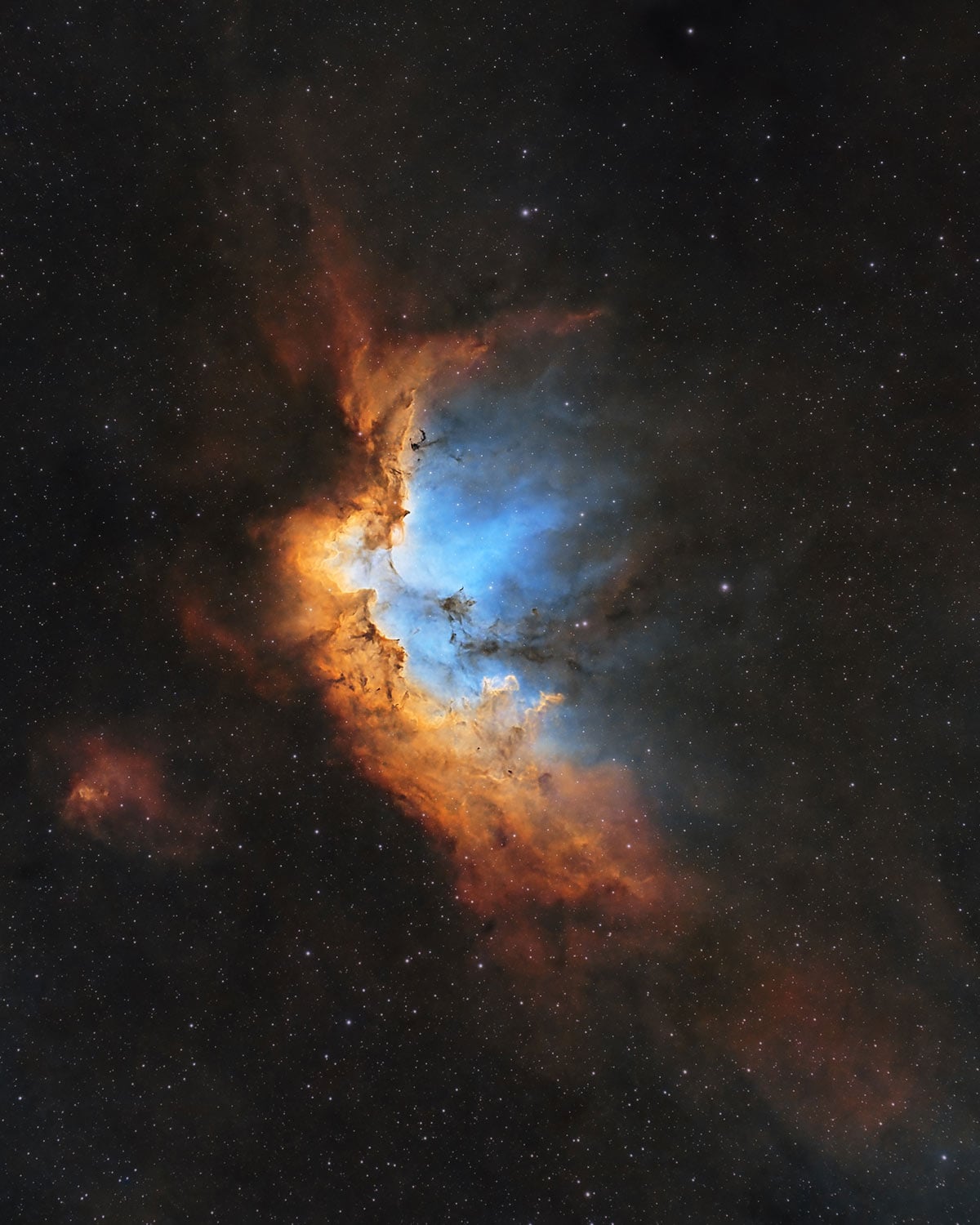
Wizard Nebula by Trevor Jones
But many of the skills overlap.
Understanding your equipment, accurately locating a target, tracking the sky, focusing, collecting calibrated images, and working with astronomical software are all useful skills that can make the transition from astrophotography into observational science much easier.
For experienced astrophotographers, citizen science can be an opportunity to use familiar equipment in a completely different way.
How to Get Started
You do not need specialized equipment or advanced astronomy experience to begin contributing to citizen science.
The best place to start is with a project that matches your interests, experience, and the equipment you already have.
Choose How You Want to Participate
If you have no astronomy equipment, start with an online project such as Galaxy Zoo, Planet Hunters TESS, Space Warps, Rubin Comet Catchers, or Backyard Worlds.
These projects provide the astronomical images or data, along with instructions explaining what to look for.
If you enjoy observing the night sky, projects such as Globe at Night and Aurorasaurus allow you to contribute observations using little or no specialized equipment.
If you already use a telescope or astrophotography equipment: Programs such as AAVSO, Exoplanet Watch, UNITE, and IASC provide opportunities to collect or analyze more specialized astronomical data.
Use the Tools You Already Have
The tools you need depend on the project.
For some citizen science programs, a computer or smartphone is all that is required. Online platforms provide the images, data, and training directly to participants.
For observational projects, useful tools may include:
- Smartphone for recording your location, time, and observations
- Planetarium app or star chart to identify objects and constellations
- Binoculars for projects that involve visual observations
- Telescope for monitoring fainter targets
- Astronomical camera for imaging, photometry, or transit observations
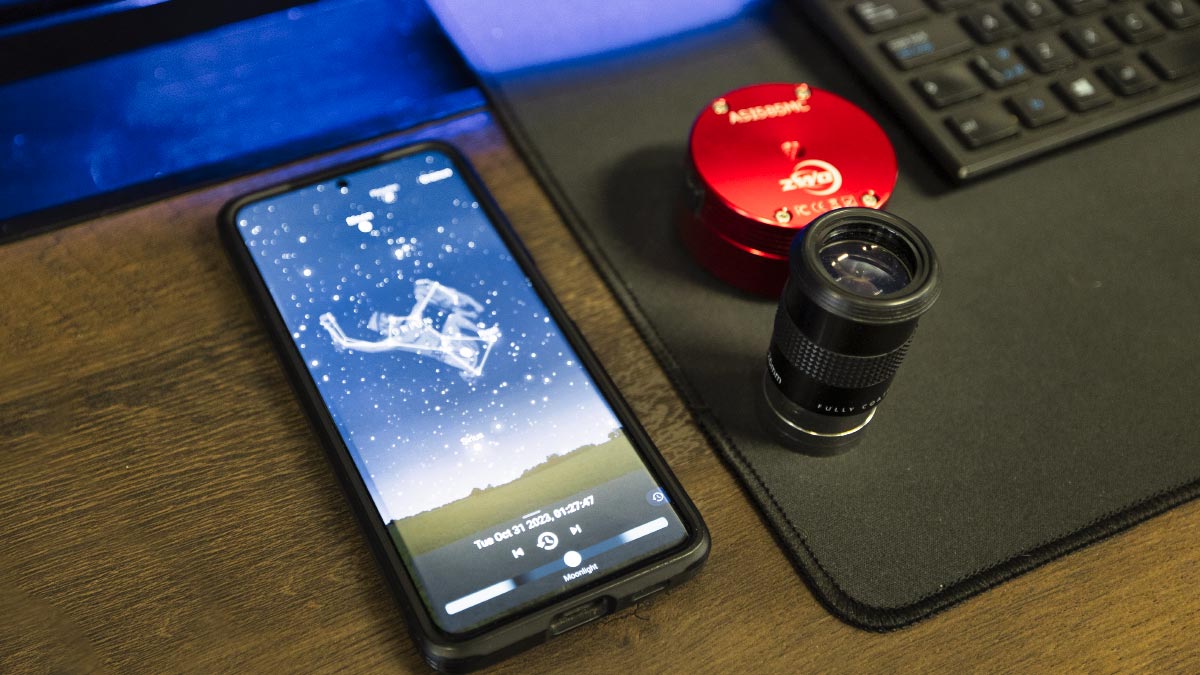
Stellarium planetarium app
If you are already an astrophotographer, you may have much of the equipment needed for more advanced projects. In many cases, the biggest adjustment is learning how to collect and report data in the format researchers require.
Learn What the Project Needs
Before making your first contribution, spend some time with the project’s instructions or training materials.
Scientific observations are most useful when participants follow consistent methods. Depending on the project, that could mean recording an accurate time and location, using particular exposure settings, calibrating images, taking specific measurements, or submitting observations in a particular format.
You do not need to understand every part of the science before you begin. Most citizen science programs are designed to teach participants what they need to know as they get involved.
Start Small
Your first contribution does not need to be complicated:
- Classify a few galaxies.
- Submit a Globe at Night observation.
- Analyze a provided exoplanet dataset.
- Learn how to identify a moving asteroid in a set of survey images.
Starting with one project gives you an opportunity to become familiar with the process before taking on more advanced observations.
Connect With the Community
Many citizen science projects include tutorials, discussion forums, observing guides, and communities where participants can ask questions and learn from more experienced volunteers.
Local astronomy clubs and societies can also be valuable places to develop observing skills and connect with people already participating in scientific projects.
Citizen science can grow with your experience. You can begin with a project that requires nothing more than a computer and eventually move into collecting your own astronomical observations if that interests you.
Citizen Science Communities and Resources
You don’t have to figure everything out on your own.
Many citizen science projects include discussion forums, tutorials, observing guides, and opportunities to interact with other volunteers and researchers.
Local astronomy clubs and societies can also be useful places to learn observing skills, meet experienced amateur astronomers, and participate in coordinated projects.
Some useful places to start include:
- Zooniverse
- NASA Citizen Science
- SciStarter
- American Association of Variable Star Observers
- Local astronomy clubs and societies
The best project is ultimately one that matches your interests and the amount of time or equipment you have available.
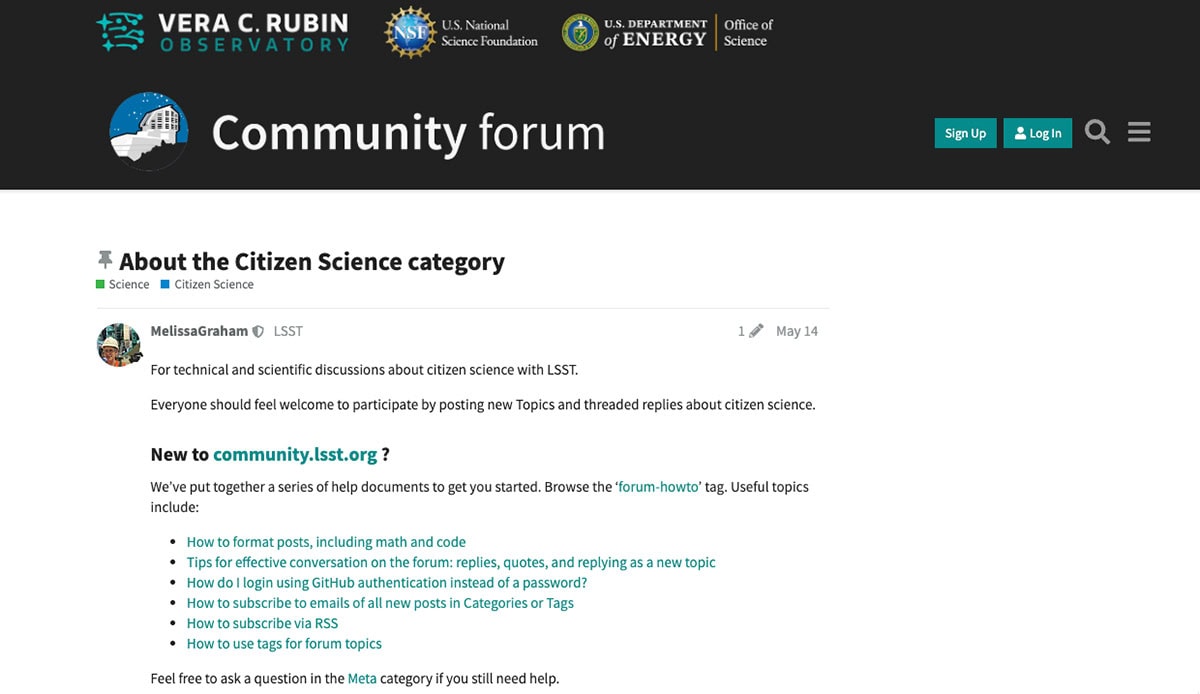
LSST Citizen Science Forum
Conclusion
Citizen science gives amateur astronomers and members of the public an opportunity to move beyond simply learning about astronomical research and actually participate in it.
That participation can be as simple as spending a few minutes classifying an image on your computer or reporting the darkness of your backyard sky. It can also grow into measuring variable stars, observing exoplanet transits, searching professional survey images for asteroids, or contributing data to research campaigns.
You don’t need to know everything before you begin.
Pick a project that interests you, learn what researchers are looking for, and start contributing.

Ashley is an environmental educator, communication professional, and astrophotographer. She has extensive experience writing for diverse audiences to increase public awareness and engagement. Ashley is an active Advocate and Delegate with DarkSky International, helping to protect the nighttime environment from the harmful effects of light pollution through advocacy and outreach.