Official Canon Astrophotography Video
In early May 2020, I decided to purchase a Canon EOS Ra camera from B&H photo. This is Canon’s latest astrophotography camera, and it has some seriously impressive specs (like a full-frame 30.3 MP astro-modified sensor). For a complete rundown of the Canon EOS Ra, you can read my full review from January of this…
What is Astrobackyard.com? This astrophotography blog creates an outlet for me to share images, information and tips about my favourite hobby. I received lots of help when I began this hobby in 2011, and it’s my turn to pay-it-forward to the next wave of astrophotographers. I have watched the hobby grow in the short years that I…
Update: When this article was written, I referred to any non-DSLR camera a “CCD” camera. The correct term for this type of camera is “dedicated astronomy camera“, as the model mentioned in this post includes a CMOS sensor. Since then, I have had the pleasure of experience a true CCD camera, the Starlight Xpress Trius…
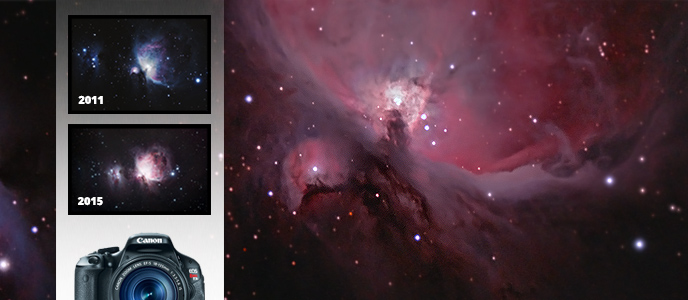
Staying Inside – Image Processing The unseasonably cold weather and precipitation we have experienced here in Southern Ontario have given me the perfect opportunity to go through my old astrophotography images and reprocess the data. I have been advancing my image-processing skills by studying current astronomy images taken by the pros. Being a creative professional myself, I…
Taking impressive deep-sky astrophotography images is not reserved for those using an astronomical telescope. A budget camera lens can be used to take images of some of the best deep-sky objects in the night sky. A telephoto zoom lens can provide enough magnification to pull distant objects in space in for a closer look, but…
Here are the exact camera settings I use to take pictures of stars with a DSLR camera and lens. The following steps will help ensure that your photos are clear and sharp and include plenty of stars in the night sky. Mount your DSLR to a tripod to avoid camera shake Set the aperture (f-stop)…